I think most of us have been there at some point. You sign up for a global affiliate program, grind content for weeks, then payouts suddenly feel complicated. Some platforms push PayPal only. Some offer mobile money direct payout. Others require a minimum threshold before they wire anything. It gets confusing quickly.
So we will break it down slowly, clearly, and with examples that feel real. This article compares Mobile Money vs PayPal in detail, especially for African affiliates who want simple earnings, fewer headaches, and money they can use today, not next month.
Mobile Money vs PayPal Overview for Beginners
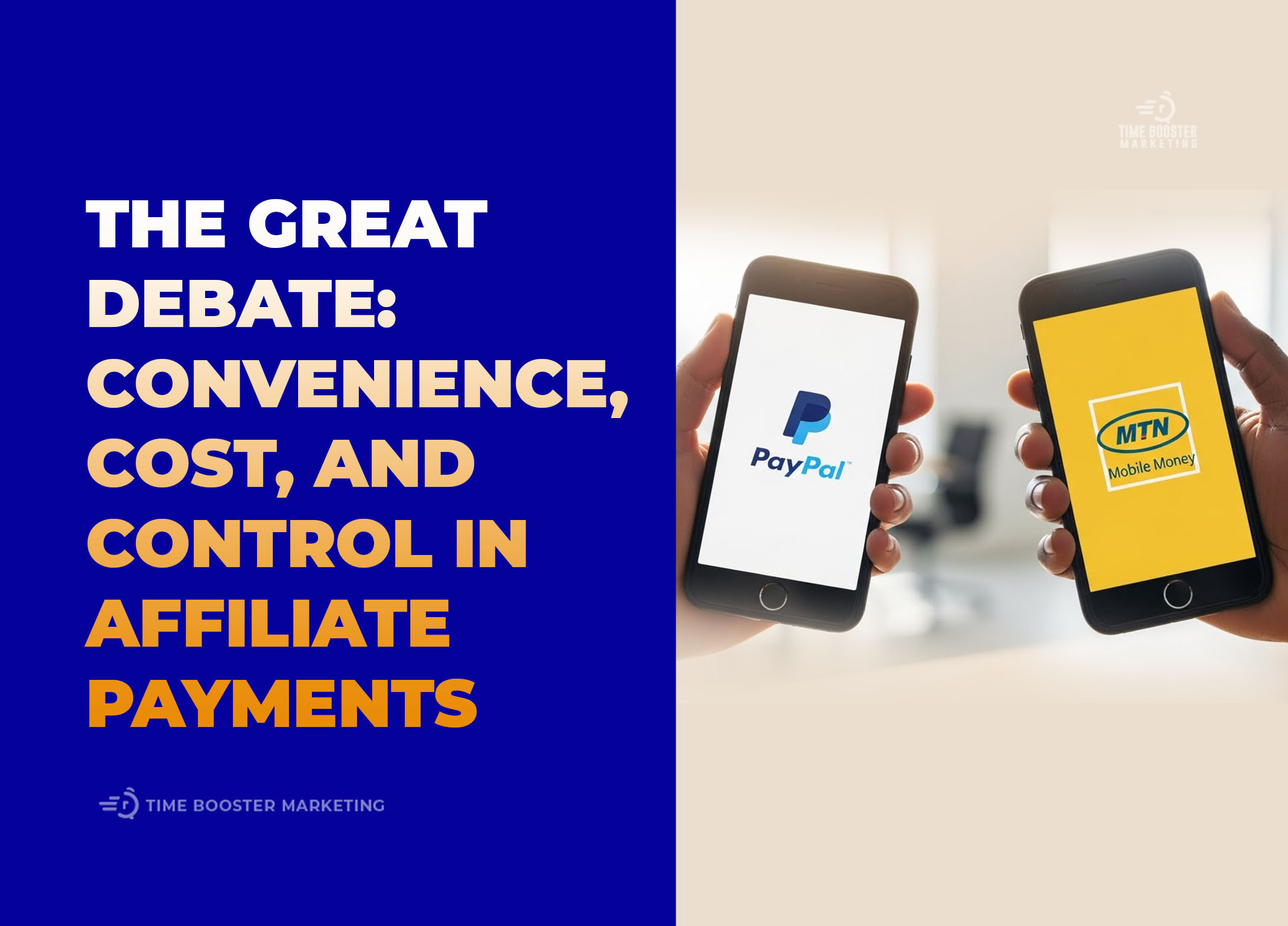
Let us paint a simple picture. PayPal is like a global payment highway. Most international companies use it, and almost every major affiliate network supports it. On the other hand, Mobile Money is more like a local street that works beautifully within African markets, making withdrawals easy, fast, and friendly for daily use.
Both do the same job, but the experience feels very different.
How Mobile Money Works for Affiliate Earnings
Mobile Money lets you receive funds directly into your SIM-based wallet. Think MTN Mobile Money, M-Pesa, Orange Money, Airtel Money, GCash for Africa expansions, and so on. No card needed. No long sign-up pages. If you have a phone, you are already halfway there.
A lot of African affiliate programs use it because it reduces friction. People can withdraw in minutes. You can cash out from a kiosk down the street or transfer directly to your bank account.
Mobile Money often works best when:
- You are promoting brands within Africa
- Payouts are small to medium sized
- You do not want to deal with bank paperwork
- You value instant access to funds
- You are a beginner or mid-level affiliate
How PayPal Works for Affiliate Earnings

PayPal shines globally. Many digital product sellers, SaaS companies, online course creators, and major international affiliate platforms pay through PayPal as their default. If you want to earn from US, UK, Asian, or European programs, you often need a PayPal account.
The upside is reach. The downside, especially for Africans, is account limitations. Some countries cannot receive payments. Some only send. Some accounts get restricted randomly or hold funds for 21 days. Transfer fees sometimes feel uncomfortable, especially when you convert dollars to local currency.
PayPal works best when:
- Your affiliate program is international
- Earnings are larger or less frequent
- You want to build a global presence
- You have verified identity documents
- You plan to scale long-term
We will go deeper, but first, let us compare the two directly.
Mobile Money vs PayPal: Availability Across African Countries
Imagine someone in Kenya, Uganda, or Ghana. Mobile Money is everywhere. They walk to a shop, cash out instantly. Meanwhile, someone in Cameroon or Nigeria may struggle with PayPal restrictions. This already changes everything.
A simple breakdown:
| Country | Mobile Money Availability | PayPal Receive Support |
|---|---|---|
| Kenya | Very strong (M-Pesa) | Partial receive depending on verification |
| Nigeria | Mobile money growing | Historically send only (workarounds exist) |
| Ghana | Strong mobile usage | Receive often possible |
| Cameroon | Common mobile payouts | Account limitations for receiving |
| Uganda | Major mobile money adoption | Mixed support |
| South Africa | Mobile wallet + bank mix | Strong PayPal support |
Mobile Money often wins for direct daily access. PayPal wins globally where affiliate companies default to it.
For accuracy reference, current country availability can be checked directly on their support pages:
- PayPal Country Market List: https://www.paypal.com/us/webapps/mpp/country-worldwide
- MTN MoMo: https://mtn.com/momo
- M-Pesa Global: https://www.safaricom.co.ke/personal/m-pesa
- Airtel Money: https://www.airtel.africa
- Orange Money: https://orangemoney.orange.com
Mobile Money vs PayPal Fees, Charges, and Real Cost Differences
Fees matter. Sometimes more than you think. A 10 percent fee on a 100 dollar payout means losing $10 every time. Do that ten times, and you will care deeply.
Let us compare fee structures in a real feel manner.
Mobile Money Fees
Mobile Money usually charges per withdrawal. Something like 1 percent to 3 percent, depending on the provider. Some networks charge fixed fees like 500 to 1500 FCFA or 15 to 30 KES or 10 ETB, depending on the country. Sometimes the deposit is free. Sometimes sending to the bank costs extra.
The great part is predictability. You almost always know what will be deducted upfront, and it happens instantly.
PayPal Fees
PayPal has layers of fees:
- Receive fee
- Currency conversion fee
- Transfer fee to bank or card
- Exchange rate margin
Many affiliates discover conversion shock when withdrawing. A 100 dollar payout may reduce to 92, 88, or even 80 dollars depending on your country and withdrawal method.
Official fee references:
- PayPal Merchant Fees: https://www.paypal.com/us/webapps/mpp/merchant-fees
- MoMo/Operator fee charts vary by country, but public info is available via MTN/Airtel portals.
Who Wins This Round?
For small and frequent payouts, Mobile Money usually feels cheaper in practice. For large payouts withdrawn less often, PayPal still holds up especially if you convert externally using platforms like Payoneer or Binance P2P with caution and legality in mind.
Sign-up Requirements Compared
A new affiliate wants simplicity. No stress, no forms, no waiting.
Mobile Money requirements:
- Phone number linked to ID
- SIM registration
- Sometimes nothing else
PayPal requirements:
- Phone
- Identity documents
- Often a bank card or a linked account
This is why many beginners start with Mobile Money. It feels friendly.
Payment Speed: Which One Pays Faster?
If you like instant cash, Mobile Money feels like magic. You get paid, you withdraw the same moment, buy food, pay bills, and move on.
PayPal delays can come from holding funds, pending reviews, and bank transfer waiting times. Sometimes withdrawals take hours or days, depending on local systems.
If speed matters, Mobile Money wins comfortably.
Mobile Money vs PayPal for Different Affiliate Levels
Let us be realistic. A beginner earning their first commission cares more about touching the money quickly. A pro earning 1000 dollars monthly or more cares about scalability, international reach, and structured finance.
For Beginner Affiliates
Mobile Money often works better:
- Faster access to cash
- Lower withdrawal stress
- No need for bank set-up
- Great for African product affiliate networks
For Intermediate Affiliates
A hybrid workflow could work:
- Mobile Money for fast, small earnings
- PayPal for global affiliate networks
- Expand depending on the client base
For Professional Affiliates
PayPal often becomes necessary:
- Many programs outside Africa require it
- Higher earnings suit delayed withdrawals
- Better for long-term partnerships
- Easier to integrate with Shopify, Gumroad, and Upwork
Many top earners still route PayPal funds to local Mobile Money using exchanges or payment bridges. Always ensure methods are legal and safe.
Chargebacks, Reversals, and Account Risk
PayPal allows chargebacks. Buyers can complain, and money can be reversed. Affiliates occasionally experience this emotionally and financially. Especially with digital products. Mobile Money rarely reverses unless there is a fraud investigation.
This matters if you sell direct products, do drop-shipping, or manage digital goods.
Account freezing is another fear. PayPal freezes accounts if it suspects unusual activity. It is annoying. People online often complain about it in forums like Reddit and Quora.
Reference examples:
- PayPal Dispute Guide: https://www.paypal.com/us/smarthelp/article/how-do-i-open-a-dispute-in-the-paypal-resolution-center-faq1344
- Chargeback Policies: https://www.paypal.com/us/webapps/mpp/ua/useragreement-full
Mobile Money systems freeze less often, but still possible if SIM registration conflicts or transaction volume looks abnormal.
Conversion Rates and Hidden Costs
When you withdraw PayPal to local currency, exchange rates sometimes hurt. A dollar might convert lower than the central bank rate. That difference reduces your earnings quietly. Mobile Money exchange cost depends on how you receive funds. If the affiliate program pays directly in local currency, conversion disappears.
If you prefer long-term savings, PayPal might work better with a Dollar Bank account. If you want money today, Mobile Money feels perfect.
Mobile Money vs PayPal in Real Scenarios
Let us imagine two affiliates.
Scenario 1: Jasmine, a beginner content creator in Ghana
She promotes African skincare brands. Average earnings are 20 to 200 GHS weekly. Mobile Money suits her best. She needs instant cash for transport, data, content tools. PayPal would add too many steps for something simple.
Scenario 2: Malik, tech YouTuber in Nigeria
He earns commissions from Amazon Associates, Envato, Bluehost, and global SaaS programs. PayPal makes sense. Even if he uses P2P conversion later, global acceptance opens more earning doors.
Both are right. Just different needs.
Mobile Money vs PayPal Subheadings with Keyword Integration
1. Mobile Money vs PayPal for Cross-Border Income
Mobile Money helps mostly in Africa. PayPal works worldwide. If your target audience is global, PayPal wins. If your niche is local ecommerce or fintech referrals, Mobile Money feels natural.
2. Mobile Money vs PayPal for Affiliate Withdrawals and Processing Time
Mobile Money is nearly instant. PayPal is delayed occasionally. Conversion adds time. Waiting for clearance can be frustrating especially for young earners.
3. Mobile Money vs PayPal for Transaction Volume and Scale
A high-earning affiliate handling 5,000 dollars monthly might prefer PayPal plus bank integration. A streetwear micro influencer selling referrals might stick with Mobile Money happily.
Which One Should You Choose Finally?
Maybe ask yourself three questions.
- Where do your earnings come from?
- How fast do you need the cash?
- Are you planning for global scale or local growth?
If your income flows from African programs, use Mobile Money comfortably. If your income comes from international markets, PayPal gives you flexibility to expand.
And you can use both. Many African affiliates do.
Pros and Cons Summary Table
| Feature | Mobile Money | PayPal |
|---|---|---|
| Speed | Instant | Slow sometimes |
| Fees | Low local fees | Higher when converting |
| Availability | African markets | Global acceptance |
| Sign up | Very easy | More documents needed |
| Scale | Good for small-mid | Great for large-scale |
| Reversals | Rare | Common in disputes |
Final Thoughts
If I were starting fresh today as an affiliate in Africa, I would probably begin with Mobile Money because it feels simple, friendly, and motivating. There is something beautiful about seeing your first earnings arrive without stress. But as you grow, PayPal becomes impossible to ignore if you want to reach global programs.
You do not have to rush. You can take your time. Build first income streams locally, learn content creation, test affiliate links, and get comfortable. Then open PayPal when you are really ready to expand.
Both Mobile Money and PayPal can serve you well. You just need to choose based on real needs, not hype.