
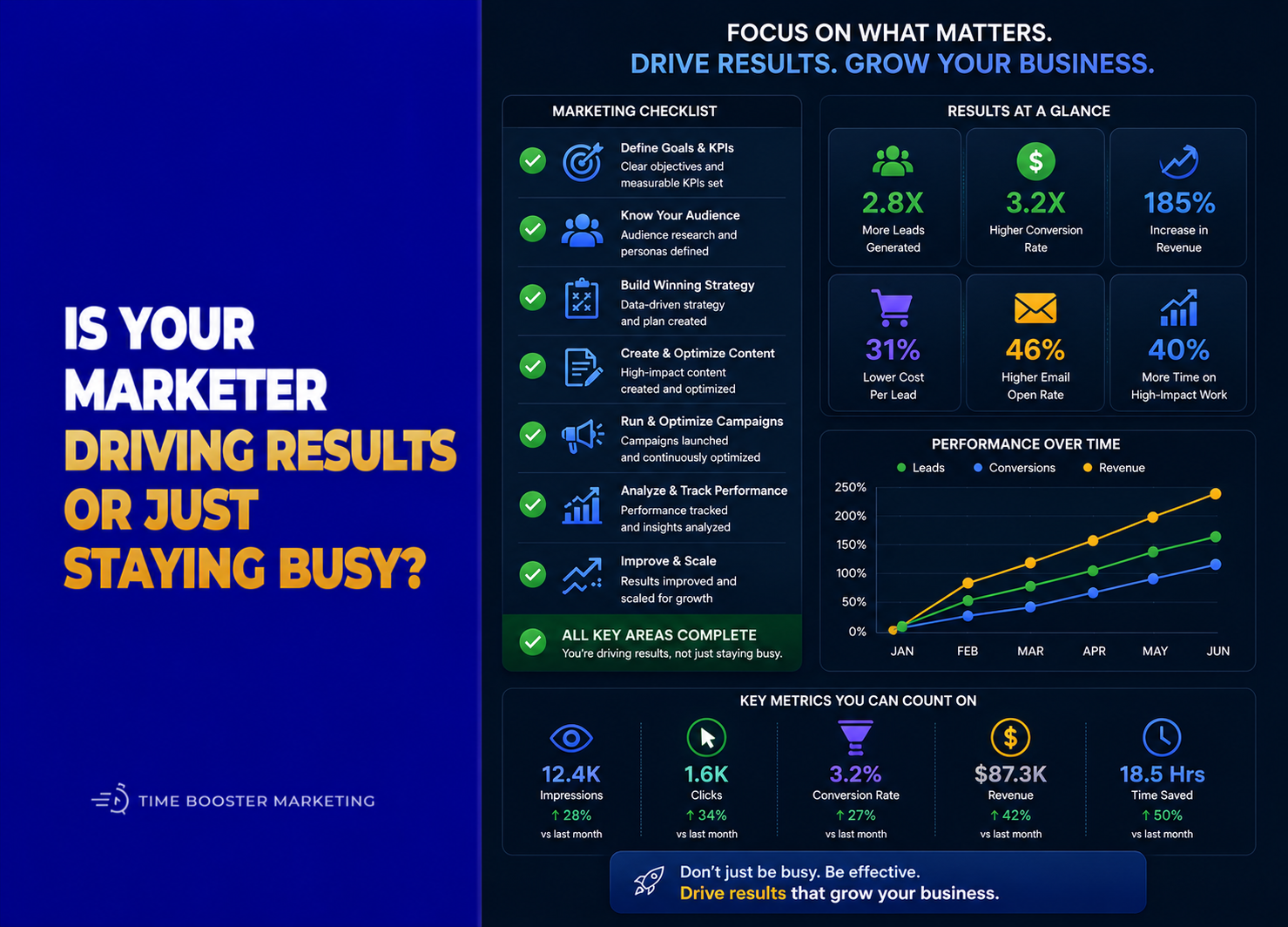
How to Know If Your Marketing Person Is Doing the Job or Just Posting Content
Hiring a marketing person can feel like progress. Your Instagram page becomes active. Flyers start going out. Stories are posted. Captions appear. Your business finally looks visible online.

But after a few weeks, the real question comes: is this marketing actually helping the business grow, or is someone just posting content?
For many Cameroon business owners, this is where frustration begins. You are paying someone every month, but you are not sure what to measure. The marketer says engagement is improving. You want more inquiries. They talk about reach. You want customers. They say consistency takes time. You wonder whether your money is being wasted.
The solution is not to control every caption, approve every emoji, or demand sales after every post. The solution is to understand digital marketer performance Cameroon SMEs can measure clearly: activity, quality, audience growth, lead generation, conversion support, reporting, and business learning.
Posting Is Activity. Marketing Is Direction.
Posting content means something was published. Marketing means the content is connected to a business goal.
A social media manager can post five times a week and still fail if the content does not attract the right audience, explain your value, build trust, answer buyer objections, or move people toward action. Activity keeps your page alive. Strategy makes that activity useful.
This distinction matters because many SMEs judge marketing emotionally. When the page is quiet, they panic. When a flyer looks beautiful, they feel hopeful. When a post gets likes, they assume it worked. But none of those reactions prove performance by themselves.
Meta’s advertising guidance emphasizes choosing objectives that match business goals because campaigns are optimized differently depending on whether the goal is awareness, traffic, engagement, leads, or sales. That same principle applies to organic content: the work must be judged according to the goal it was created to support. (Facebook)
A good marketing person should not only ask, “What are we posting this week?” They should ask, “What business result are we trying to influence this month?”
The First Sign of a Serious Marketer: They Ask About Goals
A marketer who never asks about your business goals is probably managing content, not marketing performance.
Before judging results, you need to define what success means. For a restaurant, success may mean more WhatsApp reservations, lunch orders, event bookings, or weekend traffic. For a boutique, it may mean product inquiries, repeat buyers, or showroom visits. For a real estate business, success may mean qualified calls, viewing appointments, and serious buyer follow-ups.
The goal changes the work.
If your goal is brand awareness, you should expect content that increases reach, visibility, shares, and recognition. If your goal is lead generation, you should expect stronger offers, clearer calls to action, WhatsApp links, inquiry tracking, and follow-up scripts. If your goal is sales, you need product clarity, pricing strategy, testimonials, retargeting, and conversion tracking.
Google Ads defines conversions as valuable actions such as purchases, sign-ups, or phone calls, which shows why performance must be tied to the action your business actually values. (Google Help)
Without a goal, your marketer can always look busy. With a goal, you can evaluate whether the work is moving in the right direction.
The Metrics You Should Monitor
You do not need to become a digital marketing expert to manage your marketer well. But you do need to understand the difference between vanity metrics and business metrics.
Reach and impressions show visibility
Reach tells you how many people saw your content. Impressions show how many times it appeared. These numbers matter when your goal is awareness, especially if your business is not yet well known.
But reach alone is not success. If 20,000 people see your post and none of them are likely buyers, the number looks impressive but has weak business value.
Engagement shows interest
Likes, comments, shares, saves, and replies show that people are reacting. Hootsuite’s social media metrics guidance highlights engagement, reach, impressions, clicks, saves, comments, and video plays as common indicators for evaluating content performance. (Hootsuite)
For Cameroon SMEs, saves and shares can be more meaningful than likes. A bride saving a makeup artist’s post, a parent sharing a school announcement, or a customer forwarding a restaurant menu on WhatsApp often signals stronger buying interest than a casual like.
Clicks and messages show action
This is where marketing becomes more serious. Are people clicking the link? Are they sending WhatsApp messages? Are they calling? Are they asking for prices, availability, location, or booking details?
A marketer who produces content but cannot tell you how many inquiries came from it is leaving a major gap.
Leads show commercial potential
A lead is not just any message. “Price?” is not always a qualified lead. A better lead includes intent: someone asking for delivery, booking, consultation, appointment, product size, payment terms, or location.
You should track qualified leads, not only total messages.
Sales show final business impact
Your marketer may not control every sale. Sales can fail because your price is unclear, your staff replies late, stock is unavailable, or customer service is weak. But marketing should still contribute to sales by attracting the right people and preparing them to buy.
This is why performance should be reviewed across the full path: post, reach, engagement, inquiry, qualified lead, follow-up, and sale.
What a Monthly Marketing Report Should Include

If your marketer only says, “The page is growing,” that is not enough.
A useful monthly report should explain what was done, what happened, what was learned, and what will change next. It should not be a complicated 30-page document. For most SMEs, a clear one-page or two-page report is enough.
Your report should include content published, best-performing posts, weakest posts, audience growth, reach, engagement rate, website clicks or WhatsApp clicks, inquiries generated, qualified leads, sales influenced if trackable, ad spend if any, and recommendations for the next month.
Google’s conversion tracking guidance explains that measuring customer actions after ad interaction helps businesses understand which ads drive value and how to optimize toward business goals. (Google)
That same thinking should guide your reporting even when you are not running ads. The report should help you make better decisions, not simply prove that work was done.
How Often Should You Review Progress?
Do not review marketing every hour. That creates pressure, confusion, and reactive decisions. But do not disappear for three months either. That creates weak accountability.
A practical rhythm works better.
Review content execution weekly. This is where you check whether posts were published, visuals are aligned with the brand, captions are clear, and campaigns are moving according to plan.
Review performance monthly. This is where you examine reach, engagement, inquiries, leads, content themes, audience response, and campaign lessons.
Review business impact quarterly. This is where you ask whether marketing is supporting bigger goals such as stronger brand recognition, better lead quality, higher sales, improved customer trust, or lower dependence on referrals.
This rhythm helps you avoid two extremes: micromanaging every post or ignoring marketing until you are angry about the bill.
How to Hold a Marketer Accountable Without Controlling Everything
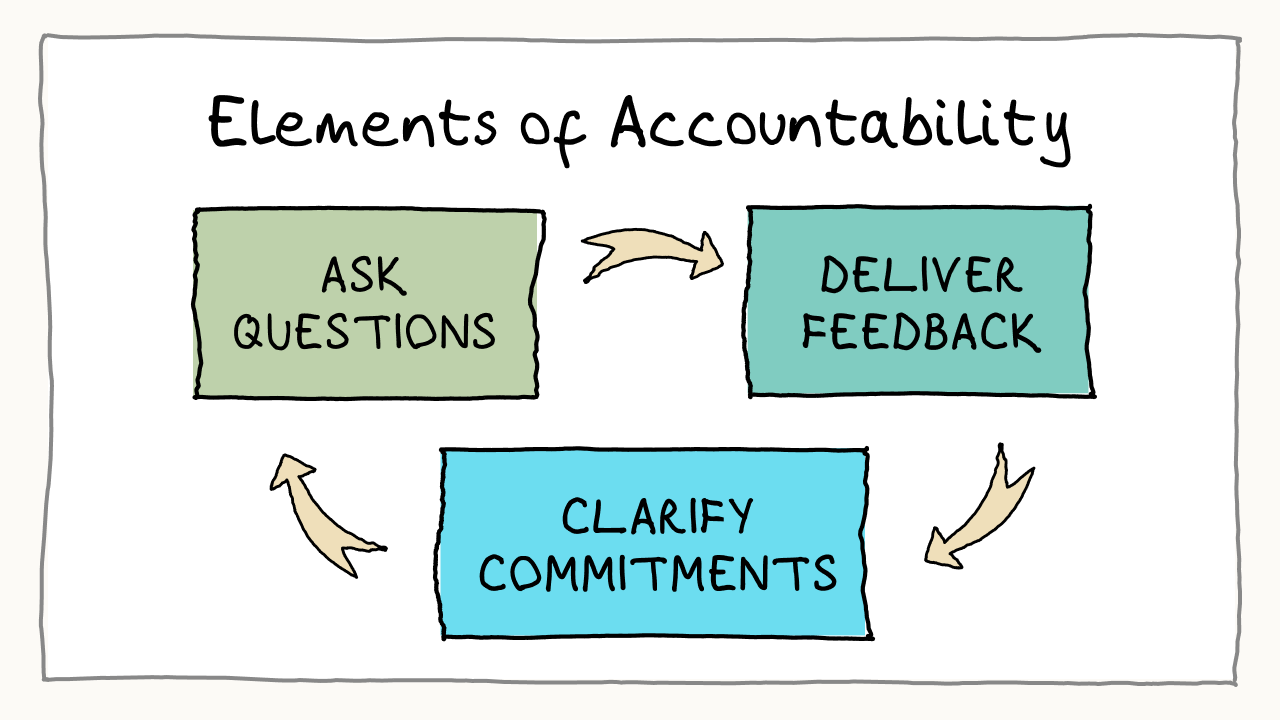
Good oversight is not the same as control.
Control sounds like: “Use this exact caption.” “Post this picture now.” “Why did this post get only 12 likes?” “Change the color.” “I saw another business doing this trend; copy it.”
Accountability sounds like: “What was the goal of this content?” “What audience were we targeting?” “What did we learn from last month?” “Which posts generated inquiries?” “What are we testing next?” “How does this support sales?”
The second approach is better because it allows your marketer to think strategically while still being responsible for results.
A serious marketer should be able to explain the purpose behind the content calendar, the role of each platform, the reason for campaign messages, and the next adjustment based on performance data.
Red Flags That Your Marketer Is Just Posting
You should be concerned if your marketer cannot explain what the content is meant to achieve.
Other warning signs include no monthly report, no clear KPIs, no tracking of inquiries, no content plan, no audience definition, no campaign ideas, no improvement over time, and no connection between content and business priorities.
Another red flag is over-focus on aesthetics. Beautiful content is valuable, but design alone does not equal marketing. A flyer can look premium and still fail because the offer is vague, the call to action is weak, or the audience does not understand why they should respond.
The biggest red flag is repetition without learning. If every month looks the same, but the results are not improving, your marketer may be managing routine instead of performance.
What Good Performance Looks Like
Good performance is not always instant sales. Especially in Cameroon’s trust-driven market, buyers often need repeated exposure before they contact you. They may watch your page quietly, compare options, ask friends, check comments, and message only when they feel confident.
So, good performance may look like better lead quality, more relevant inquiries, stronger content clarity, improved WhatsApp conversations, higher saves and shares, more repeat engagement, better campaign structure, and clearer reporting.
Over time, good marketing should help your business depend less on random referrals and more on a visible, trusted, measurable system.
The Right Question to Ask
Do not only ask, “Did they post?”
Ask, “Did the work help the business move closer to its goal?”
That question changes everything. It helps you respect the marketer’s expertise while still protecting your money. It also forces the marketing person to think beyond content volume and focus on outcomes.
For Cameroon SMEs, marketing accountability should not feel like suspicion. It should feel like business discipline. Your marketer should have room to create, test, and improve. You should have clear goals, reports, and honest performance conversations.
When both sides understand the difference between activity and results, marketing stops being guesswork. It becomes a system you can review, improve, and trust.