Free Digital Marketing in Cameroon: How Startups Can Grow Before Paying for Ads
Many Cameroonian startup founders delay marketing because they assume visibility requires money.
You may believe you need a professionally designed website, daily paid advertisements, an influencer campaign, or a marketing agency before customers will take your business seriously. Those resources can eventually help, but they are not the only way to acquire your first customers.

At the beginning, your most valuable marketing advantages are usually your time, proximity to customers, knowledge of the problem, and ability to communicate personally.
Y Combinator advises early-stage founders to “do things that don’t scale” and focus on finding an initial group of customers who genuinely value the product. For a new Cameroonian startup, this could mean answering enquiries personally, visiting potential partners, requesting introductions, and manually following up with every lead. (Y Combinator)
Paid advertising can accelerate a working customer-acquisition system. It cannot automatically repair an unclear offer, weak customer experience, or product that people do not recommend.
Free Marketing Does Not Mean Effortless Marketing
Free digital marketing in Cameroon should be understood as marketing without significant media spending.
It still requires mobile data, time, consistency, customer follow-up, and sometimes local transportation. What it removes is the belief that you must spend heavily before you can test whether people want what you sell.
Cameroon had approximately 12.6 million internet users and 5.9 million social media user identities in October 2025. That creates substantial digital reach, but internet penetration remained below half of the total population. Your strategy should therefore combine online visibility with referrals, community relationships, local partnerships, and direct conversations rather than depending on one platform. (DataReportal – Global Digital Insights)
The goal is not to appear everywhere. It is to become visible and credible wherever your first customers already spend time.
1. Build an Organic Posting System
Organic posting means publishing content without paying the platform to distribute it.
The common mistake is posting only promotional flyers. A graphic that says “We provide the best delivery service” may announce your existence, but it gives the customer little reason to remember, trust, or share your startup.
A stronger content system uses four categories.
Problem Content
Describe a specific frustration your customer recognises.
A logistics startup could explain why poorly written delivery addresses cause delays. A bookkeeping startup could show how mixing personal and business money creates cash-flow confusion. A recruitment platform could explain why generic job descriptions attract unsuitable applicants.
Problem content makes potential customers feel understood.
Educational Content
Teach customers how to make a better decision.
Useful examples include checklists, short demonstrations, common mistakes, cost comparisons, frequently asked questions, and step-by-step explanations.
Google recommends creating people-first content that serves an intended audience, demonstrates first-hand expertise, and leaves readers feeling that they have learned enough to achieve a goal. (Google for Developers)
Your content should therefore answer real customer questions, not simply fill a posting calendar.
Proof Content
Show that your startup can produce results.
Publish customer feedback, before-and-after examples, delivery confirmations, product demonstrations, project summaries, screenshots with permission, or short case studies.
A new startup without many customers can document pilot projects, founder experience, prototypes, testing procedures, or the process used to solve a problem. Proof must be honest, but it does not need to be elaborate.
Offer Content
Tell people what to do next.
An organic post should occasionally invite the audience to request a quotation, join a waiting list, book a demonstration, visit a location, download a guide, or start a WhatsApp conversation.
A practical weekly schedule could include one educational post, one proof post, and one direct offer. Consistency matters more than posting several weak pieces of content every day.
2. Turn WhatsApp Into a Customer-Acquisition System
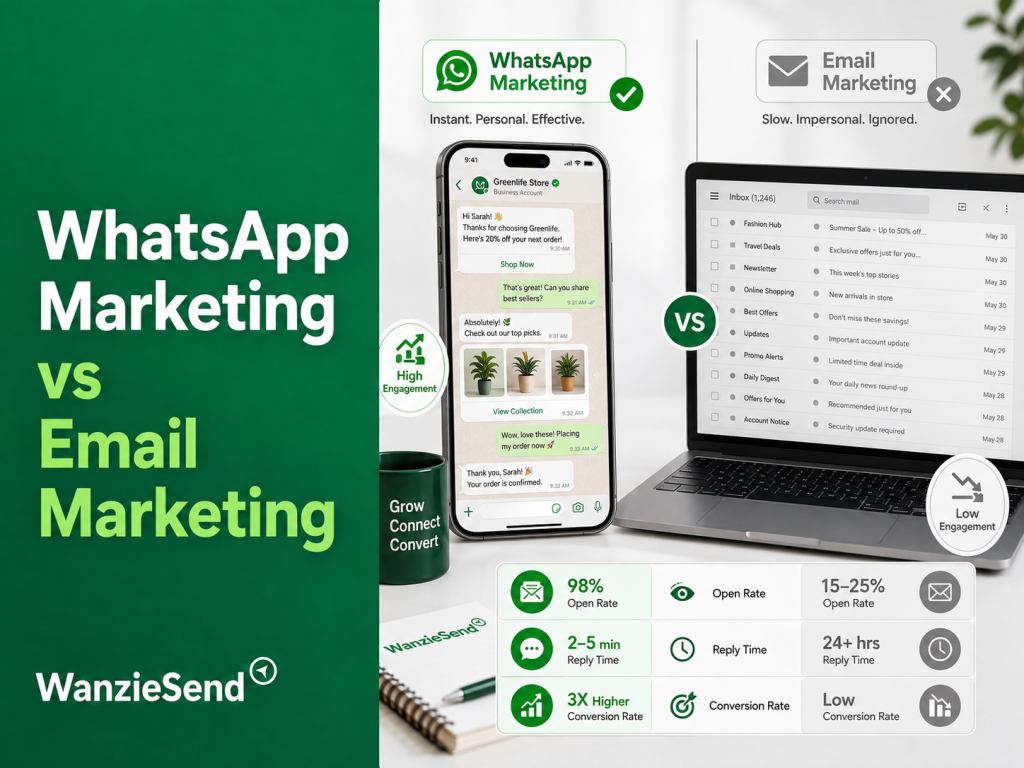
For many Cameroonian startups, WhatsApp is not merely a messaging application. It is where discovery becomes conversation and conversation becomes a sale.
Begin by setting up a complete WhatsApp Business profile. Include your business name, clear description, operating hours, location or service area, website where applicable, and product catalogue.
WhatsApp Business also provides quick replies for frequently asked questions, labels for organising conversations, away messages, and catalogues for displaying products or services. (WhatsApp for Business)
Use labels such as:
- New enquiry
- Qualified prospect
- Quotation sent
- Follow-up required
- Customer
- Referral partner
Your Status should not consist only of “Buy now” messages. Combine customer questions, useful tips, demonstrations, proof, founder updates, and offers.
Avoid adding people to groups or broadcast lists without permission. Unsolicited messages may produce short-term attention, but they can damage the trust your startup needs.
3. Ask for Referrals Systematically
Referrals should not be left to chance.
Customers are more likely to recommend you when the request is specific, timely, and easy to complete. Ask immediately after a positive result, successful delivery, helpful consultation, or enthusiastic compliment.
Instead of saying, “Please tell people about us,” try:
“Do you know one restaurant owner who struggles with reliable weekday deliveries? You can forward this short introduction to them.”
Provide a message the customer can forward without rewriting it:
“I recently used [Startup Name] for [specific service]. They helped me [specific result]. You can contact them here: [WhatsApp link].”
Specific referral requests help customers identify the right person rather than expecting them to promote your startup to everyone.
Track who sends referrals and acknowledge them. Appreciation can be a personal message, public recognition with permission, early access, reciprocal support, or another appropriate gesture.
4. Participate in Community Groups Without Spamming
Facebook groups, WhatsApp communities, alumni networks, professional associations, neighbourhood groups, and industry forums can provide direct access to concentrated audiences.
However, entering a group and immediately dropping advertisements is rarely an effective community strategy.
Start by observing the rules and recurring discussions. Answer questions related to your expertise. Share useful explanations. Recommend appropriate solutions even when your startup is not the answer.
Meta has highlighted how local recommendations and community conversations help people decide where to eat, shop, and obtain services. This makes community participation particularly useful for startups whose customers rely on trusted local opinions. (About Facebook)
A useful group contribution might be:
“Three factors usually cause this delivery problem. Here is how to check each one before selecting a provider.”
A weak contribution would be:
“We offer the best delivery service. Inbox now.”
The first creates authority. The second looks like an interruption.
5. Create Local Partnerships
Partnerships allow two businesses to share audiences without purchasing access to them.
Look for businesses serving the same customer at a different stage of the buying journey. They should complement your startup rather than compete directly with it.
Examples include:
- A payment startup partnering with small online retailers
- A catering startup partnering with event planners
- A property platform partnering with relocation consultants
- A fitness application partnering with gyms or nutrition professionals
- A bookkeeping startup partnering with business-registration consultants
- A delivery startup partnering with restaurants and Instagram boutiques
Begin with a small, measurable collaboration. You could create a joint guide, organise a demonstration, cross-refer suitable customers, bundle services, host a community session, or feature each other’s expertise.
Do not approach potential partners with a vague request to “collaborate.” Explain the shared customer, the proposed activity, each party’s responsibility, and the expected benefit.
6. Convert Customer Experiences Into Reviews
Reviews help strangers evaluate whether your promises are credible.
Create a free Google Business Profile when your business is eligible. Google allows businesses to appear on Search and Maps, add operating information and photographs, publish updates, and respond to customer reviews without paying for the profile. (Google)
Ask satisfied customers to describe:
- The problem they had
- The service or product they used
- What your startup did well
- The result or experience
- Who they would recommend you to
Send the review link immediately after a positive experience. Do not buy reviews or offer gifts in exchange for positive ratings. Google requires reviews to reflect genuine experiences and prohibits incentives intended to influence reviews. (Google Help)
Respond to both positive and negative feedback professionally. A thoughtful response shows potential customers how your startup communicates when things go well and how it handles problems when they do not.
Use a Simple Free-Marketing Growth Loop
These channels become more powerful when connected.
A useful growth loop looks like this:
- Publish helpful content addressing a specific customer problem.
- Share it through your page, Status, founder profile, and relevant communities.
- Invite interested people into a WhatsApp conversation.
- Ask questions to determine whether they are suitable customers.
- Deliver a strong first experience.
- Request a review and a relevant referral.
- Turn the experience into another proof-based post.
The output of one customer interaction becomes the input for the next marketing cycle.
A 30-Day No-Budget Marketing Plan

Week One: Build the Foundation
Clarify the customer, problem, offer, price range, and next step. Complete your social profiles, WhatsApp Business profile, catalogue, and Google Business Profile where appropriate.
Prepare answers to the ten questions customers ask most frequently.
Week Two: Publish and Start Conversations
Create three educational posts, two problem-focused posts, one founder story, and one direct offer.
Share them across the channels your customers actually use. Reply to every serious comment or message.
Week Three: Activate Relationships
Request referrals from satisfied customers, previous professional contacts, friends who understand the offer, and relevant partners.
Approach five complementary businesses with one specific collaboration proposal. Participate helpfully in selected community groups without mass posting.
Week Four: Collect Proof and Improve
Request genuine reviews. Document customer questions, objections, and successful outcomes.
Identify which posts generated conversations, which introductions produced qualified leads, and where prospects stopped moving forward. Use those insights to improve the next month’s content and offer.
Measure Conversations, Not Vanity
Follower numbers can be encouraging, but they do not reveal whether your startup is moving towards revenue.
Track:
- Qualified enquiries
- WhatsApp conversations started
- Referrals received
- Partnership-generated leads
- Reviews collected
- Quotations or demonstrations requested
- Customers acquired
- Reasons prospects did not purchase
A startup with 300 relevant followers and ten monthly customer conversations may be in a stronger position than one with 10,000 passive followers.
Spend on Advertising After You Understand What Works
Paid promotion becomes more useful after you know which customer you are targeting, which message earns responses, which offer converts, and how your team follows up.
At that point, advertising can amplify a proven process.
Until then, organic marketing gives you something more valuable than cheap visibility: direct customer intelligence. Every conversation helps you understand the language customers use, the risks they perceive, the questions they ask, and the value they are willing to pay for.
Your first marketing advantage is not money. It is your ability to listen closely, communicate clearly, serve customers personally, and turn each successful experience into the next opportunity.