AI WhatsApp Automation Services for Small Businesses
Small businesses lose customers every day because nobody replies fast enough.
A customer asks for a price. Another wants delivery information. Someone requests available sizes. A prospect sends “Hello” after seeing an Instagram ad. By the time the business replies, the customer has already moved on.
This is where AI WhatsApp automation services become valuable.
For many African small businesses, WhatsApp is already the main sales channel. Customers use it to ask questions, negotiate trust, confirm payments, send screenshots, request quotations, track orders, and follow up after delivery. The problem is that most businesses still manage WhatsApp manually, even when message volume grows.
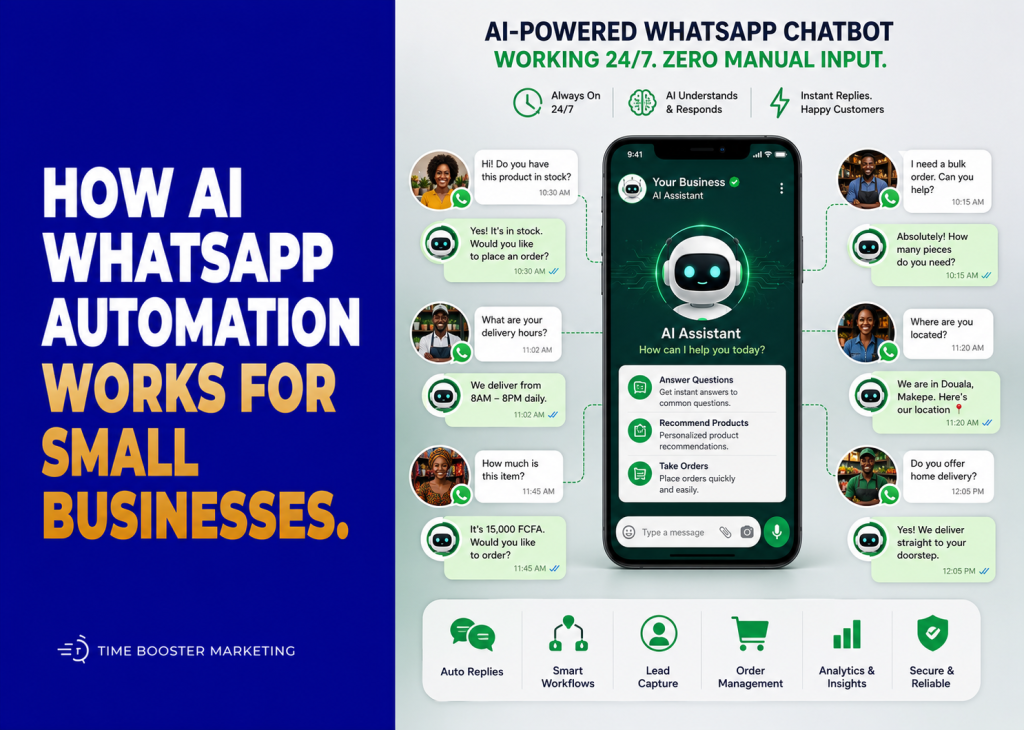
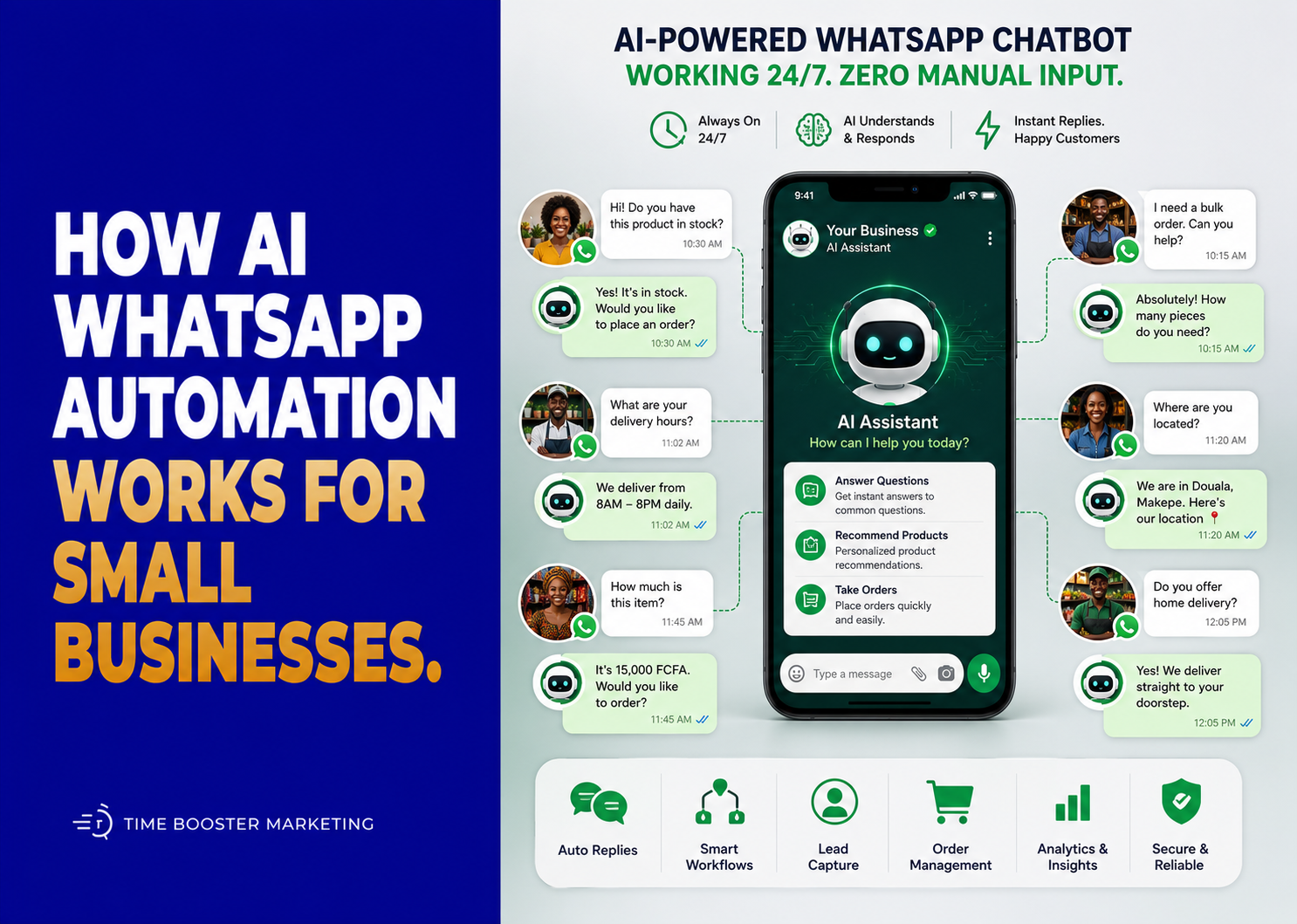
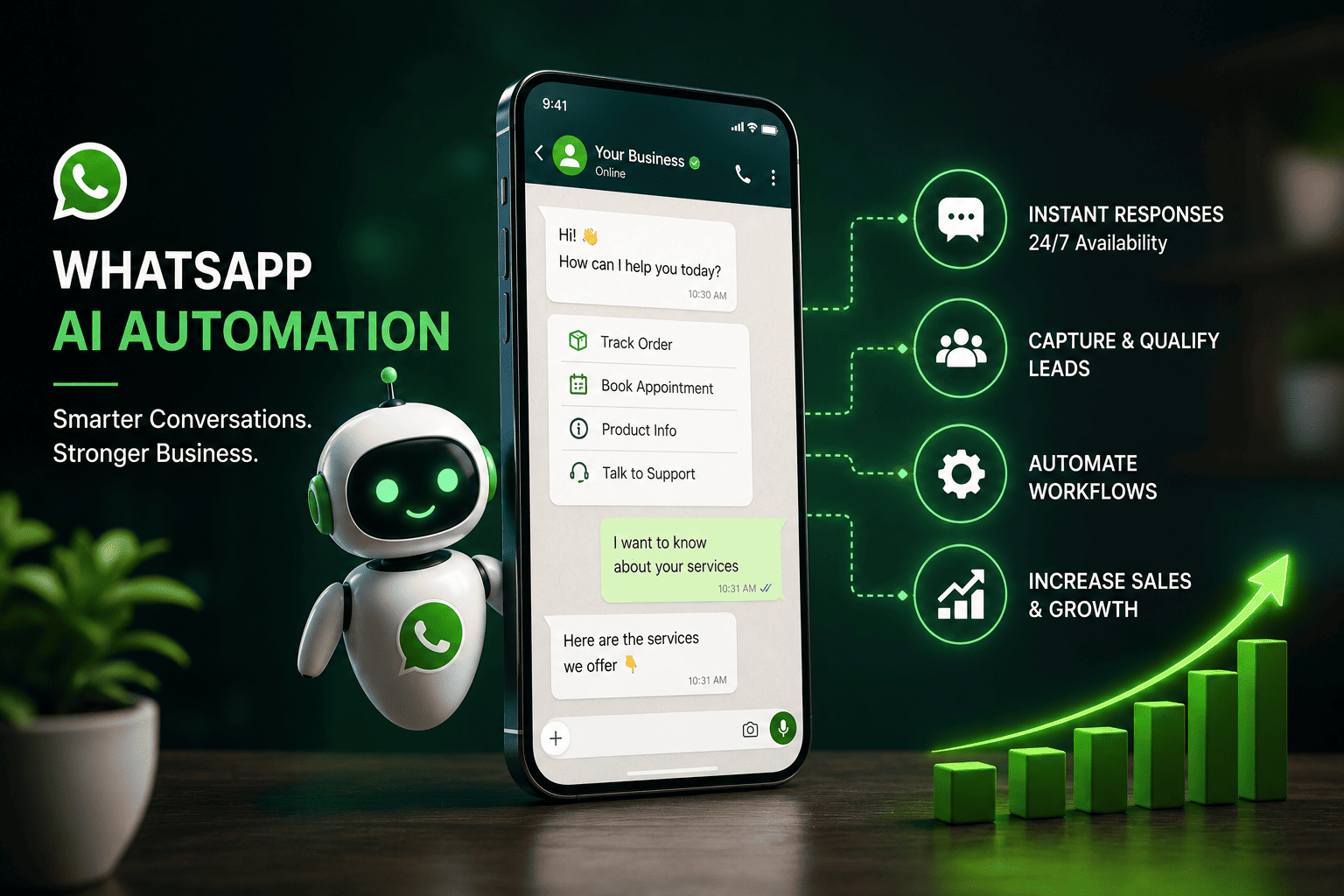
AI-powered WhatsApp automation helps a small business respond faster, qualify customers, organize conversations, and keep follow-up moving without hiring a large support team.
What AI WhatsApp Automation Actually Does
A traditional chatbot follows fixed rules.
If a customer types “price,” it sends a price list. If they type “location,” it sends an address. If the customer writes something unexpected, the bot fails.
AI WhatsApp automation is more flexible. It can understand different versions of the same question, summarize customer intent, recommend the next step, route conversations, and support more natural replies.
That means the system can recognize that these messages may all be asking for similar help:
“How much is it?”
“Please send price.”
“What is the cost?”
“Combien ça coûte?”
“I want to know your packages.”
A well-designed AI WhatsApp assistant can classify the enquiry, ask a follow-up question, provide the right information, and send serious prospects to a human representative.
This does not mean AI should replace your team completely. It should handle repetitive work, prepare the conversation, and help staff focus on customers who are ready to buy.
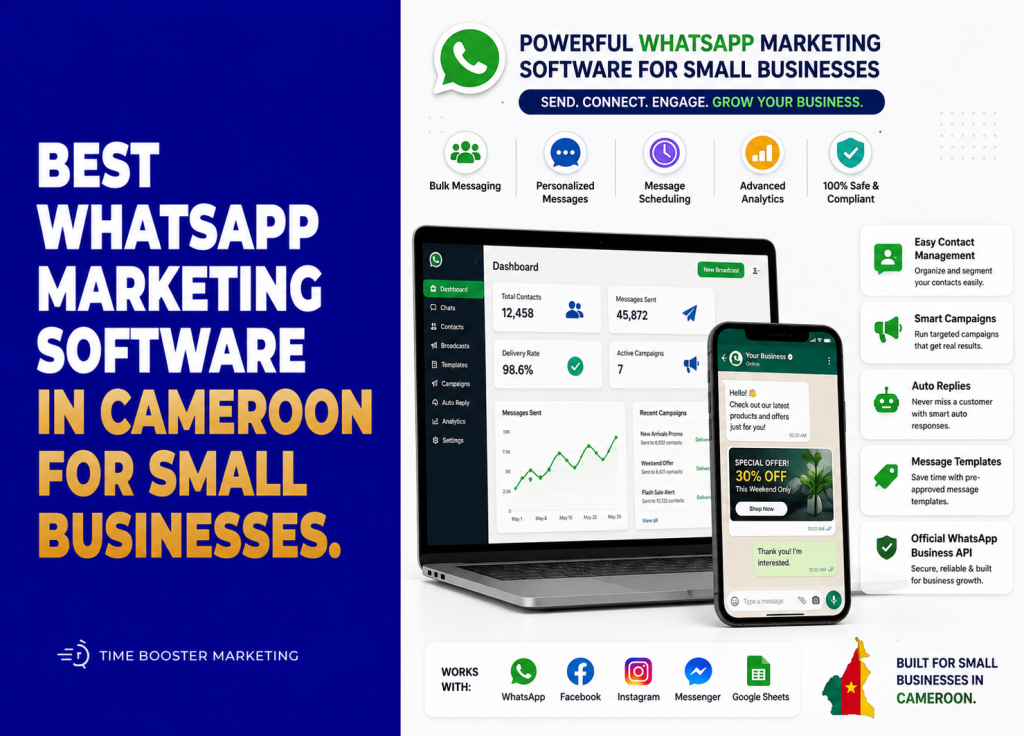
Meta’s WhatsApp Business Platform supports scaled business messaging, automation, customer service engagement, and richer interactions. Its Business Platform features page explains that businesses can use WhatsApp for automated messages, customer care, product discovery, and engagement workflows.
Why AI WhatsApp Automation Matters for Small Businesses
A small business does not usually have the luxury of a full customer-service department.
The owner may be managing suppliers, staff, stock, deliveries, appointments, and payments. Messages arrive while the team is serving customers physically. Some enquiries are forgotten. Some are answered late. Some receive inconsistent information.
AI automation helps solve four practical problems:
Speed: customers get immediate responses.
Consistency: common questions receive accurate answers.
Qualification: serious buyers are separated from casual enquiries.
Follow-up: prospects who do not buy immediately are not forgotten.
For businesses in Cameroon and other African markets, this is especially important because many customers prefer conversation before purchase. They want to confirm details before trusting the business. WhatsApp makes that possible, but only if the business can manage the conversation professionally.
Use Case 1: Lead Qualification
Not every WhatsApp message is a sales opportunity.
Some customers are ready to buy. Some are comparing prices. Some are outside your service area. Some do not have the required budget. Some are asking for a service you do not provide.
AI WhatsApp automation can ask qualification questions before a human joins the conversation.
For a real estate business, the assistant can ask:
- Which city or area are you interested in?
- Are you looking to rent or buy?
- What is your budget range?
- When do you want to move?
- How many bedrooms do you need?
For a training center, it can ask:
- Which course are you interested in?
- Are you a beginner or already experienced?
- Do you prefer online or in-person training?
- When would you like to start?
For a B2B service provider, it can ask:
- What type of business do you run?
- What problem are you trying to solve?
- How soon do you want to begin?
- Who will make the final decision?
This helps the business avoid wasting time on unqualified conversations while giving serious prospects a faster path to sales.
Use Case 2: FAQ Handling
Many businesses answer the same questions every day:
- What is the price?
- Where are you located?
- Do you deliver?
- What are your opening hours?
- Do you accept Mobile Money?
- How do I book?
- What documents are required?
- Is this available today?
AI automation can answer these questions instantly.
A restaurant can automate menu, delivery, opening hours, and reservation questions. A salon can answer questions about services, prices, appointment slots, and aftercare. A clinic can provide opening hours, appointment steps, and general service information while directing medical questions to qualified staff.
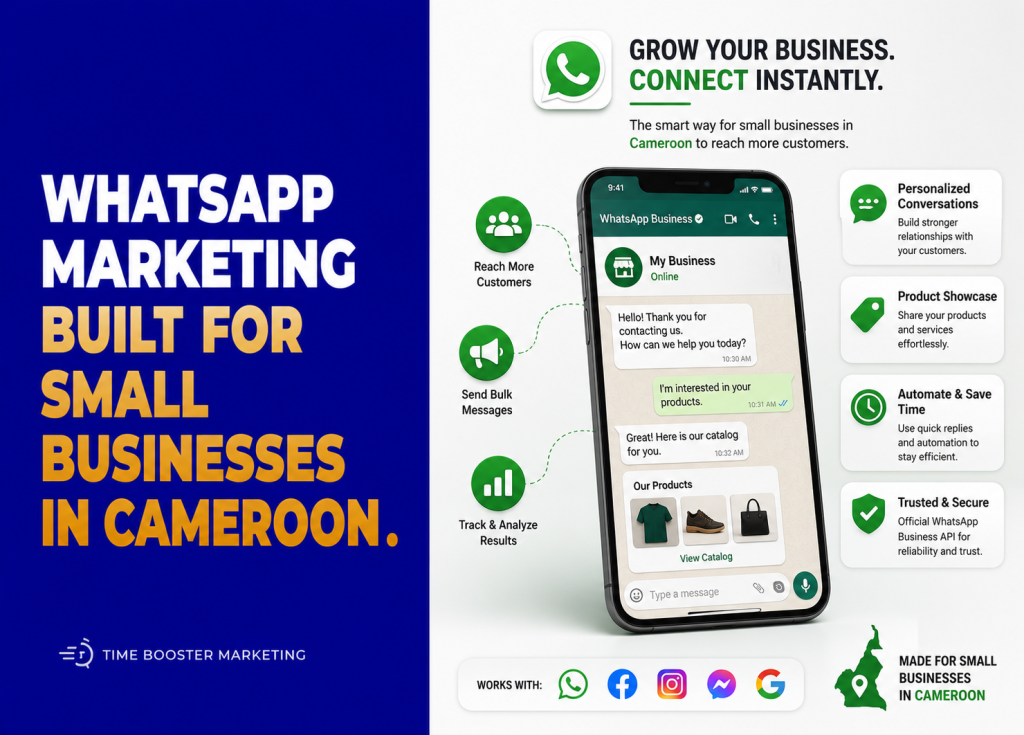
The free WhatsApp Business App already gives small businesses helpful tools such as business profiles, catalogs, greetings, away messages, labels, and quick replies. AI automation becomes the next step when those manual tools are no longer enough.
Use Case 3: Order Tracking and Customer Updates
Customers become anxious when they pay and hear nothing.
AI WhatsApp automation can reduce pressure on staff by sending order updates, delivery instructions, appointment reminders, payment confirmations, and support messages.
For example, an e-commerce seller can automate:
Order received
Payment pending
Payment confirmed
Package prepared
Out for delivery
Delivered
Follow-up after delivery
For appointment-based businesses, the system can send reminders before the appointment and follow-up messages after the service.
More advanced businesses can use WhatsApp Flows to create structured in-chat interactions such as appointment booking, product browsing, feedback collection, or service requests. Meta’s official Postman collection for the WhatsApp Business Platform describes WhatsApp Flows as rich interactions that help customers complete common tasks inside WhatsApp.
Use Case 4: Re-Engagement Sequences
Many customers ask questions but do not buy immediately.
That does not always mean they are not interested. They may need salary timing, approval from a spouse or manager, more information, or a reminder.
AI WhatsApp automation can help create re-engagement sequences.
For example:
Day 1: “Would you like help choosing the right package?”
Day 3: “The option you asked about is still available. Would you like current delivery details?”
Day 7: “We are closing bookings for this week. Should we reserve a slot for you?”
For a training center, the system can remind prospects before registration closes. For a boutique, it can notify customers when a requested product is restocked. For a service business, it can follow up after a quotation.
The key is permission and relevance. WhatsApp follow-up should feel helpful, not invasive. Businesses should respect customer consent, message frequency, and WhatsApp’s rules for business messaging.
AI Automation Is Not Only a Chatbot
A proper AI WhatsApp automation service may include several layers.
Conversation Design
This defines what happens when a customer says hello, asks for price, requests support, wants to buy, or needs human help.
Knowledge Base Setup
The AI needs accurate business information: services, prices, policies, locations, delivery terms, FAQs, booking steps, and product details.
Lead Scoring
The system can help identify which customers are urgent, qualified, high value, or better suited for later follow-up.
Human Handoff
When the customer is ready, confused, angry, or asking something sensitive, the conversation should move to a human.
CRM or Spreadsheet Tracking
The business should know how many enquiries came in, how many became qualified leads, how many converted, and how many need follow-up.
Reporting
A serious service should report response time, enquiry types, lead quality, conversion stages, and missed opportunities.
This is why AI WhatsApp automation should be sold as a customer-journey system, not just a “bot.”
How to Start Without a Technical Team
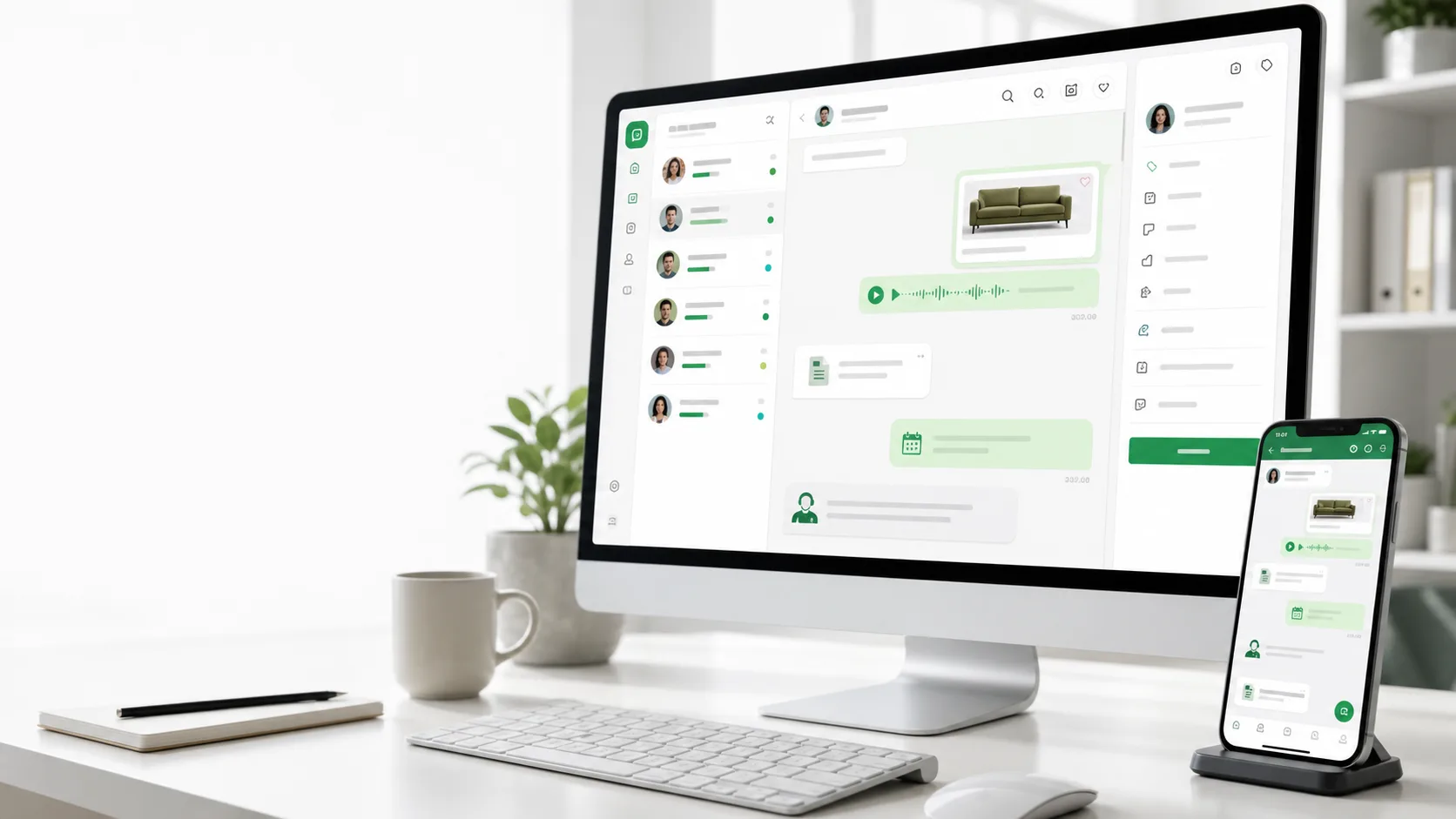
Small businesses do not need to begin with a custom software project.
Start with a simple implementation path.
Step 1: Organize Your Current WhatsApp Business Account
Before adding AI, fix the basics.
Set up your profile, catalog, greeting message, away message, labels, and quick replies. If your basic WhatsApp Business setup is disorganized, AI will only automate confusion.
Step 2: List Your 20 Most Common Customer Questions
Collect real questions from your chats.
Do not guess. Look at what customers actually ask.
Group them into categories:
- Prices
- Availability
- Booking
- Delivery
- Payment
- Location
- Product comparison
- Complaints
- Follow-up
- Refunds or exchanges
This becomes the foundation of your AI knowledge base.
Step 3: Choose One Workflow First
Do not automate everything at once.
Start with one workflow, such as:
- New lead qualification
- FAQ handling
- Appointment booking
- Order tracking
- Re-engagement after quotation
A focused workflow is easier to test and improve.
Step 4: Use an Official or Trusted Platform
Avoid unofficial bulk messaging tools that risk account restrictions or poor delivery. Choose platforms that connect through official WhatsApp infrastructure or credible business messaging providers.
Meta’s WhatsApp Cloud API documentation explains that the Cloud API is the official Meta-hosted WhatsApp Business Platform API for business messaging.
Step 5: Test With Real Conversations
Run the automation with a limited audience first.
Check:
- Did the AI understand customer questions?
- Did it give correct information?
- Did it ask too many questions?
- Did it know when to transfer to a human?
- Did customers continue the conversation?
- Did leads become easier to manage?
Improve the workflow before scaling.
What an AI WhatsApp Automation Service Should Include
If a small business hires an agency or consultant, the service should include more than connecting a bot.
A realistic package should include:
- WhatsApp Business audit
- Customer conversation mapping
- FAQ and knowledge base setup
- AI assistant configuration
- Lead qualification flow
- Human handoff rules
- Follow-up sequences
- CRM or tracking sheet integration
- Team training
- Monthly performance review
The provider should also explain pricing clearly. WhatsApp’s Business Platform Pricing page explains that platform messaging costs can depend on delivery, recipient country, and message category. Software fees and WhatsApp messaging fees should both be considered before launching automation.
When a Small Business Is Ready for AI Automation

AI WhatsApp automation makes sense when:
- You receive repeated questions every week
- Customers complain about slow replies
- Your team forgets follow-ups
- You run ads into WhatsApp
- You lose enquiries during busy hours
- You need to qualify leads before calling
- You want better customer records
- You sell products or services that require explanation
It may be too early if your business receives only a few messages per week and can manage them manually with quick replies and labels.
Start when automation solves a real bottleneck, not because AI sounds fashionable.
AI Should Improve Trust, Not Remove the Human Touch
Customers do not want to feel trapped inside a machine.
They want fast answers, clear guidance, and human help when needed. The best AI WhatsApp automation services respect that.
Use AI for repetition. Use people for judgment.
Let automation answer common questions, collect details, organize leads, and send reminders. Let your team handle negotiation, complaints, sensitive issues, complex decisions, and relationship-building.
That balance is what makes AI useful for small businesses.
AI WhatsApp automation is no longer only for large companies. A small business can start with one workflow, one customer problem, and one simple assistant that saves time immediately. The businesses that benefit most will not be those with the fanciest chatbot. They will be the ones that use automation to reply faster, qualify better, follow up consistently, and turn more WhatsApp conversations into real revenue.