
Should Buea SMEs Use Scarcity, Urgency, or Social Proof to Sell More?

You should already know people do not buy only because a product exists. They buy when they trust you, understand the value, feel the timing makes sense, and believe the decision will not embarrass or disappoint them. That is why consumer psychology marketing in Buea matters. It helps you understand what is happening in the customer’s mind before they send a WhatsApp message, walk into your shop, ask for the price, delay payment, or say, “I will get back to you.”
But psychology in marketing can easily be misunderstood. Some business owners hear words like scarcity, urgency, persuasion, and buying triggers and immediately think of manipulation. Others copy aggressive online tactics from foreign brands without adapting them to the realities of Buea’s market. They write “Only 2 left!” when they have more stock. They say “Offer ends tonight!” and continue the same offer next week. They pressure customers publicly. They exaggerate demand. For a short time, these tactics may create movement. Over time, they weaken trust.
That is a serious problem in Buea because trust travels quickly, but distrust travels faster. A customer who feels tricked may not only stop buying from you; they may quietly warn classmates, colleagues, church members, neighbors, family members, or WhatsApp groups. In a city where referrals, personal reputation, student communities, professional networks, and face-to-face credibility still influence buying decisions, persuasion must be handled carefully.
Consumer psychology marketing in Buea should not be about forcing people to buy. It should be about helping customers make better decisions with less confusion. Scarcity, urgency, social proof, and reciprocity are useful because they reduce hesitation, clarify value, and make the next step easier. Used ethically, they help you serve customers better. Used carelessly, they make your business look unreliable.
This is where the real decision comes in: should your Buea SME use scarcity, urgency, or social proof to sell more? The answer is not one-size-fits-all. Each trigger works differently. Each one fits a different customer situation. And in many cases, the most powerful trigger is the one most businesses ignore: reciprocity.
Why Consumer Psychology Marketing in Buea is Important

Consumer psychology is the study of why people choose, delay, compare, trust, reject, or buy. For a small business owner, this is not an academic topic. It affects everyday selling. It explains why someone can like your product but still postpone buying. It explains why a customer may choose a more expensive competitor because “people know them.” It explains why a buyer may ask five questions on WhatsApp and disappear, not because they are unserious, but because they are uncertain.
In Cameroon’s growing digital business environment, more customers are discovering businesses through social media, messaging apps, digital platforms, and online recommendations. The World Bank’s Cameroon Digital Economy Assessment notes that social media networks and over-the-top communication services are increasing in use, while e-commerce still faces challenges around trust, digital payments, and logistics. For Buea SMEs, that means digital visibility alone is not enough. You must also build confidence around the transaction itself.
This is especially important because many local businesses sell through conversation, not automated checkout systems. A customer may see your Instagram post, message you on WhatsApp, ask for the price, request pictures, ask whether delivery is possible, compare with another seller, and then decide based on how confident they feel. In that journey, psychology is everywhere.
The American Psychological Association has also highlighted that persuasion works through subtle mechanisms that shape how consumers recognize and respond to influence. This matters because your customers are not passive. They can sense when they are being guided, pressured, respected, or manipulated.
For a Buea SME, ethical persuasion means understanding those decision points and communicating in a way that helps the customer move forward honestly. It is not about creating false pressure. It is about answering the hidden questions behind hesitation:
“Can I trust this business?”
“Is this offer really worth it?”
“Will I regret buying now?”
“Are other people satisfied?”
“What happens if I wait?”
“Is this business serious and reliable?”
“Do they care about me after payment?”
Scarcity, urgency, social proof, and reciprocity each answer different versions of these questions.
Scarcity vs Urgency: They Are Not the Same Thing
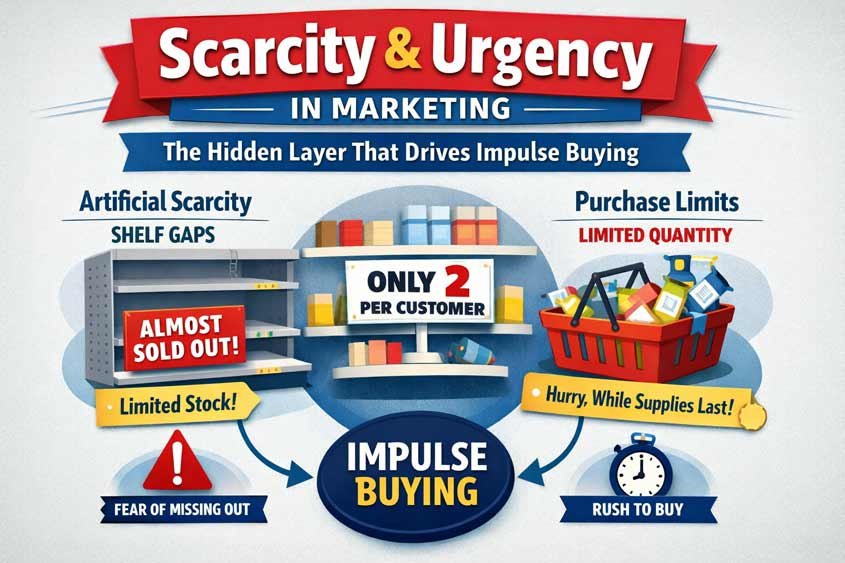
Many Buea businesses use scarcity and urgency as if they mean the same thing. They do not. Confusing them is one reason many promotions sound forced.
Scarcity is about limited availability. It tells the customer that the product, service slot, size, color, package, or opportunity is not unlimited. Urgency is about limited time. It tells the customer that the decision window will close soon.
The difference matters because each trigger creates a different type of pressure in the customer’s mind.
Scarcity says, “If I delay, this specific thing may no longer be available.”
Urgency says, “If I delay, this specific benefit may expire.”
Both can increase sales, but only when they are true, relevant, and clearly explained.
When Scarcity Works Best for Buea SMEs
Scarcity works best when your limitation is real and visible. For example, a fashion seller in Buea may have only a few pieces of a particular dress design because the supplier brought limited stock. A baker may only accept a certain number of custom cake orders per weekend because quality drops when too many orders are accepted. A beauty studio may only have three bridal makeup slots available for a specific Saturday. A phone accessories seller may have limited original chargers because the supplier shipment was small.
In these cases, scarcity is not manipulation. It is useful information. You are helping the customer understand that waiting has a real consequence.
The key is to explain the reason behind the scarcity. Do not simply write, “Few slots left.” Say why.
For example:
“We are taking only five graduation makeup bookings for Saturday because each client needs enough time for skin prep, full application, and touch-up support.”
That statement does more than create scarcity. It communicates quality control. It shows that the limit exists to protect the customer experience.
This is the ethical version of scarcity. It helps serious buyers act while also reinforcing your standards.
When Scarcity Becomes Harmful
Scarcity becomes harmful when it is fake, vague, or repeated so often that customers stop believing you.
If you say “Only 3 left” every week, people will eventually understand that your scarcity is a sales trick. If you say “Limited offer” without explaining what is limited, customers may assume you are copying generic online marketing language. If you create artificial panic around a product that is easily available everywhere, your message may feel dishonest.
In Buea, this can damage your reputation because many customers rely on informal verification. They ask friends. They compare sellers. They check whether your claims match reality. If your marketing feels exaggerated, it can reduce the very trust you need to close sales.
Scarcity should therefore be used only when something is genuinely limited:
Limited stock
Limited sizes
Limited booking slots
Limited production capacity
Limited supplier availability
Limited custom order space
Limited seats for a training or workshop
Limited early-bird bonuses
If the limitation is not real, do not use scarcity.
When Urgency Works Best for Buea SMEs
Urgency works best when time affects the customer’s benefit. It is especially useful for promotions, event-based offers, seasonal demand, registration deadlines, delivery planning, and service scheduling.
For example, a training center in Buea can use urgency when registration closes before a new cohort starts. A restaurant can use urgency for a lunch package available only between 12 p.m. and 3 p.m. A photographer can use urgency for graduation photo bookings before ceremony week. A laundry service can use urgency for same-day pickup cut-off times. A real estate agent can use urgency when inspection slots are only available on specific days.
The strongest urgency messages are specific. Instead of saying “Hurry now,” explain what happens if the customer waits.
For example:
“Orders confirmed before 10 a.m. qualify for same-day delivery around Molyko, Great Soppo, and Bonduma. Orders confirmed after 10 a.m. move to the next delivery round.”
This is not aggressive. It is operationally clear. The customer understands the timing, the benefit, and the consequence of delay.
When Urgency Feels Manipulative
Urgency becomes manipulative when every message sounds like an emergency. If your brand is always shouting “Last chance,” “Final offer,” “Don’t miss out,” and “Today only,” customers become tired. They may also begin to question whether your normal prices are real.
This is especially risky for SMEs that depend on repeat buyers. If customers feel pressured during every interaction, they may buy once but avoid future engagement. A short-term sale is not worth long-term suspicion.
Urgency should be used when there is a genuine deadline:
A promotion end date
A booking cut-off
A delivery cut-off
An event date
A supplier order deadline
A seasonal demand window
A limited payment plan period
A class or cohort start date
If there is no real time limit, use clarity instead of urgency. Tell customers what to do next, but do not pretend there is a deadline.
Scarcity vs Urgency: Which One Should You Use?
The simplest way to decide is to ask: what is the real reason the customer should act now?
If the product or service itself may run out, use scarcity.
If the benefit, price, bonus, delivery option, or registration window will expire, use urgency.
If neither is true, do not force either trigger. Use education, comparison, social proof, or reciprocity instead.
For example, if you sell imported shoes and only have two pairs left in size 42, scarcity is appropriate. If you are offering free delivery until Friday, urgency is appropriate. If you have enough stock and no deadline, it is better to explain quality, comfort, durability, customer results, or use cases.
This distinction protects your credibility. It also makes your marketing more precise.
A Practical Decision Framework for Buea SMEs
Use scarcity when your message is about availability:
“Only 4 Saturday slots left.”
“Size 39 is almost sold out.”
“We can accept 6 custom orders this week.”
“The supplier has confirmed this color will not return this month.”
Use urgency when your message is about timing:
“Registration closes on Friday.”
“Same-day delivery closes at 10 a.m.”
“Promo price ends Sunday night.”
“Orders for graduation week close on May 20.”
Use social proof when your message is about trust:
“Here is what recent customers said.”
“See before-and-after results.”
“This package is popular with student entrepreneurs.”
“A local business used this service to improve their customer response time.”
Use reciprocity when your message is about value before purchase:
“Here is a free checklist to help you choose the right package.”
“Send us your room size and we will suggest the best curtain measurement.”
“Here are three questions to ask before buying a used phone.”
“We will help you compare options before you decide.”
The best trigger is the one that matches the customer’s real uncertainty.
Social Proof for Businesses With Small Followings
Many Buea SMEs avoid social proof because they think it only works for brands with thousands of followers. That is a mistake. Social proof is not about looking famous. It is about reducing perceived risk.
A customer wants to know: “Have other people trusted this business and had a good experience?”
You do not need 20,000 followers to answer that question. You need credible evidence.
CXL’s explanation of Cialdini’s persuasion principles describes social proof as the influence people feel when they see others validating a decision. In practical marketing, this means customers are more comfortable taking action when they can see that people like them have already done so.
For a Buea SME, “people like them” may mean students, parents, young professionals, small business owners, brides, landlords, tenants, church members, tech workers, university staff, or neighborhood customers. The closer the proof feels to the buyer’s own situation, the stronger it becomes.
Why Small, Specific Social Proof Often Beats Big Numbers
A testimonial from a real customer in Buea can be more persuasive than a vague claim that “many people love us.” Specificity creates believability.
Compare these two statements:
“Many customers trust us.”
“Grace, a final-year student in Molyko, ordered our graduation package and said the delivery came earlier than expected.”
The second statement feels stronger because it gives context. It helps another student imagine the experience. It also answers practical concerns: timing, reliability, and relevance.
This is important because many SME customers are not only buying the product. They are buying confidence that the business will not disappoint them.
Types of Social Proof Buea SMEs Can Use Without Large Followings
If your following is small, focus on proof quality, not audience size.
1. Customer Testimonials
Ask satisfied customers for short feedback after delivery. Do not wait until months later. The best time to request a testimonial is when the customer has just expressed satisfaction.
You can ask:
“Thank you for ordering. If you are happy with the service, please send us one sentence about your experience. It helps new customers know what to expect.”
Make it easy. Many customers will not write a long review, but they can send one sentence.
2. Screenshot Proof
WhatsApp screenshots can be powerful, but they must be used responsibly. Always remove phone numbers, private details, addresses, payment information, and anything personal. If possible, ask permission before posting.
A screenshot that says “I received it, thank you, the quality is good” can reassure new buyers more than a polished design flyer.
3. Before-and-After Evidence
This works well for beauty services, cleaning businesses, interior decor, tailoring, fitness, branding, web design, photography, and repair services. Before-and-after content gives visual proof that your work creates a real transformation.
The mistake many SMEs make is posting the result without explaining the problem. Add context:
“The client wanted a simple birthday setup for a small indoor space. We used a compact design to keep the room open while still making the backdrop photo-friendly.”
That explanation turns a picture into persuasive proof.
4. Process Proof
Customers trust what they can understand. Show how you package orders, prepare meals, clean tools, inspect products, handle bookings, confirm payments, or deliver items. Process proof is especially useful when customers worry about hygiene, quality, authenticity, or reliability.
For example, a food business can show preparation standards. A skincare seller can explain product sourcing. A phone vendor can show testing steps before delivery. A tailor can show fitting stages.
This type of proof is powerful because it shows seriousness before the customer even pays.
5. Community Proof
Buea has strong community networks. If your business has served a student association, church group, office team, event, local organization, or professional community, that can become social proof. The point is not to name-drop carelessly. The point is to show that real groups have trusted your work.
For example:
“We handled snack packs for a 35-person department meeting in Buea and delivered before the scheduled start time.”
This communicates capacity, reliability, and local relevance.
6. Repeat Customer Proof
Repeat purchases are one of the strongest forms of social proof. If customers come back, it means the first experience was good enough to repeat.
You can say:
“Most of our weekend cake orders now come from returning customers and referrals.”
Only use this if it is true. If it is true, it is more persuasive than a generic testimonial because it shows ongoing trust.
How to Use Social Proof Without Looking Desperate
Social proof should feel natural, not like begging for validation. Avoid overloading every post with “Our customers love us.” Instead, integrate proof into useful content.
For example, if you sell hair products, do not only post testimonials. Post a customer question, explain the answer, then include proof.
“Many customers ask whether this oil works better for protective styles or loose natural hair. Based on feedback from buyers, most use it during protective styling because it helps reduce dryness between wash days.”
This approach teaches and proves at the same time.
If you run a service business, combine explanation with evidence:
“One reason we limit weekend bookings is that each client needs enough time. Here is feedback from a client who appreciated not being rushed.”
Now your social proof supports your positioning. It is not decoration. It strengthens your sales argument.
The Reciprocity Trigger Most Brands Never Use
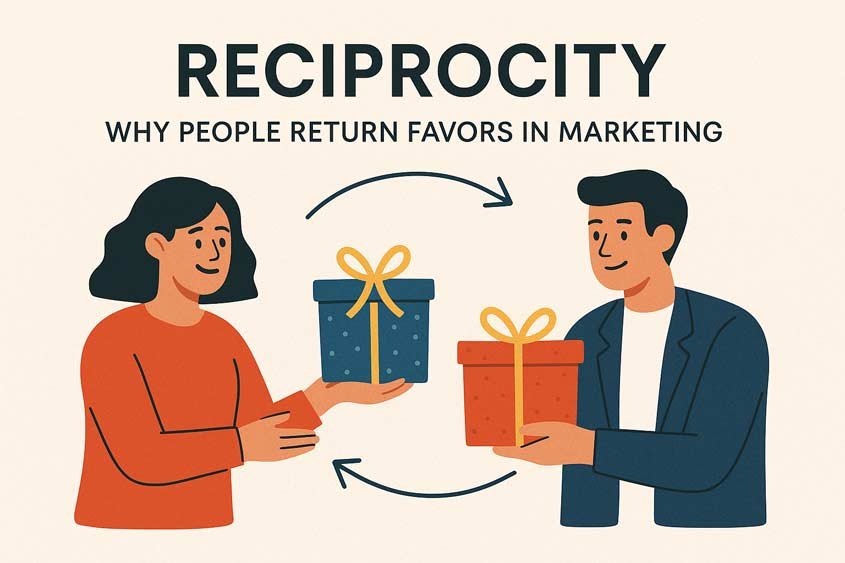
Reciprocity is one of the most underused psychological buying triggers among Buea SMEs. It is also one of the most ethical when used properly.
Reciprocity means people are more likely to respond positively when they have first received something useful, thoughtful, or valuable. In marketing, this does not mean bribing customers. It means helping before asking.
Cialdini’s persuasion framework includes reciprocity as a core principle: when people receive value, they often feel more open to giving attention, trust, or action in return.
For Buea SMEs, reciprocity can be especially powerful because many customers are tired of being sold to aggressively. A business that educates, guides, simplifies, or protects the customer stands out.
Why Reciprocity Works So Well in Trust-Based Markets
In a trust-based market, customers pay attention to how you behave before money enters the conversation. If your first interaction is pressure, they become defensive. If your first interaction is useful, they relax.
This matters on WhatsApp. Many customers begin with questions. They may ask, “How much?” but behind that question are other concerns: “Is this worth it?” “Will this person insult me if I do not buy?” “Can I trust the quality?” “Will they disappear after payment?” “Do they understand what I need?”
Reciprocity helps you answer those concerns before pushing for the sale.
For example, if you sell laptops, you can share a short guide: “Three things to check before buying a used laptop in Buea.” If you sell skincare, you can explain how to avoid mixing products that irritate the skin. If you sell event decor, you can share a budget planning checklist. If you offer printing services, you can give students a file preparation guide to avoid last-minute formatting issues.
This kind of value builds authority. It also makes customers feel that your business is not only interested in collecting money.
The Reciprocity Mistake Many SMEs Make
Many businesses think reciprocity means giving discounts. It does not.
Discounts can be useful, but they are not the strongest form of reciprocity. In fact, constant discounts can train customers to wait, bargain, or doubt your normal pricing. Better reciprocity gives the customer clarity, confidence, convenience, or reduced risk.
Examples include:
A free checklist
A short buyer’s guide
A sizing recommendation
A product comparison
A maintenance tip
A sample consultation
A delivery planning reminder
A simple template
A first-time customer orientation
A post-purchase care guide
These forms of value do not necessarily reduce your price. They increase your usefulness.
Reciprocity Examples for Different Buea SMEs
A fashion seller can offer a free size guide for customers ordering through WhatsApp. This reduces wrong-size complaints and helps customers buy with confidence.
A food vendor can send a weekly menu planning reminder to office workers and students. This makes ordering easier and keeps the business top of mind.
A beauty studio can share a “how to prepare your skin before makeup” guide. This improves the final result and shows professionalism.
A phone accessories seller can explain the difference between fast-charging cables and ordinary cables. This helps customers avoid buying based only on price.
A real estate agent can give a checklist of questions to ask before paying inspection fees or deposits. This builds trust in a sector where customers are often cautious.
A digital marketer can offer a simple audit of a business’s Instagram bio, WhatsApp catalog, or landing page. This demonstrates expertise before asking for a paid project.
A laundry service can share clothing care tips for suits, gowns, and delicate fabrics. This positions the business as careful and knowledgeable.
In each case, reciprocity works because the customer receives useful guidance before being asked to commit.
How to Combine Scarcity, Urgency, Social Proof, and Reciprocity
The strongest marketing does not rely on one trigger. It uses the right trigger at the right stage of the buying journey.
A customer who does not understand your offer needs education, not urgency.
A customer who likes your offer but does not trust you needs social proof, not pressure.
A customer who trusts you but is delaying unnecessarily may need urgency.
A customer who wants a limited item may need scarcity.
A customer who is still comparing options may need reciprocity through guidance.
The mistake is using urgency too early. Many SMEs try to rush customers before they have created enough trust. That is why messages like “Pay now before it ends” often fail. The customer has not yet understood why the offer matters.
A better sequence is:
Give value through reciprocity.
Build confidence through social proof.
Clarify the offer.
Use scarcity or urgency only if there is a real limit.
Make the next step simple.
For example, suppose you run a training program in Buea for small business owners who want to improve WhatsApp marketing.
A weak message would be:
“Register now! Limited seats! Offer ends soon!”
A stronger message would be:
“Many small businesses lose customers on WhatsApp because their replies are slow, unclear, or too focused on price. We created a free checklist to help you audit your current WhatsApp sales process. Our next practical training starts on June 10, and registration closes June 7 so we can review each participant’s business before class. We are taking 20 participants only because the session includes live feedback. Here is what past participants said after applying the framework.”
This message uses all four triggers ethically:
Reciprocity: free checklist
Urgency: registration closes June 7
Scarcity: 20 participants only
Social proof: past participant feedback
It does not feel manipulative because each trigger has a reason.
Ethical Persuasion: The Line Buea SMEs Should Not Cross
Ethical persuasion respects the customer’s ability to choose. Manipulation tries to remove that ability.
This distinction matters. Your goal is not to make customers feel foolish for delaying. Your goal is to help them understand whether buying now is truly in their interest.
A good persuasion message gives clear information:
What is available
Who it is for
Why it matters
What result it helps create
What the customer should expect
What happens if they wait
What proof supports the claim
What step to take next
A manipulative message hides or distorts information:
Fake deadlines
False scarcity
Exaggerated results
Hidden conditions
Public pressure
Fear-based claims
Fake testimonials
Misleading before-and-after images
Unclear refund or exchange terms
In Buea, where business reputation is deeply connected to personal credibility, manipulation is expensive. It may win a sale but lose a relationship. For SMEs, relationships are assets. They lead to referrals, repeat purchases, partnerships, event bookings, and word-of-mouth growth.
How to Apply These Triggers on WhatsApp
WhatsApp is one of the most important sales environments for many Buea SMEs. It is where interest becomes conversation and conversation becomes payment. But many businesses use WhatsApp only to send prices and flyers. That leaves too much persuasion work undone.
Use Scarcity on WhatsApp With Specific Details
Instead of:
“Few left. Hurry.”
Use:
“We currently have 3 pieces left in medium and 1 in large. The supplier has not confirmed restock for this color yet.”
This gives the customer real decision information.
Use Urgency With Clear Cut-Offs
Instead of:
“Pay now.”
Use:
“To receive it today around Molyko, payment confirmation needs to come before 11 a.m. After that, delivery moves to tomorrow.”
This sounds professional, not pushy.
Use Social Proof in Conversation
Instead of waiting for customers to ask whether you are reliable, send proof naturally.
For example:
“This package is popular with students preparing for graduation week. I can send you two recent customer reviews if you would like to see feedback before choosing.”
This gives the customer control. It also reduces suspicion.
Use Reciprocity Before Quoting the Price
If a customer asks, “How much?” do not only send the price. Add guidance.
For example:
“The basic package is 15,000 FCFA and the premium package is 25,000 FCFA. If you are using it for a small indoor event, the basic package may be enough. If you want stronger photo quality and a fuller backdrop, the premium option will serve you better.”
This is reciprocity because you are helping the customer choose wisely, not simply pushing the higher price.
How to Apply These Triggers on Instagram and Facebook
On Instagram and Facebook, your content must do more than display products. It must reduce uncertainty. Customers scrolling through your page are silently judging whether your business looks active, credible, consistent, and safe to contact.
Scarcity Content
Use scarcity posts when stock, slots, or capacity are genuinely limited.
Example:
“We are accepting 6 custom dress orders this week to maintain fitting quality. Once the slots are filled, new orders move to next week.”
This positions scarcity as a quality decision.
Urgency Content
Use urgency posts for deadlines and time-sensitive benefits.
Example:
“Graduation photo bookings for Saturday close on Thursday evening so we can finalize the shooting schedule and location plan.”
This explains the operational reason behind the deadline.
Social Proof Content
Post testimonials, customer stories, delivery confirmations, transformation posts, and repeat-order highlights. But always add context. Do not only post screenshots. Explain what the proof demonstrates.
Example:
“This customer needed a last-minute birthday cake delivered before 4 p.m. We confirmed the design early, kept the decoration simple, and delivered before the event started.”
Now the proof communicates reliability, speed, and expectation management.
Reciprocity Content
Create educational posts that help customers make better decisions.
Examples:
“How to choose the right cake size for 10, 20, or 30 guests”
“What to check before paying for a room in Buea”
“How to prepare your files before printing your project”
“How to choose a phone charger that will not damage your battery”
“What to ask before booking a makeup artist for graduation”
These posts attract serious buyers because they solve real problems.
The Best Trigger Depends on Your Business Model
Different businesses should prioritize different psychological triggers.
Product-Based SMEs
If you sell clothes, accessories, food items, electronics, cosmetics, books, or household goods, scarcity can work well when stock is genuinely limited. Social proof is also important because customers want to know whether the product quality matches the pictures.
Use scarcity for stock limits. Use social proof for quality reassurance. Use reciprocity to help customers choose correctly.
Service-Based SMEs
If you offer makeup, photography, laundry, repairs, tutoring, consulting, event planning, cleaning, design, or marketing services, urgency and scarcity often work around time and capacity. You cannot serve unlimited people at once.
Use scarcity for booking slots. Use urgency for scheduling deadlines. Use social proof for trust. Use reciprocity to show expertise before the customer pays.
Training and Coaching Businesses
If you run classes, workshops, bootcamps, or coaching programs, urgency and scarcity can both work, but only when linked to learning quality.
Do not say “limited seats” without reason. Explain that smaller groups allow feedback, practice, review, or better interaction.
Use reciprocity heavily through free lessons, checklists, mini-audits, sample exercises, or diagnostic questions.
Food and Hospitality Businesses
For food vendors, restaurants, snack businesses, and catering services, urgency often works better than scarcity. Customers need to know order cut-off times, delivery windows, and event booking deadlines.
Social proof is also essential because food purchases involve taste, hygiene, and reliability. Process proof can be very persuasive here.
Real Estate and Accommodation Businesses
For agents, landlords, hostels, and property managers, social proof and trust signals matter more than pressure. Customers are cautious because property decisions involve money, safety, and legal risk.
Use social proof, clear documentation, viewing processes, and reciprocity through checklists. Use urgency only when inspection schedules or availability are genuinely time-sensitive.
A Simple Ethical Persuasion Formula for Buea SMEs
If you want a practical formula, use this:
Value first. Proof second. Limit third. Action last.
Value first means you help the customer understand the problem or choice.
Proof second means you show evidence that your business can deliver.
Limit third means you explain any real scarcity or urgency.
Action last means you make the next step clear.
For example:
“Choosing the wrong cake size can make an event feel underplanned or waste money. For 20 guests, our medium size usually works well if there are other snacks available. Last weekend, we used this size for a small birthday gathering in Buea Town, and the customer said it was enough for the group. We have two delivery slots left for Saturday. To reserve one, send your preferred flavor and delivery area.”
This message is persuasive because it is useful, credible, specific, and clear.
It does not shout. It guides.
Common Mistakes to Avoid
Mistake 1: Using Fake Scarcity
Fake scarcity may create quick sales, but it weakens trust. If customers discover the product was never limited, they may question everything else you say.
Mistake 2: Making Every Offer Urgent
If every offer is urgent, none of them feels urgent. Save urgency for real deadlines.
Mistake 3: Thinking Social Proof Requires Fame
You do not need a large following. You need believable evidence from real customers, real work, and real results.
Mistake 4: Ignoring Reciprocity
Many SMEs only post when they want sales. This trains customers to see the brand as self-interested. Helpful content makes your business more memorable and trusted.
Mistake 5: Copying Foreign Marketing Without Local Adaptation
Some global marketing tactics assume customers will buy directly from a website with card payment and automated checkout. Many Buea customers still want conversation, reassurance, negotiation, delivery clarity, and trust before payment. Adapt the psychology to the buying environment.
Mistake 6: Overusing Fear
Fear-based marketing can damage your brand. Instead of making customers feel anxious, help them feel informed.
Mistake 7: Hiding Conditions
If a discount, delivery promise, booking slot, or bonus has conditions, state them clearly. Hidden conditions create conflict after payment.
How to Measure Whether These Triggers Are Working
Do not judge your marketing only by likes. Likes are attention, not necessarily buying intent. A post can receive many likes and produce few sales. Another post can receive modest engagement but bring serious WhatsApp inquiries.
Track practical signals:
How many people message after a post?
How many inquiries become payments?
Which posts generate serious questions?
Which testimonials lead to new conversations?
Which offers create repeat purchases?
Which deadlines increase early payment?
Which educational posts attract better-quality leads?
Which WhatsApp scripts reduce back-and-forth confusion?
This helps you understand which psychological trigger works for your audience.
For example, if urgency posts generate many inquiries but few payments, customers may feel interested but not convinced. Add more proof. If social proof posts generate trust but slow action, add a real deadline or booking limit. If educational posts get saved and shared but do not convert, add a clearer next step.
Marketing psychology is not guesswork. It becomes stronger when you observe customer behavior.
So, Which Trigger Should Buea SMEs Use Most?
If your business is still building trust, start with reciprocity and social proof.
If customers already trust you but delay decisions, add urgency.
If your product, service, or capacity is genuinely limited, use scarcity.
For many Buea SMEs, the best order is not scarcity first. It is reciprocity first. Give customers useful guidance. Then show proof. Then explain the real reason to act now.
This approach fits the local market better because it respects the customer relationship. It does not treat buyers as targets to pressure. It treats them as people making decisions with limited money, competing priorities, and a need for confidence.
Scarcity can sell. Urgency can move people. Social proof can build trust. But reciprocity can make customers feel that your business is on their side before they buy.
That is the deeper advantage.
In a market where reputation matters, the most powerful persuasion is not the loudest message. It is the message that helps the customer think clearly, trust confidently, and act without regret.