How to Avoid Costly Digital Marketing Mistakes in Cameroon
Digital marketing is not always expensive. Bad digital marketing is expensive.

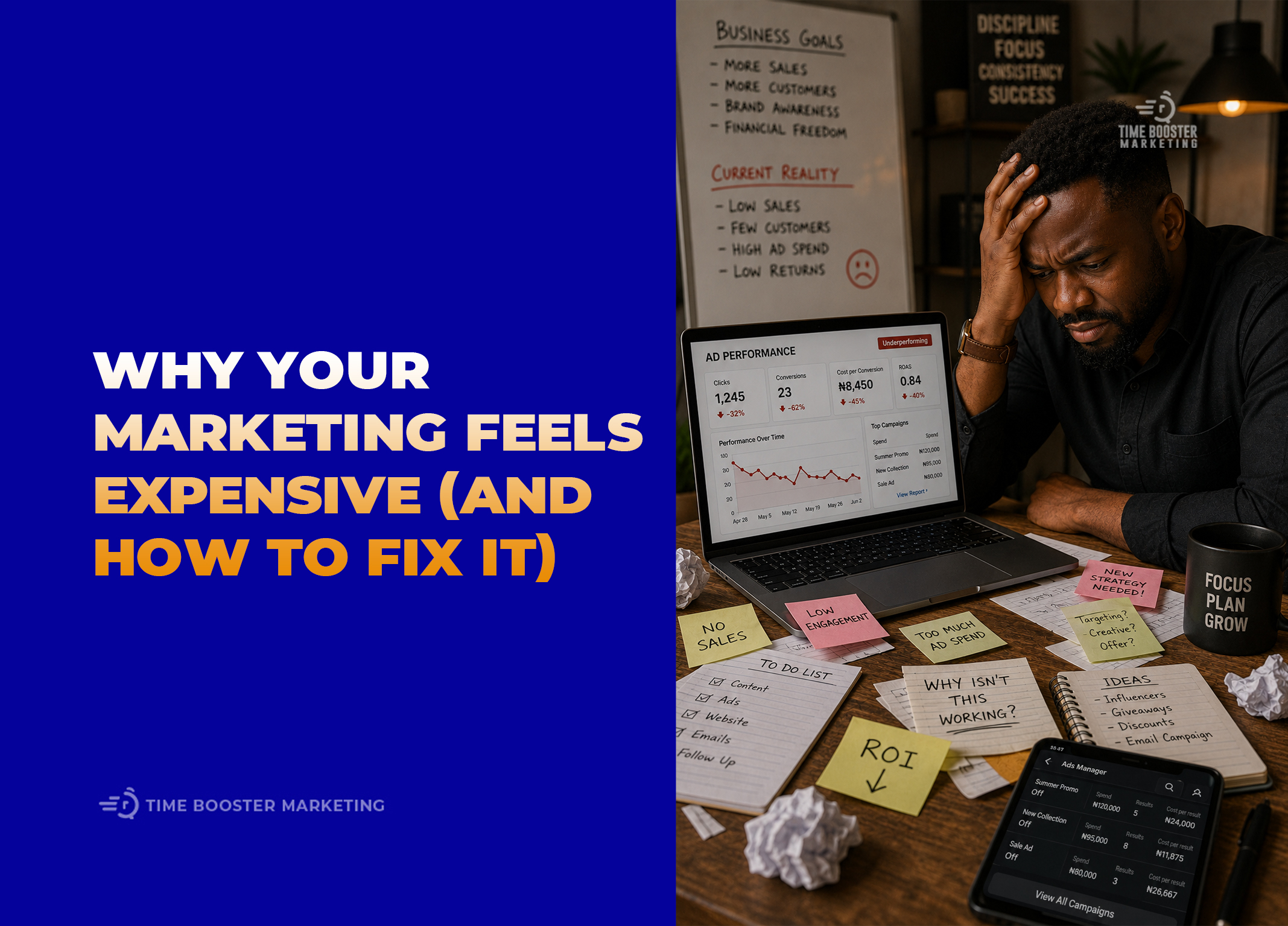
Many Cameroonian businesses have paid for boosted posts, flyers, content designs, influencer mentions, or Facebook ads and later concluded, “This online marketing thing does not work.” But often, the channel was not the real problem. The problem was that the campaign had no clear goal, no defined audience, no tracking, no follow-up system, and no patience.
That matters because customers in Cameroon are already online. DataReportal reported 12.6 million internet users in Cameroon in October 2025, with internet penetration at 41.9%. The opportunity is real, but access to digital platforms does not automatically create sales. Strategy is what turns visibility into enquiries, trust, and conversion. (DataReportal – Global Digital Insights)
Mistake 1: Posting Randomly and Calling It Marketing
Random posting is one of the biggest digital marketing mistakes in Cameroon.
A business posts a food photo today, a motivational quote tomorrow, a blurry product image next week, then disappears for ten days. After one month, the owner says, “Social media is not bringing customers.”
The issue is not social media. The issue is that the content has no job.
Every post should help the customer move closer to a decision. A boutique post should answer questions about size, price, styling, delivery, and availability. A restaurant post should make the customer hungry, show the menu, clarify location, and make ordering easy. A real estate post should explain location, price range, documents, viewing process, and trust proof.
Posting just to appear active wastes effort. Posting with a sales journey in mind builds confidence.
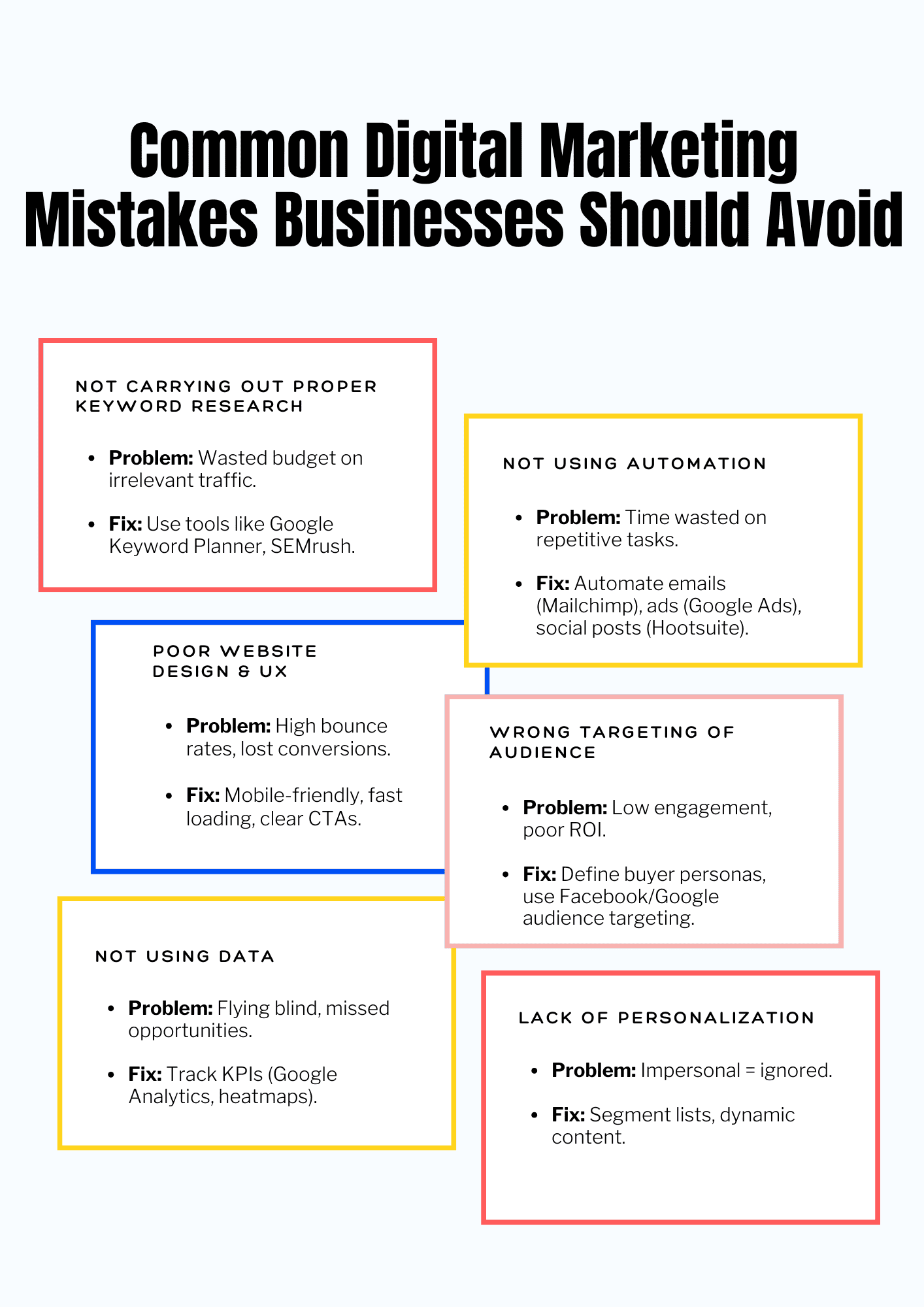
Mistake 2: Running Ads Without Audience Targeting
Many businesses waste money because they promote posts to “everyone.”
But everyone is not your customer.
A salon in Bonamoussadi does not need to reach every person in Cameroon. A luxury event planner does not need students with no event budget. A children’s school does not need people outside its realistic catchment area. A real estate company selling land near Kribi needs people interested in property, investment, relocation, or construction—not random engagement.
Meta’s ad targeting tools allow advertisers to define audiences using details such as location, interests, gender, and other available traits, which means businesses can avoid spending money on people who are unlikely to buy. (facebook.com)
Good targeting starts with simple questions: Who buys this? Where are they? What do they care about? What problem are they trying to solve? What budget level makes sense? What language, tone, or proof would make them trust us?
Without these answers, ads become digital gambling.
Mistake 3: Having No Clear Campaign Goal
“More visibility” is not a strong enough goal.
Visibility for what? More restaurant bookings? More WhatsApp enquiries? More property inspections? More course registrations? More salon appointments? More walk-ins? More repeat purchases?
A campaign for awareness is different from a campaign for leads. A campaign for leads is different from a campaign for direct sales. A campaign for repeat customers is different from a campaign for launching a new product.
When the goal is unclear, the business cannot judge whether the campaign worked. Likes may look good, but they do not matter if the goal was bookings. Reach may look impressive, but it does not matter if nobody asked for prices.
A better goal sounds like this: “Generate 40 WhatsApp enquiries this month for bridal makeup in Douala.” Or: “Get 25 qualified leads for land visits in Yaoundé.” Or: “Increase lunch delivery orders from office workers within 5 km.”
Clear goals protect your budget because they tell your content, ads, and follow-up what to focus on.
Mistake 4: Spending on Ads Before Fixing the Offer
Some businesses do not have a marketing problem. They have an offer problem.
The ad may bring attention, but the offer does not convert. The price is unclear. The product photos are weak. The caption does not explain the benefit. The WhatsApp response is slow. The customer has to ask too many basic questions. The business says “DM for price” but replies hours later.
In Cameroon’s trust-based buying environment, customers often want reassurance before paying. They want to know whether you are real, reliable, reachable, and clear. If your offer does not answer those fears, more ad spend will only expose the weakness faster.
Before paying for traffic, check the basics. Is the product clear? Is the price or price range available? Is the location visible? Is there proof from past customers? Is the next step obvious? Can the customer contact you easily?
A weak offer makes digital marketing feel expensive because you pay for attention but fail to convert it.
Mistake 5: Not Tracking What Works
Many businesses cannot tell which post, ad, platform, or message brought the customer.
That is a serious problem. Without tracking, you may keep paying for what looks popular while ignoring what actually brings enquiries.
Google Analytics reports can help businesses monitor traffic, investigate data, and understand users and their activity, especially when campaigns send people to a website, booking page, or landing page. (Google Help) Google also provides a traffic acquisition report that helps show where website and app visitors are coming from, including new and returning users. (Google Help)
For Cameroonian SMEs, tracking does not have to be complicated. Ask every new customer, “How did you hear about us?” Use different WhatsApp links for different campaigns. Save leads by source. Track how many enquiries became paying customers. Note which posts generated serious conversations, not just comments.
If you do not track, you cannot improve. You can only guess.
Mistake 6: Expecting Results Too Quickly
Another costly mistake is impatience.
Some business owners run one ad for three days, post five times, or publish one article, then decide digital marketing does not work. But not every channel works at the same speed.
Facebook and Instagram ads can produce faster visibility, but they still need testing. WhatsApp marketing can convert quickly if the contact list is warm. Referrals take time because they depend on trust. SEO takes longer, but it can compound if the content answers real search demand.
Google’s SEO Starter Guide explains that SEO involves helping search engines find, crawl, index, and understand content. That kind of visibility is built through useful pages, technical accessibility, and relevance over time, not one rushed post. (Google for Developers)
Patience does not mean waiting blindly. It means giving each channel enough time, data, and adjustment before judging it.
Mistake 7: Measuring Attention Instead of Business Outcomes
Likes are not useless, but they are not the final result.
A post with many likes but no enquiries may be entertaining, not profitable. A video with many views but no clear offer may build awareness but fail to generate sales. A campaign with high reach but weak WhatsApp conversations may need better messaging.
The better question is not, “Did people see it?” The better question is, “Did the right people take the right next step?”
For a restaurant, that next step may be calls, reservations, delivery orders, or private event enquiries. For a boutique, it may be product saves, WhatsApp messages, fitting appointments, or repeat orders. For a real estate business, it may be qualified calls, property viewings, and document requests.
Digital marketing becomes less expensive when you stop paying for empty attention and start measuring movement toward revenue.
Mistake 8: Ignoring Follow-Up
Many Cameroonian businesses lose money after the lead arrives.
The customer sends a WhatsApp message. Nobody replies quickly. The response is too short. The price is sent without explanation. The customer asks another question and is forgotten. Two days later, the business says the campaign failed.
But the campaign did its job. The sales process failed.
Follow-up is where marketing becomes money. Use WhatsApp labels. Save customer names. Follow up with people who asked for prices. Send reminders before events, holidays, salary periods, school registration deadlines, or appointment slots. Do not harass people, but do not abandon warm interest.
A lead that is not followed up is wasted spend.
How Cameroonian Businesses Can Spend Smarter
Start with one clear offer, one audience, one channel, and one measurable goal.
For example, a salon could promote one bridal package to women in Douala planning weddings, send leads to WhatsApp, use quick replies, track enquiries, and follow up within 24 hours. That is smarter than posting random hairstyles for everyone and hoping someone books.
A restaurant could promote office lunch delivery within a limited area, show prices clearly, post daily menus before lunch, and track orders by source. A school could run registration content with deadlines, parent testimonials, location details, and a WhatsApp enquiry system.
Digital marketing feels expensive when every activity is disconnected. It becomes affordable when the message, audience, channel, and follow-up work together.
The Channel Is Usually Not the Problem
Facebook is not too expensive. WhatsApp is not too informal. SEO is not too slow. Content marketing is not useless. Ads are not automatically wasteful.
The real problem is usually poor planning.
When Cameroonian businesses post randomly, target vaguely, avoid tracking, change direction too quickly, and set unclear goals, even a small budget disappears fast. But when the campaign is focused, measured, and connected to a real customer journey, digital marketing becomes easier to trust.
You do not need to spend like a big brand to market well. You need to stop paying for confusion. Clear goals, strong offers, targeted audiences, simple tracking, patient testing, and serious follow-up can make the same budget work much harder.