
How to Build Trust in Digital Marketing With Simple Proof and Transparency
Trust in digital marketing is not built by saying, “We will make your business visible.”
It is built by showing the client what you are doing, why you are doing it, what progress looks like, and what results can realistically be expected.
For many Cameroonian businesses, this matters because digital marketing still feels risky. A business owner may have boosted posts before and seen likes but no sales. They may have paid someone to “manage Facebook” but received no report. They may have hired a content creator who posted nice designs without explaining how the content would attract customers.
That fear is reasonable. Cameroon has a growing digital market, but business owners still need practical proof before they feel confident investing. DataReportal reported 12.6 million internet users in Cameroon at the end of 2025, showing that digital channels matter, but opportunity alone does not guarantee results. Businesses still need strategy, measurement, and transparency. (DataReportal – Global Digital Insights)
Why Transparency Matters in Digital Marketing
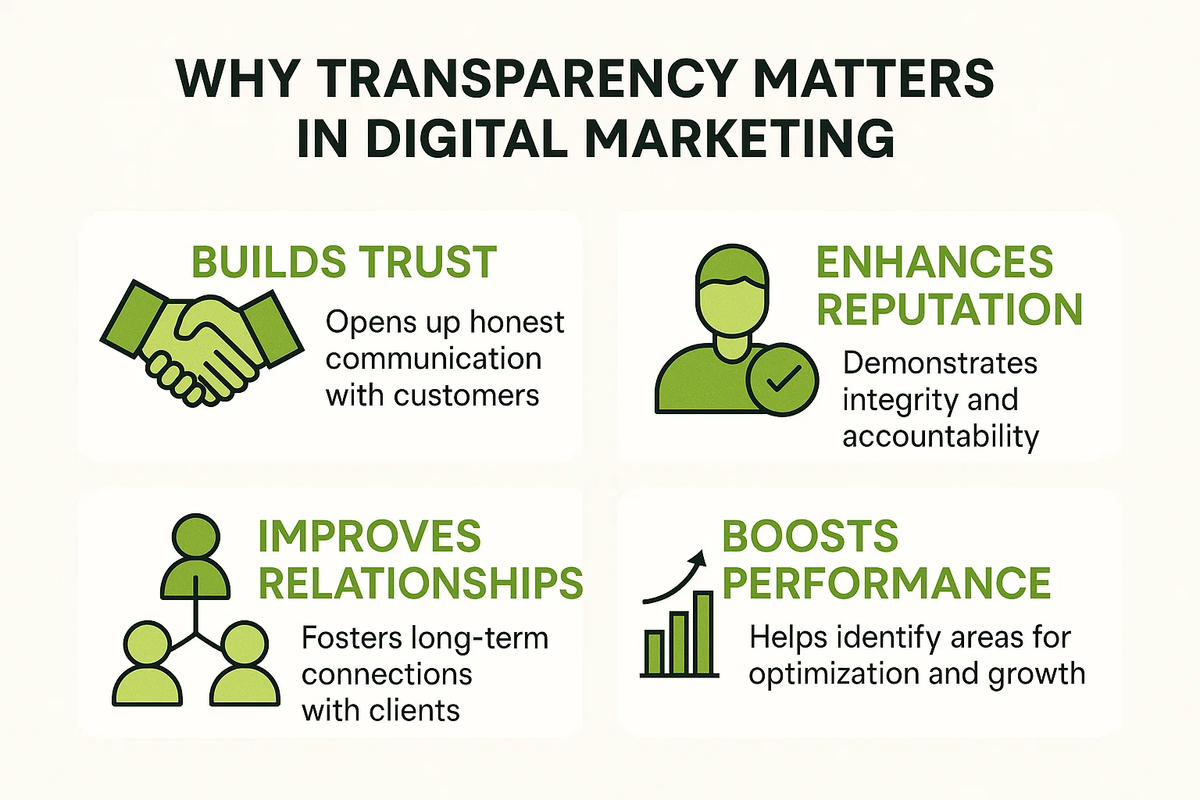
Transparency reduces fear because it replaces mystery with clarity.
A client should not have to guess whether work is happening. They should not have to chase for screenshots. They should not hear only “people are engaging” without seeing what that engagement means. Good digital marketing makes the process visible enough for the client to understand without needing to become a marketing expert.
For a restaurant, transparency means knowing which posts brought enquiries, which menu offer attracted messages, and which audience responded. For a boutique, it means seeing which product photos, captions, or WhatsApp links generated interest. For a real estate business, it means tracking leads, viewing requests, location interest, and follow-up quality.
A trustworthy marketer does not hide behind jargon. They explain the work in business language: visibility, enquiries, bookings, leads, sales conversations, repeat customers, and cost per result.
Start With Clear Campaign Goals
Before content, ads, or posting schedules, the campaign goal must be clear.
A weak goal is: “We want more visibility.”
A better goal is: “We want 30 qualified WhatsApp enquiries this month for bridal makeup in Douala.”
That difference matters because every campaign needs a measurable direction. Visibility campaigns, lead generation campaigns, sales campaigns, and customer retention campaigns are not the same. They require different content, budgets, messages, and reports.
For example, a new restaurant may need awareness and foot traffic. A salon may need bookings. A school may need registration enquiries. A real estate company may need qualified leads with budget and location preferences. A boutique may need product reservations through WhatsApp.
Clear goals also protect the client from false promises. No serious marketer should guarantee exact sales from a small campaign without understanding budget, offer, pricing, competition, location, and sales follow-up.
Use Reporting Practices Clients Can Understand

Reporting is one of the strongest ways to build trust in digital marketing.
A good report should not only show numbers. It should explain what the numbers mean and what action comes next.
Meta Ads Reporting allows advertisers to create, customize, export, share, and schedule reports based on selected campaign performance parameters. That means there is no serious excuse for running Facebook or Instagram ads without some form of performance reporting. (facebook.com)
For website marketing, Google Analytics reports can help businesses monitor traffic, investigate data, and understand users and their activity. This is useful when a campaign sends people to a website, booking page, product page, or blog article. (Google Help)
A simple monthly report for a Cameroonian SME should include:
Who the campaign reached, how many people engaged, how many enquiries came in, what content performed best, what money was spent, what results were achieved, what problems appeared, and what will change next month.
The most important part is interpretation. A report that says “Reach: 20,000” is incomplete. A better report says, “The campaign reached 20,000 people, but most enquiries came from women aged 25–34 in Douala, so next month we should shift more budget toward that audience and test a stronger WhatsApp booking message.”
That is the kind of reporting that builds client confidence.
Show Proof of Work, Not Just Final Results
In Cameroon’s trust-based business culture, proof matters.
Clients want to know that the marketer is not just posting randomly or spending ad money without structure. Proof of work can include content calendars, draft captions, ad screenshots, targeting summaries, keyword lists, analytics screenshots, campaign notes, approval records, and weekly progress updates.
This does not mean overwhelming the client with every technical detail. It means giving enough visibility to show that the service is real, organized, and intentional.
For example, a marketer can send a weekly update like:
“This week we published three posts, tested two ad creatives, responded to 18 enquiries, and found that the price-focused caption generated more WhatsApp clicks than the general awareness post. Next week, we will test a testimonial-led version.”
That kind of communication makes the client feel involved without slowing down the work.
Use Content Approvals to Protect the Brand
Content approvals are essential because marketing mistakes can damage trust quickly.
A restaurant does not want the wrong price posted. A school does not want incorrect registration dates shared. A boutique does not want unavailable stock promoted. A real estate firm does not want property details misrepresented. A salon does not want client photos published without permission.
A trustworthy digital marketing process includes an approval system before publishing sensitive content. This can be simple: a WhatsApp message, Google Doc, shared calendar, or approval folder. The goal is to confirm facts before the public sees them.
A practical approval checklist should cover price, spelling, offer details, location, product availability, dates, phone number, visuals, client permissions, and call to action.
Approvals also reduce conflict. When both sides know what was approved, there is less confusion later.
Use Testimonials Honestly
Testimonials build trust because they show that other people have already taken the risk of buying.
But testimonials must be handled carefully. The strongest testimonials are specific, believable, and connected to real outcomes. “Great service” is fine, but “They helped us get 42 event enquiries from one campaign and explained the results every week” is stronger because it explains the value.
The FTC’s endorsement guidance says endorsements should reflect honest opinions, and material connections should be disclosed when they could affect how people evaluate the endorsement. Even if your business operates in Cameroon, this is a useful trust principle: do not fake reviews, hide paid endorsements, or present sponsored praise as neutral opinion. (Federal Trade Commission)
For Cameroonian SMEs, testimonial proof can come from WhatsApp screenshots, Google reviews, client videos, before-and-after examples, event photos, campaign summaries, or customer feedback. Always ask permission before sharing names, faces, messages, or business results publicly.
Communicate Like a Professional, Not a Magician
Poor communication destroys trust faster than poor performance.
A client can often accept slow growth if they understand what is happening. What creates frustration is silence, vague updates, missed deadlines, unexplained spending, and defensive answers.
A trustworthy digital marketer should set communication standards from the beginning. The client should know when updates will arrive, who approves content, how urgent issues are handled, how reports are delivered, and what response time is realistic.
For example:
Weekly updates for active campaigns.
Monthly reports for strategy and performance.
Same-day alerts for urgent ad issues, incorrect posts, or customer complaints.
Clear approval deadlines before publishing.
One main communication channel to avoid scattered messages.
This is especially useful in Cameroon, where many business conversations happen through WhatsApp. WhatsApp is convenient, but without structure, important approvals, payment details, customer enquiries, and campaign decisions can get buried.
Be Honest About What Digital Marketing Can and Cannot Fix
Transparency also means telling the client the truth.
Digital marketing can bring attention, traffic, enquiries, and stronger brand visibility. But it cannot always fix a weak offer, poor customer service, bad pricing, slow replies, unclear product photos, or inconsistent delivery.
For example, an ad may generate WhatsApp leads, but if nobody replies quickly, conversion will suffer. A Facebook campaign may create interest, but if the offer is confusing, people will hesitate. SEO may bring website visitors, but if the page has no clear contact button, enquiries may be lost.
This is why honest marketers talk about the full customer journey, not just posting and ads.
Google’s Ads Transparency Center also reflects a wider shift toward visibility in advertising by allowing people to search ads from verified advertisers across Google platforms. For business owners, the lesson is simple: modern marketing is moving toward more accountability, not less. (adstransparency.google.com)
What Trustworthy Digital Marketing Service Looks Like

A trustworthy digital marketing service should feel clear, organized, and evidence-based.
You should receive a defined goal, a simple strategy, a content plan, approval steps, performance reports, and honest recommendations. You should understand where your money is going. You should know what is being tested. You should see what is working, what is not working, and what will be improved.
The marketer should be able to explain decisions without hiding behind complicated terms. If they recommend Facebook ads, they should explain the audience and objective. If they recommend SEO, they should explain the search terms and content plan. If they recommend short videos, they should explain what customer hesitation the video will solve.
Trust grows when the client feels informed enough to make decisions.
Simple Questions to Ask Before Hiring a Digital Marketer
Before paying for digital marketing, ask practical questions.
“What goal will this campaign focus on?”
“How will you report results?”
“Will I approve content before it goes live?”
“What proof of work will I receive?”
“How often will we communicate?”
“What results are realistic for my budget?”
“What do you need from me to make the campaign work?”
A trustworthy marketer will not be offended by these questions. They will welcome them because serious marketing works better when expectations are clear.
Trust Is Built Through Proof, Not Pressure
Digital marketing becomes easier to trust when businesses stop treating it like a mystery.
For Cameroonian SMEs, the goal is not to chase every trend or believe every promise. The goal is to work with people and systems that show proof, communicate clearly, report honestly, and respect your brand.
Good digital marketing should help you feel more confident, not more confused. It should show what is being done, connect activity to business goals, and make results visible enough for better decisions.
That is how trust in digital marketing grows: through simple proof, transparent reporting, honest approvals, real testimonials, and communication standards that make the client feel protected.