Why Your Business Needs a Digital Marketing Strategy Cameroonians Can Trust Before Spending Money
Many Cameroon business owners start digital marketing backwards. They boost a post, pay a designer, hire an influencer, or run Facebook ads before answering the most important question: what exactly should this money achieve?
That mistake is expensive. Not always because the campaign fails completely, but because the results are unclear. You may get likes without sales. You may get WhatsApp messages from people who cannot afford your offer. You may spend on Instagram when your buyers are searching on Google. You may run ads for three days, stop too early, then conclude that “digital marketing does not work.”
The real problem is usually not digital marketing itself. The problem is spending without a digital marketing strategy.
A strong digital marketing strategy that Cameroon SMEs can use does not need to be complicated. It needs to answer six practical questions before money leaves your account: who are you trying to reach, what goal are you pursuing, which platform fits that goal, what message will make people care, how much can you spend safely, and what timeline will prove whether the campaign is working?
Why Strategy Matters Before You Spend
Cameroon’s digital space is growing, but growth does not automatically mean easy sales. DataReportal reported that Cameroon had 12.4 million internet users in January 2025, with internet penetration at 41.9%, while social media user identities stood at 5.45 million. That means there is real opportunity, but it also means many potential buyers are still offline, semi-online, or reachable only through specific channels and habits. (DataReportal – Global Digital Insights)
This is why strategy matters. You are not marketing to “everyone online.” You are marketing to a specific type of buyer with a specific problem, level of trust, budget, location, and buying behavior.
A restaurant in Bonapriso, a salon in Buea, a boutique in Yaoundé, and a real estate agency in Douala should not use the same campaign strategy. Their buyers make decisions differently. Some need visual proof. Some need location convenience. Some need pricing clarity. Some need repeated trust signals before they send a message.
Without planning, you end up paying platforms to show your message to people who were never likely to buy.
The Hidden Ways Businesses Waste Digital Marketing Budget
Wasted budget does not always look dramatic. Sometimes it looks like “good engagement” with no revenue.
A common mistake is running ads to a weak offer. For example, “Quality products available” is not a strong reason to click. It does not explain what you sell, who it is for, why it is better, or why the buyer should act now.
Another mistake is choosing platforms by popularity instead of buyer behavior. Facebook may work for broad local reach. Instagram may work for visual lifestyle products. Google Search may work when people already have buying intent. WhatsApp may be best for closing warm leads and answering objections. Each platform plays a different role.
Google’s own campaign setup guidance reflects this sequence: define your business, select your campaign goal, create the ad, choose the audience and budget, then launch. The order matters because the budget should follow the goal, not the other way around. (Google)
When you skip strategy, you are not really investing in marketing. You are buying exposure and hoping the market understands what to do next.
Step 1: Define the Audience Before Choosing the Platform

Before you spend, describe your ideal customer in practical terms.
Do not stop at “men and women in Cameroon.” That is too broad to guide a campaign. Instead, define the person most likely to buy now. Are they parents in Douala looking for weekend family dining? Brides in Yaoundé comparing makeup artists? Small business owners who need accounting support? Diaspora Cameroonians looking for reliable property support back home?
Your audience definition should include location, buying power, urgency, objections, preferred communication channel, and decision trigger. In Cameroon, this matters because many purchases are trust-led. People often want to ask questions on WhatsApp, check comments, compare with someone they know, or confirm that your business is real before paying.
WhatsApp Business exists for this kind of conversational buying journey, allowing businesses to connect with customers through messaging and move prospects along the path to purchase. (WhatsApp for Business)
A good audience definition helps you avoid paying for attention from people who are curious but not ready, interested but unable to pay, or close to your content but far from your market.
Step 2: Set One Clear Campaign Goal
A campaign without one main goal becomes confused.
Many businesses want awareness, followers, sales, WhatsApp messages, website visits, and brand credibility from one small campaign. That sounds efficient, but it usually weakens performance because each goal requires a different setup.
If your goal is awareness, you measure reach, recall, and visibility. If your goal is leads, you measure inquiries, form submissions, calls, or WhatsApp conversations. If your goal is sales, you measure purchases, bookings, deposits, or confirmed orders.
Meta’s advertising guidance also emphasizes choosing an ad objective that matches your business goal, because the selected objective influences how the ad system looks for results. (Facebook)
For a Cameroon SME, a practical campaign goal might be: “Generate 40 qualified WhatsApp inquiries for our weekend buffet within 14 days,” or “Get 20 booking calls for apartment viewings in Douala this month.”
The goal should be specific enough to judge success. “Get more customers” is a wish. “Generate 30 qualified inquiries at a cost we can afford” is a campaign strategy.
Step 3: Choose Platforms Based on Intent, Not Hype
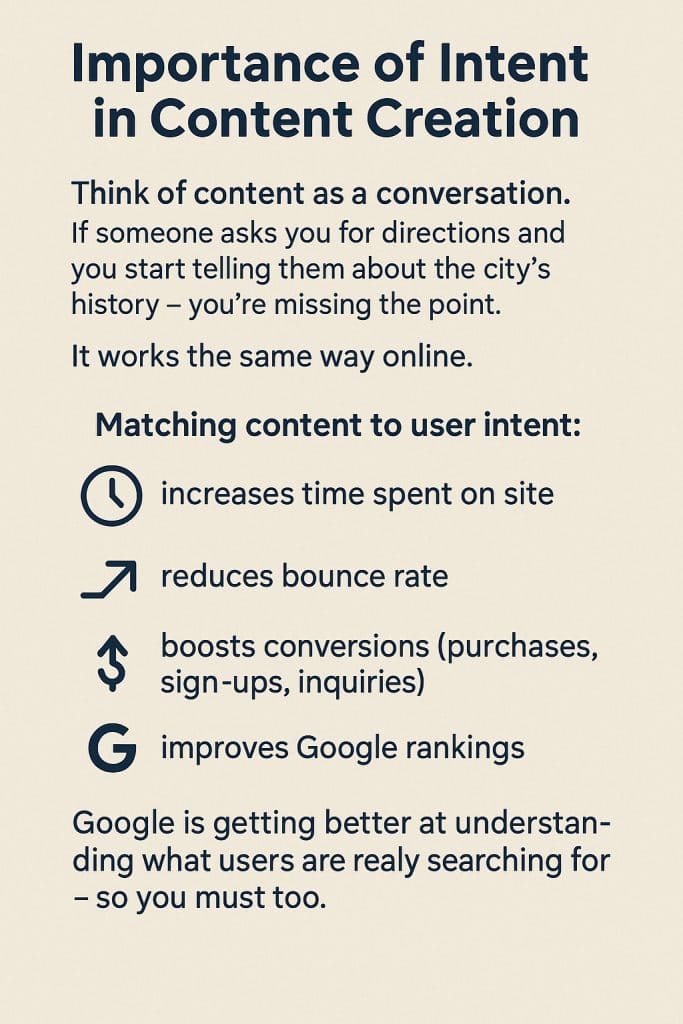
Each digital platform has a different job.
Facebook is often useful for local awareness, community visibility, offers, events, and broad targeting. Instagram is stronger when visuals shape desire, such as food, fashion, beauty, interiors, fitness, hospitality, and lifestyle brands. Google Search is powerful when customers already know what they need and are actively searching. WhatsApp is often where trust, negotiation, clarification, and closing happen.
The mistake is treating all platforms as equal distribution channels.
A gym launching a new membership package may use Instagram Reels for social proof, Facebook ads for neighborhood reach, and WhatsApp for consultation and sign-up. A law firm or B2B consultant may rely more on Google Search, LinkedIn, referrals, and educational content. A boutique may need Instagram visibility, WhatsApp catalog organization, and customer reviews more than a website-heavy campaign.
Your strategy should define the role of each platform before money is spent. Otherwise, you may end up boosting random content instead of building a buyer journey.
Step 4: Clarify the Message Before Designing the Ad

Your message is not your logo, flyer, or slogan. Your message is the reason someone should care.
Weak digital marketing often fails because the business talks about features instead of outcomes. “We sell quality shoes” is feature-heavy and vague. “Comfortable office shoes for women in Douala who stand, walk, and still need to look polished” is clearer because the buyer can recognize herself.
Before spending money, write your campaign message in three parts:
What problem does the buyer have?
Maybe they need affordable catering, a reliable salon, a trustworthy mechanic, a safe apartment, or professional clothing that fits their lifestyle.
Why should they trust you?
Trust can come from reviews, before-and-after photos, transparent pricing, location details, guarantees, qualifications, delivery proof, or visible customer experience.
What should they do next?
The next step must be obvious: send a WhatsApp message, call, book, visit, request a quote, or place an order.
A useful test is the “so what?” test. If your headline says “Premium Event Decoration,” ask: so what? A stronger version might be, “Elegant event decoration for Douala weddings that need a premium look without last-minute stress.”
That message gives the buyer a reason to pay attention.
Step 5: Set a Budget That Matches the Goal

Your budget should not be based only on what is left after other expenses. It should be tied to the result you want and the level of testing required.
Google Ads allows advertisers to set daily campaign budgets based on advertising goals and the average amount they are comfortable spending each day. It also recommends monitoring campaigns to identify limited budgets or leftover spend. (Google Help)
For a Cameroon SME, this means you should separate your budget into three parts: testing, optimization, and scaling.
Testing helps you compare audiences, messages, creatives, or offers. Optimization helps you shift money toward what is working. Scaling increases spend only after results are visible. When businesses spend everything on one ad immediately, they leave no room to learn.
A practical budget plan might define how much you will spend per day, how many days the test will run, what result counts as progress, and when you will stop or adjust.
Step 6: Build a Realistic Campaign Timeline
![How to Prepare an Advertising Plan [Free Template]](https://53.fs1.hubspotusercontent-na1.net/hub/53/hubfs/advertising-campaign-timeline.jpg?width=1708&name=advertising-campaign-timeline.jpg "Why Your Business Needs a Digital Marketing Strategy Cameroonians Can Trust 6")
Many small businesses stop too early because they expect instant results.
Some campaigns can generate quick inquiries, especially for urgent offers, food, events, flash sales, or beauty services. But higher-trust purchases need more time. Real estate, professional services, B2B solutions, education, and premium hospitality often require repeated exposure before someone acts.
Your timeline should include preparation, launch, monitoring, adjustment, and review.
Before launch, prepare the offer, visuals, captions, landing page or WhatsApp flow, response script, pricing information, and follow-up system. During launch, monitor results daily but avoid changing everything too quickly. After a few days, compare performance. At the end, review what happened and document lessons for the next campaign.
Digital marketing becomes cheaper over time when you learn from each campaign. It becomes expensive when every campaign starts from zero.
What to Prepare Before Spending Any Money
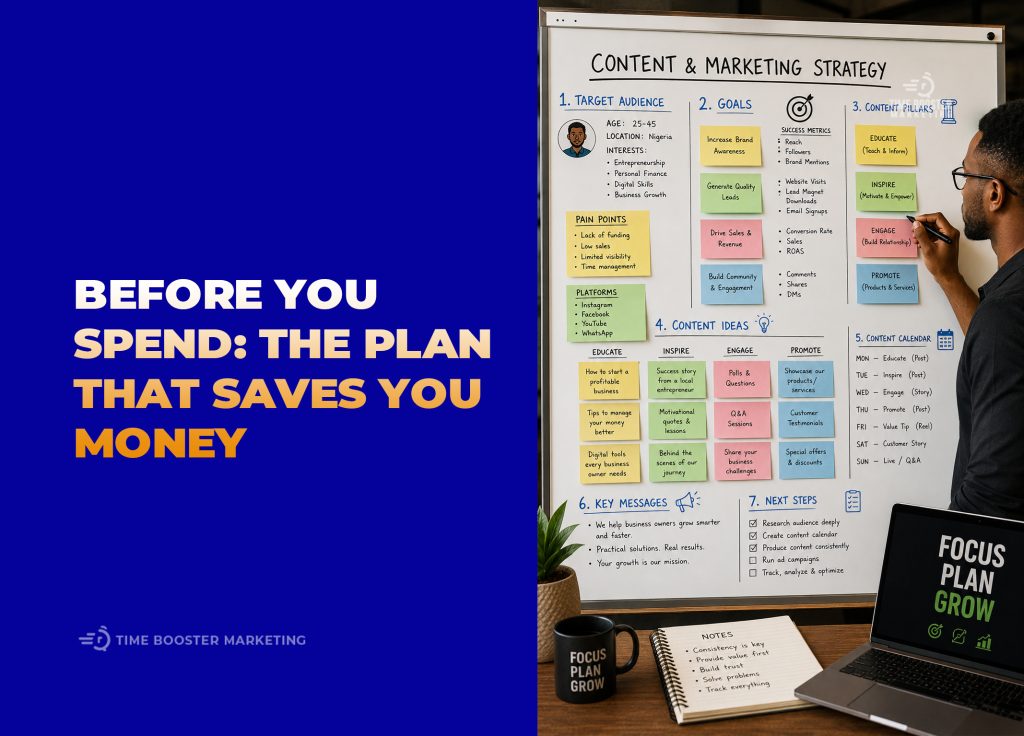
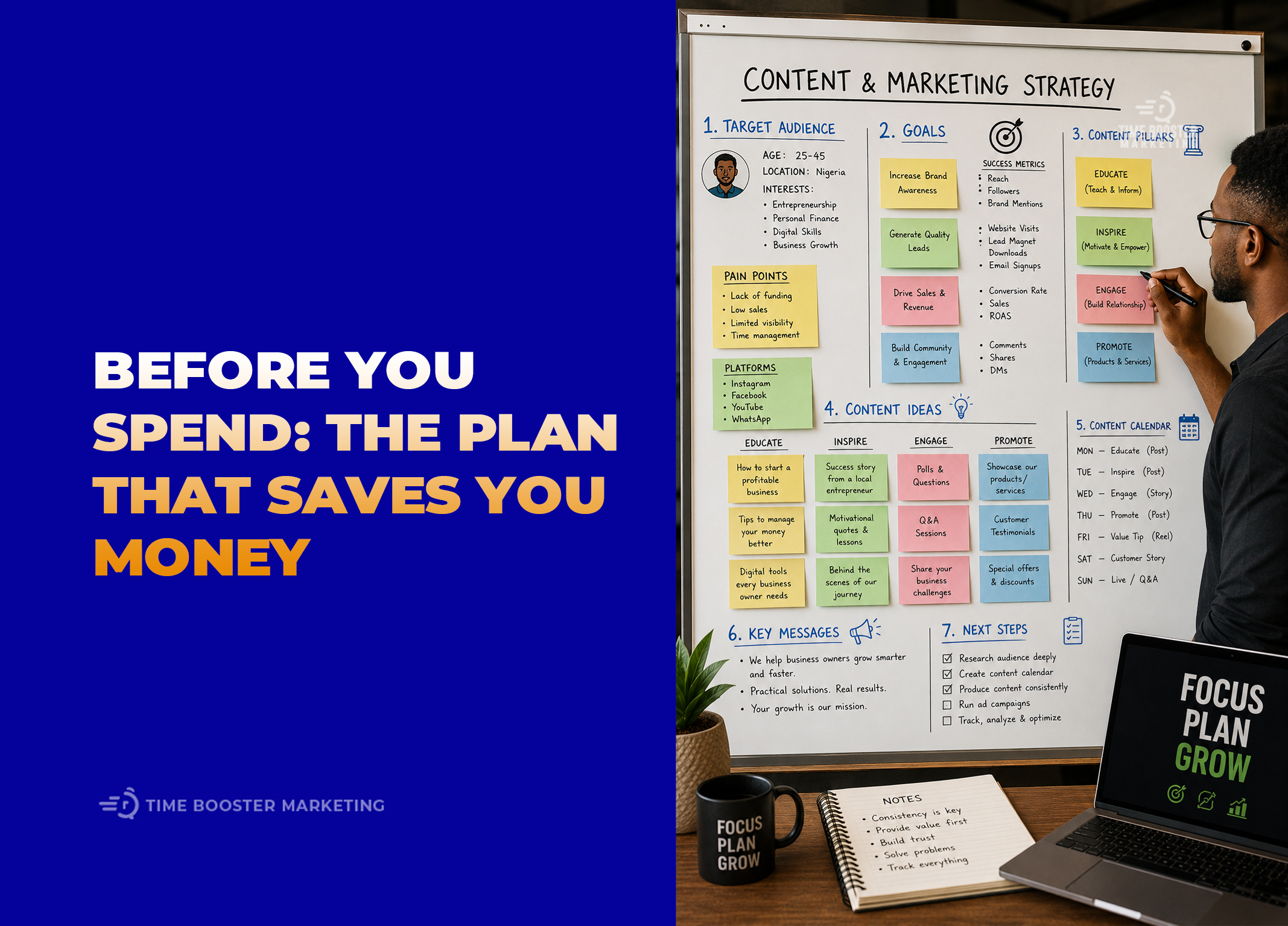
Before your next campaign, prepare a one-page strategy document.
It should include your audience, goal, platform choice, message, offer, budget, timeline, conversion path, and follow-up process. Also decide who will respond to leads. In many Cameroon businesses, campaigns fail not because the ad was bad, but because nobody replies fast enough, the WhatsApp greeting is weak, prices are unclear, or prospects are left waiting.
Google’s conversion measurement guidance explains that advertisers should measure which ads drive customers to take actions such as purchases or contracts. That principle matters even if your business sells through WhatsApp instead of a full e-commerce website. You still need to know which campaign produced real inquiries, qualified leads, bookings, and sales. (Google)
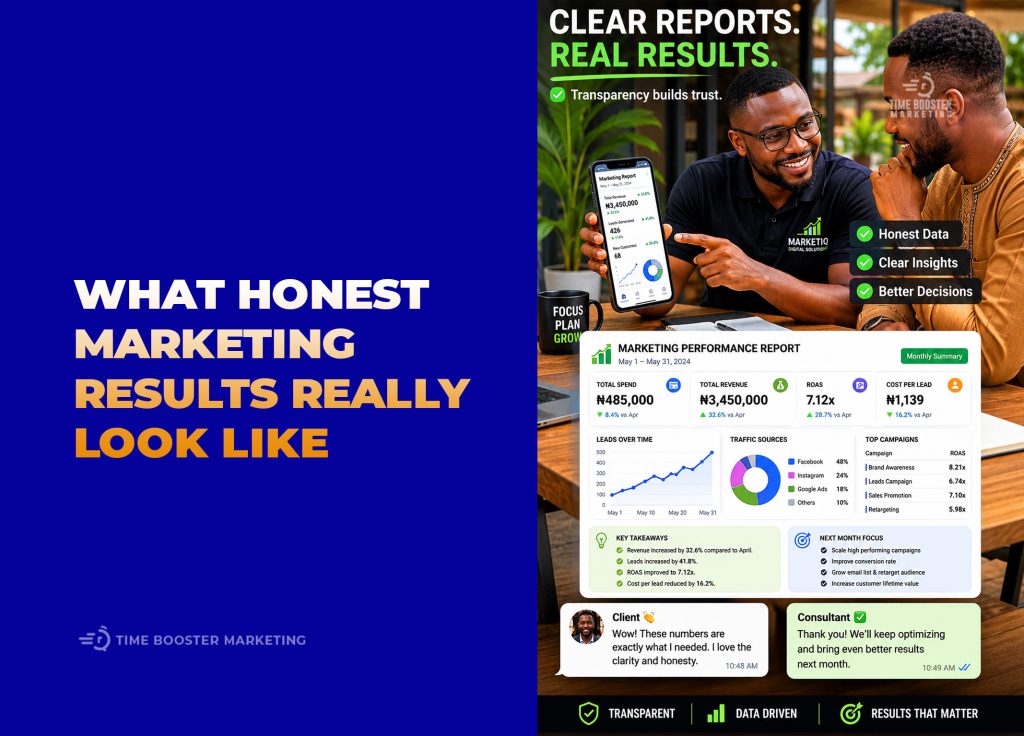
A simple tracking sheet can record the date, platform, amount spent, number of inquiries, number of serious leads, number of sales, and total revenue. This turns marketing from guesswork into business intelligence.
A Digital Marketing Strategy Protects Your Cash Flow
For many Cameroon SMEs, cash flow is tight. Marketing money competes with rent, stock, salaries, logistics, taxes, and daily operating costs. That makes strategy even more important.
A digital marketing strategy does not guarantee that every campaign will win. No honest marketer can promise that. What it does is reduce careless spending. It gives your money a job. It helps you say no to random boosting, unclear influencer deals, rushed flyers, and trendy platforms that do not match your buyer.
Most importantly, it helps you build a repeatable system. You learn which audience responds, which message converts, which platform produces better leads, and which offers create urgency.
That is how digital marketing becomes an investment instead of a monthly gamble. Before you spend, plan. Before you launch, define the goal. Before you scale, prove what works. For Cameroon SMEs competing in a crowded and trust-driven market, that discipline can be the difference between wasted budget and steady growth.