Why Content Marketing in Cameroon Builds Trust Better Than Hard Selling
Many businesses in Cameroon are not suffering from a complete lack of visibility. They are suffering from a lack of credibility.
You may be posting promotional flyers every week, updating your WhatsApp Status, running occasional Facebook advertisements, and telling customers that your service is “high quality.” Yet potential buyers still ask for excessive reassurance, compare you with cheaper alternatives, delay decisions, or disappear after requesting the price.
The problem is not always your offer. It is often the amount of trust surrounding the offer.
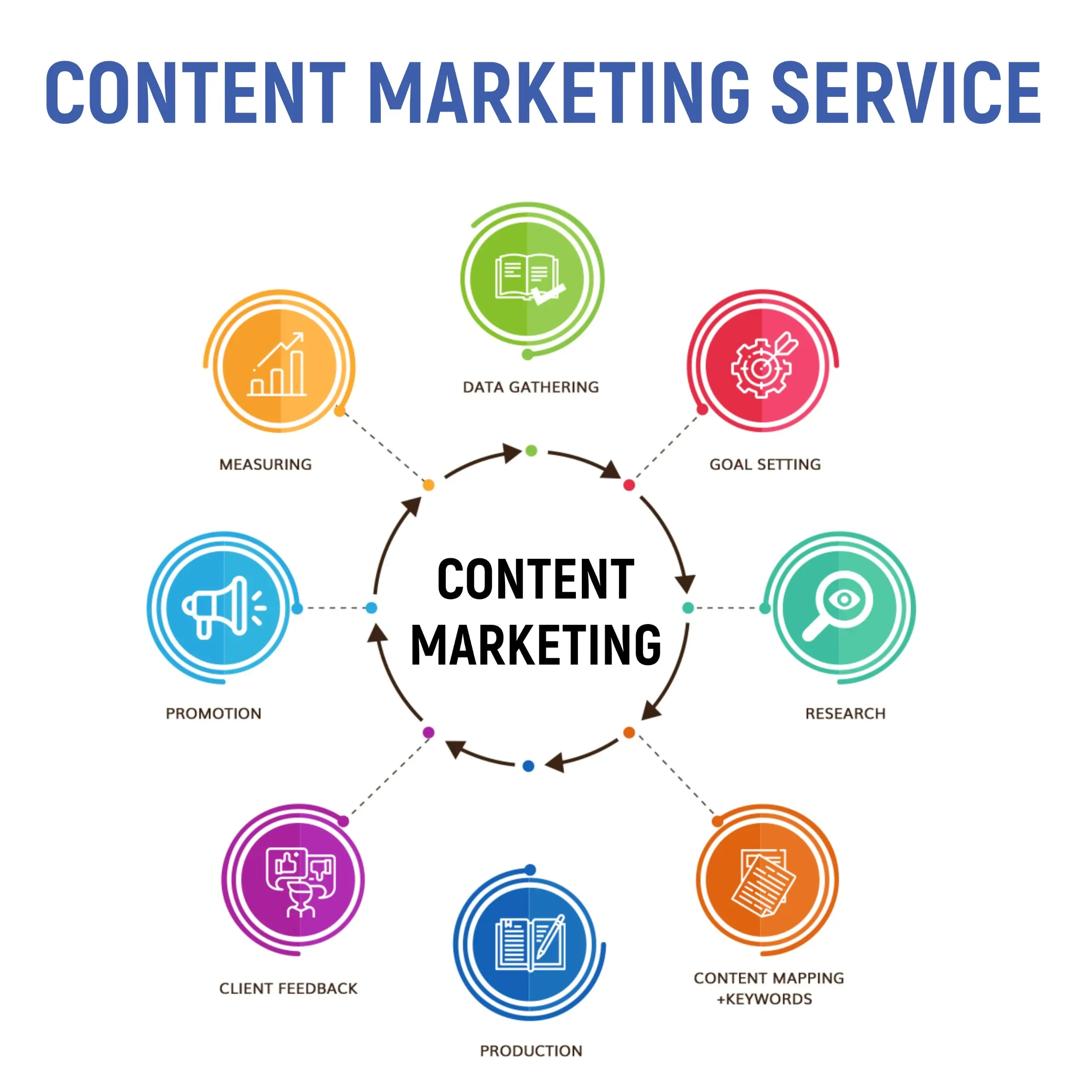
Hard selling repeatedly asks customers to act: “Order now,” “Book today,” “Limited spaces available,” or “Send us a message.” Content marketing gives customers reasons to believe before asking them to act.
That distinction matters in Cameroon’s growing digital marketplace. DataReportal recorded approximately 12.6 million internet users in Cameroon at the end of 2025 and 5.9 million social media user identities in October 2025. More customers can discover businesses online, but greater access also gives them more options to compare, question, and ignore. (DataReportal – Global Digital Insights)
Hard Selling Demands Trust Before It Has Been Earned
Hard selling is not simply direct selling. Every business eventually needs to make a clear offer.
The problem begins when nearly every communication is an offer.
Consider a real estate agency whose content consists mainly of property photographs, prices, phone numbers, and statements such as “best deals in Douala.” A serious buyer still has unanswered questions:
- Is the property documentation reliable?
- What additional costs should I expect?
- How do I avoid paying the wrong person?
- Which neighbourhood is appropriate for my budget?
- What happens after I express interest?
The advertisement presents the product, but it does not reduce the buyer’s uncertainty.
The same problem affects salons that only post finished hairstyles, restaurants that only display meals, gyms that only publish membership offers, and consultants who repeatedly announce their services. Attractive visuals may generate attention, but attention without explanation does not automatically create confidence.
Hard-selling messages underperform when they ask the customer to make a decision without resolving the risks surrounding that decision.
Content Marketing Reduces the Risk Customers Feel
A customer rarely evaluates only the product. The customer also evaluates the possibility of disappointment.
They may worry that your photographs are misleading, your service will not match your promises, hidden charges will appear, delivery will be delayed, or communication will become difficult after payment.
Educational content addresses these concerns indirectly and credibly. Instead of repeatedly saying, “Trust us,” you demonstrate that you understand the decision your customer is trying to make.
Global research from Edelman found that trust has become as important a purchase consideration as price and quality. Its 2025 brand trust study also reported that consumers increasingly expect brands to provide education, stability, relevance, and clarity—not merely corporate promises. (Edelman)
This is why a useful guide can sometimes move a customer closer to purchasing than another discount announcement.
A guide titled “Five Documents to Check Before Renting Commercial Property in Douala” does more than attract attention. It shows that the agency understands the customer’s risks.
A restaurant article explaining “How to Estimate Catering Portions for a 100-Person Event” demonstrates operational knowledge.
A salon video explaining “How to Prepare Natural Hair Before a Protective Style” signals expertise before the customer enters the salon.
The content builds trust because it helps the customer make a better decision, even before money changes hands.
Three Types of Content That Build Brand Trust
1. Blogs Demonstrate Depth
Blog marketing allows you to answer important customer questions in more detail than a short social media caption can accommodate.
A strong blog article should not simply describe your service. It should explain a problem, show the customer how to think about it, identify common mistakes, and clarify the available options.
For example, a hotel targeting corporate travellers could publish:
- How to choose accommodation for a business trip to Yaoundé
- What companies should check before booking long-stay rooms
- How airport transfers work for late-night arrivals
- Questions to ask before reserving a conference venue
Each article positions the hotel as a knowledgeable guide rather than another business competing primarily on room prices.
Blogs also create searchable assets. Unlike a WhatsApp Status that disappears quickly, a useful article can remain available when customers search for answers months later. Google explicitly states that its ranking systems are designed to prioritise helpful, reliable, people-first information rather than content created mainly to manipulate search rankings. (Google for Developers)
Effective blog marketing therefore serves two connected purposes: it improves discovery and gives discovered prospects more reasons to trust the business.
2. Practical Tips Create Repeated Proof of Expertise
Not every educational asset needs to be a long article. Short tips can build trust through consistency.
A gym could post a weekly explanation of common training mistakes. An event planner could share budgeting tips. A restaurant could explain how to select a menu for guests with different dietary needs. A property manager could publish maintenance advice for landlords.
The most useful tips are specific enough to produce a small result.
“Take care of your skin” is vague.
“Apply moisturiser while your skin is still slightly damp to reduce dryness” is practical.
“We provide excellent event planning” is promotional.
“Before paying a venue deposit, confirm whether chairs, security, cleaning, and backup electricity are included” is educational.
Specificity signals experience. When your advice reflects situations customers actually encounter, people can see that your knowledge comes from real work rather than copied marketing language.
Short educational content is especially valuable for businesses that sell through WhatsApp and Instagram. One detailed blog can be repurposed into several Status updates, carousel posts, short videos, email messages, and sales-team responses.
3. Case Studies Replace Claims With Evidence
A case study shows how your business handled a real customer problem.
This makes it stronger than a generic testimonial such as “Great service” or “Highly recommended.” A credible case study explains the customer’s situation, the challenge, the solution, and the outcome.
For example:
A restaurant needed to cater a company workshop for 120 participants with a limited serving period. The caterer reorganised the menu, created multiple serving points, and prepared labelled dietary options. All guests were served within the scheduled break.
This story demonstrates planning, capacity, and problem-solving without relying on exaggerated claims.
The customer should remain the central character. Content Marketing Institute recommends customer-centred case studies because prospects want to understand what happened to organisations or individuals facing circumstances similar to theirs. Case studies that sound excessively promotional can instead appear like advertisements and weaken credibility. (Content Marketing Institute)
A useful case study does not need to disclose confidential information. You can anonymise the customer while still providing enough detail to make the story believable.
Educational Content Works Because It Gives Before It Asks
Hard selling begins with what the business wants: a booking, order, deposit, call, or store visit.
Content marketing begins with what the customer needs: an answer, explanation, comparison, warning, example, or decision framework.
This does not mean giving away your complete service for free. It means providing enough insight for the customer to recognise three things:
- You understand the problem.
- You have a credible process for solving it.
- You are transparent about what the solution involves.
This approach creates a healthier sales conversation. Prospects who have read your articles or watched your educational videos arrive with more realistic expectations. They understand your terminology, recognise the value behind your pricing, and ask more informed questions.
Content Marketing Institute’s research found that buyers generally want to trust brand content, but they become disappointed when information lacks value, feels outdated, duplicates what is already available, or leads too aggressively with a sales pitch. Detailed information from a credible source strengthens trust; thin content followed by immediate sales pressure damages it. (Content Marketing Institute)
The lesson is straightforward: publishing content is not enough. The content must genuinely help.
Use the Teach–Prove–Clarify–Invite Framework
A simple trust-building content system can follow four stages.
Teach
Answer one important customer question.
A solar installation company might explain how customers can estimate their household energy needs. A beauty business might explain the difference between treatments for different skin conditions.
Prove
Show evidence that you have solved the problem.
Use a case study, customer story, process photograph, demonstration, measurable outcome, or behind-the-scenes explanation.
Clarify
Remove uncertainty around the purchase.
Explain your pricing structure, booking process, turnaround time, payment stages, delivery conditions, or what the customer needs to provide.
Invite
Present a relevant next step without excessive pressure.
For example:
“Send your guest count and event date to receive a preliminary catering recommendation.”
This invitation works because the content has already created context. The customer is not being pushed directly from ignorance to purchase.
Turn One Useful Topic Into a Local Content System

You do not need to produce new ideas for every platform.
Suppose you operate a property management company and create a blog titled “Seven Questions Landlords Should Ask Before Hiring a Property Manager in Cameroon.”
That single article can become:
- Seven WhatsApp Status updates
- An Instagram carousel
- A two-minute explanatory video
- A checklist sent to prospective landlords
- A talking point for sales calls
- A follow-up message for undecided leads
- A future case study showing how your process worked
This approach is more sustainable than creating disconnected promotional flyers every day. It also ensures that your website, social media presence, and direct sales conversations reinforce the same expertise.
Measure Trust Signals, Not Only Immediate Sales
Content marketing does not always produce an immediate purchase after the first interaction. Its influence often appears through changes in customer behaviour.
Monitor whether prospects:
- Ask more specific questions
- Mention an article or video during enquiries
- Share your content with colleagues or family members
- Return to your website
- Join your WhatsApp or email list
- Request consultations after consuming several pieces of content
- Require less explanation before buying
These behaviours indicate that your content is reducing uncertainty.
You should still track enquiries, qualified leads, bookings, and revenue. However, judging every educational post by same-day sales will encourage you to abandon trust-building work too early.
Trust Compounds When Useful Content Becomes a Habit
Hard selling can generate short bursts of attention, particularly when the offer is urgent or heavily discounted. But repeated promotional pressure cannot substitute for credibility.
Content marketing builds a stronger commercial foundation. Blogs demonstrate depth. Practical tips create repeated evidence of expertise. Case studies show that your promises have been tested in real situations.
For a Cameroonian service business competing in a crowded market, the objective is not to publish more content for its own sake. It is to become the business that explains the customer’s problem most clearly, addresses risk most honestly, and proves its ability most convincingly.
When customers repeatedly learn from you before they buy from you, trust stops being a claim in your advertising. It becomes an experience associated with your brand.