
Working With a Marketing Agency in Cameroon Without Losing Control of Your Brand
You may know that your business needs stronger digital marketing, but handing your Facebook page, advertising budget, WhatsApp messaging, or public voice to an outside agency can feel risky.
What happens if the agency communicates in a way that does not sound like your business? Who owns the advertising accounts? Can campaigns be published without your approval? Will you understand where your money is going?
These concerns are reasonable. Your brand represents years of customer trust, referrals, reputation, and market experience. However, outsourcing marketing execution does not require you to outsource brand authority.
The solution is not to supervise every caption and design. It is to establish a management system that clearly separates what the agency can execute from what your business must continue to own and approve.
Outsource Marketing Execution, Not Brand Ownership
A digital marketing agency should operate as an expert implementation partner. It can bring strategy, creative production, advertising expertise, content systems, and performance analysis. Your business should retain final authority over its identity, market positioning, customer promises, budgets, and digital assets.
This distinction should be written into the relationship from the beginning.
Your agency may recommend a promotional campaign, but you decide whether the offer is commercially realistic. It may rewrite your messaging, but you confirm that the claims accurately reflect your services. It may manage advertising platforms, but your company remains the owner of the underlying accounts and data.
This is particularly important for owner-led businesses in Cameroon, where customer relationships may depend heavily on personal credibility, referrals, WhatsApp conversations, and local reputation. An agency can improve how your brand communicates, but it cannot replace your knowledge of what customers expect from you.
Create Practical Brand Guidelines Before Campaigns Begin
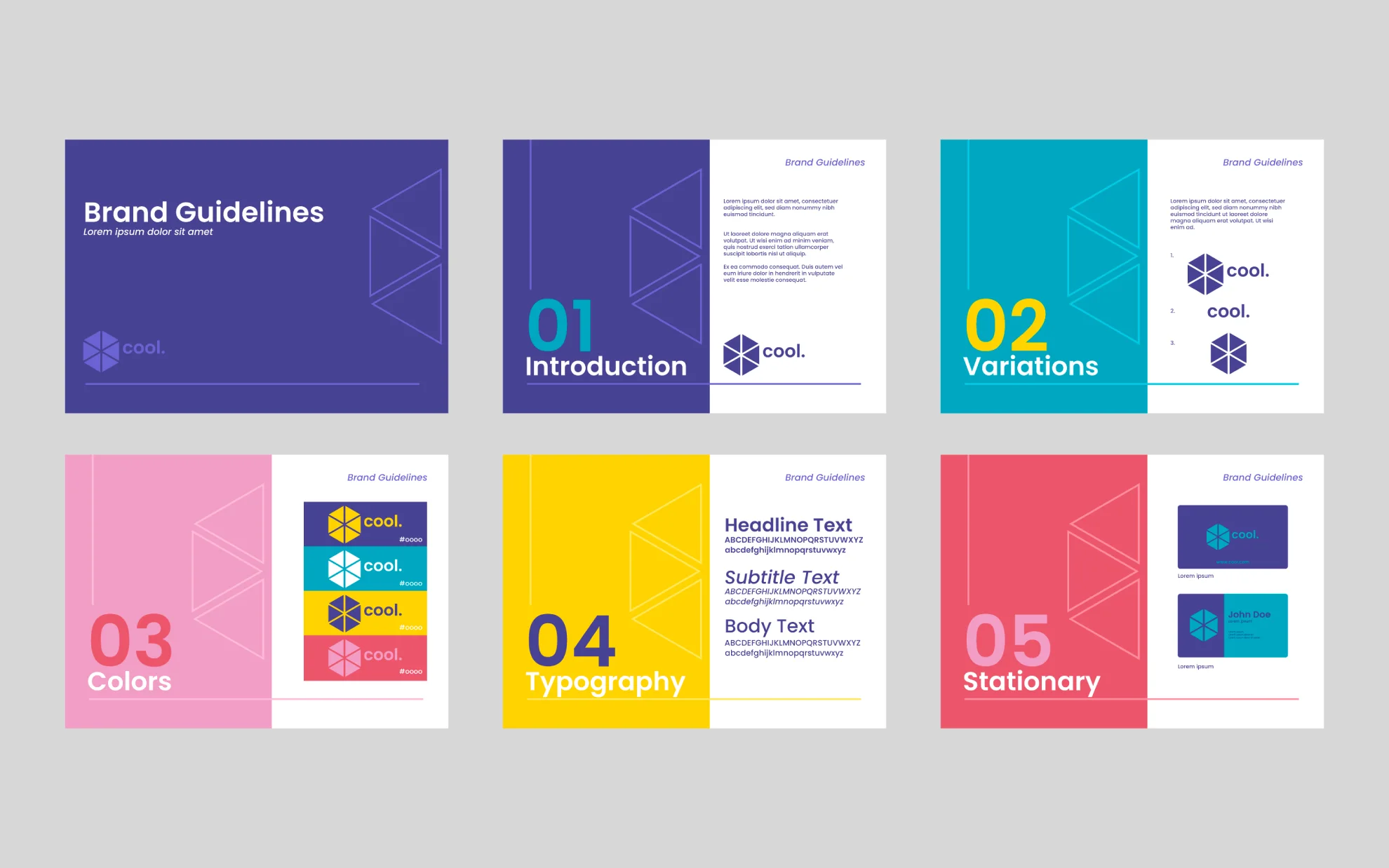
Brand guidelines give the agency a reliable decision-making reference. Without them, every design, caption, advertisement, and customer response becomes a matter of personal interpretation.
Your guidelines do not need to be a complicated 60-page corporate document. A concise working document can establish enough direction to prevent most brand inconsistencies.
Define Your Brand Positioning
Start by explaining:
- Who your most valuable customers are
- What primary problem you solve
- Why customers should choose you instead of competitors
- What evidence supports your claims
- What your brand should never promise
For example, a Douala-based property company should clarify whether it competes through premium service, verified listings, investment guidance, affordability, or local market knowledge. Without that positioning, an agency may produce attractive content that generates attention but attracts unsuitable enquiries.
Document Your Voice and Messaging Rules
Provide examples of language that sounds like your business and language that does not.
Specify whether your communication should be formal, conversational, luxurious, energetic, technical, or reassuring. For businesses communicating with both English-speaking and French-speaking audiences, explain whether campaigns should be translated directly or adapted for each audience.
Also document sensitive areas. A healthcare-related business may require careful review of service claims. A restaurant may prohibit exaggerated statements about ingredients. A real estate company may require verification before publishing prices or availability.
Brand control also includes the responsible use of your name, logo, slogan, and other distinctive assets. The World Intellectual Property Organization’s guidance for SMEs explains that elements such as names, symbols, and slogans can carry legal and commercial value, making consistent brand management more than a design preference. (WIPO)
Keep Ownership of Every Important Digital Asset
One of the most serious agency-management mistakes is allowing the agency to create essential accounts under its own email address or business portfolio.
Your company should own:
- Domain registration and website hosting
- Google Business Profile
- Meta Business Portfolio
- Facebook and Instagram pages
- Google Ads account
- Google Analytics property
- Email marketing platform
- Customer database
- Design source files
- Advertising data and campaign history
The agency should receive role-based access instead of your personal passwords.
Meta allows businesses to provide trusted people with different forms of Facebook Page access, enabling an agency to perform assigned tasks without automatically becoming the owner of the Page. (Facebook)
A similar principle applies to paid search. A Google Ads manager account allows an agency to manage a client’s advertising account while keeping the accounts connected rather than transferring the business’s identity to the agency. Google explains how these manager accounts provide centralised campaign management across linked client accounts. (Google Help)
This structure protects continuity. When the relationship ends, you can remove agency access without rebuilding your marketing infrastructure from the beginning. Google also states that an individual advertising account can be unlinked from a manager account without losing its campaign history or access to account features. (Google Help)
Establish an Approval Process That Does Not Create Bottlenecks
Approving everything may appear to provide maximum control, but it often creates delays, rushed reviews, and frustrated teams. A stronger approach is to define approval levels according to risk.
Level One: Pre-Approved Routine Content
The agency can publish low-risk content without requesting approval each time, provided it follows the agreed content plan and brand guidelines.
This may include:
- Opening-hour reminders
- Approved product photographs
- Educational tips
- Customer testimonials already cleared for use
- Repeated promotional information with unchanged terms
Level Two: Content Requiring Business Approval
Your designated representative should approve content involving:
- New offers or discounts
- Prices
- Product availability
- Partnerships
- Customer claims
- Public responses to complaints
- Significant advertising expenditure
Level Three: Leadership Approval
Reserve senior approval for high-risk decisions, such as a brand repositioning, public controversy, major campaign, new market entry, or communication that could create legal or reputational exposure.
Set an approval deadline. For example, routine campaign materials may require a response within 24 or 48 working hours. State what happens when approval is delayed. The agency should never assume that silence authorises a high-risk publication.
Appoint One Internal Marketing Decision-Maker
Agency relationships become difficult when several employees provide conflicting instructions.
The owner requests a premium campaign. The sales manager asks for lower prices. The operations team says the promoted service is unavailable. The agency then produces inconsistent work because nobody knows whose direction takes priority.
Appoint one internal agency lead. This person collects feedback, confirms operational information, approves routine materials, and communicates the company’s final decision.
The owner can remain involved in strategic decisions without becoming the daily communication channel for every revision. This preserves authority while preventing the agency relationship from consuming management time.
Agree on a Communication Frequency
Communication should be regular enough to prevent surprises but structured enough to avoid constant WhatsApp interruptions.
A practical rhythm could include:
Weekly Operational Check-In

Use a 20- to 30-minute meeting to review content, active campaigns, pending approvals, customer feedback, and immediate obstacles.
Monthly Performance Review
Use a more detailed session to examine results, spending, lead quality, lessons, and next-month priorities.
Quarterly Strategic Review
Evaluate positioning, channel performance, customer behaviour, campaign direction, and whether the agency’s scope still supports your commercial goals.
WhatsApp can remain useful for urgent coordination, especially in a local operating environment where it is often the fastest communication channel. However, strategic decisions, approvals, budget changes, and major revisions should also be documented by email or in a shared project-management system.
Demand Reporting That Connects Marketing to Business Results
A long report filled with impressions, reach, clicks, and follower growth does not necessarily show whether the agency is creating commercial value.
Your reporting structure should answer four questions:
- What did the agency do?
- What happened as a result?
- What did the business learn?
- What should change next?
The report should connect platform activity to outcomes such as qualified enquiries, WhatsApp conversations, bookings, store visits, quotations, sales opportunities, or repeat purchases.
You should also retain direct access to the reporting platforms. Google Analytics allows businesses to assign and modify user permissions at the account or property level, which means an agency can analyse performance without becoming the permanent controller of your data. Review Google’s official guidance on adding and managing Analytics users. (Google Help)
A useful monthly report should include:
- Campaign objectives
- Work completed
- Budget planned versus budget spent
- Results by channel
- Cost per meaningful enquiry or action
- Lead quality observations
- Strongest and weakest content
- Problems encountered
- Recommended next steps
Ask the agency to explain the commercial meaning of the numbers. “Reach increased” is an observation. “Reach increased among the target audience, but enquiries remained weak because the offer lacked a clear reason to respond” is actionable analysis.
Recognise the Difference Between Control and Interference
Maintaining control does not mean rewriting every caption based on personal preference.
You hired an agency because it should possess expertise that your internal team does not have. If you reject every recommendation, change campaigns after launch, or assess content only according to what you personally like, the agency cannot produce reliable results.
Healthy control focuses on boundaries and outcomes:
- Is the campaign aligned with the brand?
- Are the claims accurate?
- Is the target audience correct?
- Is the budget authorised?
- Are the results being measured properly?
Interference focuses on unstructured preferences:
- Make the logo larger.
- Use more colours.
- Post because a competitor posted.
- Change the campaign before enough data exists.
- Add every service to one advertisement.
Your agency should be able to challenge weak ideas respectfully. You should be able to reject recommendations when they conflict with operational reality. Productive collaboration requires both sides to explain their reasoning.
Watch for Agency Relationship Warning Signs
An agency may be a poor fit when it:
- Refuses to provide account access
- Creates business assets under its own ownership
- Publishes high-risk content without approval
- Cannot explain how advertising money was spent
- Reports only vanity metrics
- Repeatedly misses deadlines without warning
- Uses generic content that could belong to any company
- Avoids documenting decisions
- Becomes defensive when performance is questioned
These problems should not automatically trigger immediate termination. Begin with a documented review: identify the issue, agree on corrective action, assign responsibility, and set a deadline.
If the problem continues, your ownership structure should allow you to change providers without losing your pages, historical data, advertising accounts, or creative files.
Use a Simple Agency Control Framework
Before work begins, document five areas:
Ownership
Your company owns the brand, accounts, data, source files, and campaign history.
Authority
The agency knows what it may publish, change, spend, and approve independently.
Access
Each person receives only the platform permissions required to perform their role.
Accountability
Reports connect agency activity to agreed business objectives and explain underperformance.
Exit
The contract explains how access, files, passwords, unfinished work, and campaign information will be transferred when the relationship ends.
This framework gives the agency room to operate while ensuring that your business remains in control of decisions that affect reputation, money, and long-term growth.
Conclusion
Working with a marketing agency in Cameroon should increase your capabilities, not reduce your authority.
You retain control by establishing clear brand guidelines, owning your digital assets, defining approval levels, appointing one internal decision-maker, maintaining a consistent communication rhythm, and demanding commercially meaningful reporting.
The strongest agency relationships are not built on suspicion or unrestricted freedom. They are built on visible responsibilities, documented access, honest performance discussions, and mutual respect for expertise.
When that structure is in place, your agency can move faster, your brand can remain consistent, and you can focus on business decisions without wondering who truly controls your marketing.