LinkedIn Lead Generation Cameroon: How to Find Clients Without Running Ads
You do not need a paid ad to find clients on LinkedIn.
You need a strategy.
Many Cameroonian professionals create LinkedIn profiles, add a job title, accept a few connection requests, and wait. When no clients arrive, they assume LinkedIn does not work in Cameroon. The real problem is usually not the platform. It is passive use.
LinkedIn can help freelancers, consultants, agencies, coaches, accountants, developers, designers, recruiters, and B2B service providers become visible to people who need professional help. DataReportal’s Digital 2026 Cameroon report notes that LinkedIn’s advertising resources showed about 1.6 million registered members in Cameroon in late 2025. That does not mean all members are active buyers, but it confirms that the platform has a meaningful professional base locally.
The opportunity is simple: while many people treat LinkedIn like a dead CV page, you can use it as a client acquisition system.
Why LinkedIn Works for Organic Client Acquisition
LinkedIn is different from Facebook, Instagram, and WhatsApp because people expect professional context there. A business owner, HR manager, operations director, founder, procurement officer, or NGO coordinator is more likely to evaluate your expertise on LinkedIn than through a random social post.
That does not mean LinkedIn replaces local referrals. In Cameroon, referrals, trust, personal introductions, and WhatsApp follow-up still matter. LinkedIn strengthens those channels by making your expertise visible before the conversation starts.
When someone receives your name through a referral, they may search your profile. When you comment intelligently on a post, a potential client may check what you do. When you publish useful content consistently, your network begins associating you with a specific business problem.
That is how organic lead generation starts: not with begging for work, but with repeated professional visibility.
1. Optimize Your Profile to Attract Inbound Interest
Your profile is your landing page.
Before reaching out to anyone, make sure your profile explains why a potential client should take you seriously. LinkedIn describes a profile as a professional page for managing your personal brand and showcasing experience beyond a standard résumé. Review LinkedIn’s profile overview guide before treating your profile like a simple employment record.
A client-focused profile should answer four questions quickly:
What do you do?
Who do you help?
What problem do you solve?
What proof shows you can deliver?
Write a Client-Focused Headline
Do not waste your headline on a vague title like:
Freelancer
CEO
Digital Marketer
Consultant
A better headline explains value:
SEO Consultant Helping Cameroonian SMEs Improve Google Visibility and Search Traffic
Graphic Designer Creating Brand Identity and Campaign Visuals for Restaurants, Boutiques and Event Brands
HR Consultant Helping SMEs Improve Recruitment, Staff Documentation and Employee Onboarding
Web Developer Building Mobile-Friendly Websites for Service Businesses and Professional Brands
The formula is:
Role + client type + problem solved
This works because clients do not buy your title. They buy the outcome your skill can create.
Make the About Section Speak to the Right Client
Your About section should not read like a motivational biography.
Start by naming the kind of client you help and the problem you solve. Then explain your process, services, evidence, and next step.
For example:
I help service-based SMEs in Cameroon turn their online visibility into qualified customer enquiries. My work focuses on website messaging, SEO content, Meta advertising, and lead follow-up systems that connect marketing activity to real sales conversations.
This is stronger than:
I am a passionate and hardworking digital professional committed to excellence.
The first version tells a business owner why your profile matters.
Add Proof Where Clients Can See It
Use LinkedIn’s Featured section to show work samples, case studies, service pages, portfolio links, testimonials, media appearances, or strong posts. LinkedIn’s Featured section guide explains how to add samples of your work to your profile.
For a consultant, this could be a short case study. For a designer, it could be a portfolio. For a copywriter, it could be a landing page example. For a software developer, it could be a project walkthrough.
Also request recommendations from satisfied clients, managers, or collaborators. LinkedIn allows members to request recommendations from first-degree connections, and its recommendations guide explains how they appear on your profile.
In a trust-based market, proof reduces risk. A potential client may not contact you because of one beautiful sentence. They contact you because your profile makes you feel credible.

Use LinkedIn Service Pages
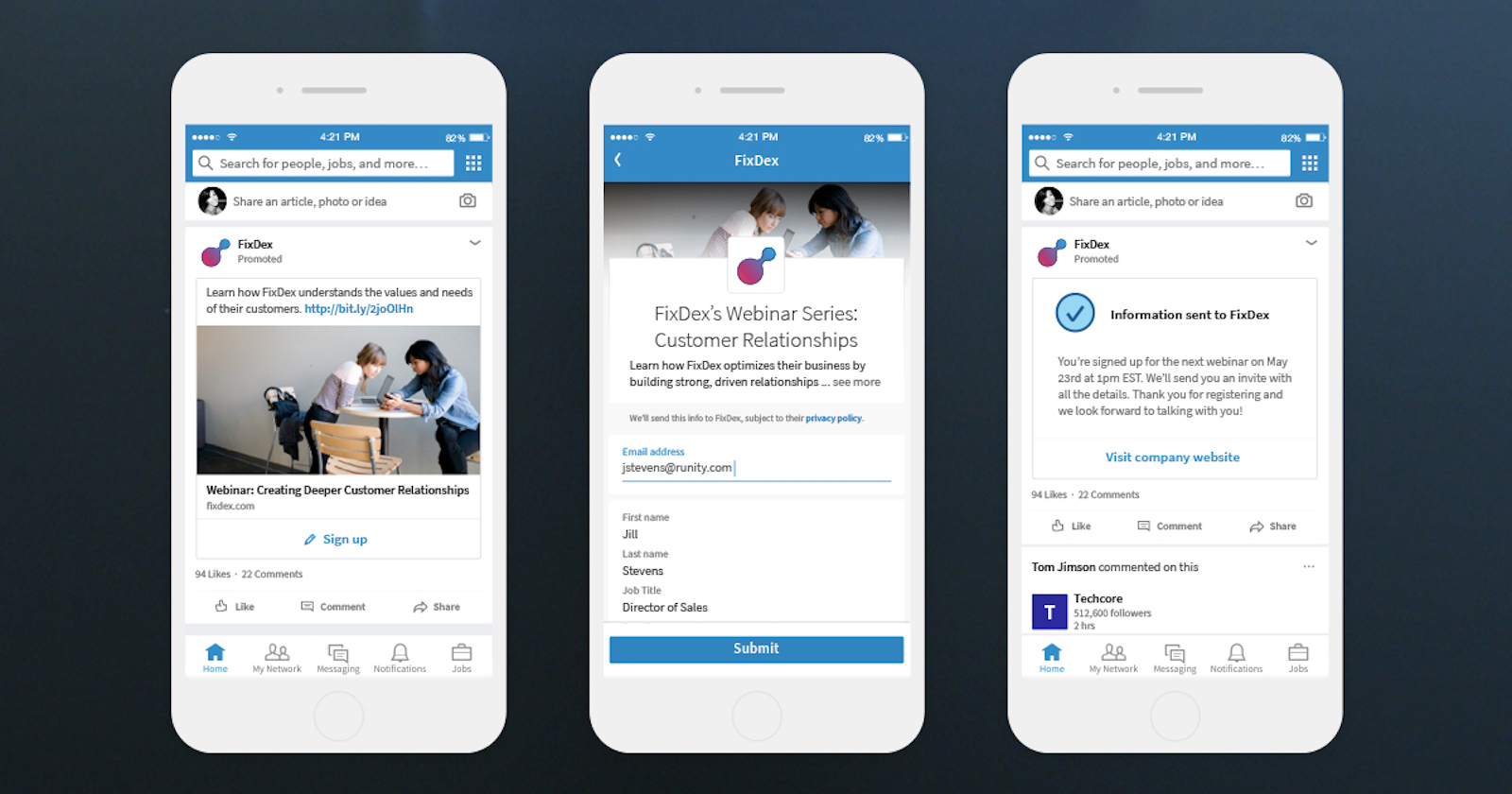
If you sell professional services, create a LinkedIn Service Page. LinkedIn says Service Pages allow clients to send requests for proposals to providers that match their request location, category, and language. Its Service Pages overview is especially relevant for freelancers and consultants.
This helps because your profile no longer only says who you are. It shows what you offer.
2. Use Content to Demonstrate Expertise
Clients rarely hire someone just because they exist on LinkedIn. They need to see evidence of thinking.
Content gives you that evidence.
You do not need to post every day. You need to publish useful, specific content that helps your target client understand a problem, avoid a mistake, or make a better decision.
LinkedIn allows members to share posts and control visibility settings, including an “Anyone” option that can make posts visible beyond first-degree connections. LinkedIn explains these settings in its post visibility guide.
Create Content Around Client Problems
Your content should not be random.
Use four content pillars:
Problem content: Explain mistakes your clients are making.
Education content: Teach them how to think about the issue.
Proof content: Show examples, results, testimonials, or before-and-after improvements.
Decision content: Explain pricing, timelines, process, expectations, and how to choose a provider.
A social media manager targeting restaurants in Douala could post:
Why your restaurant content gets likes but no reservations
A web designer targeting consultants could post:
Five website mistakes that make professional service providers look less credible
An accountant targeting SMEs could post:
Why many small businesses confuse sales with cash flow
A software developer targeting growing companies could post:
When spreadsheets stop being enough for inventory tracking
These posts work because they help the client recognize a problem you can solve.
Write Like a Specialist, Not a General Motivator
Avoid generic posts such as:
Never give up. Success takes time.
That may inspire people, but it does not prove you can solve a client’s business problem.
A stronger post says:
Many SMEs do not have a lead generation problem. They have a follow-up problem. They run ads, receive WhatsApp messages, reply late, forget the conversation, and then blame the campaign. Before increasing ad spend, fix response time, enquiry tracking, and sales scripts.
That kind of post shows judgment. It helps a potential client think, “This person understands my situation.”
Turn Your Daily Work Into Content
You do not need to invent topics.
Use:
- Questions clients ask before buying
- Mistakes you correct repeatedly
- Lessons from completed projects
- Common objections
- Industry myths
- Process explanations
- Simple checklists
- Short case studies
The best content often comes from conversations you are already having privately.
3. Identify Potential Clients Organically
Organic client acquisition does not mean waiting for people to find you.
You should actively identify people and companies that fit your offer.
LinkedIn’s people search guide explains that users can refine searches using filters such as location, company, industry, school, keywords, and service categories, although available filters may vary by account type.
Start with a simple client map.
Define:
Industry: restaurants, law firms, NGOs, real estate, SaaS, logistics, schools, clinics, hotels.
Location: Douala, Yaoundé, Buea, Limbe, Bamenda, regional markets, diaspora-owned businesses.
Decision-maker: founder, CEO, HR manager, marketing manager, operations manager, procurement lead.
Problem: weak visibility, poor lead follow-up, messy accounts, recruitment delays, outdated website, manual processes.
Then search for people and companies that match.
A freelance designer might search for founders of beauty brands and event businesses. An HR consultant might search for SME owners and operations managers. A B2B copywriter might search for SaaS founders and agency owners. A financial consultant might search for business owners discussing cash flow, tax, or reporting issues.
4. Warm Up Before You Pitch
Do not connect with someone and immediately send a sales message.
That feels like spam.
Instead, create a warm path:
- View their profile.
- Read their recent posts or company updates.
- Leave a thoughtful comment.
- Send a personalized connection request.
- Start a conversation based on relevance.
- Ask permission before presenting your offer.
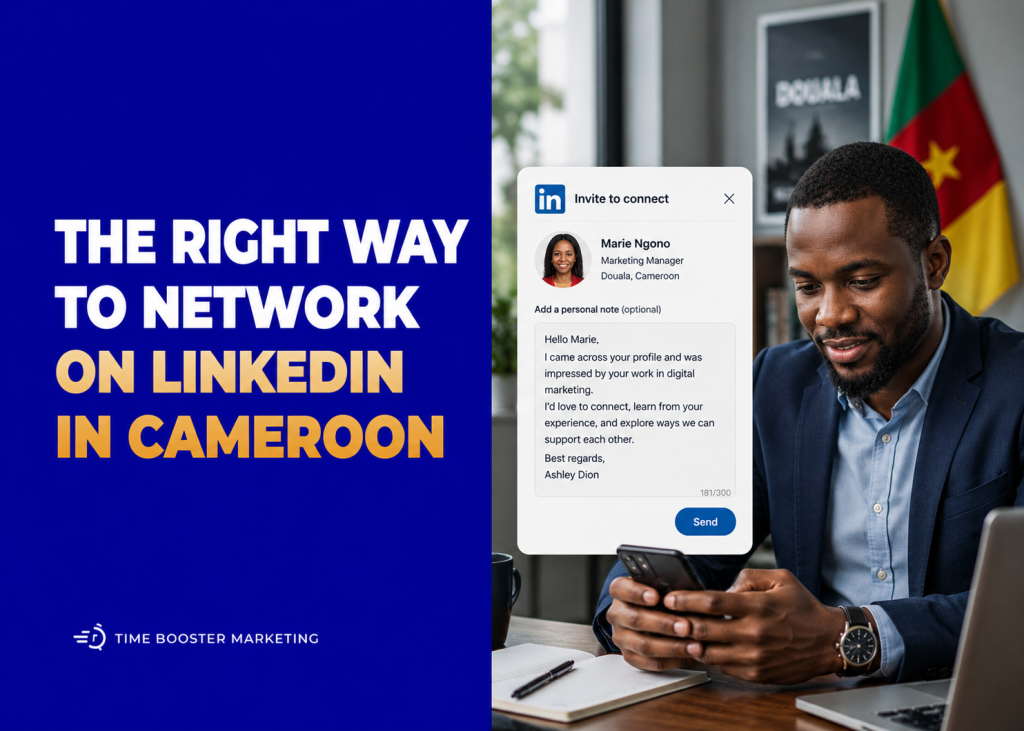
A good connection request might say:
Hello Mr. Talla, I noticed your company supports logistics businesses in Douala. I work on website and lead follow-up systems for service businesses, and I found your recent post on customer response times useful. I would be glad to connect.
This is specific, respectful, and low-pressure.
Once they accept, do not jump straight into:
Here are my packages.
Start with:
Thank you for connecting. I appreciated your point about response time. I see many service businesses losing leads not because demand is low, but because enquiries are not tracked properly after the first WhatsApp message.
That opens a professional conversation.
5. Use Direct Outreach Without Sounding Desperate
Organic outreach should feel like a business conversation, not begging.
A useful outreach message has four parts:
Observation: Show that you understand something about their business.
Problem: Mention a likely issue.
Relevance: Explain how you help.
Soft next step: Invite a conversation without pressure.
Example:
Hello Clarisse, I noticed your boutique posts consistently on Instagram, but your website does not clearly show categories, delivery areas, or WhatsApp ordering steps. I help retail businesses improve their online buying journey so social media interest turns into clearer enquiries. Would it be useful if I shared two quick observations?
This message is not aggressive. It is specific and commercially relevant.
For a consultant:
Hello Alain, I saw that your company works with growing SMEs. I help businesses organize lead tracking and follow-up so enquiries do not disappear inside WhatsApp chats. I would be glad to share a simple framework if this is currently relevant.
The goal of the first message is not to close the sale. It is to earn permission for the next conversation.
6. Move Serious Conversations Off LinkedIn Strategically
LinkedIn is good for discovery and credibility. The sale may happen through WhatsApp, Zoom, email, phone, or an in-person meeting.
Once interest is clear, guide the person to a defined next step:
Would it make sense to schedule a 20-minute call so I can understand your current process and see whether I can help?
Or:
I can send a short audit summary by email if you share the website or page you want reviewed.
Do not let serious prospects remain in vague chat forever. Move from conversation to diagnosis, from diagnosis to proposal, and from proposal to decision.
Track every serious lead in a spreadsheet or CRM:
- Name
- Company
- Industry
- Problem
- Source
- Conversation date
- Next step
- Proposal value
- Status
- Follow-up date
Organic LinkedIn lead generation still needs pipeline discipline.
7. Measure the Right Organic Metrics
Do not measure LinkedIn only by likes.
Track:
- Profile views from relevant people
- Connection acceptance rate
- Comments from potential clients
- Inbound enquiries
- Discovery calls booked
- Proposals sent
- Closed clients
- Revenue generated
- Referral conversations started
A post with 25 views from founders in your target market may be more valuable than a viral post that attracts people who will never buy.
The business question is not, “Did this content get attention?”
The better question is, “Did this activity create trust with the kind of person who can become a client or referral source?”
LinkedIn Can Work Without Ads When Your Strategy Is Clear
LinkedIn lead generation in Cameroon is not about spamming CEOs, begging for opportunities, or waiting for strangers to discover you by accident.
It is about building a profile that explains your value, publishing content that proves your expertise, identifying relevant prospects, and starting conversations with professional context.
Paid ads can amplify a strong offer, but they cannot replace unclear positioning, weak proof, or lazy outreach.
Start by fixing your profile. Add proof. Publish one useful post each week. Comment thoughtfully on posts from your target market. Send a few personalized connection requests. Track every real conversation.
You do not need everyone on LinkedIn to notice you. You need the right people to understand what problem you solve and why your expertise is worth a conversation.