LinkedIn Strategy Cameroon: A 90-Day Plan That Gets Results
LinkedIn success is not a moment. It is a system.
Many Cameroonian professionals update their profile once, post twice, send random connection requests, and stop when nothing happens immediately. Then they conclude that LinkedIn does not work.
The problem is not always the platform. The problem is inconsistency.
A strong LinkedIn strategy in Cameroon must reflect how opportunities actually move: through trust, professional visibility, referrals, recruiter searches, content, and direct conversations. LinkedIn gives you a place to combine all of those elements.
According to DataReportal’s Digital 2026 Cameroon report, LinkedIn had a meaningful professional presence in Cameroon, with advertising resources showing registered LinkedIn members in the country. That does not mean every user is active daily, but it confirms that serious professionals, recruiters, founders, consultants, and business owners are already on the platform.
The question is not whether you should “be on LinkedIn.” The question is whether you have a plan.
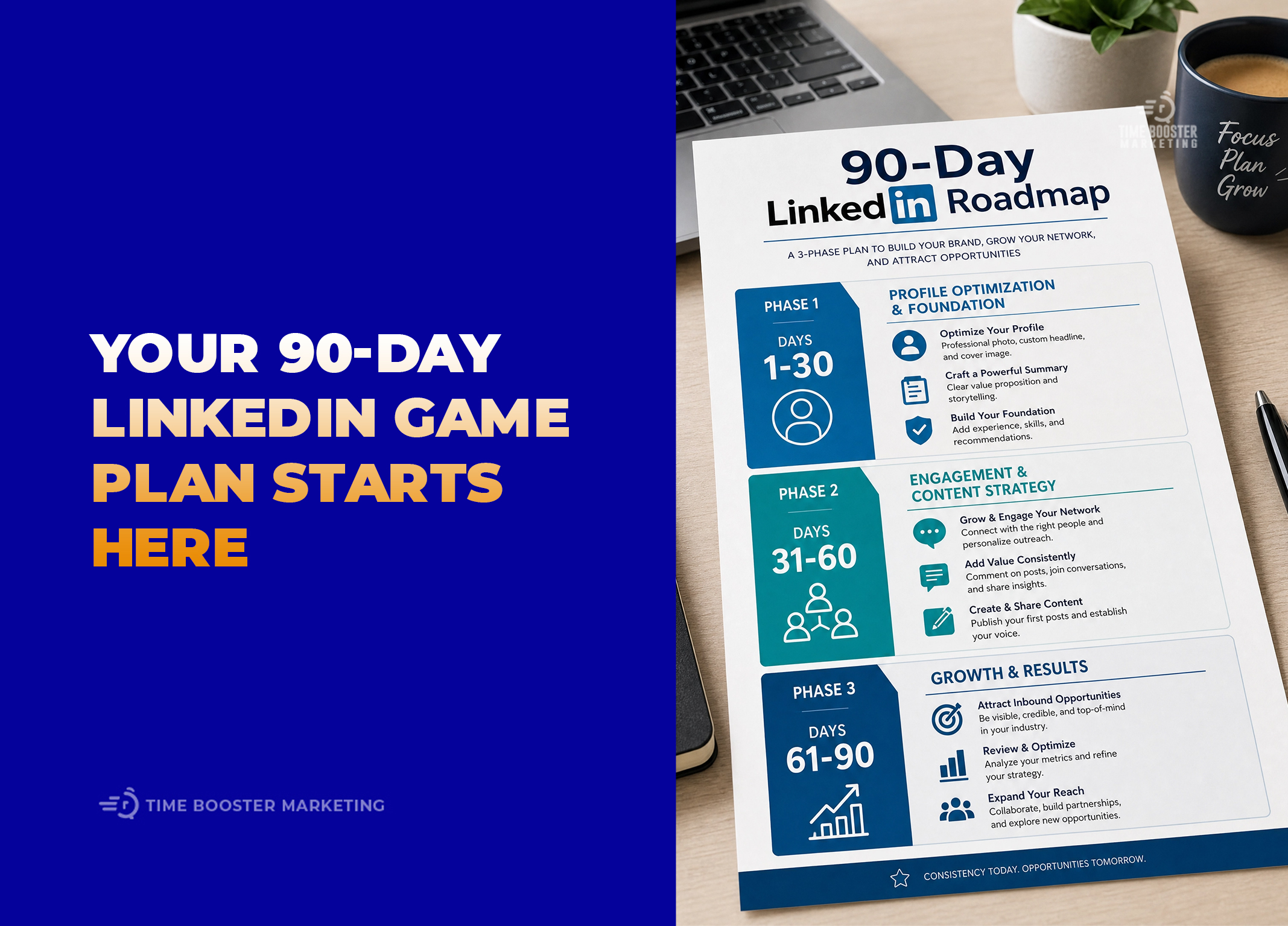
Month 1: Optimize Your Profile and Publish Your First Posts
The first 30 days should focus on clarity.
Before expecting recruiters, clients, partners, or hiring managers to respond, your profile must explain who you are, what you do, who you help, and why you are credible.
LinkedIn describes your profile as a professional landing page for managing your personal brand and creating opportunities. Its guide on how to create a good LinkedIn profile makes one thing clear: your profile is not just a digital CV. It is your first professional impression.
Week 1: Fix the Top of Your Profile
Start with your photo, banner, headline, location, and About section.
Your headline should not say only:
Open to Work
CEO
Freelancer
Student
Consultant
Use a value-driven headline instead:
Digital Marketing Specialist Helping Cameroonian SMEs Generate Qualified Leads
Junior Accountant | Bookkeeping, Reconciliation and Tax Support
Web Developer Building Mobile-Friendly Websites for Service Businesses
HR Consultant Helping SMEs Improve Recruitment and Staff Documentation
The formula is simple:
Role + skill area + audience or outcome
This makes your profile easier to understand and easier to find.
Week 2: Rewrite Your About Section
Your About section should speak to your target audience.
For job seekers, that audience may be recruiters and hiring managers. For freelancers, it may be business owners. For founders, it may be clients, partners, investors, or collaborators.
Use four short sections:
Who you are
What problems you solve
What proof or experience you have
What opportunities you are open to
Avoid vague sentences like:
I am a hardworking and passionate professional.
Write something more specific:
I help service-based SMEs improve online visibility, customer enquiries, and lead follow-up through content marketing, Meta ads, and conversion-focused messaging.
Specificity builds trust faster than adjectives.
Week 3: Add Proof to Your Profile
Your profile should not only claim competence. It should show evidence.
Use the Featured section to add work samples, portfolio links, case studies, strong posts, certificates, articles, service pages, or presentations. LinkedIn explains that the Featured section appears near the top of your profile and helps highlight key information for profile viewers.
A designer can feature portfolio samples. A marketer can feature a case study. A job seeker can feature a project or certificate. A consultant can feature an article or service page.
If you offer professional services, consider setting up a LinkedIn Service Page. LinkedIn’s Service Pages FAQ explains that Service Pages are free landing pages used to showcase services and businesses.
Week 4: Publish Your First Four Posts
Do not overthink your first posts.
Use these four formats:
Post 1: Introduce your professional focus.
Post 2: Explain a problem your target audience faces.
Post 3: Share a lesson from work, training, volunteering, or business.
Post 4: Give a practical tip related to your field.
For example, a job seeker can write about lessons from an internship. A freelancer can explain a mistake small businesses make. A founder can share a business-building lesson. A consultant can publish a short framework.
LinkedIn’s post visibility guide explains that you can choose who sees your posts, including broader visibility options. For growth, use public visibility when the content is professional and intended to reach beyond your current network.
Month 2: Build Consistency, Engagement, and Connections
Month two is where most people fail.
They optimize the profile, post once or twice, and disappear. But LinkedIn growth comes from repeated visibility. People need to see your name several times before they understand what to associate you with.
Create a Weekly Content Plan
Post two or three times per week.
Use this simple weekly structure:
Monday: Educational post
Wednesday: Opinion or lesson post
Friday: Case study, story, or practical tip
Your content should connect to your goal.
If you want a job, write about your skills, projects, industry observations, and career direction.
If you want clients, write about customer problems, mistakes, solutions, proof, and decision-making advice.
If you want partnerships, write about your market, mission, lessons, and opportunities for collaboration.
Do not chase random engagement. Build association. When people see your name, they should understand what professional value you represent.
Engage Before You Ask
Networking is not sending random connection requests.
Every week, comment thoughtfully on posts from people in your target field. Add useful perspective, not empty reactions.
Instead of writing:
Great post.
Write:
This is very relevant for SMEs in Cameroon. Many businesses invest in visibility but lose leads because WhatsApp follow-up is slow and disorganized.
That kind of comment shows thinking. It also makes your profile more visible to people outside your direct network.
Send Better Connection Requests
Send five to ten personalized connection requests per week.
Target:
- Recruiters
- Hiring managers
- Founders
- Consultants
- Industry peers
- Potential clients
- Alumni
- Event speakers
- Professionals in your desired sector
A good request says why the connection makes sense:
Hello Ms. Talla, I saw your post about recruitment in Cameroon’s finance sector. I am building my career in accounting and found your insight useful. I would be glad to connect.
For a freelancer:
Hello Mr. Mbah, I noticed your company works with growing SMEs. I support businesses with website messaging and lead-generation content, so I would be glad to connect with professionals in that space.
Connection quality matters more than connection volume.
Review Your Analytics
At the end of month two, check what is working.
LinkedIn’s analytics guide for members explains that members can review profile search appearances, post impressions, and other performance signals.
Track:
- Which posts generated profile views
- Which topics attracted useful comments
- Who viewed your profile
- Which job titles appeared in your audience
- Which posts led to connection requests
- Which conversations started
The goal is not to become obsessed with numbers. The goal is to learn which content and conversations are bringing the right people closer.
Month 3: Monetize, Pitch, Apply, or Collaborate Based on Results
Month three is where your LinkedIn strategy becomes commercial or career-focused.
By now, your profile is clearer, your content has created some visibility, and your network is more relevant. Do not remain stuck in posting mode. Start converting attention into action.
For Job Seekers: Apply With Context
Use LinkedIn job alerts to track relevant roles. LinkedIn’s job alerts guide explains how users can receive notifications for jobs that match their searches.
Do not apply randomly.
Choose roles that match your profile. Then message recruiters or hiring managers professionally when appropriate:
Hello Ms. Nfor, I recently applied for the Finance Assistant role at your organization. My background includes bookkeeping support, reconciliation, Excel reporting, and supplier documentation. I would be grateful for any guidance on what your team values most in shortlisted candidates.
This is respectful and specific.
For Freelancers and Consultants: Start Soft Outreach
By month three, identify people who have engaged with your posts, viewed your profile, accepted your connection requests, or discussed problems you solve.
Send a low-pressure message:
Hello Alain, I noticed you engaged with my post about WhatsApp lead follow-up. I help service businesses organize enquiry tracking and customer response systems. Would it be useful if I shared two quick observations about your current process?
Do not pitch everyone. Pitch where relevance is visible.
For Founders: Move From Visibility to Offers
If you are building a business, use month three to test clearer offers.
Post about:
- Your service or product
- Who it is for
- The problem it solves
- Proof or early traction
- A simple next step
For example:
I am opening three consultation slots this month for SMEs that want to improve their LinkedIn visibility and lead follow-up system. This is best for consultants, agencies, and service providers already posting but not generating serious conversations.
That is more effective than saying:
Contact us for all your digital needs.
Specific offers get better responses.
A Practical 90-Day LinkedIn Scorecard
At the end of 90 days, review:
- Profile views
- Search appearances
- Connection acceptance rate
- Post consistency
- Comments from relevant people
- Inbound messages
- Job applications sent
- Recruiter conversations
- Discovery calls booked
- Proposals sent
- Partnerships discussed
- Clients, interviews, or opportunities created
The most important question is:
Did LinkedIn create more serious professional conversations than before?
If yes, continue and refine the strategy. If no, check whether your profile is unclear, your content is too broad, your network is irrelevant, or your outreach is weak.

LinkedIn Growth Comes From Repetition With Direction
A 90-day LinkedIn strategy in Cameroon is not about pretending to be an influencer.
It is about making your value easier to find, understand, trust, and act on.
Month one gives you clarity. Month two gives you consistency. Month three turns visibility into applications, pitches, client conversations, partnerships, or business opportunities.
Do not judge LinkedIn after one week. Give your profile, content, and relationships enough time to compound.
Start with your profile this week. Publish your first useful post. Comment on relevant conversations. Connect with intention. Track what happens. Then repeat the process long enough for the right people to recognize your value.