LinkedIn Content Strategy Cameroon: What Kind of Content Works Best?
Not all LinkedIn content performs equally.
A post that works for a tech founder in San Francisco may not work for a job seeker in Douala, a consultant in Yaoundé, a freelancer in Buea, or an SME owner selling professional services across Cameroon.
That does not mean Cameroonian professionals should ignore global best practices. It means you need to adapt them to local realities: trust-based business relationships, referral culture, job-search pressure, limited professional visibility, WhatsApp-led conversations, and the need to prove competence before people take you seriously.
According to DataReportal’s Digital 2026 Cameroon report, LinkedIn’s advertising resources showed about 1.6 million registered LinkedIn members in Cameroon in late 2025. This does not mean all those people are active daily, but it shows that the platform has a meaningful professional base locally.
The opportunity is not just to post more. It is to post content that makes the right people understand your value.
Why LinkedIn Content Works Differently in Cameroon
Many Cameroonian professionals still treat LinkedIn like an online CV. They update their job title, accept connection requests, and disappear.
That creates an opportunity for people who publish useful content consistently.
On Facebook or Instagram, people may expect entertainment, lifestyle updates, family moments, trends, politics, and social commentary. On LinkedIn, people expect professional usefulness. They want career lessons, business insight, hiring information, industry opinions, leadership reflections, client problems, and practical knowledge.
This professional context changes what performs.
A generic motivational post may get likes, but it may not build your reputation as a serious accountant, developer, marketer, HR professional, consultant, engineer, or founder. A post explaining a specific workplace problem is more likely to attract the people who can hire you, refer you, collaborate with you, or buy from you.

LinkedIn’s post visibility guide explains that posts can be shared with different audiences, including “Anyone,” which can make a post visible beyond your direct connections. That means strong content can travel outside your immediate circle when people engage with it.
1. Personal Stories With a Professional Lesson
Stories work well because people remember situations more easily than abstract advice.
However, the story must have a professional point.
A weak story says:
I struggled, but I never gave up. God is faithful.
That may be sincere, but it does not clearly show your skill or expertise.
A stronger LinkedIn story says:
When I started managing customer enquiries for a small business, I thought the main issue was low demand. After reviewing the WhatsApp chats, I noticed that many serious prospects were answered after several hours. The lesson was clear: sometimes the marketing problem is really a follow-up problem.
This kind of story works because it is specific. It shows experience, judgment, and a useful lesson.
Good story topics include:
- A mistake you made early in your career
- A lesson from serving a difficult client
- What a project taught you
- A workplace challenge you handled
- A career transition
- A lesson from unemployment or job search
- A business failure that changed your thinking
- A customer conversation that revealed a bigger problem
The rule is simple: tell the story, then extract the lesson.
2. Practical Tips That Solve Real Problems
Tips perform well when they are specific and immediately useful.
A strong tip post helps your audience do something better after reading it.
Examples:
5 things SMEs should check before hiring a social media manager
3 mistakes that make your CV look weaker than your actual experience
How to respond when a customer asks for your price and disappears
What small businesses should include on a basic website homepage
How to prepare before a job interview with a Cameroonian company
This format is effective because many professionals in Cameroon are looking for practical guidance, not theory. A business owner wants to know how to get better enquiries. A job seeker wants to know why recruiters are not responding. A freelancer wants to know how to explain pricing. A young professional wants to know how to build credibility.
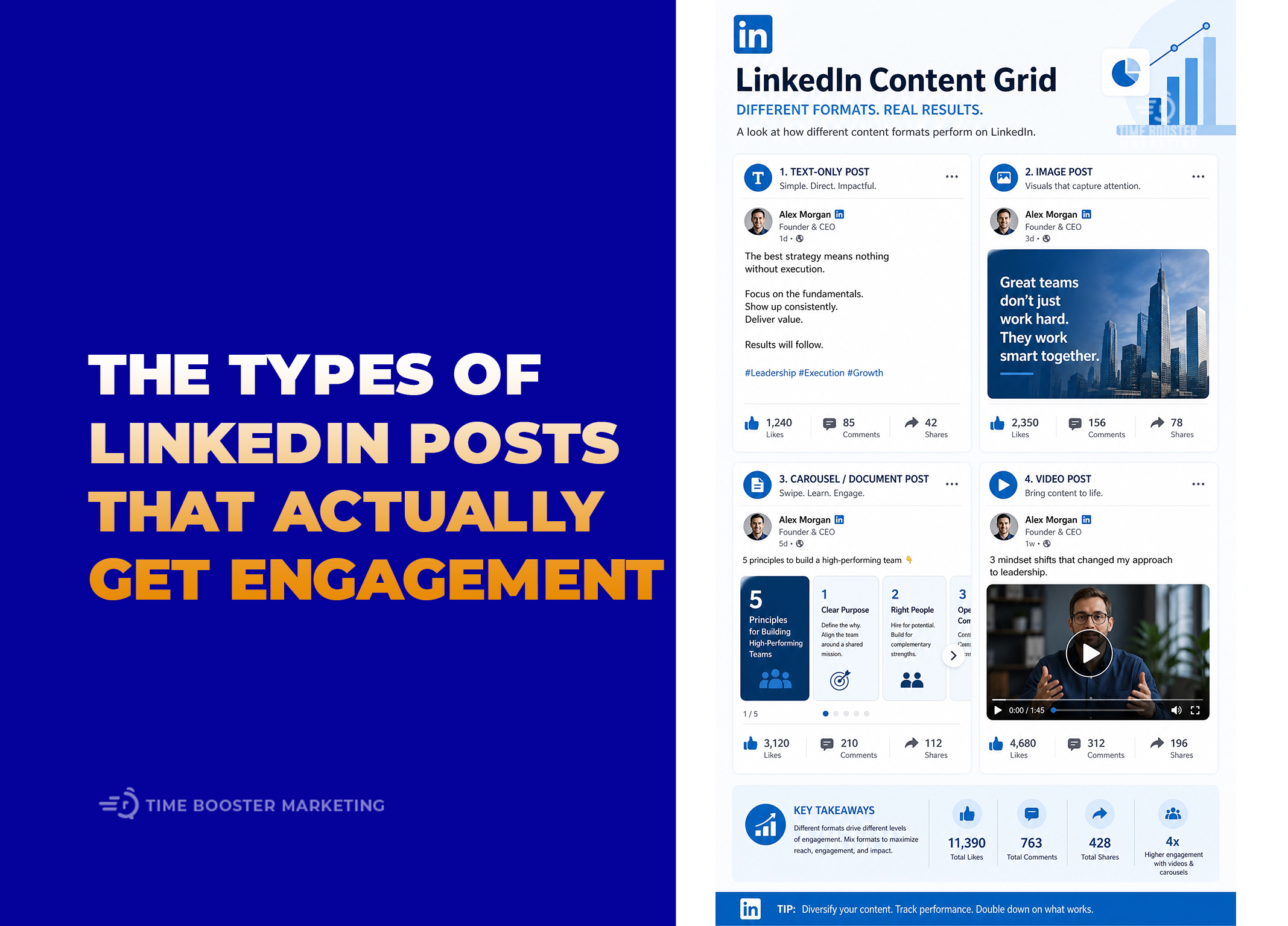
LinkedIn’s own business blog recommends posting regularly and shares content ideas such as company updates, thought leadership, customer stories, employee perspectives, and educational posts. Its article on LinkedIn content ideas for Pages also notes that companies posting at least weekly see stronger engagement than those posting less often.
For individual professionals, the principle is similar: regular useful posts help people associate your name with a subject.
3. Strong Opinions About Industry Problems
Opinions can perform well on LinkedIn because they invite agreement, disagreement, and discussion.
But opinion posts should not be empty controversy. They should reveal how you think.
A weak opinion says:
Many businesses in Cameroon are not serious.
A stronger opinion says:
Many SMEs do not have a visibility problem. They have a trust problem. Their pages are active, but pricing is unclear, customer reviews are missing, and enquiries are answered casually. More content will not fix weak credibility.
This kind of post is sharper because it diagnoses a real issue.
Good opinion topics include:
- Why many job seekers are invisible on LinkedIn
- Why SMEs confuse posting with marketing
- Why some freelancers lose clients after the first conversation
- Why businesses should stop copying foreign marketing trends blindly
- Why customer service affects digital marketing results
- Why professional visibility matters before you need a job
The best opinion posts do not just complain. They explain what the audience should do differently.
4. Mini Case Studies and Before-and-After Posts
Case studies are powerful because they prove competence.
You do not always need a large corporate success story. A simple before-and-after explanation can work.
For example:
A boutique was posting product photos without prices, sizes, or ordering instructions. We reorganized the captions to include product category, price range, available sizes, delivery area, and WhatsApp ordering steps. The content became easier for customers to act on.
This shows the problem, the intervention, and the logic behind the improvement.
A mini case study can follow this structure:
Problem: What was not working?
Action: What did you change?
Reason: Why did that change matter?
Result or lesson: What improved, or what should others learn?
If you cannot share client names or confidential numbers, keep the example anonymous and focus on the principle. Do not invent results. Credibility is more important than exaggeration.
5. Educational Posts That Explain Your Expertise
Educational content helps people understand what you know before they need your service.
An accountant can explain cash-flow mistakes. A software developer can explain why businesses outgrow spreadsheets. A recruiter can explain interview preparation. A real estate consultant can explain property verification. A marketer can explain why vague captions do not convert.
This format is especially useful for professionals selling services because clients often need education before they buy.
For longer explanations, LinkedIn allows members to publish articles through its publishing tool. LinkedIn’s article publishing guide explains how to write and publish longer-form articles directly on the platform.
Use articles for deeper topics, but use regular posts for faster visibility and conversation.
Local Topics That Resonate With Cameroonian Audiences
The best LinkedIn content in Cameroon usually connects professional insight to local experience.
Strong topics include:
Job search and career growth: CV