LinkedIn for Entrepreneurs Cameroon: How to Attract Investors and Partners
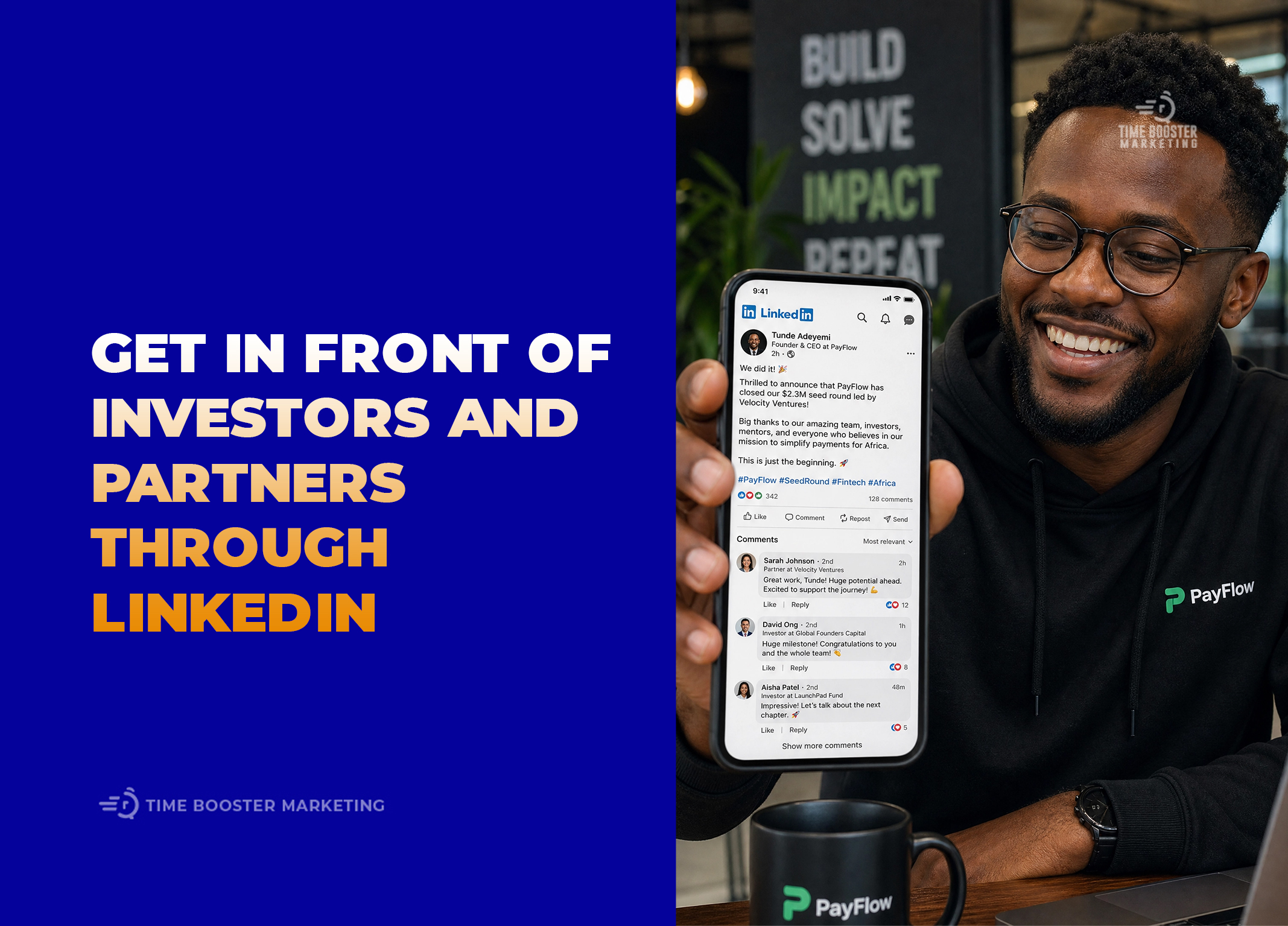
Investors are on LinkedIn. The real question is whether they can understand your business when they find you.
Many Cameroonian entrepreneurs use LinkedIn like a personal CV or abandon it completely. Their profiles say “Founder” or “CEO,” but they do not explain the business model, market, traction, customer problem, team capability, or partnership opportunity. That is a missed advantage.
According to DataReportal’s Digital 2026 Cameroon report, LinkedIn’s advertising resources indicated about 1.6 million registered members in Cameroon in late 2025. That figure does not mean every member is an investor, but it confirms that LinkedIn has a meaningful professional audience locally and can connect Cameroonian founders to regional and international networks.
LinkedIn will not raise capital for you automatically. But it can help the right people discover your thinking, evaluate your seriousness, and understand why your business is worth a conversation.
Why LinkedIn Matters for Cameroonian Entrepreneurs
Most entrepreneurs in Cameroon still depend heavily on referrals, WhatsApp introductions, family networks, trade events, and in-person meetings. Those channels matter because trust is central to business.
LinkedIn strengthens those channels by giving people a place to verify you before they reply.
If someone hears about your startup through a referral, they may check your profile. If an investor sees your comment under a sector discussion, they may visit your page. If a potential partner receives your message, they may first look at your headline, Featured section, company page, and recent posts.
LinkedIn explains that your profile is a professional landing page for managing your personal brand and creating opportunities. Its guide to creating a good LinkedIn profile is useful because investors and partners are not only evaluating your title. They are evaluating your clarity, credibility, and professional judgment.
1. Position Your Profile for Investment Conversations
A founder profile should not only say what position you hold. It should explain what you are building and why it matters.
A weak headline says:
Founder and CEO
A stronger headline says:
Founder Building Digital Inventory Tools for Small Retailers in Cameroon
Or:
Agribusiness Founder Helping Smallholder Farmers Reduce Post-Harvest Losses Through Local Processing
Or:
Founder of a Logistics Platform Connecting SMEs to Reliable Last-Mile Delivery Across Douala and Yaoundé
The stronger version gives investors and partners a reason to keep reading.
Use the Founder Positioning Formula
Use this structure:
Founder role + problem solved + market served
Examples:
Founder Helping Cameroonian SMEs Manage Customer Follow-Up Through WhatsApp and CRM Automation
Social Entrepreneur Building Practical Skills Training for Young People in Underserved Communities
Clean Energy Entrepreneur Expanding Affordable Solar Access for Small Businesses and Rural Households
This formula works because investors and partners do not invest in vague ambition. They need to understand the problem, market, and direction.
Make Your About Section Investor-Readable
Your About section should explain your business clearly without sounding like a pitch deck copied into a profile.
Use four short paragraphs:
What you are building: Name the company and explain the solution.
Why the problem matters: Show the customer pain or market gap.
What progress you have made: Mention traction, partnerships, pilots, revenue, users, team, or product stage if available.
What conversations you are open to: Investors, distributors, advisors, institutions, ecosystem partners, or strategic customers.
Example:
I am the founder of a logistics startup helping SMEs in Douala and Yaoundé manage delivery requests, customer updates, and driver coordination from one simple platform.
Many small businesses lose customer trust because delivery information is scattered across phone calls, WhatsApp chats, and manual notebooks. We are building a system that makes fulfilment more visible and easier to manage.
Our current focus is onboarding retail and food businesses that handle recurring local deliveries. We are also learning from operators, drivers, and SME owners to improve reliability in real market conditions.
I am open to conversations with logistics partners, SME-focused investors, technology advisors, and businesses that want to improve last-mile delivery operations.
That summary is not hype. It gives context.
2. Use the Featured Section to Show Proof
Investors and partners need evidence.
LinkedIn’s Featured section guide explains that members can showcase samples of their work directly on their profiles. For entrepreneurs, this is one of the most valuable profile sections because it turns claims into visible proof.
Feature items such as:
- Pitch deck teaser
- Product demo
- Company website
- Press mention
- Customer testimonial
- Pilot project summary
- Short case study
- Founder interview
- Investor memo excerpt
- Impact report
- Partnership announcement
Do not upload confidential documents publicly. Share enough to establish credibility, then reserve sensitive financials, cap table details, and investor materials for qualified conversations.
A potential partner should not have to ask, “What exactly do you do?” Your Featured section should help answer that quickly.
3. Share Your Business Journey Without Exaggeration
Founder content should create confidence.
That does not mean pretending everything is perfect. Serious investors know startups face difficulty. What they want to see is whether you understand your market, learn quickly, listen to customers, and make disciplined decisions.
LinkedIn allows members to control post visibility, including sharing posts publicly. Its post visibility guide explains how posts can reach audiences beyond first-degree connections depending on settings and engagement.
Use LinkedIn content to document:
- Customer problems you are studying
- Market insights from the field
- Product lessons
- Team milestones
- Pilot results
- Partnership needs
- Lessons from failure
- Founder reflections
- Operational challenges
- Impact stories
For example:
Last month, we spoke with 25 small retailers in Douala about stock tracking. The biggest issue was not only inventory loss. It was that owners often discovered the loss too late to correct purchasing decisions. This is shaping how we design our reporting dashboard.
That post builds credibility because it shows customer learning.
A weak post says:
We are revolutionizing Africa. Big things coming soon.
That may sound exciting, but it provides no evidence.
4. Publish Content Investors and Partners Can Evaluate
Your content should answer the questions serious stakeholders quietly ask.
What Problem Are You Solving?
Explain the customer pain in plain language.
Why Is Now the Right Time?
Show what has changed in the market, technology, regulation, customer behavior, or distribution environment.
Why Are You the Right Founder?
Share relevant experience, community access, technical skill, field knowledge, or team strength.
What Evidence Shows Progress?
Mention verified traction when possible: pilots, customers, revenue, retention, partnerships, waitlists, user feedback, cost improvements, or operational milestones.
What Help Do You Need?
Be specific. Do you need distribution partners, technical advisors, patient capital, sector experts, institutional buyers, or pilot locations?
Y Combinator’s guide to seed fundraising notes that founders usually need materials such as an executive summary and slide deck when raising. LinkedIn is not a replacement for those materials, but it can help create the trust and visibility that make people willing to review them.
5. Use LinkedIn Articles for Deeper Founder Thinking
Short posts are useful for visibility. Articles are useful for depth.
LinkedIn’s article publishing guide explains that members can publish articles to share expertise and insights. Entrepreneurs can use articles to explain market problems, industry lessons, founder viewpoints, and long-term vision.
Useful article topics include:
- Why small retailers in Cameroon need better inventory visibility
- What we learned from piloting solar solutions with rural businesses
- The hidden logistics problem affecting SME e-commerce in Douala
- Why practical youth training must connect to enterprise
- What local manufacturers need from distribution partners
These articles help investors and partners see how you think, not only what you are selling.
6. Identify the Right Investors and Partners
Do not message everyone with “Please invest in my startup.”
Start by mapping who makes sense.
Potential investors may include:
- Angel investors
- Diaspora professionals
- Sector-focused funds
- Impact investors
- Accelerator leaders
- Corporate innovation teams
- Family offices
- Experienced founders
Potential partners may include:
- Distributors
- NGOs
- universities
- government programs
- technology providers
- suppliers
- corporate buyers
- professional associations
- logistics operators
- training institutions
Look for fit before outreach. An investor focused on fintech may not be the right person for an agriculture-processing business. A corporate partner may care less about your pitch deck and more about operational reliability.
7. Reach Out Without Being Pushy
LinkedIn’s connection best-practices guide recommends personalizing invitations and giving people a clear reason to connect. That matters even more when contacting investors or partners because generic requests look careless.
A good message is short, specific, and respectful.
Investor Connection Request
Hello Ms. Ngu, I noticed your work supporting early-stage African startups in logistics and SME digitization. I am building a delivery coordination platform for small businesses in Cameroon and would be glad to connect and follow your insights.
Partner Connection Request
Hello Mr. Talla, I saw that your company works with retailers across Douala. I am building inventory and customer follow-up tools for SMEs, and I would be glad to connect with operators working in that market.
Follow-Up After Acceptance
Thank you for connecting. I am currently learning from SME operators about delivery and customer communication challenges. Your experience in distribution is very relevant. Would it be appropriate to share a short summary of what we are building and ask for one piece of feedback?
This approach works because it does not demand money immediately. It opens a conversation around relevance.
8. Build Relationships Before Asking for Capital
Cold investor outreach is difficult because trust is low.
Warm the relationship by engaging intelligently before asking for a meeting. Comment on relevant posts. Share useful market observations. Ask focused questions. Offer thoughtful updates. Show progress over time.
An investor who sees your founder journey for three months may be more open to a conversation than someone receiving a sudden pitch from a stranger.
Your goal is to become familiar, credible, and specific.
Do not ask for investment before you can clearly explain:
- the problem
- the customer
- the market
- the solution
- traction
- business model
- use of funds
- team
- risks
- next milestone
If you are not ready to raise, use LinkedIn to find advisors, pilot partners, and customer feedback first.
Turn Your LinkedIn Presence Into a Founder Asset
LinkedIn for entrepreneurs in Cameroon is not about posting motivational slogans or calling yourself CEO.
It is about making your business easier to understand, verify, and trust.
Position your profile around the problem you solve. Use the Featured section to show proof. Share your founder journey with honesty and discipline. Publish insights that reveal market understanding. Reach out to investors and partners with relevance, not pressure.
Investors and partners are more likely to respond when they can see that you are not only looking for support—you are already building, learning, and creating value.
Your next opportunity may start with a profile visit, a thoughtful comment, a shared case study, or a respectful message. Make sure that when the right person finds you, your LinkedIn presence gives them a reason to continue the conversation.