

YouTube Shorts Strategy for African Creators
YouTube Shorts can grow your audience quickly, but only if you use them with direction.

Many African creators post random trends, dances, jokes, reactions, and motivational clips because they see other people getting views. Sometimes the videos perform. But after the spike, nothing useful happens. The channel gains the wrong audience, subscribers do not return, long-form videos remain weak, and monetization becomes difficult.
That is the difference between views and strategy.
YouTube describes Shorts as short-form videos up to three minutes long, created for quick discovery and mobile viewing. Its official Get started creating YouTube Shorts guide explains that creators can use Shorts tools to create short-form videos, and YouTube Analytics now includes engaged views to show viewers who chose to keep watching.
For African creators, Shorts are powerful because they match how audiences already consume content: fast, mobile-first, visual, social, and shareable. But speed can become a trap if your channel has no clear identity.
Start With a Niche, Not a Trend
A trend can give you attention. A niche gives you recognition.
If you are known for business education, every Short should help people understand business better. If you teach agriculture, your Shorts should solve farming problems. If you create faith-based content, your Shorts should build spiritual reflection or community. If you are a restaurant, your Shorts should make people hungry, curious, or confident enough to visit.
A weak Shorts strategy says:
Let me post whatever is trending.
A stronger Shorts strategy says:
Let me use trending formats to explain problems my audience already cares about.
For example, a creator teaching small-business marketing in Cameroon could use a trending audio to show:
“3 reasons customers ignore your WhatsApp flyer.”
A career coach could use a trend to explain:
“One CV mistake that makes recruiters skip you.”
A food creator could use a fast-cut trend to show:
“How eru and water fufu is prepared for a family lunch.”
The trend creates entry. The niche creates memory.
Use Trends Without Losing Your Identity
Trending content works when it is adapted, not copied.
YouTube’s Tips to create YouTube Shorts encourages creators to use tools such as the Shorts audio library, effects, backgrounds, and creative formats. Those tools can help with discovery, but they should support your message, not replace it.
Before using a trend, ask:
Can this trend express my niche?
Will the right audience understand why I posted it?
Can I add local relevance?
Will this attract subscribers who want more of my content?
If the answer is no, skip it.
A creator who teaches finance should not chase every dance trend unless the trend can explain budgeting, savings, debt, pricing, business cash flow, or money behavior. A school channel should not post random comedy unless it connects to student life, learning, discipline, exams, or parent concerns.
Trends should make your message easier to enter, not harder to recognize.
Build Repeatable Shorts Formats
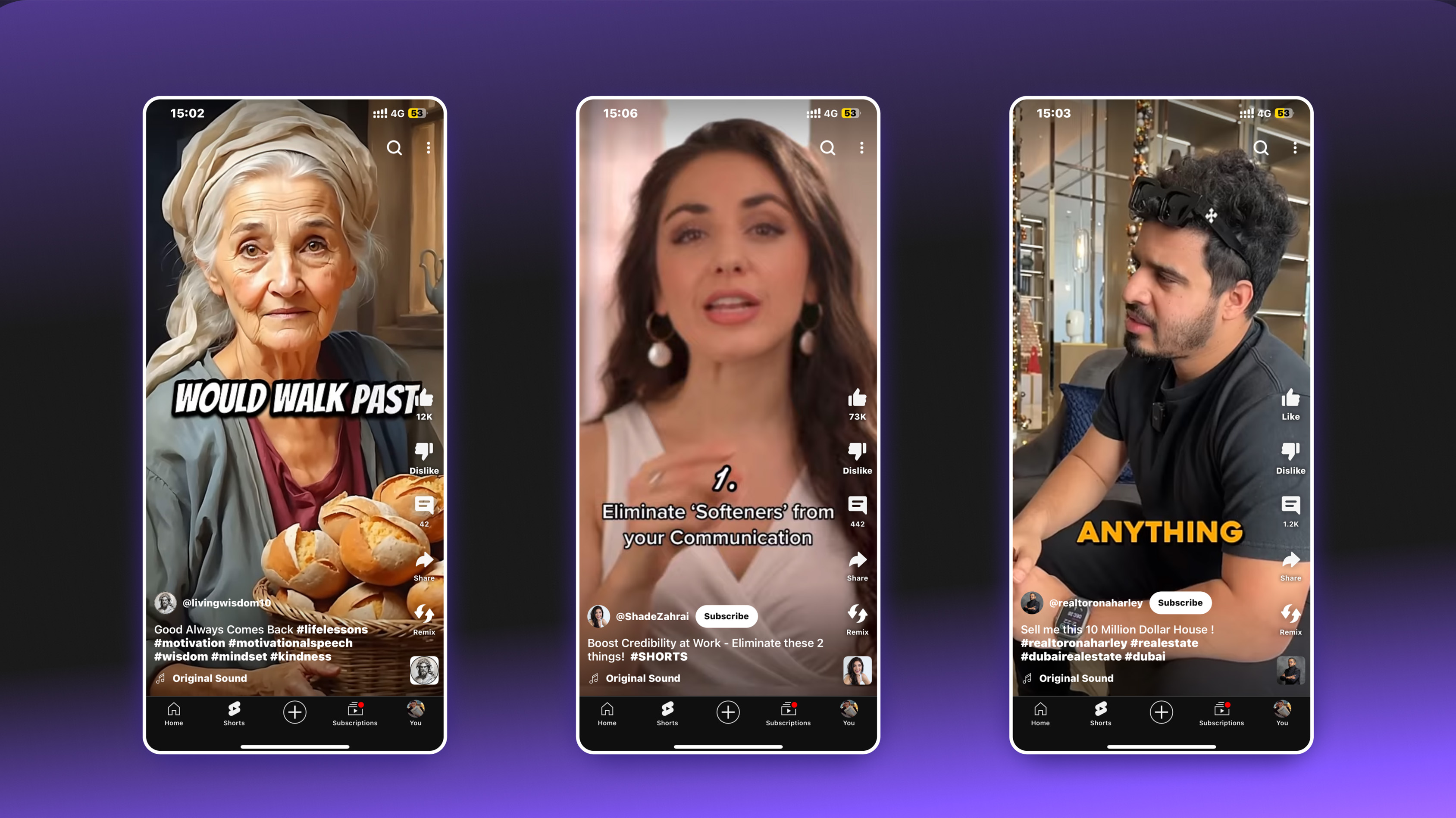
The easiest way to stay consistent is to create formats you can repeat.
Use formats such as:
One mistake: “One mistake killing your WhatsApp sales.”
Three tips: “Three ways to improve your YouTube titles.”
Before and after: “Before SEO vs after SEO on a service page.”
Myth correction: “No, you do not need expensive gear to start YouTube.”
Local comparison: “Selling on Instagram vs WhatsApp in Cameroon.”
Quick checklist: “Before you post that flyer, check these three things.”
Mini-story: “A client almost lost this sale because nobody followed up.”
Repeatable formats help viewers learn what to expect from you. They also reduce content planning stress because you are not inventing from zero every day.
Write Strong Hooks in the First Two Seconds
Shorts move fast. Viewers decide quickly.
Your hook should immediately tell the viewer why they should continue watching.
Weak hook:
Hello guys, welcome back to my channel.
Strong hook:
Your WhatsApp ads are not failing. Your replies are too slow.
Weak hook:
Today I want to talk about business.
Strong hook:
Most small businesses lose customers after the first “How much?”
Weak hook:
Here are some YouTube tips.
Strong hook:
If your Shorts get views but no subscribers, this is why.
Good hooks are specific, diagnostic, and direct. They name a problem the viewer already feels.
Make Every Short About One Idea
A Short is not a full lecture.
Do not try to explain seven concepts in one clip. Pick one idea and deliver it cleanly.
For example:
Instead of:
How to grow your business online
Create:
Why your Instagram bio should include a WhatsApp link
Instead of:
How to start YouTube
Create:
Your first YouTube video should answer one question
Instead of:
How to get customers
Create:
Stop saying “quality services” if you want serious enquiries
One Short should do one job. That makes the message easier to watch, remember, and share.
Use Local Context as a Competitive Advantage
African creators should not erase local context to look “global.”
Local detail often makes content stronger.
Mention real buying behavior, city names, cultural habits, customer objections, language realities, market pressure, transport problems, mobile money habits, WhatsApp communication, event culture, school systems, local foods, and business conditions when relevant.
A generic business Short says:
Improve your customer service.
A stronger African-market Short says:
If a customer asks for your price on WhatsApp and you reply six hours later, they have probably already bought from someone else.
That feels real because it reflects actual business behavior.
Your local context is not a weakness. It is your differentiation.
Connect Shorts to Longer Videos

Shorts should not exist alone.
Use them to feed deeper content. YouTube allows creators to add a related video to a Short after upload, which can help direct viewers to another video on the channel. YouTube’s related video for Shorts guide explains that the feature is designed to complement the Short and encourage viewers to watch more of your content.
This is important for creators who teach, sell, coach, preach, review, or explain.
Example strategy:
Short: “3 mistakes killing your Google Maps ranking.”
Related video: “How to Get Your Business on Google Maps in Cameroon.”
Short: “One reason your YouTube title is not getting clicks.”
Related video: “YouTube SEO: How to Rank Videos in Cameroon.”
Short: “Why WhatsApp broadcasts stop working after 256 contacts.”
Related video: “Why Businesses Are Switching From Broadcasts to Messaging Platforms.”
The Short creates discovery. The long video builds trust.
Read Shorts Analytics Weekly
YouTube Shorts growth should be measured, not guessed.
YouTube’s Content tab analytics tips for Shorts explains that creators can review Shorts performance in YouTube Studio and understand which Shorts lead viewers to subscribe or unsubscribe over time.
Track:
Viewed versus swiped away: Did the hook stop people?
Audience retention: Did they watch to the end?
Likes and comments: Did the idea create response?
Subscribers gained: Did the Short attract the right people?
Traffic source: Did discovery come from Shorts feed, search, or external sharing?
Related video clicks: Did viewers move to deeper content?
If a Short gets many views but no subscribers, it may be entertaining but not connected to your channel promise. If a Short gets fewer views but strong subscribers, comments, or long-form clicks, it may be more valuable than a random viral clip.
Use the Trends Tab for Ideas, Not Copying
YouTube Analytics can also support ideation. YouTube’s Analytics guide notes that the Trends tab can help creators discover content gaps for videos and Shorts and identify video ideas viewers may want to watch.
Use trends to ask:
What is the audience already interested in?
What question has not been answered well?
How can I localize this topic for African viewers?
Can I create a faster, clearer, more useful version?
A trend is not an instruction to copy. It is a signal of attention. Your job is to add relevance.
Build a Weekly Shorts Schedule
A practical Shorts schedule for African creators could look like this:
Monday: One educational Short.
Tuesday: One trend adapted to your niche.
Wednesday: One myth or mistake.
Thursday: One story or behind-the-scenes clip.
Friday: One Short linked to a long-form video.
This gives you consistency without chaos.
For a business channel, three Shorts per week may be enough. For entertainment or lifestyle channels, daily Shorts may work if quality stays high. The right frequency is the one you can sustain without weakening your channel identity.
Avoid the Biggest Shorts Mistakes
The first mistake is chasing trends that attract the wrong audience.
The second is posting Shorts that have no connection to your long-form content.
The third is using misleading hooks that make people leave disappointed.
The fourth is ignoring analytics.
The fifth is reposting low-quality clips from other platforms without adapting them.
The sixth is using copyrighted, unsafe, or policy-breaking content carelessly. YouTube’s Community Guidelines and spam policy make clear that misleading, spammy, harmful, or manipulative content can put a channel at risk.
Growth is not worth losing the channel.
Turn Shorts Into an Audience System
A strong YouTube Shorts strategy has five layers.
Discovery: Use hooks, trends, local context, and clear visuals.
Recognition: Stay inside a defined niche.
Retention: Deliver one useful idea quickly.
Conversion: Connect Shorts to long videos, playlists, services, products, or communities.
Learning: Use analytics to refine topics, hooks, formats, and posting frequency.
This is how Shorts become more than quick views.
Shorts Can Open the Door, but Strategy Keeps People
YouTube Shorts are a powerful opportunity for African creators because they lower the barrier to discovery. You can record on a phone, publish quickly, test ideas, and reach audiences beyond your immediate network.
But random posting will not build a serious channel.
Choose a niche. Adapt trends intelligently. Use strong hooks. Create repeatable formats. Add local relevance. Connect Shorts to deeper videos. Study analytics. Protect your channel with responsible content.
The goal is not to go viral once. The goal is to become recognizable enough that the right people keep coming back.