Aligning an AI Automation Strategy with Your Content and SEO Strategy
Your business is using AI to draft blog posts. You have a content calendar. You have an SEO agency (or tool) telling you which keywords to target. Yet, your growth is flat. Why?
The problem is that these three critical functions, AI, Content, and SEO, are operating in separate silos. Meaning:
- Your content team gets a list of keywords and is told to “include them.”
- Your AI tool is used like a smarter typewriter, generating text without strategic direction.
- Your SEO efforts are a series of technical fixes that lack the content needed to capture traffic.
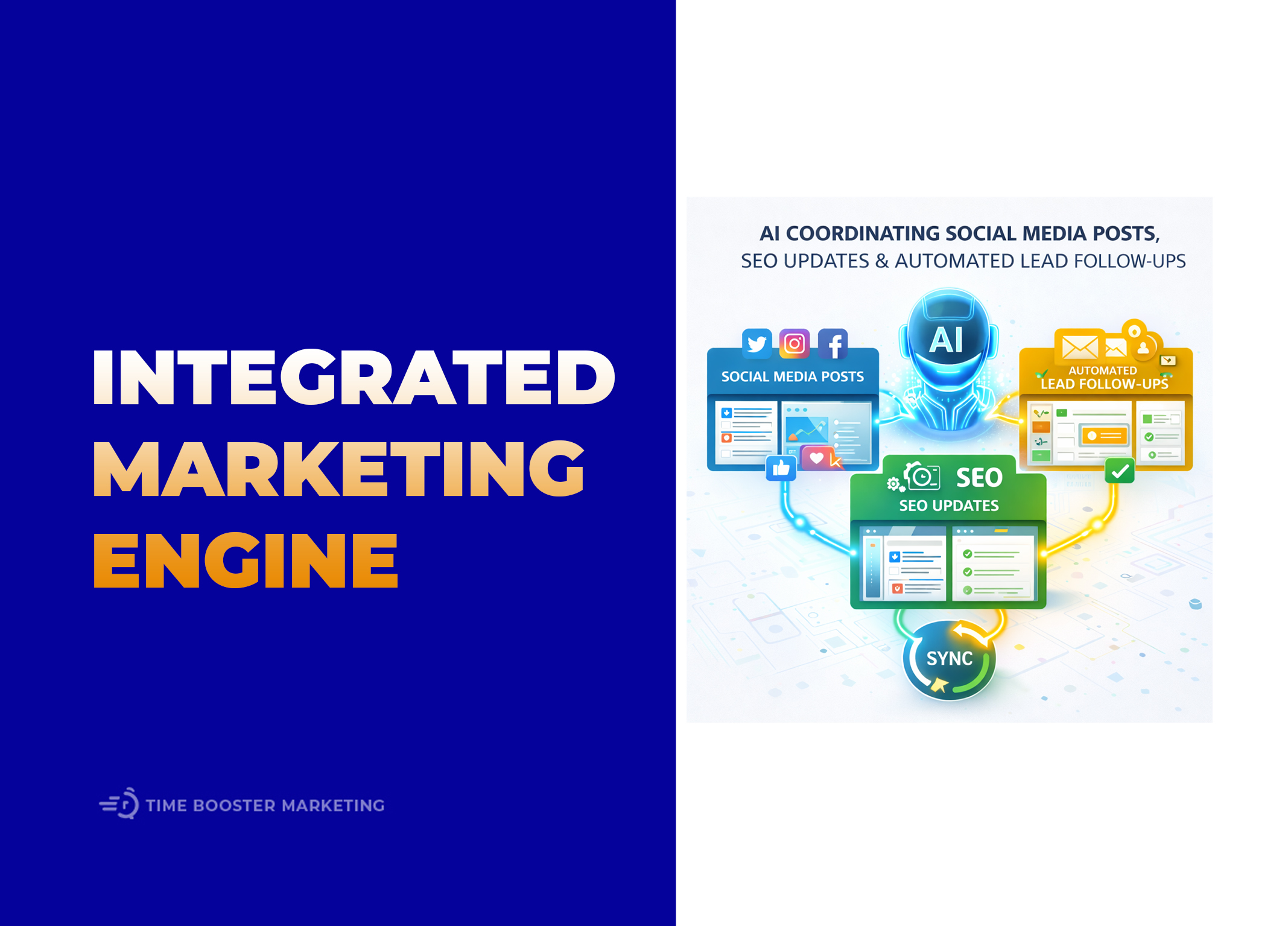
This disconnected approach is inefficient and ineffective. A unified AI automation strategy is the solution. It’s a framework where AI doesn’t just assist with tasks; it acts as the central nervous system connecting your SEO goals directly to your content creation process, creating a powerful, self-optimizing engine for growth.
This guide will show you how to build that integrated strategy.
Why Separate AI, Content, and SEO Strategies Fail
When these functions are not aligned, you create significant waste:
- Content That Nobody Finds: Your team writes a brilliant, insightful article. But because it wasn’t built on a foundation of SEO research (search volume, user intent, competitor gaps), it never ranks on Google. It’s a beautiful car with no road to drive on.
- SEO Without a Voice: You perform a perfect technical SEO audit and identify valuable keywords. But without a content engine to create articles, landing pages, and resources targeting those keywords, your site has nothing to offer search engines or users. It’s a perfect road map with no destination.
- Ad-hoc AI Usage: You use an AI writer to generate a blog post fast. But the AI wasn’t given the right inputs—target audience, primary and secondary keywords, internal linking opportunities, or the desired user intent. The result is generic, unoptimized content that fails to rank or convert, as detailed in Google’s own guidance on creating helpful, reliable content.
A unified strategy ensures that every piece of content is created with a specific SEO purpose, and AI automates and optimizes that entire workflow.
The Unified AI Automation Strategy Framework

Think of your growth engine as having three core components, all powered by AI automation:
- SEO Strategy (The Roadmap): This defines where you need to go. It identifies the high-value keywords, user intents, and competitive gaps.
- Content Strategy (The Vehicle): This is how you get there. It involves creating the articles, videos, and landing pages that satisfy user intent and build authority.
- AI Automation (The Engine): This is what makes the vehicle move efficiently. It automates research, creation, optimization, and distribution, connecting the roadmap to the vehicle at every step.
When integrated, the process looks like this: SEO data informs AI-driven content briefs → AI augments content creation → Content performance data feeds back into the SEO strategy.
Phase 1: AI-Powered Research and Planning

This is the foundation. Before you write a single word, your AI automation strategy should answer: “What content will have the highest impact on our SEO and revenue goals?”
AI-Driven Keyword & Topic Clustering
Instead of just generating a list of keywords, use AI to group them into topic clusters. A topic cluster is a group of interlinked pages all related to a central “pillar” topic. This signals to Google that you have deep expertise in that area.
- How AI Helps: AI can analyze thousands of keywords and automatically group them by user intent (e.g., “what is,” “how to,” “best,” “pricing”). This allows you to build a content plan that covers an entire topic comprehensively.
- Tools: SEMrush’s Topic Research Tool, Ahrefs’ keyword clustering features.
- Further Reading: Learn more about this powerful SEO technique from Ahrefs’ guide to topic clusters.
AI-Powered Competitive Analysis
Manually sifting through competitor websites is slow and inefficient.
- How AI Helps: AI tools can crawl competitor sites and instantly identify:
- Content Gaps: Topics they rank for that you don’t cover.
- Keyword Gaps: Keywords they get traffic from that you are missing.
- Top-Performing Formats: Whether their audience prefers guides, videos, or case studies.
Predictive SEO Forecasting
Instead of reacting to trends, AI can help you get ahead of them.
- How AI Helps: By analyzing historical search data, social media trends, and news cycles, AI models can predict which topics will see a surge in interest. For a business in Cameroon, this could mean predicting demand for “rainy season business ideas” before the season starts.
- Further Reading: This emerging field is covered in articles on predictive analytics from publications like Search Engine Journal.
Phase 2: AI-Augmented Content Creation

With a solid, data-backed plan, AI now accelerates the creation process while ensuring SEO alignment.
From Intelligent Brief to Optimized Draft
This is where the magic happens. A unified strategy doesn’t just ask AI to “write an article about X.” It provides a detailed, SEO-informed brief.
- The AI-Generated Brief: Your AI automation workflow should first create a brief that includes:
- Primary and secondary keywords.
- Target word count based on top-ranking competitors.
- An outline with suggested H2 and H3 headings.
- Questions to answer (pulled from Google’s “People Also Ask”).
- Internal and external linking suggestions.
- The AI-Generated Draft: With this brief, an AI writer like Jasper or Copy.ai can produce a first draft that is already 70% of the way to being fully optimized. Your content team then refines, adds human insight, and ensures brand voice.
Real-Time, On-Page SEO Optimization
Instead of writing an article and “doing SEO” on it later, this process happens simultaneously.
- How AI Helps: Tools like SurferSEO or MarketMuse analyze your draft in real-time against top-ranking pages. They provide a score and suggest improvements, such as:
- Adding missing semantic keywords.
- Improving headline structure.
- Optimizing image alt-text.
- Further Reading: For a foundational understanding of what these tools are optimizing for, review Moz’s comprehensive guide to on-page SEO.
Phase 3: AI-Driven Distribution and Optimization

Creating great content is only half the battle. A unified strategy automates the process of getting it in front of the right audience and uses performance data to improve over time.
Automated Content Distribution
- How AI Helps:
- Social Scheduling: Tools like Buffer or Hootsuite use AI to determine the optimal time to post on each platform and can even rewrite your content for different channel formats.
- Outreach Automation: AI can identify relevant blogs or journalists for outreach and draft personalized emails, saving hours of manual work.
- Connecting Your Tools: Use platforms like Zapier or Make.com to create workflows, e.g., “When a new blog post is published in WordPress, automatically create 5 social media posts and add them to the Buffer queue.”
AI-Powered Performance Monitoring & Content Refreshing
Content isn’t “one and done.” Its value diminishes over time.
- How AI Helps: An AI-powered system can monitor your analytics and automatically flag pages with decaying traffic or rankings. It can then suggest specific updates, such as:
- “This article from 2024 is losing traffic. Update the statistics for 2026.”
- “A new competitor is now ranking for this keyword. Add a section addressing [New Feature].”
- Further Reading: Google emphasizes the importance of content freshness. You can read their perspective on updating your site’s content.
A Practical Example: A Real Estate Agency in Douala
Let’s see how a unified AI automation strategy works in practice.
| Stage | Disconnected Strategy (The Old Way) | Unified AI Automation Strategy (The New Way) |
|---|---|---|
| Planning | The CEO says, “We need a blog post about our new properties in Bonaberi.” | AI analyzes search trends and identifies a rising, high-intent keyword: “prix terrain bonaberi”. It generates a topic cluster plan around “Investing in Bonaberi Real Estate.” |
| Creation | A writer drafts a post listing the properties. It has no keywords or clear user intent. | An AI-generated brief is created for the pillar page: “Le Guide Ultime de l’Investissement Immobilier à Bonaberi 2026.” The brief includes keywords, questions, and competitor data. An AI writer drafts the post, which is then refined by a human editor. |
| Optimization | An SEO intern adds “real estate Douala” to the title and hopes for the best. | During writing, an SEO tool ensures the content covers all relevant semantic topics. The system automatically suggests internal links to specific property listings. |
| Distribution | The link is posted once on Facebook. | An automation triggers a multi-channel campaign: a LinkedIn post for investors, an Instagram Reel showcasing the area, and a WhatsApp message to leads who previously inquired about Bonaberi. |
| Feedback | The post gets 50 views and is forgotten. | AI tracks performance. It notes high engagement and suggests a follow-up article: “Comment Éviter les Arnaques Foncières à Douala”, linking back to the pillar page and further establishing authority. |
Your Action Plan to Build a Unified Strategy
- Audit Your Current Stack (Day 1-7): Map out your existing tools for AI, content, and SEO. Identify where the process is disconnected. Are your writers getting SEO briefs? Is your SEO data informing your content calendar?
- Choose Your Integration Hub (Day 8-14): Select a central platform for your content plan (like Notion, Asana, or a dedicated content marketing platform). This is where your AI-generated research and briefs will live.
- Build Your First Automated Workflow (Day 15-30): Start simple. Create a Zapier or Make.com workflow that connects your research tool to your content hub. For example: “When a new keyword opportunity is tagged in SEMrush, create a new ‘Content Idea’ card in Trello with a predefined brief template.”
By building a unified AI automation strategy, you move from ad-hoc tasks to a cohesive, intelligent system. You create content with purpose, ensure it gets seen, and build a powerful feedback loop that drives sustainable, long-term growth.