Best WhatsApp Marketing Platform: How to Choose the Right Tool for Your Business
Choosing the wrong WhatsApp marketing platform can waste months.
A tool may look impressive during a demo, but fail when your team needs to send campaigns, assign chats, track leads, connect to a CRM, manage customer follow-up, or calculate whether WhatsApp conversations are actually producing sales.
This matters because WhatsApp is not just a messaging app for many African businesses. It is where customers ask for prices, confirm availability, request quotations, send payment screenshots, track orders, and decide whether they trust you.
The best WhatsApp marketing platform is not automatically the most expensive tool. It is the platform that fits your sales process, your team capacity, your customer behavior, and your growth stage.
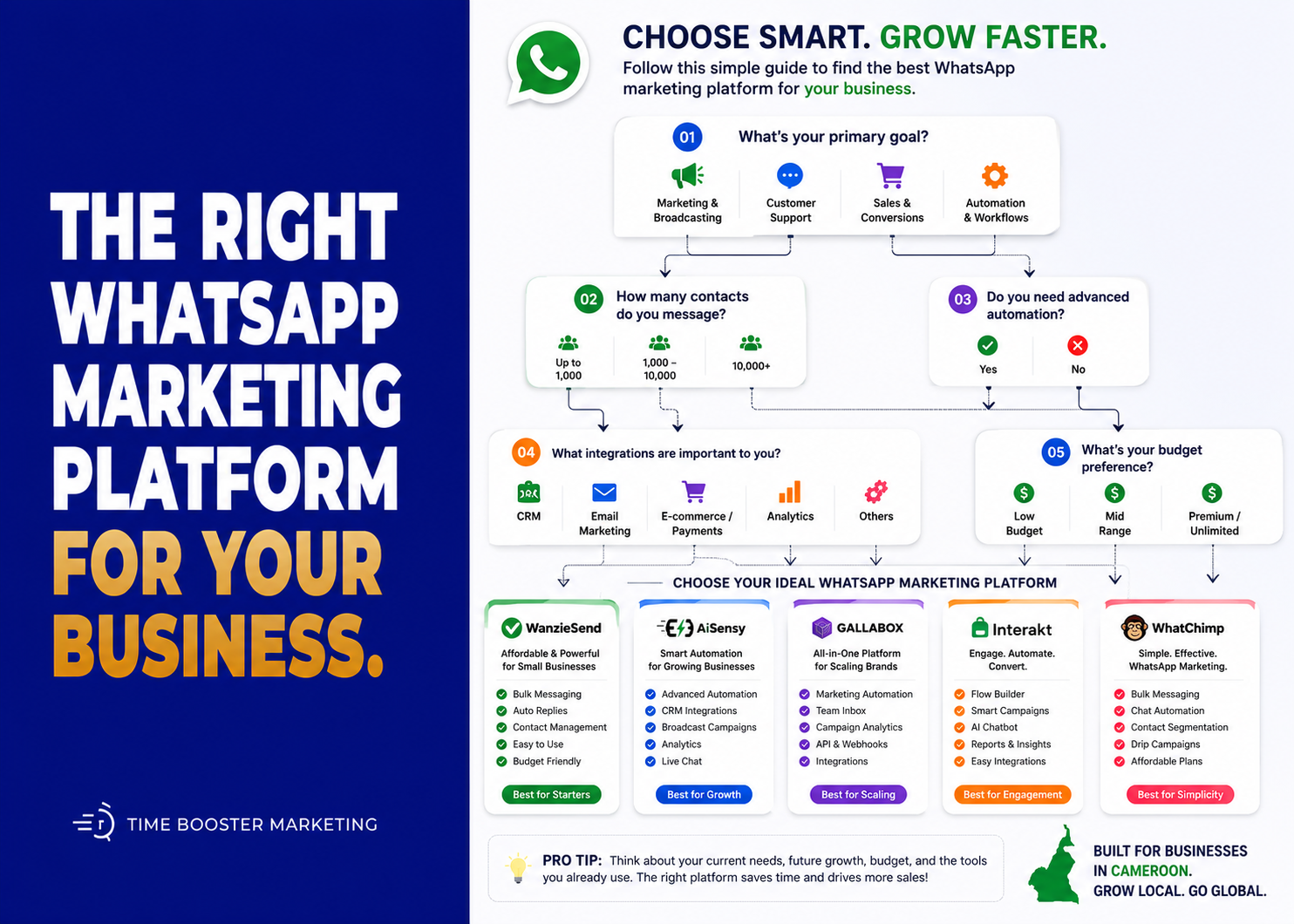
Before paying for any platform, answer these five questions.
1. What Problem Are You Actually Trying to Solve?
Do not buy a WhatsApp platform because it has automation, AI, broadcasts, dashboards, or API access.
Buy it because it solves a specific business bottleneck.
Are you losing leads because staff reply late? Are customers asking the same questions repeatedly? Are quotations forgotten after they are sent? Are sales conversations stuck on one phone? Are you running ads into WhatsApp but cannot track which campaign produced revenue?
Your answer determines the type of platform you need.
A small boutique may need catalogs, quick replies, labels, and basic broadcasts. A real estate agency may need lead qualification, agent assignment, and CRM tracking. A training center may need automated registration follow-up. An e-commerce brand may need abandoned-cart reminders and order updates.
Meta’s official WhatsApp Business Platform is built for customer engagement at scale, including integration with CRM and marketing automation systems. That level of infrastructure is valuable only when your business process is ready for it.
2. How Much Automation Do You Really Need?
Automation depth is one of the biggest differences between platforms.
A basic tool may send broadcasts and simple auto-replies. A stronger platform may support customer segmentation, chatbot flows, lead scoring, drip campaigns, abandoned-cart recovery, appointment reminders, team routing, and AI-assisted replies.
The mistake is buying deep automation before your business has clear conversation rules.
If your team has not documented prices, FAQs, delivery terms, booking steps, qualification questions, and follow-up stages, automation will only repeat confusion faster.
Start by mapping your ideal WhatsApp journey:
New message → qualification → recommendation → quotation → payment → delivery → follow-up → repeat purchase
Then ask whether the platform can support that journey.
WhatsApp’s Business Platform features page explains that businesses can use the platform for automated messages, customer service engagement, product discovery, and business messaging workflows. That is the level you should consider when manual WhatsApp management is no longer enough.
3. Does the Platform Integrate With Your CRM or Sales Tracker?
A WhatsApp platform is weak if conversations stay trapped inside the inbox.
Your business should be able to track:
- Customer name
- Phone number
- Product or service requested
- Lead source
- Sales stage
- Assigned staff member
- Follow-up date
- Quotation value
- Payment status
- Final outcome
For smaller businesses, this may begin with Google Sheets or Airtable. For growing businesses, it may require HubSpot, Zoho, Salesforce, Pipedrive, Odoo, or a custom CRM.
CRM integration matters because WhatsApp is often where interest starts, but your business still needs pipeline visibility. If you cannot tell which chats became customers, you cannot calculate return on marketing spend.
When comparing platforms, ask:
Can it create or update CRM contacts automatically?
Can it push tags, qualification answers, and campaign sources into the CRM?
Can it assign leads to different salespeople?
Can it export data if we leave the platform?
If the answer is no, be careful. Your customer data is too valuable to be locked inside a tool you may outgrow.
4. Is the Pricing Transparent Enough to Forecast Costs?
WhatsApp platform pricing can be confusing because there may be two layers of cost.
First, you may pay the software provider a monthly subscription. Second, you may pay WhatsApp messaging fees depending on message category, destination country, and delivery. WhatsApp’s official Business Platform Pricing page explains message categories such as marketing, utility, authentication, and service.
Before choosing any platform, calculate:
- Monthly subscription
- Setup or onboarding fee
- User-seat cost
- Broadcast limits
- Automation limits
- WhatsApp message fees
- Chatbot or AI usage fees
- CRM integration fees
- Support fees
- Cost of migrating away later
A cheap platform can become expensive if every important feature requires an upgrade. An expensive platform may be justified if it saves staff time, improves conversion, and gives reliable tracking.
Do not ask only, “How much does it cost?”
Ask, “What will it cost at our expected message volume in three months?”
5. Can Your Team Actually Use It Every Day?
The best WhatsApp marketing platform is useless if your team avoids it.
This is especially important for SMEs where staff may already be managing calls, walk-in customers, deliveries, social media messages, payments, and stock. A complex dashboard may impress management but frustrate the people who must use it daily.
Evaluate:
- Is the inbox easy to understand?
- Can staff assign and transfer conversations?
- Are labels and stages simple?
- Can managers review unanswered chats?
- Can the team use English and French where needed?
- Is support available when something breaks?
- Can new employees be trained quickly?
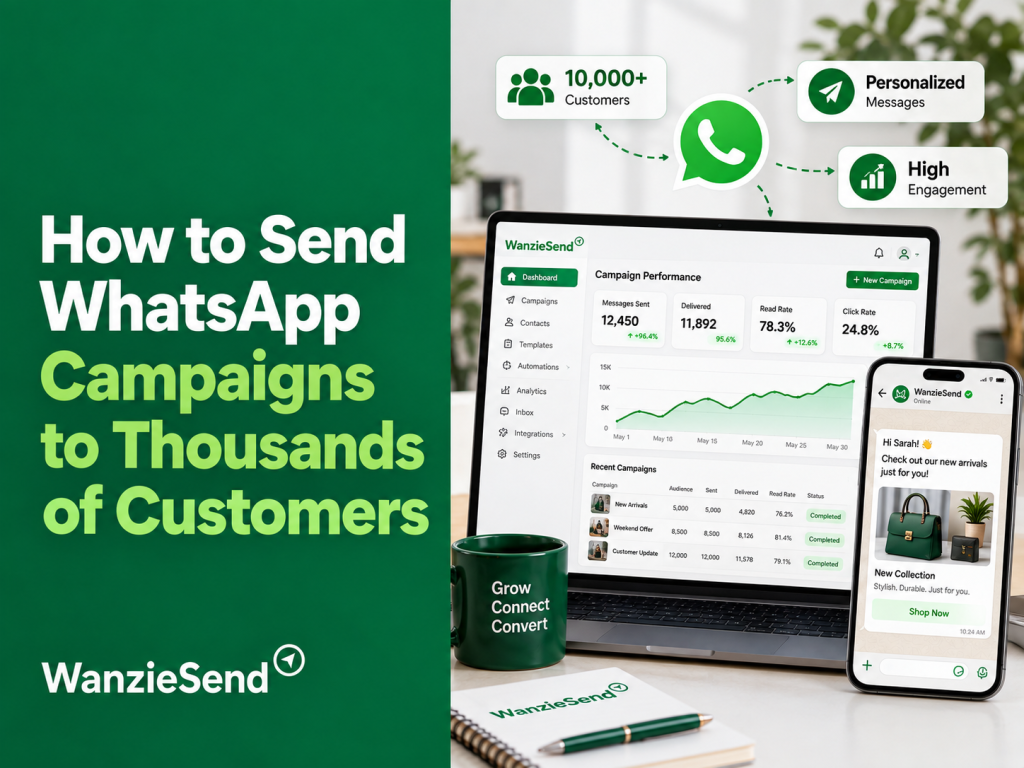
For Cameroonian and African SMEs, local support can matter as much as features. A Cameroon-first tool such as WanzieSend may be worth evaluating if your business wants WhatsApp campaign management, scheduling, analytics, rich media messaging, and local-market relevance. Businesses should still verify current pricing, onboarding status, official WhatsApp Business API requirements, and support availability before committing.
Key Features to Prioritize
Automation Depth

Prioritize platforms that can handle your actual workflows, not just generic auto-replies. Useful automation includes FAQs, lead qualification, follow-up reminders, appointment prompts, order updates, and re-engagement sequences.
CRM Integration

Your WhatsApp platform should connect customer conversations to sales records. Without CRM integration or at least clean export options, you will struggle to measure real performance.
Analytics

A serious platform should show more than the number of messages sent.
Track:
- Delivery rate
- Read rate
- Response rate
- Campaign replies
- Qualified leads
- Sales conversations
- Follow-up completion
- Revenue influenced by WhatsApp
API Access

API access matters when you want deeper integrations, custom workflows, webhooks, internal dashboards, or developer-controlled automation. Meta’s official WhatsApp Cloud API documentation describes the Cloud API as Meta-hosted infrastructure for business messaging.
If you do not have technical support, choose a platform that hides the API complexity behind an easy dashboard.
Pricing Transparency
Avoid platforms that cannot explain software fees, WhatsApp messaging costs, campaign limits, support costs, and upgrade triggers clearly.
Reliability and Compliance
Avoid unofficial bulk-sending tools that promise unlimited WhatsApp blasting without explaining compliance, sender quality, template approval, or account safety. A damaged WhatsApp number can hurt sales immediately.
Decision Framework by Business Stage
Stage 1: Very Small Business
Best fit: WhatsApp Business App or lightweight local tool.
Choose this if one person manages enquiries and you only need quick replies, labels, catalog, greeting messages, and basic organization.
Do not overbuy automation too early.
Stage 2: Growing SME
Best fit: shared inbox platform with broadcasts, tags, team assignment, simple automation, and reporting.
Choose this if multiple staff members handle WhatsApp and leads are being missed.
Your priority is speed, ownership, and follow-up discipline.
Stage 3: Sales-Driven Business
Best fit: WhatsApp platform with CRM integration, lead scoring, campaign attribution, and automation workflows.
Choose this if WhatsApp is connected to advertising, quotations, consultations, bookings, or sales reps.
Your priority is measuring which conversations become revenue.
Stage 4: E-Commerce or High-Volume Retail
Best fit: platform with product catalog integration, abandoned-cart recovery, payment reminders, delivery updates, and customer segmentation.
Choose this if customers browse products, ask for availability, and buy repeatedly.
Your priority is turning product interest into completed orders and repeat purchase.
Stage 5: Enterprise or Developer-Led System
Best fit: API-first WhatsApp Business Platform setup or provider with strong webhook and CRM capabilities.
Choose this if you need custom workflows, system integrations, advanced reporting, and internal technical control.
Your priority is reliability, scalability, and data architecture.
A Simple Platform Scorecard
Before committing, score each platform from 1 to 5 on these criteria:
Business fit: Does it solve our main bottleneck?
Ease of use: Can our team operate it daily?
Automation: Can it handle our real workflows?
CRM/data: Can we track leads and export customer data?
Analytics: Can we measure revenue-related performance?
Pricing: Can we forecast costs clearly?
Support: Can we get help when needed?
Scalability: Can the platform grow with us?
Do not choose the platform with the highest total feature count. Choose the one with the strongest fit for your current stage and next growth step.
Choose the Platform That Protects Your Sales Process
Picking the best WhatsApp marketing platform is a business decision, not a software fashion decision.
A restaurant needs speed and order clarity. A real estate agency needs qualification and agent routing. A training center needs registration follow-up. A clinic needs appointment discipline. An e-commerce brand needs product flows and recovery sequences. A B2B service provider needs CRM tracking and lead quality.
Start with your customer journey. Identify the leak. Choose the smallest platform that solves that leak properly. Then upgrade only when message volume, team complexity, automation needs, or reporting requirements justify it.
The wrong WhatsApp platform wastes budget. The right one turns conversations into an organized, measurable sales system.