
How to Build Online Credibility in Cameroon as a New Business
When your business is new, potential customers cannot rely on years of reputation to decide whether they should trust you. They look for smaller signals.
They examine whether your name is consistent across platforms, whether your phone number works, whether real customers can confirm your claims and whether your offer is clear enough to understand without a long conversation.

This matters in Cameroon’s increasingly connected market. DataReportal estimated that Cameroon had 12.6 million internet users and 5.9 million social media user identities by late 2025. Your online presence is therefore not just a promotional channel; it is often part of the customer’s verification process. (DataReportal – Global Digital Insights)
You do not need to manufacture the appearance of a large company. You need to remove the reasons a reasonable customer might hesitate.
Build a Minimum Credibility Stack
Online credibility is not created by one attractive logo or one viral post. It comes from several trust signals supporting one another.
Your minimum credibility stack should include:
- A legally and commercially consistent business identity.
- Complete professional profiles.
- Clear services, prices or buying procedures.
- Evidence that real people have used your service.
- Reliable contact and response systems.
- Consistent visual and verbal branding.
A customer may discover you through Instagram, search for your name on Google, check your Facebook page and then contact you through WhatsApp. Each step should confirm the same story.
If one platform uses a different name, an outdated phone number or a completely different description, the customer begins wondering which information is real.
Make Your Business Verifiable

Use the Same Business Identity Everywhere
Choose one official business name and use it consistently across your website, invoices, social media accounts, WhatsApp profile, email signature and payment instructions.
Avoid switching casually between several shortened names. If your registered name is different from your trading name, explain the relationship clearly. For example:
BrightPath Consulting is the trading name of BrightPath Solutions SARL.
Where appropriate, include your legal name, business location and relevant registration details in your website footer, proposal documents or company profile. Cameroon’s official eRegulations portal provides information on company registration, taxation and related administrative procedures, making it a useful reference when confirming which documents apply to your business structure. (cameroun.eregulations.org)
Do not publish identification numbers merely to decorate a profile. Use accurate information that a customer or corporate procurement officer could verify.
Use a Domain-Based Email Address
An address such as hello@yourbusiness.cm or contact@yourbusiness.com looks more established than a personal email containing unrelated names or numbers.
A business domain also connects your website and email identity. Even a simple one-page website can show:
- Who you serve.
- What you provide.
- Where you operate.
- How customers contact you.
- What happens after an enquiry.
- Evidence of previous work.
Professional presentation does not require a complex website. It requires complete, accurate information.
Complete Every Professional Profile
An incomplete profile creates uncertainty. A customer should not have to search through old posts to understand what you sell.
Optimise Your Google Business Profile
Where your business is eligible, create a Google Business Profile with your correct name, service category, phone number, operating hours, location or service area and website.
Google explains that a Business Profile can display your hours, website, phone number and location directly in Search and Maps. These details help customers verify that the business they found on social media has a consistent public presence elsewhere. (Google Help)
Add current photographs rather than relying entirely on stock images. Depending on your business, useful photographs include:
- Your storefront or office entrance.
- Your team at work.
- Branded equipment.
- Completed projects.
- Product packaging.
- The customer reception area.
For a home-based or service-area business, do not invent a public office address. Use the available service-area settings and explain how appointments work.
Professionalise Facebook and Instagram
Your social profile should answer four questions immediately:
- What do you offer?
- Who is it for?
- Where do you operate?
- What should the visitor do next?
Replace vague descriptions such as “quality services at affordable prices” with a specific statement:
We provide bridal makeup and on-location beauty services for weddings and events in Douala. View packages below or request availability on WhatsApp.
Meta describes Facebook Pages as a source of business information that can help organisations build credibility with audiences. Complete your About section, contact buttons, category, location and service information instead of treating the page only as a posting feed. (Facebook)
Pin a post that introduces the business, explains the main offer and directs visitors to the correct enquiry channel.
Create a Credible LinkedIn Presence
LinkedIn is particularly important when you sell to companies, development organisations, professionals or diaspora clients.
Create both a credible founder profile and a separate company page. Add your logo, overview, website, industry, location and service description. LinkedIn reports that pages with complete information, including a logo, description and website URL, can be more discoverable and potentially receive more weekly views. (LinkedIn)
The founder’s employment section should also connect clearly to the company. Customers should be able to see who leads the business and whether that person’s experience supports the service being offered.
Treat WhatsApp as a Business Reception Desk
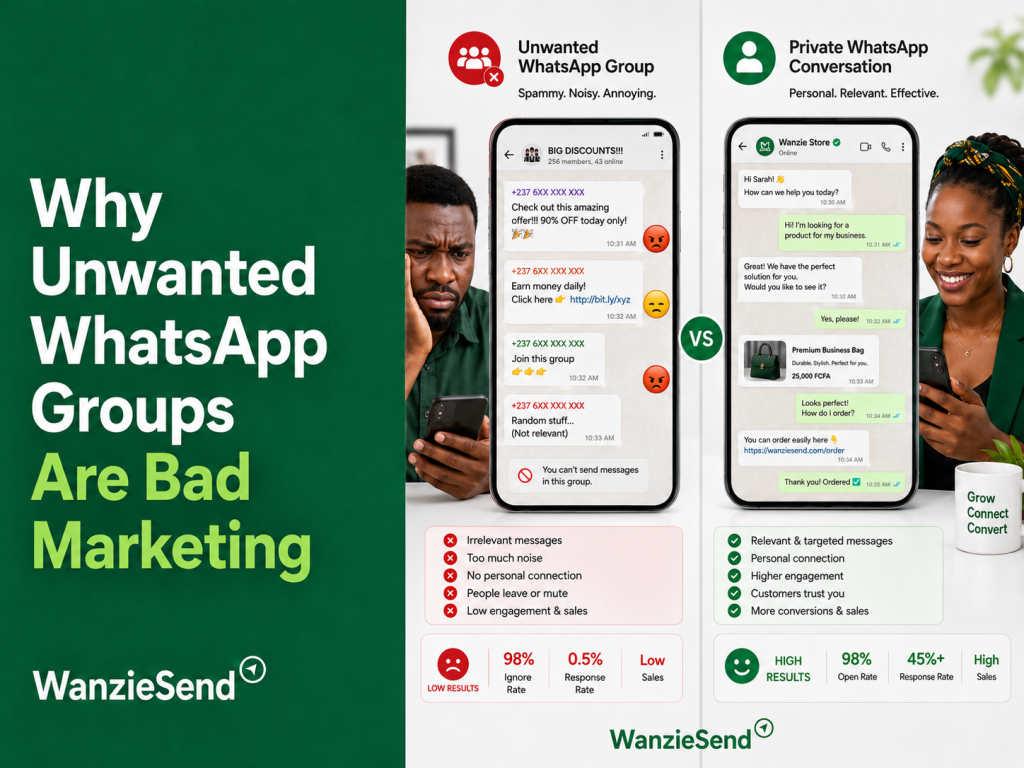
When customers move from social media to WhatsApp, the conversation should feel like a continuation of the same professional brand.
Use WhatsApp Business rather than a casual personal account. Set up:
- A recognisable business name.
- A clear profile photograph or logo.
- Business hours.
- A concise service description.
- A catalogue where relevant.
- Greeting and away messages.
- Saved replies for frequent questions.
A useful greeting message could say:
Thank you for contacting Nola Events. Please send your event date, location, guest estimate and required service. We reply to enquiries between 8:00 a.m. and 6:00 p.m., Monday to Saturday.
This immediately shows structure. It also reduces repetitive conversations and makes your response process more consistent.
Avoid sending unexplained payment numbers. Before requesting payment, restate the service, amount, payment stage, recipient name and next step. Customers are more comfortable when the process is predictable.
Make Your Offer Easy to Understand
Unclear offers weaken credibility because confusion feels risky.
“Contact us for all your digital needs” does not tell the customer what you actually deliver. Define the service, intended customer, scope, price starting point and process.
Use this formula:
We help [specific customer] achieve [specific result] through [defined service], delivered within [timeframe or process].
For example:
We help small restaurants in Yaoundé improve their online visibility through menu photography, social media content and monthly posting support.
Then explain what is included:
- Number of deliverables.
- Turnaround time.
- Revision limits.
- Price or starting price.
- Deposit requirements.
- Delivery format.
- How to begin.
Clear offers reduce the fear that the customer will encounter hidden fees, shifting terms or an improvised process.
Collect Reviews Before You Have a Large Audience
You do not need hundreds of reviews. A small number of specific, credible reviews is more persuasive than a large collection of vague praise.
After completing a project successfully, send a simple request:
Thank you for working with us. Could you share two or three sentences describing the service you received, what you appreciated and the result?
Where Google reviews are available for your profile, Google allows businesses to create a direct review link or QR code that can be shared through email, receipts and WhatsApp conversations. Reviews must reflect genuine experiences, and Google prohibits offering discounts or other incentives in exchange for positive feedback. (Google Help)
Do not ask employees, relatives or people who have never purchased from you to create artificial reviews. Fake social proof may make the profile look active temporarily, but it creates a serious reputation risk when the language feels repetitive or the claims cannot be supported.
Turn Testimonials Into Stronger Proof
A useful testimonial answers three questions:
- What problem did the customer have?
- What did your business do?
- What changed afterward?
“Excellent service” offers little evidence.
A stronger testimonial would say:
We contacted the team three weeks before our launch. They photographed our products, created our Instagram content and delivered everything before the agreed date. We opened with a complete catalogue instead of rushing the campaign at the last minute.
Request permission before publishing names, photographs, logos or project details. When confidentiality matters, identify the customer by relevant context, such as “restaurant owner in Bonamoussadi” or “HR consultant in Yaoundé,” rather than inventing anonymity after publication.
You can display approved testimonials on your website, social media highlights, proposals and WhatsApp catalogue. Keep the wording authentic instead of rewriting every review into polished corporate language.
Maintain Consistent Branding
Brand consistency does not mean every post must look identical. It means customers should recognise the same business across every touchpoint.
Standardise:
- Logo versions.
- Primary colours.
- Fonts.
- Photography style.
- Business description.
- Tone of voice.
- Contact details.
- Offer names.
A common credibility problem appears when a business has an elegant Instagram page but sends customers a blurry price list with different colours, an old logo and several spelling errors.
Your flyer, quotation, invoice, social profile and WhatsApp catalogue should look as though they came from the same organisation.
Publish Evidence, Not Only Promotion
A new business often posts “we are the best” repeatedly because it lacks a large portfolio. Replace unsupported claims with observable evidence.
Publish content such as:
- A behind-the-scenes service process.
- A completed project.
- Before-and-after work where appropriate.
- Customer questions and detailed answers.
- Founder explanations of professional decisions.
- Delivery or installation updates.
- Team introductions.
- Clear policies and service standards.
Evidence-based content lets customers evaluate how you work. It builds stronger trust than constant discounts or motivational graphics.
Use a Seven-Day Credibility Sprint
Days 1–2: Correct Your Identity
Confirm your business name, contact information, description and service area. Update every platform so that the details match.
Days 3–4: Strengthen Your Profiles
Complete your Google, Facebook, Instagram, LinkedIn and WhatsApp Business information. Add real photographs, working links and a direct next step.
Day 5: Clarify Your Offer
Create one clear service page, pinned post or digital brochure explaining who the service is for, what is included, the buying process and the price or starting point.
Day 6: Request Proof
Contact recent customers for honest reviews and permission to show completed work. Organise approved testimonials into an Instagram highlight or website section.
Day 7: Test the Customer Journey
Ask someone unfamiliar with the business to find your service, verify your information and attempt to make an enquiry.
Watch where they become confused. Fix broken links, inconsistent names, unclear pricing, missing locations and slow response instructions.
Credibility Comes From Reducing Uncertainty
A new business in Cameroon does not become credible by pretending to be older, larger or busier than it is.
You become credible when customers can confirm who you are, understand exactly what you offer, see evidence of your work and predict what will happen after they contact you.
Build that confidence deliberately. Keep your profiles complete, your claims specific, your reviews authentic and your buying process clear. When every digital touchpoint tells the same story, being new stops looking like a risk and starts looking like an opportunity to work with a focused, professional business.