How to Google Search in Cameroon in 2026: Queries With Accurate Results
Google Search is not magic. It is a system.
When you type “best hotel in Douala,” “digital marketing agency Cameroon,” “how to register a business in Cameroon,” or “restaurant near me,” Google does not simply show random websites. It tries to understand your query, match it with pages it has discovered, evaluate which results are most useful, and display them in a format that answers your intent.
For Cameroonian users, this matters because many searches produce poor results when the query is too vague. For Cameroonian businesses, it matters even more because a website cannot win search traffic if Google cannot crawl it, understand it, trust it, or match it to what customers are actually typing.
According to DataReportal’s Digital 2026 Cameroon report, Cameroon had about 12.6 million internet users in October 2025. That means search visibility is no longer a technical luxury. It is part of how serious customers discover, compare, and verify businesses.
How Google Search Actually Works
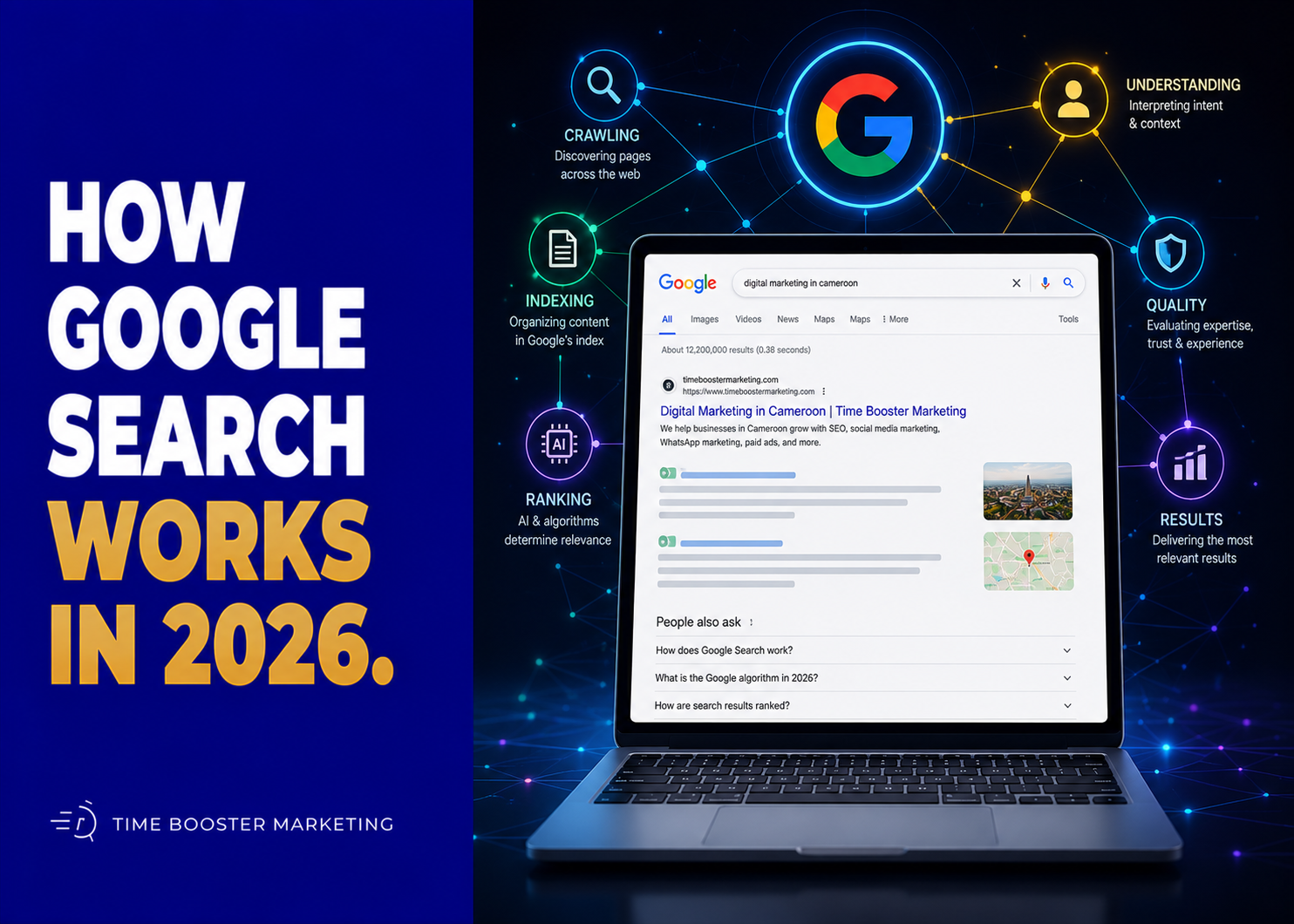
Google Search works in three broad stages: crawling, indexing, and serving search results.
Google’s own in-depth guide to how Search works explains that crawling is how Google discovers pages, indexing is how Google stores and understands them, and serving is how Google returns results when someone searches.
Crawling: Google Has to Find the Page
Crawling happens when Googlebot visits web pages and follows links. If your page is not linked from anywhere, blocked by technical settings, hidden behind poor navigation, or loaded in a way Google cannot access properly, it may not be discovered quickly.
For a business in Cameroon, this means your website should not exist as a lonely digital brochure. Link to it from your Google Business Profile, social media pages, directory listings, partner websites, articles, and internal website menus.
Indexing: Google Has to Understand the Page
After crawling, Google decides whether and how to index the page. Google’s Search Console documentation explains that indexed pages can appear in Google Search results if they follow Google Search Essentials.
This is where many local business websites fail. A page may exist, but it may not clearly explain the service, location, audience, offer, pricing context, contact options, or trust signals.
A page titled “Home” with one paragraph saying “we offer quality services” is difficult to match with serious searches.
A better page says:
Digital Marketing Agency in Douala Helping Cameroonian SMEs Generate Leads Through SEO, Meta Ads, and WhatsApp Marketing
That gives Google and users more useful context.
Ranking: Google Chooses What Seems Most Useful
Google’s Search ranking systems guide explains that its systems consider many signals to determine which results seem most helpful and reliable for a query.
This means ranking is not only about keywords. It also depends on usefulness, relevance, quality, page experience, links, freshness where relevant, and whether the content appears trustworthy.
For Cameroonian businesses, the practical lesson is clear: do not build thin pages only to “have a website.” Build pages that answer real customer questions better than competitors do.
How Google Displays Websites
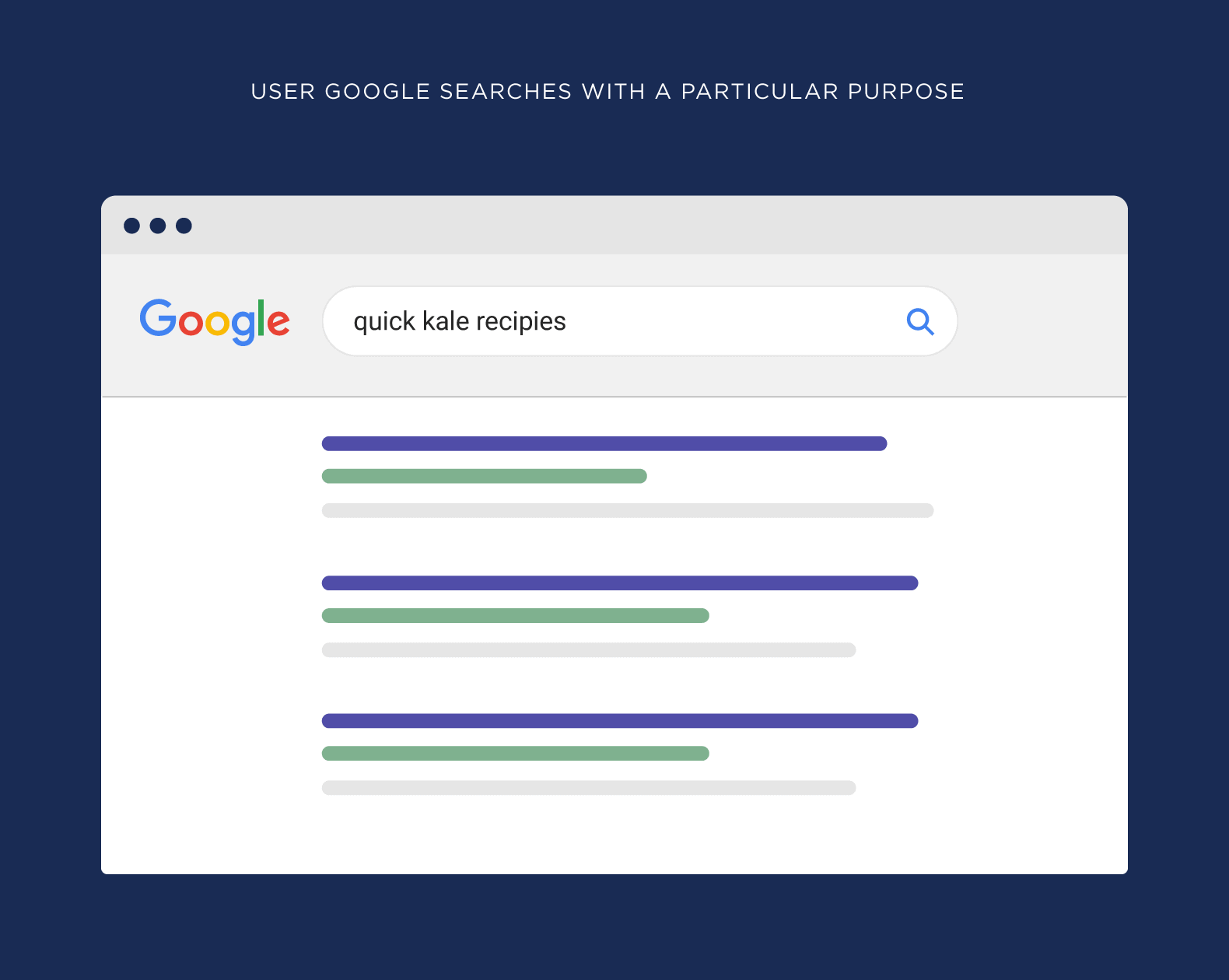
Search results are not only blue links anymore.
Google may display title links, snippets, site names, images, videos, local results, featured snippets, knowledge panels, “People also ask” boxes, and other visual elements. Google’s Search appearance documentation explains how websites can influence how they appear in Search through titles, snippets, images, favicons, business details, and other visible result features.
For businesses, this means your page title and meta description matter because they shape first impressions. Google’s guide on snippets and meta descriptions explains that snippets help users understand why a page may be relevant.
A weak search result says:
Welcome to Our Website
A stronger result says:
Solar Installation in Yaoundé | Home and Business Solar Systems
The second result tells the searcher what the company does and where it operates.
Why Google Searches in Cameroon Often Feel Inaccurate
Many searches in Cameroon fail because users type broad queries.
For example:
plumber
lawyer
school
restaurant
visa help
These queries are too open. Google may not know whether you want a nearby provider, a definition, a list, a phone number, a review, a price, or a guide.
Cameroon also has a bilingual reality. Some businesses publish in English, some in French, and some mix both. A search for “lawyer in Douala” may produce different results from “avocat à Douala.” A search for “tailor Yaoundé” may differ from “couturier Yaoundé.”
Accurate search starts with accurate language.
How to Write Better Google Queries in Cameroon
Use this simple formula:
service + location + intent
Instead of:
hotel
Search:
affordable hotel in Bonapriso Douala with parking
Instead of:
marketing agency
Search:
digital marketing agency in Cameroon for small businesses
Instead of:
business registration
Search:
how to register a small business in Cameroon 2026
Instead of:
school fees
Search:
private secondary school fees in Yaoundé 2026
Specific searches help Google understand what you want.
Search Operators That Improve Accuracy
Google’s advanced search guidance explains that users can refine searches with operators such as quotation marks, minus signs, and site: searches.
Use quotation marks when you want an exact phrase:
“digital marketing agency Cameroon”
Use minus signs to remove unwanted results:
apartments in Douala -Airbnb
Use site: to search within one website:
site:minfopra.gov.cm concours 2026
Use file type searches when looking for documents:
Cameroon tax guide filetype:pdf
Use French and English versions when the topic may appear in both languages:
business registration Cameroon
création entreprise Cameroun
Use city modifiers:
dentist Bonamoussadi Douala
agence immobilière Bastos Yaoundé
Use year modifiers for fast-changing information:
import duties Cameroon 2026
Meta ads cost Cameroon 2026
The more precise the query, the better the result.
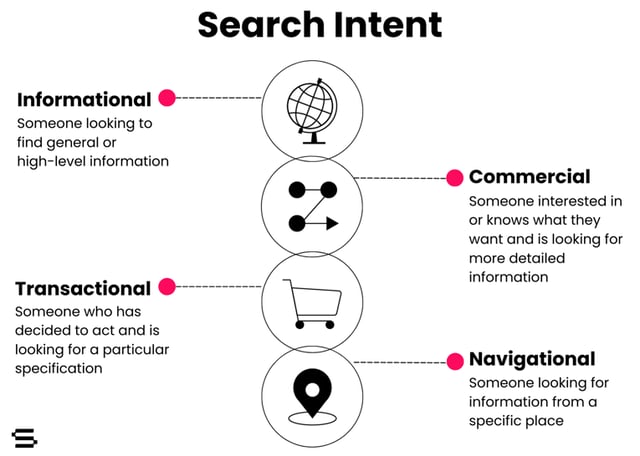
How Businesses in Cameroon Can Rank for Better Queries
Users are becoming more specific. Your website must match that specificity.
Do not create one general page for every service. Create focused pages that answer focused searches.
For example, instead of only having one “Services” page, a marketing agency could create:
- SEO Services in Cameroon
- WhatsApp Marketing Services for Small Businesses
- Meta Ads Management in Douala
- Website Design for Cameroonian SMEs
- Google Business Profile Optimization Cameroon
Each page should explain the service, who it is for, the business problem, the process, expected outcomes, and how customers can take the next step.
Google’s Search Essentials says websites are more likely to do well when they provide helpful content and a good experience for people.
Use Google Search Console
Every serious business website in Cameroon should use Google Search Console.
Google describes Search Console as a free tool for monitoring, maintaining, and troubleshooting a site’s presence in Google Search. It helps site owners identify indexing issues, inspect URLs, and understand search performance.
Use it to answer:
- Which pages are indexed?
- Which queries bring impressions?
- Which pages get clicks?
- Which pages are missing from Google?
- Which technical errors need fixing?
- Which search terms show customer intent?
The URL Inspection tool can show what Google knows about a specific page and allows site owners to request indexing after important updates.
Create Content That Matches Cameroonian Search Reality
A Cameroonian customer may not search like a customer in the United States, France, or Nigeria.
They may search with city names, price sensitivity, WhatsApp intent, delivery concerns, local neighborhoods, French-English phrasing, or trust-based terms such as “reliable,” “affordable,” “near me,” “best,” “verified,” or “with contact.”
That means your content should answer practical local questions:
- How much does it cost?
- Where are you located?
- Do you deliver?
- Do you accept Mobile Money?
- What areas do you serve?
- How long does the service take?
- What documents are required?
- Can I contact you on WhatsApp?
- What makes your business credible?
Google’s guide on creating helpful, reliable, people-first content recommends building content for people rather than content made mainly to manipulate rankings. That advice is especially important in Cameroon, where trust and clarity often convert better than keyword stuffing.
A Practical Google Search Checklist for Cameroon
Before searching, ask:
Am I using the right language?
Try English and French when relevant.
Did I include the city or region?
Search Douala, Yaoundé, Buea, Bamenda, Limbe, Garoua, Kribi, or your exact neighborhood.
Did I include my intent?
Use words like price, cost, guide, agency, near me, contact, review, documents, requirements, delivery, or appointment.
Do I need an official source?
Use site: searches for government, university, bank, or institutional websites.
Is the topic recent?
Add 2026 for regulations, prices, admissions, tenders, exams, jobs, technology, and platform updates.
The Business Lesson: Search Accuracy Starts With Content Accuracy
Google Search in Cameroon will only become more important as customers use the internet to verify businesses before calling, visiting, messaging, or paying.
For users, better search results come from better queries.
For businesses, better search visibility comes from better content, clearer pages, stronger technical setup, and consistent indexing discipline.
If your website does not explain what you do, where you operate, who you serve, why customers should trust you, and how to contact you, Google has little to work with.
The businesses that win in search will not be the ones repeating keywords blindly. They will be the ones answering Cameroonian customer questions more clearly than everyone else.