

How WhatsApp Marketing Generates More Sales Than Email
WhatsApp does not generate more sales than email because it is “newer.”
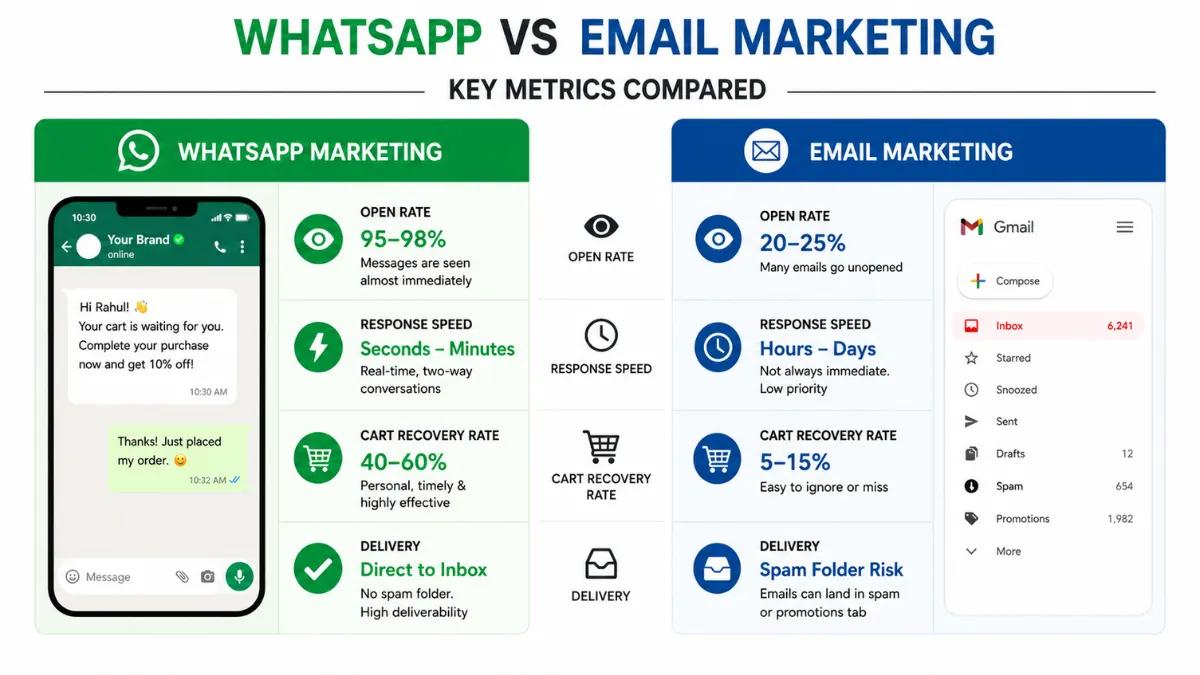
It generates more sales in many small-business situations because it matches how customers actually buy.
A customer sees your product on Instagram. They ask, “How much?” on WhatsApp. They want photos, sizes, delivery details, payment options, availability, location, or reassurance from a real person. If your business replies quickly and clearly, the sale can move forward immediately. If you force that same customer into email, the momentum often dies.
Email still matters. It is excellent for newsletters, long-form education, receipts, onboarding, formal communication, and nurturing serious leads over time. But for businesses where sales depend on speed, trust, and conversation, WhatsApp often gets closer to the buying decision.
Meta’s official WhatsApp Business App features page highlights tools such as business profiles, catalogs, quick replies, labels, automated messages, and ads that click to WhatsApp, all built around direct customer interaction.
WhatsApp Wins Because It Feels Like a Conversation
Email often feels like a broadcast.
WhatsApp feels like a conversation.
That difference matters. Many customers do not want to read a long promotional email before making a simple buying decision. They want to ask a question and get an answer. They want to know if the shoe is available in size 40, if the restaurant delivers to Bonamoussadi, if the apartment viewing is available tomorrow, if the makeup artist is free on Saturday, or if the training fee can be paid in instalments.
This is why WhatsApp works especially well for:
- boutiques
- restaurants
- salons
- gyms
- real estate agents
- schools
- event vendors
- coaches
- consultants
- travel agencies
- clinics
- local service providers
The sale often happens inside the chat, not after a long email journey.
Email Engagement Is Real, but It Is Slower
Email is not dead. It is still one of the best channels for structured communication.
But email engagement depends heavily on list quality, subject lines, timing, industry, deliverability, and reader habit. Mailchimp explains that email campaign reports measure open rates and click rates, while campaign benchmarking helps businesses compare performance against similar senders.
That means email should not be judged only by whether someone opened the message. A customer can open an email and do nothing. They can click and still not buy. They can miss the email entirely because it lands among promotions, newsletters, alerts, spam, work messages, and old subscriptions.
WhatsApp usually sits closer to daily life. People check it for family, work, customers, groups, suppliers, and urgent updates. For African SMEs, that daily habit is commercially powerful.
WhatsApp Reduces the Gap Between Interest and Action
The biggest sales advantage of WhatsApp is speed.
When a customer shows interest, delay is dangerous. They may compare another vendor, forget the need, lose trust, or buy from the person who replied first.
WhatsApp shortens the journey:
Ad or post → WhatsApp chat → question → answer → quote → payment or booking
Email often creates a longer path:
Ad or post → website → form → inbox → delayed reply → follow-up → decision
Meta’s Click to Message ads are designed to send people from an ad directly into a conversation on Messenger, Instagram, or WhatsApp, while Ads that Click to WhatsApp can be placed across Facebook and Instagram to support lead generation, sales, and marketing goals.
For businesses that already sell through chat, this is a major advantage. The ad does not only send traffic. It starts a sales conversation.
WhatsApp Business Tools Help Convert Faster
The free WhatsApp Business App gives small businesses tools that email alone does not replicate in the same conversational way.
A product catalog lets customers view items inside WhatsApp. Quick replies help your team answer repeated questions faster. Labels help organize leads by stage. Greeting and away messages reduce missed opportunities. Business profiles show hours, address, website, and description.
WhatsApp’s own small-business resources explain that the app includes tools such as business profiles, catalogs, greeting messages, away messages, quick replies, and labels to help manage customer chats.
For a small business, these features support a simple sales pipeline:
New enquiry → qualified lead → quotation sent → payment pending → delivered → follow-up
That is stronger than treating every chat as a random message.
WhatsApp Follow-Up Feels More Immediate
Most sales are not closed in the first message.
Customers delay. They ask for price and disappear. They need approval from a spouse, manager, parent, or business partner. They want to compare options. They are waiting for salary, mobile money, or event confirmation.
WhatsApp follow-up works because it feels direct:
Hello Marie, just checking if you still want the birthday cake for Saturday. We have two slots left for that delivery time.
That message is more urgent than a generic email subject line like:
Follow-up on your order enquiry
WhatsApp follow-up can be used for:
- abandoned enquiries
- quote reminders
- delivery updates
- appointment confirmations
- event reminders
- payment follow-ups
- restock alerts
- limited offers
- renewal reminders
- post-purchase care
But it must be respectful. Meta’s WhatsApp Business Policy says businesses may contact people on WhatsApp only if they have the person’s phone number and have received permission to message them.
WhatsApp Automation Can Scale Sales Without Losing Speed

Manual WhatsApp works at the beginning. But as enquiries grow, one phone and one staff member become a bottleneck.
That is where WhatsApp automation and the WhatsApp Business Platform become useful. Meta’s WhatsApp Business Platform features include marketing messages, automation, customer service engagement, and integrations for larger-scale messaging.
With automation, businesses can:
- qualify leads
- send product menus
- answer FAQs
- route enquiries to staff
- confirm bookings
- send reminders
- collect customer preferences
- reconnect with old leads
- trigger CRM updates
- manage high-volume campaigns
This is where WhatsApp moves from “chat app” to “sales system.”
When Email Still Performs Better
WhatsApp does not replace email completely.
Email is still better for long-form communication, formal documentation, newsletters, onboarding sequences, invoices, contracts, detailed reports, downloadable resources, and B2B communication where decision-makers expect structured information.
Use email for:
- newsletters
- educational content
- long proposals
- receipts
- onboarding
- company announcements
- detailed product explanations
- downloadable guides
- legal or formal communication
Use WhatsApp for:
- fast enquiry response
- direct follow-up
- customer support
- reminders
- quotes
- product availability
- booking confirmation
- sales conversations
- urgent updates
The smartest businesses do not choose one blindly. They use each channel for the role it performs best.
A Better Sales Funnel: Use Both Together
A strong SME funnel can combine WhatsApp and email.
For example:
Step 1: Customer discovers your offer on Facebook, Instagram, Google, or your website.
Step 2: They click to WhatsApp to ask a question.
Step 3: Your team qualifies them and answers quickly.
Step 4: You send a quote, catalog, booking link, or payment instructions.
Step 5: After purchase, you ask permission to send future updates.
Step 6: Email handles receipts, newsletters, guides, and longer nurturing.
Step 7: WhatsApp handles reminders, support, repeat orders, and reactivation.
This works because WhatsApp captures immediate buying intent while email builds long-term education and retention.
The Real Reason WhatsApp Generates More Sales
WhatsApp generates more sales when it reduces friction.
It helps customers move from interest to action faster. It gives them a familiar channel. It makes the business easier to reach. It supports quick answers, human reassurance, product sharing, reminders, and follow-up. It also fits the trust-based buying culture common in many African markets, where customers want to speak to someone before paying.
But WhatsApp does not work if your team replies slowly, sends spam, has no catalog, uses confusing messages, ignores labels, or treats every customer the same.
The tool is powerful. The sales process still matters.
Common WhatsApp Marketing Mistakes
Do not blast people without permission.
Do not send the same generic promotion to everyone.
Do not ignore messages after running ads.
Do not answer only with “available” or “yes” when the customer needs guidance.
Do not leave catalog items without prices or descriptions.
Do not depend on one staff member’s personal phone forever.
Do not use WhatsApp without tracking leads and follow-ups.
Do not abandon email completely if your business needs formal communication, education, or long-term nurturing.
A Simple WhatsApp Sales Workflow
Start with this weekly system:
Monday: Send a useful tip or offer to interested customers.
Tuesday: Follow up with warm leads who asked questions but did not buy.
Wednesday: Update your catalog, price list, FAQs, and quick replies.
Thursday: Post customer proof, testimonials, or behind-the-scenes content on Status.
Friday: Send reminder messages for bookings, deliveries, payments, or weekend offers.
Saturday: Review labels and move leads into the right stage.
Sunday: Check which messages generated replies, sales, and repeat orders.
This turns WhatsApp from random chatting into measurable selling.
WhatsApp Sells Faster When Customers Are Ready to Talk
WhatsApp marketing can generate more sales than email because it sits closer to customer intent.
Email is useful for education and retention. WhatsApp is stronger for conversation, urgency, trust, and follow-up. For many African businesses, especially SMEs selling through personal interaction, WhatsApp matches how customers already behave.
The winning strategy is not to abandon email. It is to use WhatsApp for the moments where speed and conversation matter most, then use email for the deeper relationship.
A customer who is ready to ask, compare, negotiate, book, or pay should not be pushed into a slow channel. Give them the easiest path to action. In many markets, that path is WhatsApp.