In Cameroon, that understanding matters more than anywhere else.

Search behavior here is layered. People switch between English and French without warning. They mix formal terms with street language. They search fast, with purpose, often on mobile, often when they need something immediately. If your keywords do not reflect that reality, your content can be well written and still completely invisible.
Keyword research for Cameroon market is not about chasing global volume. It is about relevance, familiarity, and intent. When you get those right, SEO stops feeling like a gamble and starts feeling predictable.
Why Keyword Research for Cameroon Market Is Different
Most keyword research advice is built for markets where search behavior is standardized. Cameroon does not work that way.
Here, language is fluid. A single user may search the same problem in English, French, and Pidgin across different moments. Someone might type “house for rent Yaounde,” then later “location maison Yaounde,” then ask a friend “where man fit rent house for Bastos.” These are not edge cases. They are normal.
Keyword research that ignores this reality ends up optimizing for the wrong audience. The content may rank somewhere, but it does not resonate. Search engines notice that disconnect through low engagement and short visits.
In Cameroon, effective keyword research starts with people, not platforms.
Understanding Local Search Intent in Cameroon

Search intent in Cameroon is rarely abstract. Most searches are practical, immediate, and tied to real-world actions.
People search to find a place, compare prices, confirm legitimacy, or decide who to trust. That intent shows up clearly in how queries are structured.
Local searches often include city names like Douala, Yaounde, Buea, Limbe, or Bamenda. They frequently include price signals such as “cheap,” “pas cher,” or “prix.” Many searches include urgency or direction, like “near me,” “where to buy,” or “best place for.”
Keyword research for the Cameroon market must prioritize this intent. High-volume keywords without local context may bring visitors, but they rarely bring customers. Lower volume keywords with strong local intent often convert better and faster.
Language Mixing and How People Actually Search
One of the biggest mistakes beginners make is assuming that search queries must be grammatically correct. In Cameroon, search queries are functional, not polished.
People mix languages because it is faster. They shorten words. They remove articles. They type how they speak. Search engines understand this far better than most businesses do.
A phrase like “wedding makeup Douala prix” may look messy on paper, but it reflects real demand. Ignoring these mixed-language keywords means ignoring how people actually search.
Keyword research for the Cameroon market works best when it embraces imperfect language and focuses on clarity over correctness.
How to Find the Right Keywords for Cameroon Businesses

Good keyword research starts offline, whether we admit it or not.
Before opening any tool, pay attention to real conversations. Listen to how customers explain their problems when they walk in, when they call, when they send WhatsApp messages at odd hours. Notice how they phrase things when they are not trying to sound professional. Those phrases are gold. People rarely change their language just because they are typing into Google. They search the same way they speak, especially on mobile, especially when they are in a hurry.
Over time, patterns appear. Certain words repeat themselves. Certain locations keep coming up. Certain frustrations show up again and again. That is your first keyword list, even if it is not written down yet. To be honest, this part is often skipped because it feels informal. But it is the most accurate layer of keyword research you will ever do.
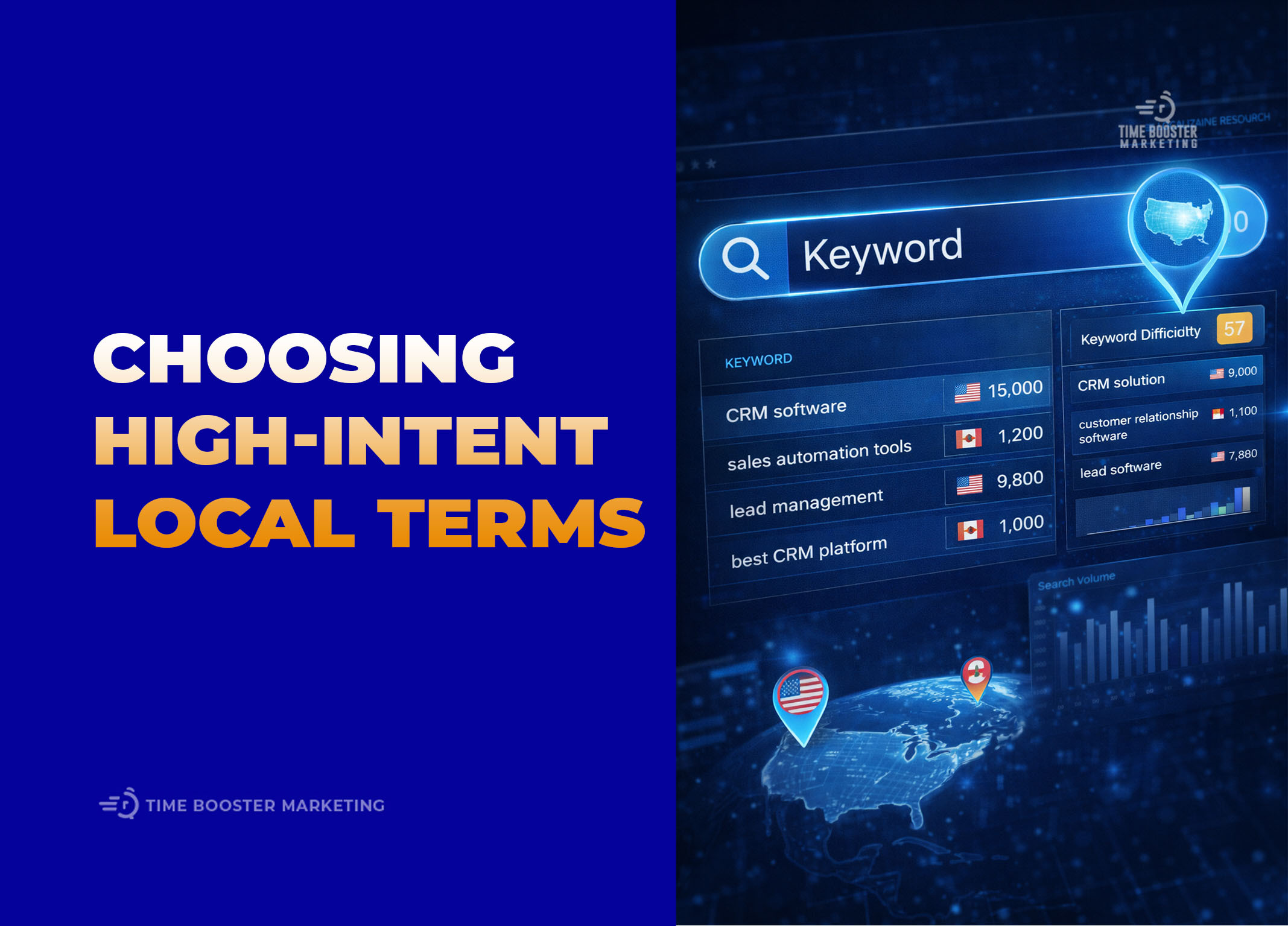
Once you understand how people naturally describe their needs, keyword tools finally make sense. Tools like Google Keyword Planner, Google Search Console, or even simple Google autocomplete are no longer telling you what to do. They are confirming what you already know. They help you spot variations, check relative demand, and uncover related phrases you might have missed. Validation, not discovery. That distinction matters.
Focus heavily on keywords that show intent. Long phrases that combine service, location, and action usually outperform broad keywords with bigger numbers. A phrase like “birthday cake delivery Yaounde” may not look impressive in a tool, but it brings someone who is ready to buy. A keyword does not need thousands of searches to be valuable. It needs the right people searching it at the right moment.
Keyword Placement for Local SEO Impact
Finding the right keywords is only half the work. Placement is where many businesses quietly lose momentum.
Keywords should live where users and search engines expect them. Page titles, headings, service descriptions, FAQs, and local landing pages are obvious places, but the key word there is natural. If it sounds forced when you read it out loud, it probably is. Search engines have moved past crude repetition. They care more about clarity and relevance than density.
Local SEO benefits greatly from consistent keyword signals across platforms. Your website, Google Business Profile, image descriptions, and internal links should all reflect the same language. When these pieces align, your business starts to feel coherent online. That coherence builds trust, not just rankings.
For many Cameroon businesses, one strong page focused on a specific city or service performs better than several vague pages trying to cover everything. A clear page answering local questions beats a general page every time. Clarity beats quantity, especially in markets where users are impatient and decisive.
Search engines reward pages that solve real local problems directly. You do not need to impress them. You need to help the person searching.
Branded Keywords and Trust Signals
In Cameroon, trust travels offline before it shows up online.
Someone hears about your business from a friend, sees your sign, attends an event, or gets your number on WhatsApp. The next step is often a brand search. They type your business name into Google to confirm you are real. That moment matters more than many businesses realize.
Branded keywords should be part of your keyword strategy from the start. This includes your business name, service variations tied to your name, and location-based brand searches. These searches signal credibility to search engines and protect your visibility from competitors trying to appear next to your brand.
At the same time, discovery keywords still matter. These are the phrases people use before they know who to trust. Strong discovery content introduces your business to new audiences. Over time, that content leads to branded searches. When people start searching your name directly, your SEO has crossed an important threshold.
Trust compounds quietly. Branded searches are one of the clearest signals of that.
Common Keyword Research Mistakes to Avoid
Many businesses struggle with SEO, not because they are lazy, but because their focus drifts in the wrong direction.
They chase high-volume global keywords that look impressive but attract the wrong audience.
They ignore French queries, mixed-language searches, or informal phrasing that reflects real behavior.
They optimize for traffic instead of actions like calls, messages, or visits.
They copy competitor keywords without understanding what actually makes those pages work.
They treat keyword research as a one-time task instead of a living process that evolves with the business.
Keyword research is not about imitation. It is about alignment. When your keywords reflect how people think, search engines do not need convincing. The signals line up naturally.
Final Thoughts
Keyword research for the Cameroon market is not about perfection. It is about familiarity. Use language people recognize. Reflect how they search when no one is watching. Optimize for intent, not assumptions or global trends. When your keywords feel natural, your content feels useful. When your content feels useful, search engines reward it quietly, steadily, and over time. That is how sustainable visibility is built in Cameroon. Slow. Intentional. Rooted in real human behavior.