Paid Search Strategy for Google Ads in Cameroon: 7 Proven Steps to Measurable ROI
If you are running a business in Cameroon or managing digital marketing for one, and you have been wondering whether Google Ads can actually work in your market, this guide is for you. Maybe you have tried boosting posts on Facebook and seen some engagement, but no real sales. Maybe you have heard that “nobody in Cameroon clicks on Google Ads” and you are not sure if that is true. Or maybe you already dabble in PPC but cannot figure out why your spend is not turning into revenue. The truth is, a well-built paid search strategy works in Cameroon just as it does anywhere else, but only when you design it for the specific realities of this market.

The Cameroonian digital landscape is growing fast. Internet penetration crossed 45% in recent years, smartphone adoption is climbing, and Google remains the dominant search engine across both the Francophone and Anglophone regions of the country. That means people are actively searching for products, services, and solutions online every single day. The businesses that show up at the top of those searches with relevant ads are the ones capturing that demand. This article gives you the exact framework to be one of those businesses.
Why a Paid Search Strategy Matters in Cameroon Right Now
The Digital Growth Window Is Open
Cameroon sits at an interesting inflection point. Digital advertising is not yet saturated the way it is in markets like Nigeria, Kenya, or South Africa. According to Statista’s digital advertising reports, ad spend in the country is growing but competition on Google Ads remains relatively low for most industries. This means your cost per click (CPC) is often a fraction of what advertisers pay in Western markets. We are talking CPCs as low as $0.05 to $0.30 for many commercial keywords, compared to $2 to $10 or more in the United States.
This lower competition is a gift, but it will not last forever. As more Cameroonian businesses and international companies targeting the region catch on, auction prices will rise. Building your paid search strategy now means you lock in cheaper traffic, build quality score history in your Google Ads account, and establish brand presence before the market gets crowded.
What Makes Cameroon Different from Other PPC Markets
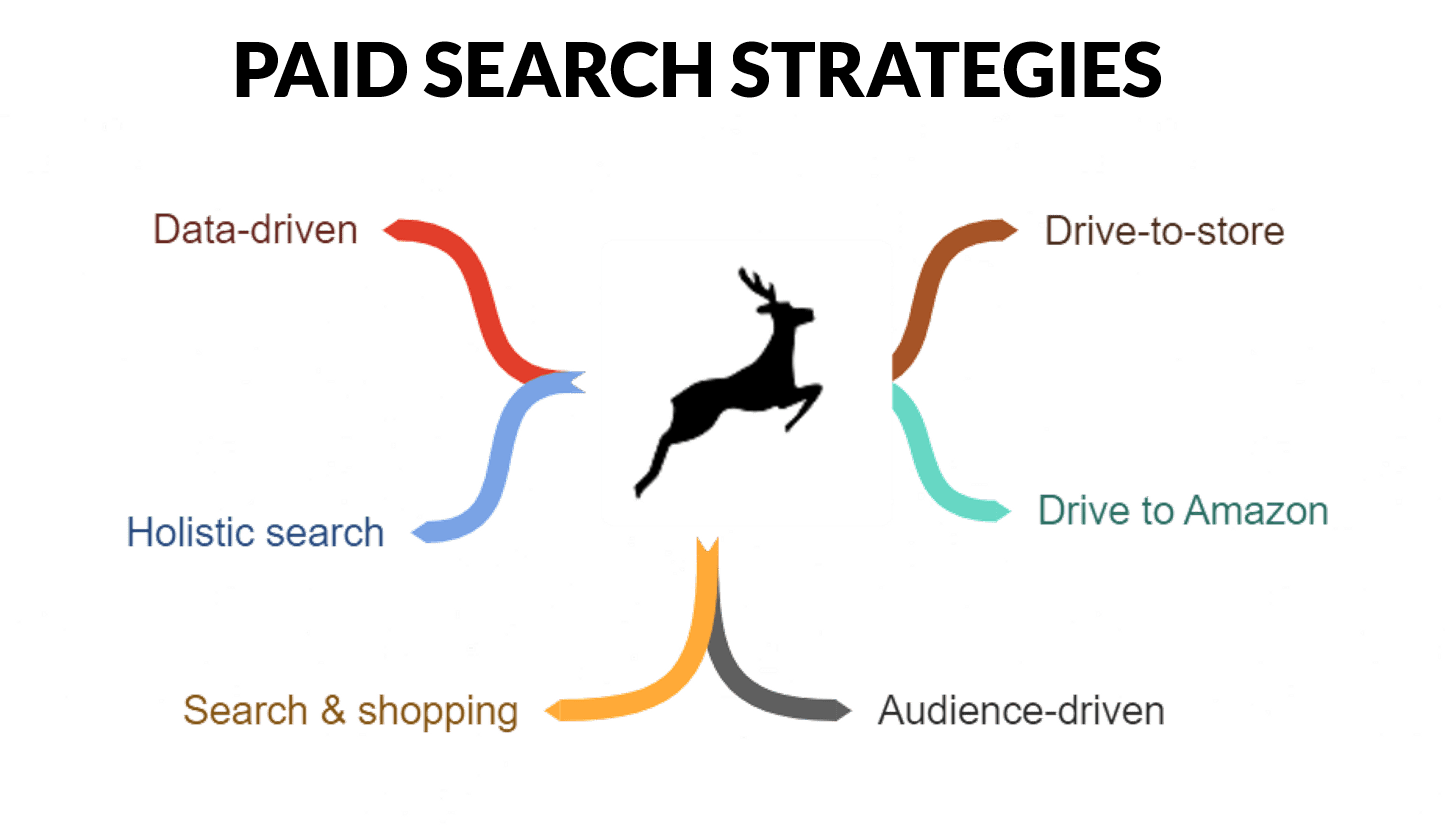
You cannot just copy a Google Ads playbook written for the US or UK market and expect it to perform here. Several factors make the Cameroon market distinct, and your strategy needs to account for each one:
- Bilingual search behavior: Cameroon is officially bilingual, with French speakers making up roughly 80% of the population and English speakers about 20%. People search in both languages, and some mix French and English in the same query. Your keyword research must cover both languages and even pidgin variations.
- Mobile-first audience: Over 75% of internet access in Cameroon happens on mobile devices. Your ads, landing pages, and conversion paths must be mobile-optimized or you will waste your budget.
- Payment and trust barriers: Many consumers are cautious about online transactions. Mobile money (MTN MoMo, Orange Money) is far more trusted than credit card payments. Your landing pages need to reflect local payment preferences.
- Geographic concentration: Most commercial activity and higher-income consumers cluster in Douala, Yaoundé, Bafoussam, and Bamenda. Geo-targeting matters a great deal here.
Step 1: Build Your Paid Search Strategy on Local Keyword Research
Finding What Cameroonians Actually Search For
Keyword research for Cameroon is not just about translating your English keywords into French. People in Douala do not search the same way people in Paris do. Local expressions, brand preferences, and even spelling variations all play a role. For example, someone looking for a plumber might search “plombier Douala” or “plumber Douala” or even “find plumber for Douala.” Each of these represents a different intent path.
Start your research with these tools and approaches:
- Google Keyword Planner set to Cameroon as the target location. Filter by French and English separately to see volume differences.
- Google Trends with the region set to Cameroon. This shows you seasonal patterns and rising queries that Keyword Planner might miss.
- Google Search autocomplete: Type your core service or product terms into Google while using a Cameroon-based VPN or setting your location to Cameroon. Note every autocomplete suggestion.
- Competitor ad research with SEMrush or Ahrefs: Even if your direct competitors are not running ads, check whether international brands are bidding on related terms in the Cameroon market. Ahrefs’ PPC keyword research guide offers a strong methodology you can adapt.
Organizing Keywords by Intent and Language
Once you have a raw keyword list, organize it into three intent buckets. This keeps your paid search strategy focused on what matters most: conversions.
- High commercial intent (ready to buy): “acheter iPhone Douala,” “meilleur hotel Yaoundé prix,” “hire accountant Cameroon.” These get priority budget.
- Research intent (comparing options): “comparatif assurance auto Cameroun,” “best internet provider Cameroon 2026.” These work well for remarketing funnels.
- Informational intent (learning): “comment créer une entreprise au Cameroun,” “how to register a business in Cameroon.” Use these sparingly or only for top-of-funnel brand awareness.
Create separate ad groups for French and English keywords, even if the landing page content is similar. This lets you write ad copy in the matching language, which dramatically improves click-through rates.
Step 2: Structure Your Google Ads Account for the Cameroon Market
Campaign Architecture That Controls Spend
A messy account structure is the fastest way to burn money. For a Cameroon-focused paid search strategy, keep your campaign structure clean and intentional. Here is a structure that works well for most local businesses:
- Campaign 1: Brand terms (French + English): Low cost, high conversion rate. Protect your brand name from competitors.
- Campaign 2: High-intent commercial terms, French: Your primary revenue driver for Francophone searchers.
- Campaign 3: High-intent commercial terms, English: Same idea, targeting Anglophone regions like the Northwest, Southwest, and bilingual searchers in Douala.
- Campaign 4: Competitor terms: Bid on competitor brand names if legally appropriate. Lower conversion rates but useful for brand switching.
- Campaign 5: Remarketing / Display: Re-engage people who visited your site but did not convert.
Each campaign should have tightly themed ad groups with no more than 15 to 20 keywords per group. This keeps your ads relevant to the search query, which raises your Quality Score and lowers your actual CPC.
Setting Geo-Targeting Correctly
Do not just target “Cameroon” as a whole and walk away. Google Ads lets you target by city and radius. If your business serves Douala, set Douala as your primary target with a radius that matches your service area. You can then set Yaoundé as a secondary target with a different bid adjustment if conversion rates differ between the two cities.
Also, critically, change your location targeting setting from “Presence or interest” to “Presence: People in or regularly in your targeted locations.” The default setting shows your ads to anyone who shows interest in Cameroon, including people sitting in France or Canada browsing travel content. That wastes budget fast.
Step 3: Write Ad Copy That Speaks to Cameroonian Buyers
Language, Tone, and Local Relevance
Your ad copy needs to feel local. Generic English ad copy written for a global audience will underperform compared to copy that references local cities, currency (FCFA), and cultural context. Here are principles that improve performance:
- Use FCFA pricing in ads when possible. “À partir de 15,000 FCFA” is more concrete and trustworthy than “affordable prices.”
- Reference the city name in your headline or description. “Livraison rapide à Douala” outperforms “Fast delivery in your area.”
- Address trust concerns directly. Phrases like “Paiement par Mobile Money accepté” or “Satisfaction garantie” reduce hesitation.
- Use responsive search ads (RSAs) with at least 10 headline variations and 4 description variations. Google will test combinations and find what resonates with your specific audience.
Testing and Iteration
Never launch just one ad and leave it. A strong paid search strategy requires ongoing testing. Run at least two to three RSAs per ad group and check performance every two weeks. Look at these metrics specifically:
- Click-through rate (CTR): Below 3% on search campaigns means your ad copy or keyword relevance needs work.
- Conversion rate: If people click but do not convert, the problem is usually the landing page, not the ad.
- Cost per conversion: This is your north star metric. Know your target and optimize ruthlessly toward it.
Step 4: Design Landing Pages for Mobile and Local Trust
Mobile-First Is Not Optional
Remember that 75%+ of your traffic will come from mobile devices. If your landing page takes more than three seconds to load on a mid-range Android phone over a 3G or 4G connection, you will lose most of your visitors before they even see your offer. Use Google’s PageSpeed Insights tool to test your landing pages and aim for a mobile performance score above 80.
Keep your landing pages simple and direct. A strong Cameroon-focused landing page includes:
- A clear headline matching the ad copy the person just clicked
- One primary call to action above the fold (WhatsApp button, phone call, or form)
- Social proof: customer reviews, testimonials, or client logos from recognizable Cameroonian brands
- Trust signals: Mobile Money logos, business registration details, physical address in Cameroon
- Fast load time: compress images, minimize scripts, use a CDN with African edge servers
WhatsApp as a Conversion Channel
In Cameroon, WhatsApp is often the preferred communication channel for business inquiries. Consider using a “Click to WhatsApp” button as your primary conversion action. You can track these clicks as conversions in Google Ads using event-based tracking in Google Tag Manager. This gives you a direct line to leads who are comfortable communicating the way they already communicate every day.
Step 5: Set Budgets and Bidding for Low-CPC Markets
How Much Should You Spend?
There is no universal answer, but here is a practical framework. If your average CPC is $0.15 and you need 20 clicks to generate one lead, your cost per lead is roughly $3.00. If you want 10 leads per day, you need a daily budget of about $30, or roughly 18,000 FCFA. That comes to around $900/month.
For many small to medium businesses in Cameroon, starting with $300 to $500 per month is enough to generate meaningful data and real leads. The key is starting with enough budget to exit the “learning phase” of Google’s algorithm, which typically needs about 50 conversions per campaign within 30 days.
Choosing the Right Bidding Strategy
For new campaigns with no conversion history, start with Manual CPC or Maximize Clicks with a bid cap. This gives you control while you gather data. Once you have accumulated 30 to 50 conversions in a campaign over 30 days, switch to Target CPA (cost per acquisition) bidding. This lets Google’s machine learning optimize for people most likely to convert.
Avoid using Maximize Conversions without a target CPA cap in a new account. In low-competition markets, it can sometimes overbid and exhaust your daily budget on just a few expensive clicks.
Step 6: Track Everything With Proper Conversion Measurement
Why Most Cameroon Advertisers Fail at ROI Proof
Here is the uncomfortable truth. Most businesses running Google Ads in Cameroon cannot prove their ROI because they never set up proper conversion tracking. They look at clicks and impressions, feel good about the numbers, but cannot tell you how many of those clicks turned into paying customers. A paid search strategy without conversion tracking is just guessing with a budget.
At minimum, you need to track these conversion actions:
- Form submissions on your website (contact forms, quote requests)
- Phone calls from ads (use Google’s call tracking or a local call tracking number)
- WhatsApp clicks (track as custom events)
- Purchases or bookings if you run e-commerce or appointment-based services
- Offline conversions: If your sales process happens offline (which is common in Cameroon), use Google’s offline conversion import. Upload your CRM data showing which leads became customers, and Google will optimize toward those higher-quality leads.
Set up Google Tag Manager on your site and configure these events before you spend a single franc on ads. Google’s official conversion tracking documentation walks you through every step.
Building a Simple ROI Dashboard
You do not need expensive software. A Google Sheet connected to your Google Ads data via the Google Ads add-on or Looker Studio (formerly Data Studio) gives you a real-time view of what matters. Track these numbers weekly:
- Total spend (FCFA and USD)
- Total conversions (leads, sales, calls)
- Cost per conversion
- Revenue generated (from CRM or sales records)
- Return on ad spend (ROAS): revenue divided by ad spend. Anything above 3:1 is strong. Above 5:1 is excellent.
Step 7: Scale What Works and Cut What Does Not
The Optimization Cycle
A paid search strategy is never “set and forget.” The best advertisers in any market, including Cameroon, follow a regular optimization cycle. Here is a practical weekly and monthly routine:
Weekly tasks (15 to 20 minutes):
- Review search terms report and add irrelevant queries as negative keywords
- Check device performance and adjust mobile vs. desktop bids
- Pause any keywords with high spend and zero conversions over 14 days
- Review ad copy performance and pause underperformers
Monthly tasks (1 to 2 hours):
- Analyze geographic performance by city and adjust bids
- Review audience segments and add high-performing audiences for observation or targeting
- Test new ad copy variations based on previous month’s learnings
- Review competitor landscape using Google’s Auction Insights report
- Update your ROI dashboard and share results with stakeholders
When to Scale Up
Scale your budget only when you see consistent, profitable results over at least 30 days. Increase budget by 20 to 30% at a time, not double. Rapid budget increases can destabilize automated bidding strategies and tank performance temporarily. Also expand into new keyword themes only after your core campaigns are profitable. Many advertisers make the mistake of going broad too quickly and diluting the campaigns that are actually making money.
Common Challenges and How to Overcome Them
Low Search Volume Warnings
You will see “Low search volume” status on many Cameroon-specific keywords. This is normal in smaller markets. Do not panic. Group these keywords into slightly broader ad groups, or use phrase match and broad match with tight negative keyword lists to capture enough volume while staying relevant.
Limited Conversion Data for Smart Bidding
Smart bidding strategies like Target CPA need conversion data to work. In a small market, it can take longer to accumulate enough conversions. Start with manual bidding, be patient during the data-gathering phase, and switch to automated bidding once you hit the threshold. You can also set up micro-conversions (like page views of your pricing page or time on site over 60 seconds) as secondary conversion actions to feed the algorithm more signals.
Skepticism from Stakeholders
If you are pitching a paid search strategy to a business owner in Cameroon who has never invested in digital advertising, expect skepticism. The best way to overcome it is with a small, controlled pilot. Propose a 60-day test with a modest budget, clear KPIs, and a commitment to full transparency on results. When they see real leads and real customers coming from the campaign, the conversation about scaling becomes much easier.
Success Signals: What Good Looks Like
After 90 days of running a well-structured Google Ads campaign in Cameroon, here is what you should realistically expect to see:
- CTR above 4% on branded campaigns and above 3% on non-branded search campaigns
- Cost per lead under $5 for most service-based industries (legal, real estate, education, health)
- Conversion rate above 5% on well-optimized landing pages
- Positive ROAS if you are tracking revenue, meaning your campaigns generate more money than they cost
- Growing impression share as your Quality Scores improve, and you outperform competitors in the auction
These numbers will vary by industry, but they give you a benchmark to measure yourself against.
The Future of Paid Search in Cameroon
The digital advertising market in Central Africa is on a growth trajectory that mirrors what East and West Africa experienced five to seven years ago. As internet speeds improve with 4G and 5G rollouts, as mobile money becomes even more embedded in daily commerce, and as more consumers shift their buying research to Google, the opportunity for paid search will only expand.
Businesses that build a strong paid search strategy now will have a significant advantage. They will have historical data, optimized accounts, trained teams, and established brand presence in the search results. Those who wait will enter a more competitive, more expensive market later.
Performance Max campaigns, AI-driven ad copy, and Google’s expanding automation features will also make it easier for smaller businesses to compete, as referenced in Search Engine Journal’s coverage of PPC automation trends. But automation works best when it sits on top of a solid strategic foundation, and that is exactly what this guide gives you.
Bringing It All Together
Building a paid search strategy for Google Ads in Cameroon is not about complexity. It is about doing the fundamentals well: researching keywords in both French and English, structuring your account cleanly, writing locally relevant ad copy, building fast mobile landing pages, setting up proper conversion tracking, and optimizing consistently. The market conditions in Cameroon today, with low CPCs and limited competition, make this one of the most cost-effective PPC opportunities on the continent.
You do not need a massive budget. You do not need a fancy agency. You need a clear plan, disciplined execution, and the willingness to learn from your data every single week. If you follow the seven steps in this guide, you will be ahead of the vast majority of advertisers in the Cameroon market, and you will have the numbers to prove it.
Start with your bilingual keyword audit today. That single step will shape every decision that follows, and it will put you on the path to campaigns that deliver measurable, bankable ROI.