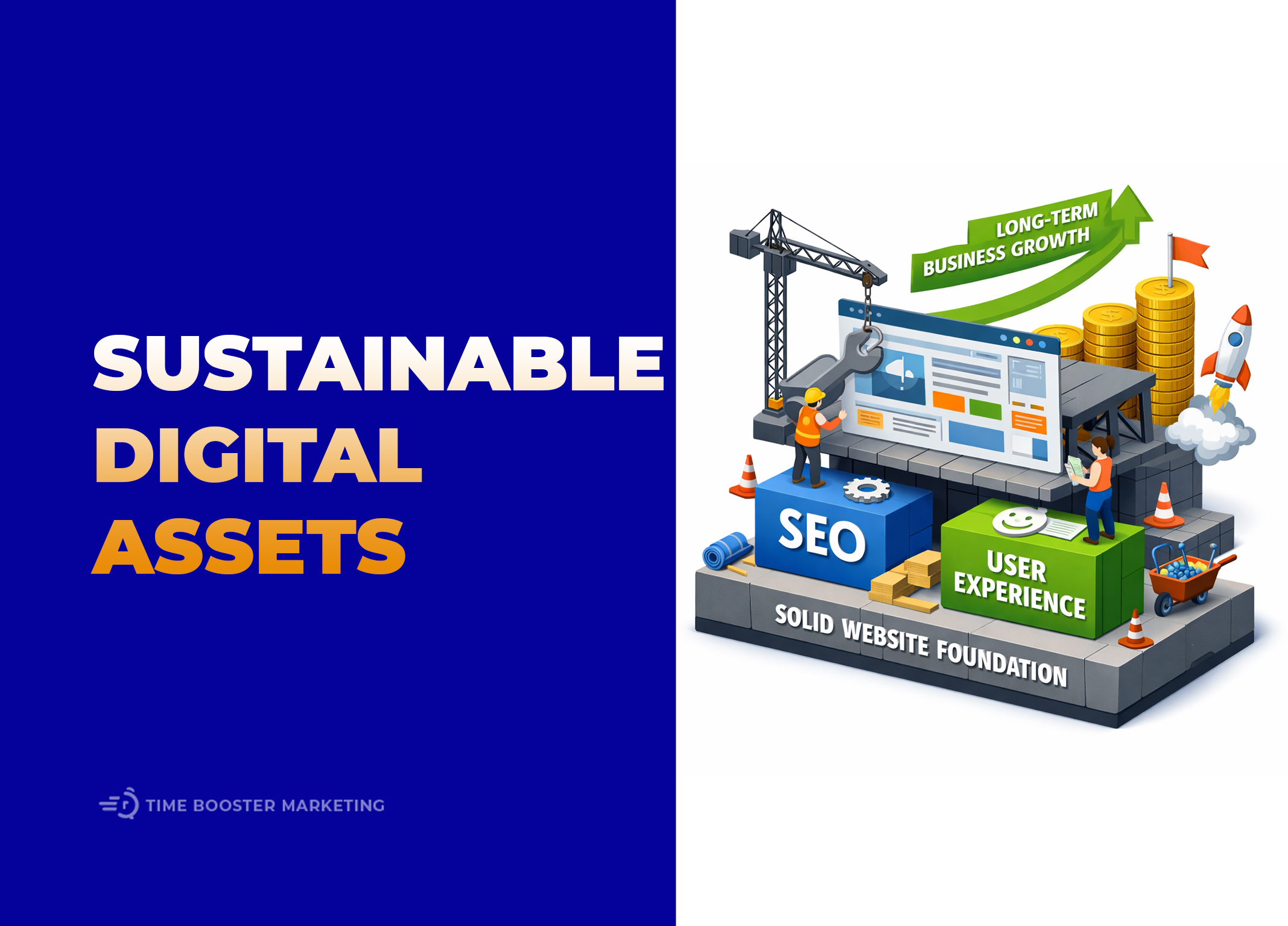
Think of your physical storefront in a busy Douala market or Yaoundé shopping district: you own that space (or sign a long-term lease), control what happens there, and it generates revenue for years. Now think of a paid Facebook ad: you pay per click, when you pause the campaign, traffic stops, and if Meta changes its algorithm, your reach drops overnight. Your website is your permanent digital real estate, and professional web design is the difference between a ramshackle pop-up stall and a polished, high-value storefront that builds lasting wealth.
For businesses across Cameroon, the shift away from overreliance on temporary ad trends to investing in professional web design is no longer optional; it’s the key to sustainable growth. Paid ads have become increasingly costly, volatile, and short-lived, while a professionally designed website acts as a foundational, long-term asset that delivers value regardless of social media fads or platform policy shifts.
Here’s what you’ll gain from this guide:
- A clear breakdown of the hidden risks of relying solely on temporary paid ads
- Why professional web design acts as permanent digital real estate
- 5 core reasons custom web design outlasts every passing ad trend
- A real-world Cameroon business case study of this strategy in action
- Actionable steps to turn your website into a permanent revenue-driving asset
The Hidden Cost of Rented Digital Space: Why Temporary Ad Trends Fail
Paid social media, search, and display ads are rented digital space. You pay a premium for access to an audience, and the moment you stop paying, that access disappears. For Cameroon businesses, this volatility has become increasingly costly and frustrating:
- Rising Ad Costs: A 2024 Cameroon Digital Marketing Association report found that average CPCs for Facebook and Google Ads increased by 35% year-over-year, with some niche sectors seeing jumps as high as 50%.
- Algorithm Volatility: Meta’s 2025 algorithm shift reduced organic and paid reach for small local businesses by 28%, while Google’s frequent updates can erase months of ad campaign progress overnight.
- Platform Lock-In: Relying solely on ads from one platform means you lose all traffic if your account is suspended, banned, or restricted, an all-too-common risk for small businesses in emerging markets.
- No Lasting Audience Ownership: Paid ads do not build a permanent list of loyal customers; every lead you generate lives on a third-party platform, not your business.
Worst of all, temporary ads do not build long-term brand authority. A customer sees your ad once, clicks through, and if they don’t convert immediately, they may forget your business entirely, unless you keep paying to show them another ad.
Professional Web Design as Permanent Digital Real Estate

Professional web design is not just a pretty website. It is a custom-built, optimized digital storefront that you own entirely. Unlike generic DIY templates (Wix, basic Squarespace, or off-the-shelf themes), professional web design is tailored to your brand, your audience, and your long-term business goals. It includes:
- Mobile-first architecture optimized for Cameroon’s 75% mobile-first internet user base
- SEO-driven structure that ranks organically on Google and other search engines
- Secure, scalable infrastructure that grows with your business
- Localized features like bilingual (French/English) content, WhatsApp integration, and MTN MoMo payment support
- Clear conversion paths that turn visitors into leads or customers without ongoing ad spend
This is permanent digital real estate: you control every aspect, you own all your customer and lead data, and it generates value for years with minimal ongoing maintenance costs.
5 Core Reasons Professional Web Design Outlasts Temporary Ad Trends
1. Owned, No Lock-In: Full Control Over Your Digital Space
Unlike paid ads, which are subject to platform rules and algorithm changes, a professionally designed website gives you full control over your content, branding, and conversion paths. If you want to add a new service, update your pricing, or launch a blog, you can do so without asking permission from a social media platform. You never have to worry about losing access to your digital storefront overnight.
For example, a small B2B consulting firm in Bamenda once relied entirely on LinkedIn Ads for leads. When LinkedIn restricted access to its lead gen forms for local businesses in 2024, the firm lost 70% of its new leads immediately. After investing in a professional website with a custom lead capture form and SEO blog, it regained all its lost lead volume within 6 months, without relying on any third-party platform.
2. Long-Term Organic Traffic: Free, Consistent Leads for Years
A professionally designed website optimized for search engine optimization (SEO) generates free, consistent organic traffic for years. Unlike paid ads, which stop delivering leads the moment you pause your campaign, organic search traffic grows over time as your website ranks for relevant keywords.
A 2025 HubSpot report found that businesses with a professional, SEO-optimized website generate 3x more high-quality leads than those relying solely on paid ads. For Cameroon businesses, this is especially impactful: a Douala-based logistics company launched a professional website with localized blog content about supply chain optimization in Central Africa. Within 18 months, 62% of its new leads came from organic Google search, cutting its ad spend by 40% while increasing total lead volume by 48%.
3. Builds Permanent Brand Authority: Trust That Lasts
Professional web design lets you showcase your brand’s expertise, social proof, and credibility in a permanent, accessible space. You can publish case studies from Cameroonian clients, display local testimonials, and share educational content that positions your business as a trusted leader in your niche.
Unlike a fleeting ad that promises a quick fix, your website acts as a digital headquarters where customers can research your business, verify your credibility, and feel confident choosing your services. This builds long-term brand loyalty that no temporary ad can match.
4. Scalable Without Extra Cost: Grow Your Business Without Rising Ad Spend
Paid ads require an increasing budget to reach more customers: as your business grows, you need to spend more on ads to maintain your lead volume. Professional web design, by contrast, lets you scale your reach for minimal additional cost. You can add new service pages, blog posts, product listings, or localized content to your website without paying extra per impression.
For example, a Yaoundé-based e-commerce clothing brand added a line of local handcrafted accessories to its professional website. Without spending a single dollar on new ads, the brand saw a 32% increase in monthly sales from organic search and repeat customers within 3 months.
5. Full Ownership of Customer Data: Nurture Leads Long-Term
When you generate leads via paid ads, most of that data lives on the third-party platform’s servers. You have limited access to customer details, and you cannot easily nurture leads with email marketing or personalized follow-ups. A professional website lets you capture full customer data (names, phone numbers, email addresses, WhatsApp contacts) and store it in your own CRM, letting you nurture leads over months or even years to turn casual visitors into loyal customers.
For Cameroon businesses, this is especially valuable given the local preference for WhatsApp communication. A professional website with a direct WhatsApp CTA button lets customers reach out directly, and you can save their contact information for future follow-ups, something no paid ad can offer.
Common Pitfalls of Undervaluing Professional Web Design
Many Cameroon businesses make two critical mistakes when it comes to their digital real estate:
- Relying on Generic DIY Templates: Off-the-shelf website builders create generic, unoptimized sites that load slowly on mobile, rank poorly on search engines, and fail to convert visitors into customers. These templates also lack the localized features (bilingual content, MTN MoMo payment support) that are critical for Cameroon’s unique market.
- Treating Your Website Like a Digital Brochure: A professional website is not just a static display of your business details. It should be a conversion-driven tool that guides visitors toward taking action, whether that’s filling out a contact form, sending a WhatsApp message, or making a purchase. Many businesses waste the value of their digital real estate by treating their website as a static afterthought instead of a revenue-driving asset.
The Digital Rent Trap: Why Chasing Ad Trends Is a Losing Strategy
The Volatility of Rented Attention
Paid advertising operates on borrowed ground. Platforms control the rules, algorithms, costs, and audience access. When Meta shifts its algorithm, your organic reach evaporates. When Google updates its auction system, your CPC doubles. When a new platform emerges (remember Vine?), early adopters win, until the platform pivots or fades.
This volatility creates three critical business risks:
- Zero residual value: Stop spending → traffic stops. No equity accumulates.
- Escalating costs: Competition drives CAC higher yearly (eMarketer reports 15–25% annual increases in competitive verticals).
- Platform dependency: Your audience lives on someone else’s property, subject to their policies and priorities.
As marketing legend Seth Godin notes: “Advertising is the tax you pay for being unremarkable.” Relying solely on ads signals a weak foundation, not a scalable strategy.
The Compounding Power of Owned Digital Real Estate
Your website operates on fundamentally different economics. Every improvement, better content, faster load times, stronger SEO, refined UX, creates compounding value:
- A blog post published today can drive qualified traffic for years
- Technical SEO fixes improve visibility across all future content
- Trust signals (testimonials, case studies) strengthen credibility with every new visitor
- Email capture builds an audience you own and can reach forever, free of platform fees
Unlike ads that vanish at sunset, your website works 24/7: converting visitors while you sleep, answering objections before sales calls, and establishing authority before prospects even contact you. This isn’t marketing overhead, it’s business infrastructure.
The Lifecycle of an Ad vs. a Website: Temporary vs. Timeless
Ad Campaigns: Short-Term Spark, Long-Term Smoke
Digital ad platforms are like carnival rides: thrilling for five seconds, then a desperate race for the next fix when the novelty wears off.
- Pros: Fast execution, immediate results, easy A/B testing.
- Cons: Expensive over time, dependent on platform changes, short-lived ROI.
Every TikTok algorithm update or Instagram Stories format shift costs you. What worked last month becomes useless today. The cost of chasing these shifts accumulates—money spent on failed campaigns, time spent retraining teams, and lost trust in a strategy that’s always playing catch-up.
The Permanent Digital Foundation
While ad trends fade, your website endures. It’s the 15-bedroom mansion your business lives in, while ads are the luxury cruises you rent every season.
- Pros: Full control, recurring traffic, long-term trust-building.
- Cons: Initial investment, requires maintenance (but pays for itself over time).
A well-designed website:
- Acts as a 24/7 marketing team, attracting visitors even when you sleep.
- Builds SEO authority, ranking in search engines for years.
- Becomes a trust anchor for your brand, outlasting fickle platform biases.
- Scales personally, adapting to new content, products, and services as your business grows.
According to HubSpot’s 2025 State of Marketing Report, companies prioritizing owned digital assets (websites, content hubs, email lists) achieve 3.2x higher customer retention and 2.8x better ROI over 3 years compared to ad-dependent peers. The math is clear: assets beat expenses.
9 Strategies to Engineer Your Website as Enduring Digital Real Estate
Strategy 1: Architect for Longevity, Not Just Launch Day
Design your site with a 5-year horizon. Avoid trendy aesthetics that date quickly (neon gradients, excessive animations). Prioritize timeless typography, intuitive navigation, and modular components that adapt as your business evolves. Document your content strategy, brand voice, and UX patterns so future updates maintain cohesion.
Strategy 2: Embed SEO as Structural Integrity
Treat SEO like plumbing, critical infrastructure hidden beneath the surface. Implement clean URL structures, semantic HTML, internal linking architecture, and schema markup during development. Create topic clusters around core services/products so authority compounds across related content. This turns your site into a self-reinforcing knowledge hub that search engines reward.
Strategy 3: Build Content That Appreciates in Value
Shift from “blog posts” to evergreen assets:
- Comprehensive service guides (e.g., “The Complete Guide to Commercial Roofing in Minnesota”)
- Localized resource hubs (e.g., “Cameroon Business Compliance Checklist 2026”)
- Interactive tools (calculators, configurators, assessments)
These assets attract backlinks, earn featured snippets, and become referral touchpoints, growing more valuable with time.
Strategy 4: Engineer Trust as a Core Feature
Trust isn’t decorative, it’s functional. Integrate:
- Verified client testimonials with photos, companies, and results
- Case studies showing your process and measurable outcomes
- Team bios with authentic photos and expertise highlights
- Security badges, certifications, and transparent policies
For global audiences (like Cameroon), include local trust signals: physical addresses, local phone numbers, WhatsApp integration, and payment method badges (MTN MoMo, Orange Money).
Strategy 5: Design for Human Behavior, Not Just Aesthetics
Professional Web Design solves business problems:
- Place primary CTAs where eye-tracking studies show attention peaks
- Reduce form fields to the absolute minimum for conversion
- Implement sticky navigation on mobile for effortless exploration
- Use progressive disclosure to simplify complex offerings
Every pixel should serve a purpose, guiding visitors toward confidence and action.
Strategy 6: Future-Proof Technical Foundations
- Mobile-first performance: Target <2s load time on 3G connections (critical for markets like Cameroon)
- Core Web Vitals optimization: Prioritize LCP, INP, CLS as non-negotiable metrics
- Accessibility compliance (WCAG 2.2): Ensure usability for all visitors while avoiding legal risk
- Headless or modular CMS: Enable agile content updates without developer dependency
This technical rigor ensures your site remains competitive as standards evolve.
Strategy 7: Integrate Owned Channels as Growth Loops
Your website should feed, not replace other owned assets:
- Strategic email capture points with high-value lead magnets
- CRM-triggered follow-up sequences for engaged visitors
- Social proof displays that encourage sharing (“Join 12,000+ subscribers”)
- API connections to sync data across tools (HubSpot, Salesforce, etc.)
This creates a self-sustaining ecosystem where each channel amplifies the others.
Strategy 8: Implement Analytics That Measure Asset Value
Move beyond “page views.” Track metrics that reflect true asset health:
- Organic traffic growth rate (YoY)
- Content decay rate (pages losing traffic)
- Lead quality score (sales-qualified vs. tire-kickers)
- Customer lifetime value (LTV) from organic channels
- Cost per owned visitor (vs. cost per ad click)
These reveal whether your digital real estate is appreciating or depreciating.
Strategy 9: Establish a Maintenance Rhythm, Not Just a Launch
Digital real estate requires stewardship:
- Quarterly content audits: refresh outdated pages, fix broken links
- Bi-annual technical health checks: speed tests, security scans, mobile validation
- Annual strategy reviews: align site goals with evolving business objectives
- Continuous user feedback loops: heatmaps, session recordings, survey prompts
This transforms your site from a project into a living business asset.
Real Impact: Businesses That Built Digital Real Estate That Lasts
A Minneapolis B2B manufacturer spent years cycling through LinkedIn and Google Ads with diminishing returns. They invested in Professional Web Design: rebuilt their site around service-focused topic clusters, embedded detailed case studies with ROI metrics, and optimized for local industrial keywords. Within 18 months:
- Organic traffic grew 220%
- Sales-qualified leads from the website surpassed paid channels
- Average deal size increased 35% (prospects arrived better educated)
- Marketing spend shifted from 80% paid → 40% paid, with higher overall revenue
A Douala-based consulting firm faced volatile Facebook Ads performance due to platform changes and payment friction. They rebuilt their site as digital real estate: French/English bilingual architecture, WhatsApp-integrated CTAs, MTN MoMo trust badges, and localized case studies. Results in 12 months:
- 68% of new clients discovered them via organic search
- Website became their #1 sales tool (reducing cold outreach by 70%)
- Client trust scores increased 4.2x (per post-engagement surveys)
- Ad spend reduced by 50% while revenue grew 30%
These businesses didn’t abandon ads; they made ads support their asset, not replace them.
Future Outlook: Why Digital Real Estate Will Only Grow More Valuable
Three macro-trends amplify the strategic advantage of Professional Web Design:
- Cookieless future: As third-party tracking fades, owned assets (websites, email lists) become the only reliable source of first-party data and audience insight.
- AI search evolution: Google’s AI Overviews prioritize authoritative, well-structured websites. Thin or templated sites will vanish from visibility; deeply engineered digital real estate will dominate.
- Consumer trust erosion: With ad fatigue at record highs (Edelman Trust Barometer), prospects increasingly seek unbiased information on your site before engaging. Your website is now your most credible salesperson.
Forward-thinking businesses are reallocating budgets: from 70% paid / 30% owned → 40% paid / 60% owned. They recognize that ads rent attention; websites own relationships.
Your First Step Toward Building Digital Real Estate Today
Your website is either appreciating in value or depreciating in relevance. There is no neutral state.
Take this action within 48 hours:
- Run the Asset Audit: Open your analytics. For the past 90 days:
- What % of total traffic came from owned channels (organic search, direct, email)?
- What’s your cost per owned visitor vs. cost per ad click?
- Which pages generated the most qualified leads without ad spend?
- Calculate Your Digital Equity: (Score >1.0 = your asset is outperforming rented space)
- Identify One Compounding Improvement:
- Fix one technical SEO issue blocking visibility
- Refresh one outdated service page with client proof points
- Add one trust element missing on your homepage (local address, payment badges, team photo)
Professional Web Design isn’t about pixels or aesthetics. It’s about engineering a business asset that works while you sleep, builds equity while competitors chase trends, and becomes the unshakable foundation of your growth. In a world of digital noise, your website is the one space you control completely. Make it count.
Your website isn’t a line item on a marketing budget. It’s the cornerstone of your business legacy.