What Is SEO Reporting for Cameroon Brands?
When I say SEO Reporting for Cameroon Brands, I mean the practice of collecting, analyzing, and sharing data about how well your website performs in search (organic traffic, rankings, conversions, etc.) in a way that helps you improve.
If you do SEO work without regularly reporting, you won’t know what’s working, what isn’t, or where to invest more. For Cameroon brands, good SEO reporting makes the difference between spending budget wisely and chasing vanity metrics.
Evolution & Context: Why SEO Reporting Matters More Now
To appreciate why SEO reporting is especially important now:
- Search engines and users expect more maturity. To rank well, you need consistent content, fast and mobile-friendly sites, good backlinks, etc. Reporting helps you track those.
- Digital adoption in Cameroon is growing. According to DataReportal’s Digital 2025 report, there were 12.4 million internet users in Cameroon in early 2025, which is about 41.9% penetration. (DataReportal – Global Digital Insights) This means more people are online, and more stake.
- Mobile broadband connections are high: many users access the internet via mobile, so metrics like mobile speed, bounce rate, etc., matter. (DataReportal – Global Digital Insights)
- Local competition is increasing. Cameroon brands need to show results to customers, partners, or investors. Good SEO reporting builds credibility.
Key Challenges Cameroon Brands Face with SEO Reporting
Before laying out solutions, here are the challenges we see many local brands dealing with:
- Lack of tools or technical skills
Some brands may not have access to Google Analytics, Search Console, or the knowledge to set up dashboards. - Data gaps
Sometimes sites lack conversion tracking, ranking tracking, or structured analytics. - Overwhelmed with too many metrics
It’s tempting to report everything: traffic, keyword positions, bounce, clicks, impressions, etc. But too many numbers can confuse. - Local relevance
Some metrics that are globally common may not matter as much locally. For example, certain keywords or social platforms may not be relevant in Cameroon. - Presentation & storytelling
Even with data, if you don’t present it cleanly, people (stakeholders, business owners) may not understand or act on it. - Inconsistent reporting cadence
Reports done only once or irregularly don’t allow tracking trends.
Statistics & Trends from Cameroon That Affect SEO Reporting
These stats help illustrate the environment and what data might matter for Cameroon brands:
- In early 2025, Cameroon had 12.4 million internet users, a penetration of 41.9%. (DataReportal – Global Digital Insights)
- Mobile broadband connections are about 86.3% of population (some connections may not include internet usage). (DataReportal – Global Digital Insights)
- Social media usage is growing; in 2024, there were about 5.05 million social media identities, with increasing adoption. (DataReportal – Global Digital Insights)
- Digital marketing trends in Cameroon note that mobile-first strategies, lightweight content, localized content, mobile speed are key to performance. (Cameroon Marketplace)
These show that when you build reports, you should pay attention to mobile metrics, local behavior, social engagement, and conversion metrics, not just raw traffic.
What Metrics Actually Matter in SEO Reporting for Cameroon Brands
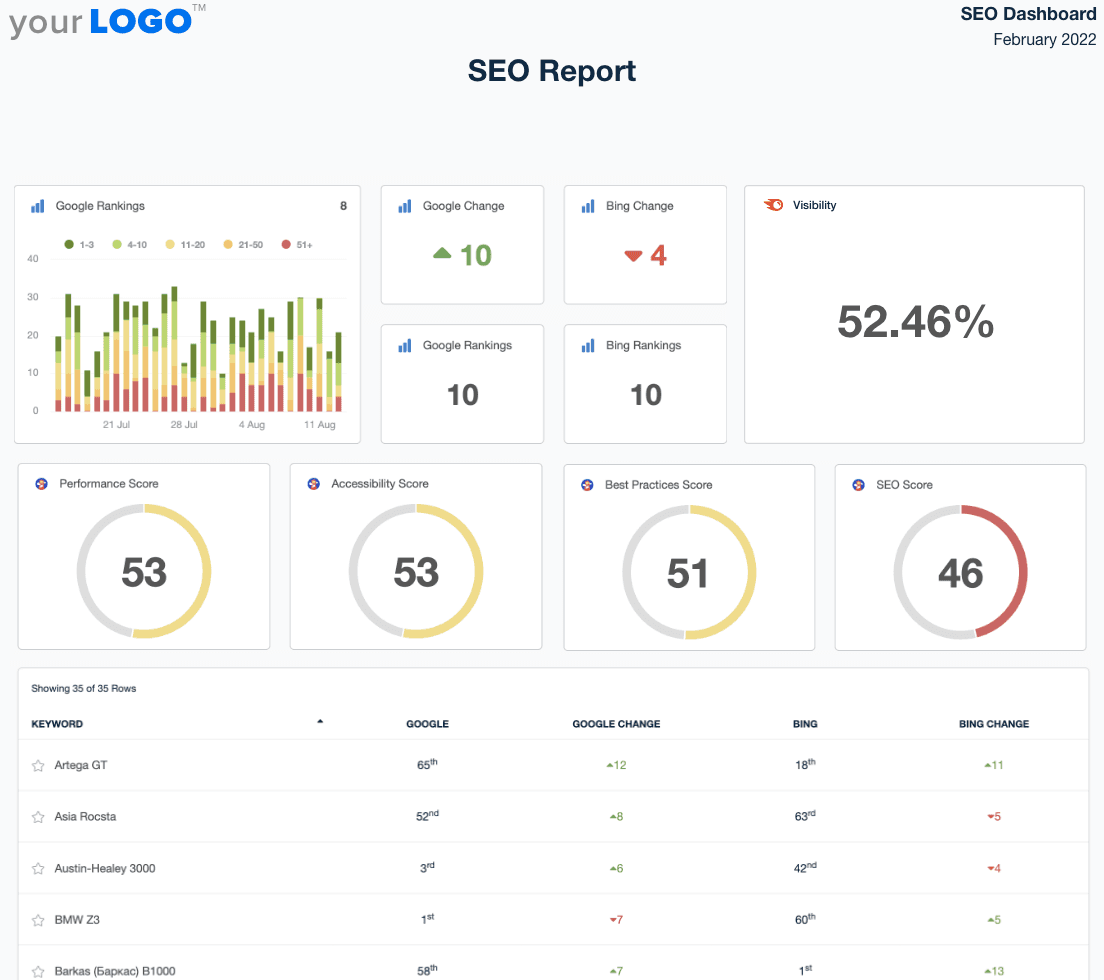
Here are the most valuable metrics you should include in your reports. I repeat: focus on what moves the needle for your business, not every possible metric.
| Metric | Why It Matters Locally |
|---|---|
| Organic Traffic (sessions, users) | Shows how many people find you via search. Growth here means your SEO is working. |
| Keyword Rankings | Tells you where your pages stand for your target keywords. Be sure to track relevant local and language keywords. |
| Mobile Performance (speed, mobile usability) | Many users are on phones; slow or broken mobile experience kills traffic. |
| Bounce Rate & Time on Page | If people leave fast, your content might not match expectations. |
| Conversion Metrics | Email sign-ups, purchases, leads. Traffic without conversion is less useful. |
| Pages per Session / Session Depth | How engaged people are—how many pages they visit per visit. |
| Backlinks / Domain Authority | Quality links help with ranking; knowing what links you have helps. |
| Technical Health (crawl errors, broken links, redirect issues) | Errors can silently hurt your performance. |
| Local Signals (Google Business Profile, local keywords, reviews) | Helps you rank locally in Cameroon, which is especially valuable. |
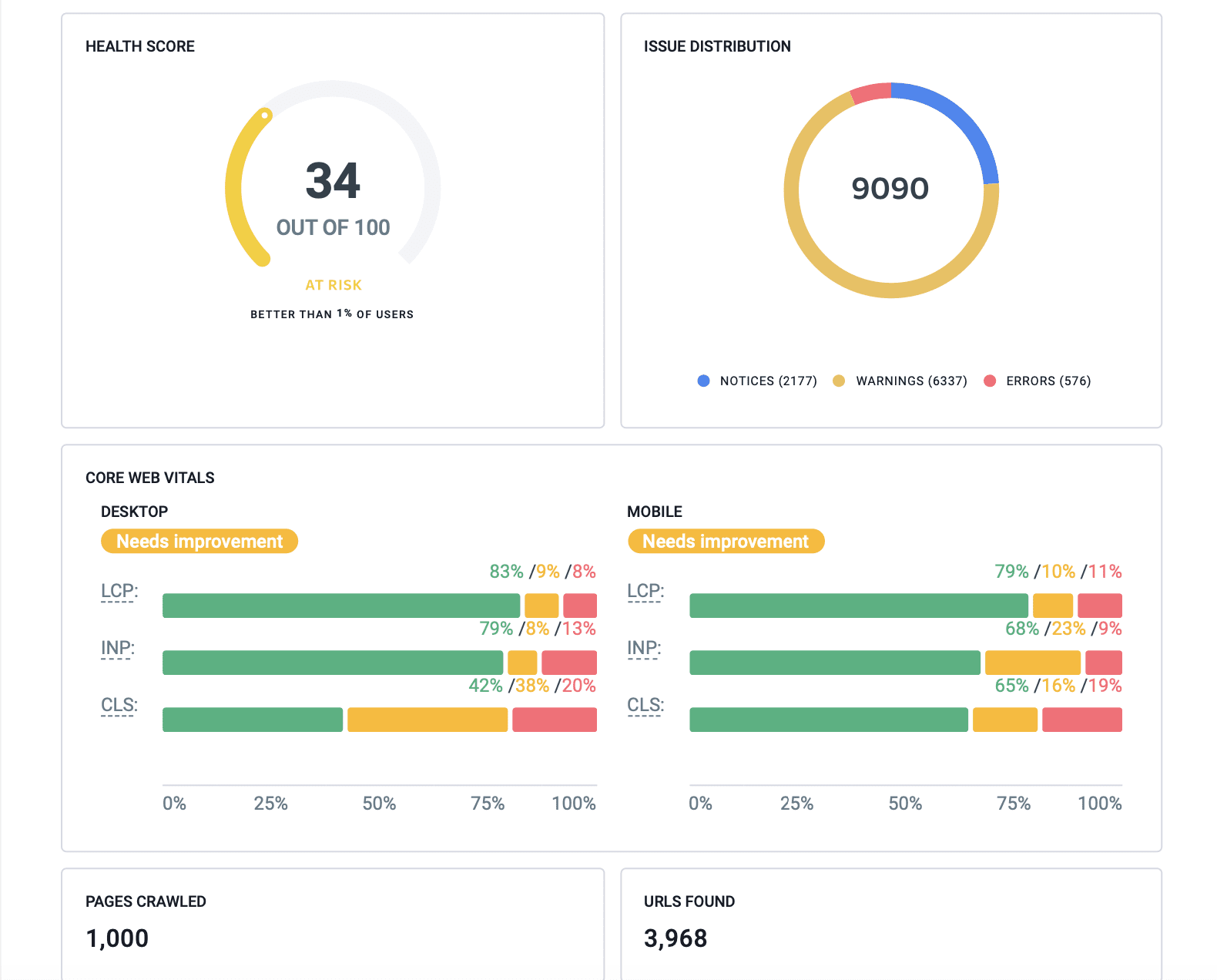
| UX metrics (core web vitals: LCP, FID, CLS etc.) | As Google focuses more on user experience, these matter more. |
10 Steps to Build Excellent SEO Reporting for Cameroon Brands
Here is a detailed 10-step framework to create SEO Reporting for Cameroon Brands that is effective, clear, and actionable.
- Define Your Goals & Audience
- What are you trying to achieve? More leads? More online sales? More brand visibility?
- Who will see the report? Owners? Team? Investors? Decide what they care about.
- Set Up Data Sources & Tools
- Use Google Analytics, Google Search Console, mobile speed tools (PageSpeed Insights or similar).
- Use keyword tracking tools if possible (Ahrefs, SEMrush, or local alternatives).
- Make sure you have conversion tracking in place.
- Choose Key Metrics & KPIs
- Pick metrics from the list above that align with your goal.
- Localize your KPIs: track local keyword rankings, local reviews, etc.
- Establish Reporting Frequency & Structure
- Decide whether monthly, biweekly or quarterly reports make sense. Usually monthly works well.
- Structure report: begin with executive summary; then high-level performance; then deep dive; then recommendations.
- Design & Visualize Data Clearly
- Use dashboards, charts, tables.
- Visuals help: line charts for traffic over time, bar charts for keyword ranking changes, pie charts for traffic sources.
- Use colors, but not overwhelming. Highlight wins and problem areas.
- Interpret Data & Tell a Story
- Don’t just show numbers. Explain what they mean. If traffic dropped, why? If a keyword improved, what changes drove it?
- Provide context: benchmark vs previous period; what actions you took.
- Include Local Insights
- Use Cameroon-specific data (internet speed issues, mobile vs desktop behavior).
- If you have local products, services, or language variants, include performance there.
- Use local social signals, reviews, local search listings performance.
- Make Recommendations & Action Steps
- Based on data, suggest what to do next: optimize speed, fix broken pages, improve content, get more backlinks, etc.
- Set priorities: what to do now vs later.
- Ensure Accuracy & Clean Data
- Check for data sampling errors, broken tracking, incorrect tags.
- Ensure data consistency (e.g. same date ranges, consistent definitions of “organic”, etc.).
- Review & Iterate
- At each report cycle, review what worked and what didn’t.
- Adapt metrics if something isn’t useful.
- Learn from reports and improve over time.
Reporting Tools & Templates Useful for Cameroon Brands
These tools and templates can help you build strong reports:
- Google Search Console – for performance, search queries, indexing, error reports.
- Google Analytics – for traffic, behavior, conversion data.
- PageSpeed Insights or Lighthouse – for performance / UX metrics.
- Keyword Tracking Tools (Ahrefs, Semrush, or more affordable/local tools) – to monitor keyword ranking trends.
- Local Listing / Review Tools – to monitor Google My Business / local directories.
Templates & Guides:
- “Your 2025 Guide to SEO Reporting and Tracking” by Search Engine Land is good for structure and insights. (Search Engine Land)
- “How to Build a Solid Ranking Report for SEO: 10 Best Practices” by Search Atlas gives tips on what to show in ranking reports. (Search Atlas – Advanced SEO Software)
- “SEO Reporting Essentials: The Ultimate Guide” from WeAreTG it shows how to format reports and what flow works. (Timmermann Group)
Future Outlook & Opportunities
Here are what I believe will matter for SEO reporting in Cameroon in the coming years, and where you can get ahead:
- More emphasis on mobile-first metrics: Core Web Vitals, mobile usability, mobile traffic vs desktop performance.
- Growth of local SEO signals: reviews, localized content, maps listings, and voice searches in local languages.
- Wider adoption of automated dashboards so brands can see up-to-date performance without manual report preparation.
- Greater use of AI-powered insights: anomaly detection (sudden drops), forecasted performance, and competitive insights.
- More focus on tying SEO reports to business outcomes: sales, leads, brand awareness, local footfall, etc.
- Better data visualization and storytelling: a presentation that is easy for business owners to understand and act upon.
Conclusion
SEO Reporting for Cameroon Brands is not just about pulling metrics. It’s about choosing what matters, setting goals, measuring performance, telling the story, and driving action. With digital adoption growing in Cameroon, brands that report well will be trusted, make smarter decisions, and grow more sustainably.
If you set up good data tracking, pick meaningful metrics, present them clearly, and keep improving your reports, you will see clearer results.