

WhatsApp Marketing for Small Business: A Complete Guide for 2026
WhatsApp marketing works because customers already use WhatsApp to make decisions.
They ask for prices. They request photos. They confirm delivery. They ask if a product is still available. They book appointments. They negotiate. They send payment screenshots. They follow up when something is urgent.
For small businesses, that behavior is a major opportunity. WhatsApp is not only a chat app. Used properly, it becomes a customer-engagement, sales, follow-up, and retention channel.
The danger is using WhatsApp badly. If you blast random promotions to people who never gave permission, send irrelevant messages, ignore replies, or treat every customer the same, WhatsApp becomes annoying. The goal in 2026 is not more messages. The goal is better conversations that lead to trust, action, and repeat business.
What Is WhatsApp Marketing?
WhatsApp marketing is the use of WhatsApp to communicate with customers before, during, and after a purchase.
It can include product updates, promotions, appointment reminders, lead follow-up, customer support, order confirmations, event reminders, abandoned enquiry recovery, loyalty offers, and post-purchase care.
The WhatsApp Business App features page highlights tools such as business profiles, catalogs, automated greeting messages, quick replies, and labels, all of which help small businesses manage customer conversations more professionally.
For a boutique, WhatsApp marketing may mean sending new arrivals to interested customers. For a salon, it may mean appointment reminders and rebooking messages. For a restaurant, it may mean lunch menus, delivery updates, and weekend offers. For a real estate agent, it may mean sending property options to qualified leads.
Why Small Businesses Should Use WhatsApp in 2026
Small businesses should use WhatsApp because it sits close to buying intent.
A customer who messages you on WhatsApp is often warmer than someone who only likes a post. They are asking a specific question. They want a price, appointment, product detail, location, delivery option, or reassurance.
WhatsApp also supports faster trust-building. A customer can see your business profile, browse your catalog, ask questions, receive photos, and get a human response in one place. WhatsApp’s resources for the Business App emphasize catalogs, quick replies, away messages, and labels as tools that help businesses respond promptly and organize chats.
For African SMEs, this matters because many buying journeys are conversation-led. Customers may discover you on Instagram, Facebook, Google, TikTok, a referral, or a flyer, but the actual decision often happens inside WhatsApp.
Build a Permission-Based Contact List
The foundation of WhatsApp marketing is permission.
Do not add people to campaigns just because you have their number. WhatsApp’s Business Policy states that businesses may contact people on WhatsApp only when the person has given the business their mobile number and has given opt-in permission to receive messages or calls.
Build your list through clear opt-in points such as:
- website forms
- checkout pages
- in-store signups
- event registrations
- consultation forms
- QR codes
- loyalty programs
- Google Forms
- Instagram and Facebook campaigns
- Click-to-WhatsApp ads
- customer-service conversations
Use plain language:
Join our WhatsApp list to receive weekly lunch menus, delivery updates, and special offers.
Or:
Get property alerts on WhatsApp for apartments in Douala within your budget.
This tells people what they will receive. Permission is stronger when expectations are clear.
Choose the Right Campaign Types
WhatsApp marketing works best when campaigns are useful, not noisy.
Promotional Campaigns
Use these for discounts, new arrivals, seasonal offers, flash sales, event packages, and limited stock. Keep them targeted. A customer interested in men’s shoes should not receive every children’s clothing promotion.
Educational Campaigns
Use short tips, buying guides, FAQs, how-to messages, and expert advice. A clinic can share appointment-preparation tips. A coach can share weekly business lessons. A real estate agent can explain documents buyers need before a property visit.
Reminder Campaigns
These are powerful because they reduce missed revenue. Send appointment reminders, payment reminders, delivery reminders, event reminders, renewal reminders, and rebooking prompts.
Re-Engagement Campaigns
Use these for people who enquired but did not buy. For example:
Hello Clara, you asked about our bridal makeup package last week. We still have two slots open for September. Would you like me to send the updated package options?
Post-Purchase Campaigns
After the sale, send care instructions, feedback requests, review requests, refill reminders, maintenance tips, or loyalty offers. This turns WhatsApp into a retention channel, not only a sales channel.
Personalization Makes WhatsApp Feel Human
WhatsApp is personal by nature. Generic messages feel lazy.
Personalization does not always require complex software. Start with simple segmentation:
By interest: shoes, hair care, catering, apartments, training, consulting.
By stage: new lead, quote sent, payment pending, customer, repeat customer.
By location: Douala, Yaoundé, Buea, Limbe, Bamenda, diaspora.
By timing: birthday, renewal date, event date, delivery date, follow-up date.
A generic message says:
We have new products. Contact us.
A personalized message says:
Hello Nadine, the office dresses you asked about last month are back in stock in medium and large sizes. I can send photos if you are still interested.
That message feels like service, not spam.
Use Automation and Scheduling Carefully
Automation is useful when it protects speed and consistency. It becomes dangerous when it removes judgment.
The WhatsApp Business App can support basic automation through greeting messages, away messages, and quick replies. WhatsApp’s official Business App materials explain that these tools help businesses respond faster, manage expectations, and avoid missing opportunities when they are busy.
Use automation for:
- greeting new customers
- confirming business hours
- answering FAQs
- sending price-list links
- sharing location
- acknowledging enquiries
- routing customers to the right staff
- reminding customers about appointments
- collecting basic lead information
A good automated reply says:
Thanks for contacting us. Please send the service you need, your location, and preferred date. Our team will reply with availability and pricing.
A bad automated reply pretends the conversation is fully handled when the customer still needs a real answer.
Track Analytics and KPIs
If you do not measure WhatsApp marketing, you will confuse activity with results.
Track practical KPIs:
- contacts added with permission
- messages sent
- delivery rate
- reply rate
- number of enquiries
- qualified leads
- quotes sent
- bookings confirmed
- sales closed
- average response time
- repeat purchases
- opt-outs
- revenue per campaign
- cost per WhatsApp lead from ads
For businesses using the WhatsApp Business Platform, webhooks and message-status notifications can support tracking events such as message updates and delivery status through integrations. Meta’s official Postman collection for the WhatsApp Business Platform describes webhooks and message status update notifications for business messaging workflows.
For paid campaigns, Ads that click to WhatsApp can run across Facebook and Instagram placements and are designed to support lead generation, sales, and marketing objectives.
The most important question is not “How many people did we message?” It is “How many useful conversations, customers, bookings, and repeat purchases did those messages create?”
Common WhatsApp Marketing Mistakes
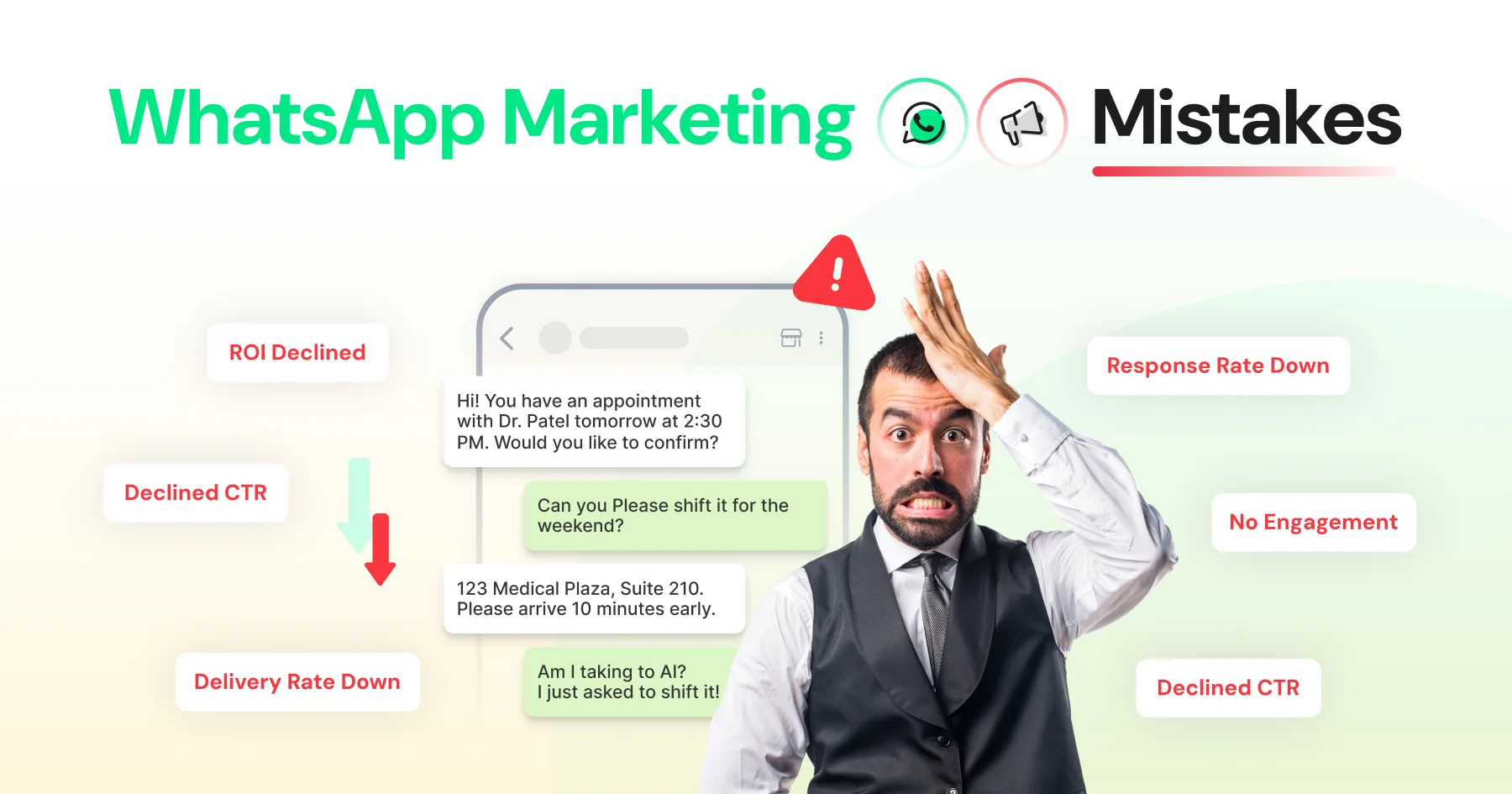
- The first mistake is sending messages without permission. This damages trust and can create compliance problems.
- The second mistake is broadcasting the same promotion to everyone. A school parent, restaurant customer, property buyer, and fashion customer do not need the same message.
- The third mistake is running ads to WhatsApp without a response system. If customers click and nobody replies quickly, the campaign wastes money.
- The fourth mistake is ignoring labels. Labels turn random chats into a basic CRM. Use labels such as New Lead, Hot Lead, Quote Sent, Payment Pending, Delivered, Follow Up, VIP Customer, and Lost Lead.
- The fifth mistake is using WhatsApp only to sell. Share helpful information, reminders, updates, support, and proof. Customers tolerate marketing when it feels useful.
- The sixth mistake is scaling too late. Once one phone and one staff member cannot manage enquiries properly, the business needs better systems.
Scale With the Right Platform
The WhatsApp Business App is enough for many small businesses at the beginning. It supports profiles, catalogs, quick replies, labels, and basic automated messages.
But as volume grows, you may need the WhatsApp Business Platform. WhatsApp describes the platform as business messaging APIs for lead generation, conversational commerce, engagement marketing, and integration with systems such as CRM and marketing automation platforms.
Upgrade when you need:
- multiple agents
- shared inboxes
- CRM integration
- campaign scheduling
- approved message templates
- automation workflows
- chatbot support
- analytics dashboards
- lead routing
- customer segmentation
- higher-volume messaging
Before choosing a provider, check pricing carefully. The WhatsApp Business Platform pricing page lists four message categories: marketing, utility, authentication, and service, with rate cards and volume tiers that businesses should review by currency and market.
For small businesses, the right platform should make WhatsApp easier to manage, not more complicated.
A Simple WhatsApp Marketing Strategy for 2026
Start with this structure.
First, clean your WhatsApp Business profile. Add your business name, description, hours, location, website, catalog, and clear contact details.
Second, build a permission-based list. Use QR codes, forms, checkout opt-ins, ads, and customer conversations.
Third, segment contacts. Separate new leads, past customers, VIP customers, product interests, locations, and enquiry stages.
Fourth, create campaign templates. Prepare messages for promotions, reminders, follow-ups, education, and post-purchase care.
Fifth, set response rules. Decide who replies, how fast they respond, and when conversations move to sales, support, or management.
Sixth, automate carefully. Use automation for speed, but keep humans involved where trust, negotiation, or complex decisions matter.
Seventh, measure weekly. Track replies, leads, sales, response time, opt-outs, and revenue.
Eighth, scale only when the process is already working manually. Automation should improve a proven workflow, not hide a broken one.
WhatsApp Marketing Works When It Respects the Customer
WhatsApp marketing for small businesses is not about blasting more messages.
It is about turning real customer interest into organized, respectful, measurable conversations. The businesses that win in 2026 will use WhatsApp to respond faster, personalize better, follow up consistently, educate customers, recover lost leads, and retain buyers after the first purchase.
Start with permission. Build a clean list. Segment your audience. Send useful campaigns. Track outcomes. Improve your replies. Add automation when manual work becomes too slow. Move to the WhatsApp Business Platform when volume, analytics, and team management require it.
Customers are already talking on WhatsApp. The opportunity is to make your business easier to trust, easier to reach, and easier to buy from.