What to Expect in the First 30 Days of a Digital Marketing Campaign
You have approved the proposal, paid the initial invoice, and given your marketing agency access to your accounts. Naturally, you want to know when the campaign will start producing customers.

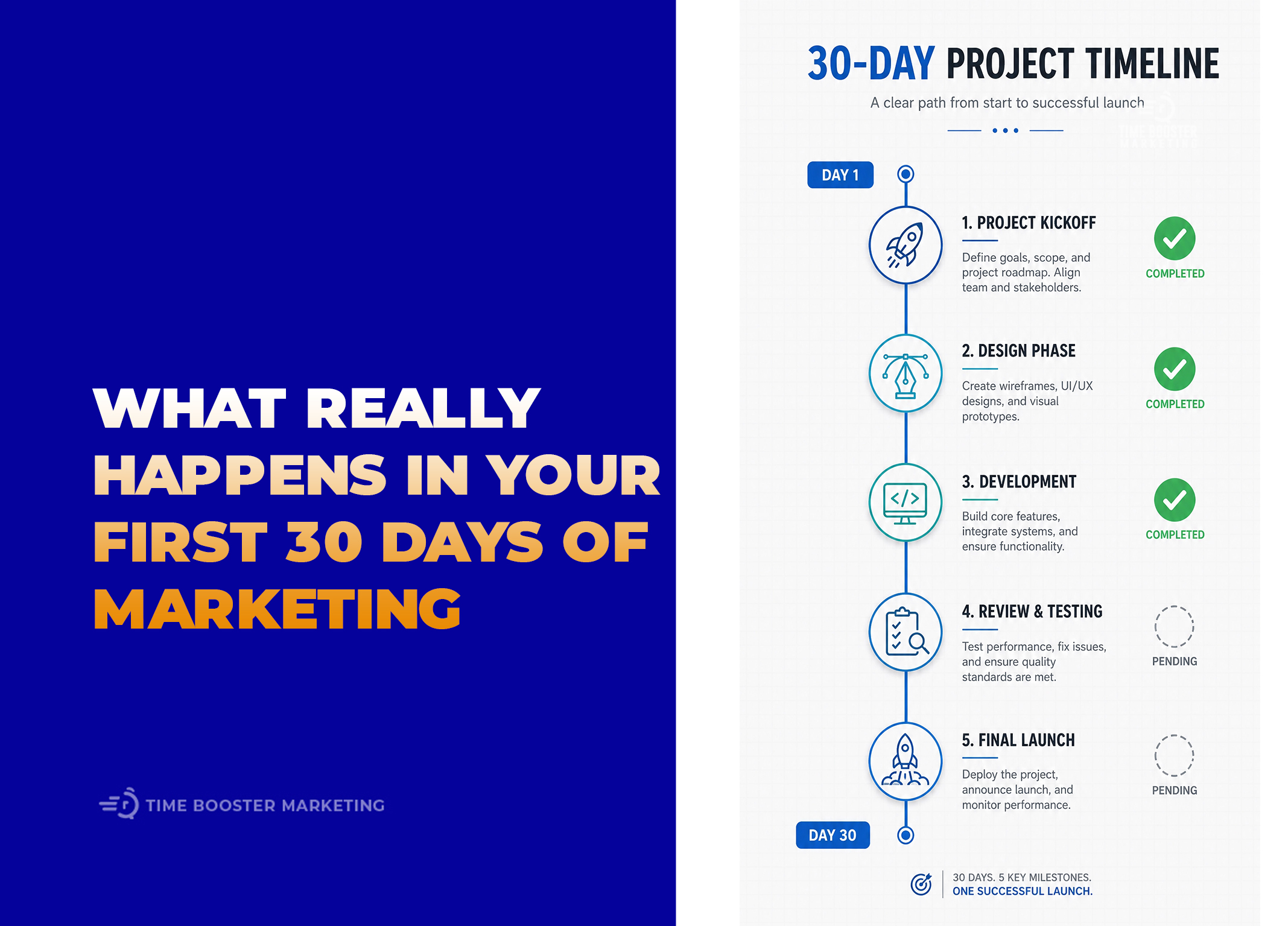
That expectation is reasonable. However, the first 30 days of a digital marketing campaign are rarely just about launching advertisements and waiting for sales. They are about establishing tracking, converting your business knowledge into marketable messages, testing audience assumptions, and identifying where potential customers lose interest.
You may generate enquiries or sales during the first month. But the most valuable outcome is usually a clearer understanding of what attracts your market, what prevents conversion, and where your budget should be concentrated next.
Why the First Month Is a Foundation-Building Period
A campaign cannot be optimized intelligently until your marketing team can see what people are doing.
Before making major budget decisions, the team needs to know which advertisements generate clicks, which landing pages hold attention, which enquiries become qualified opportunities, and which channels produce weak or irrelevant leads.
That requires dependable measurement. For example, Google recommends configuring specific conversion actions so advertisers can measure activities such as purchases, calls, enquiries, and registrations. Its official guidance on Google Ads conversion tracking also explains that campaign systems use conversion information to learn which users are more likely to complete the desired action. (Google Help)foundation, a campaign can appear busy while producing very little business intelligence.
Days 1–7: Onboarding, Research and Measurement Setup
The first week should be dominated by questions, access requests, audits, and strategic decisions.
Your Agency Should Clarify the Commercial Goal
“Get more visibility” is not a sufficiently precise campaign objective.
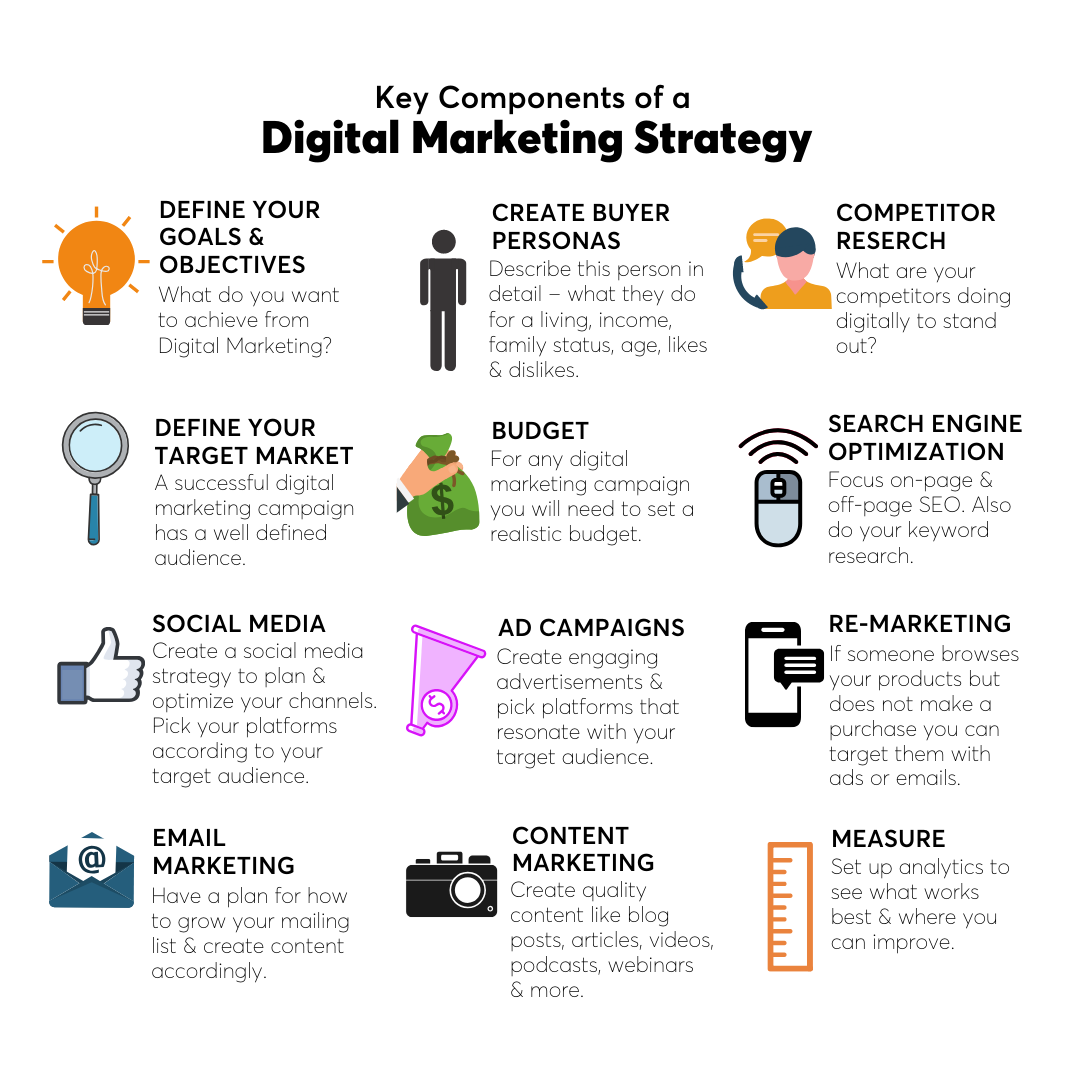
Your marketing team should determine whether the campaign is expected to generate WhatsApp conversations, telephone calls, bookings, store visits, quotation requests, email subscribers or direct purchases.
The primary action must be clear because each objective requires a different campaign structure. Meta, for example, explains that its advertising system uses the selected campaign objective to look for people who are more likely to complete the corresponding action. Choosing an engagement objective when you need qualified leads may therefore generate activity without meaningful commercial intent. (Facebook)arding process should also clarify:
- Which products or services are most profitable
- Which locations the business can serve
- What qualifies as a serious lead
- How quickly the business can respond
- Which objections commonly delay purchases
- How many new customers the business can realistically handle
These questions prevent the agency from optimizing for numbers that look impressive but do not support revenue.
Tracking Should Be Installed and Tested
Your agency may need to configure Google Analytics, advertising pixels, conversion events, call tracking, form tracking and campaign-specific links.
Google Analytics collects and reports campaign and traffic-source information so businesses can understand how users arrive through advertising, search engines, social networks and other channels. Its documentation on campaign and traffic-source measurement shows why accurate attribution is essential when multiple platforms are involved. (Google Help)s should also be added to links used in emails, WhatsApp messages, social media posts and advertisements. Google’s guidance for marketing specialists explains how these parameters help identify the campaigns referring traffic to a website. (Google for Developers) the first week, your agency should be able to explain what counts as a conversion and how that conversion will be recorded.
Days 8–14: Messaging, Content and Campaign Production
Once the objective and tracking system are clear, the team can begin producing campaign assets.
These assets may include advertisements, landing pages, social media content, videos, graphics, emails, lead forms and WhatsApp response scripts.
Expect Messaging Development, Not Just Graphic Design
Effective campaign production is not simply a matter of putting your logo on an attractive image.
The team must translate your offer into a message that answers four questions quickly:
- Who is this for?
- What problem does it solve?
- Why should the customer trust this business?
- What should the customer do next?
This is especially important in local markets where buyers frequently compare several providers through Instagram, Facebook, Google and WhatsApp before contacting anyone.
A restaurant campaign may need to emphasize convenience, atmosphere or group dining rather than merely listing menu items. A property company may need to lead with verified documentation and location advantages rather than generic claims about “luxury.” A salon may need to show the specific result, price range and booking process instead of posting another broad “visit us today” caption.
Approval Delays Can Affect the Timeline
Your agency may send copy, visuals or landing pages for approval. Slow feedback at this stage can reduce the amount of testing completed within the first month.
Advertising platforms also review campaign materials before or during delivery. Google states that advertisements are reviewed for compliance with its policies, while Meta applies advertising and commerce standards to content running across its platforms. (Google Help) lesson is simple: campaign timelines depend partly on how quickly your business supplies accurate information and approves usable materials.
Days 15–21: Launch, Audience Testing and the Learning Phase
The campaign is now live, but launch day is not the finish line. It is the beginning of controlled testing.
The Initial Audience Is an Informed Hypothesis
Your agency may believe that a certain age group, location, job title, interest category or search term represents your ideal customer. That belief must still be tested against real behaviour.
During this period, the team may compare:
- Broad audiences against interest-based audiences
- Different cities or neighbourhoods
- Several headlines and visual concepts
- Short videos against static images
- WhatsApp enquiries against website forms
- Educational messages against direct promotional offers
The purpose is not to change everything every day. It is to isolate meaningful differences and learn which combinations produce stronger signals.
Performance May Fluctuate During the Learning Phase
Meta describes the learning phase as the period during which its delivery system explores how an ad set can be delivered most effectively. Performance during this period may be less stable, and significant edits can affect how the system learns. (Facebook)so uses conversion information to learn which users are more likely to convert. Changing important conversion settings can require the system to relearn aspects of campaign performance. (Google Help)repeatedly pausing campaigns, changing audiences and replacing creative after one disappointing day can be counterproductive.
Your agency should monitor the campaign closely, but it should not react emotionally to every daily fluctuation.
Days 22–30: Early Optimization and Performance Interpretation
By the final week, enough information may be available to identify initial patterns.
This does not always mean the campaign has reached stable profitability. A modest local advertising budget may accumulate data more slowly than a large national campaign. However, your agency should be able to explain what has happened and what it intends to change.
Early Indicators That Matter
The first report should go beyond impressions and likes.
Useful early indicators include:
Tracking accuracy: Are enquiries, calls, purchases and bookings being recorded correctly?
Click-through rate: Are people interested enough in the message to visit the next step?
Cost per click: Is the campaign buying attention efficiently compared with alternative audiences or advertisements?
Landing-page engagement: Do visitors stay, scroll, read and take action, or do they leave immediately?
Conversion rate: What proportion of visitors complete the desired action?
Cost per lead: How much advertising spend is required to generate an enquiry?
Qualified-lead rate: How many enquiries actually fit the business’s service area, budget and customer criteria?
Response time: How quickly does your team reply after someone calls, submits a form or sends a WhatsApp message?
That final indicator is often overlooked. Marketing may generate a legitimate opportunity, but a delayed, unclear or unfriendly response can destroy the conversion. In trust-based markets, the quality of the sales conversation is part of campaign performance.
What You Should Not Automatically Expect in 30 Days
You should not assume that one month will produce a fully optimized system, predictable monthly revenue or a final answer about every platform.
Search engine optimization, for example, involves helping search engines understand your website and helping users discover it through search results. Google’s SEO Starter Guide presents SEO as ongoing work involving site structure, content quality, visibility and long-term maintenance, not a one-time campaign switch. (Google for Developers)ting also needs time to build familiarity and trust. A prospect may read an article, follow your Instagram account, view several posts and only contact you weeks later.
Paid advertising can generate faster feedback, but speed does not guarantee profitability. A campaign may quickly reveal that your offer is unclear, your prices are uncompetitive, your landing page is weak or your team is not following up effectively.
Those findings are not necessarily campaign failure. They are evidence showing where the customer journey needs improvement.
What a Strong Day-30 Report Should Contain
By the end of the month, your agency should provide more than a collection of screenshots.
A useful report should explain:
- What was completed during onboarding
- Which campaigns and assets were launched
- How the budget was distributed
- Which audiences and messages were tested
- What results were generated
- Which leads were commercially relevant
- What problems were discovered
- What will be changed during the next 30 days
The report should distinguish between metrics and business outcomes. Think with Google recommends beginning measurement with business objectives and differentiating the main KPI from supporting metrics. (Google)impressions may explain how many opportunities the campaign had to be seen. They do not prove that the campaign generated revenue. Similarly, a low cost per lead is not automatically positive if most leads cannot afford the service or are located outside your market.
Warning Signs During the First Month
Not every disappointing result is a red flag. However, certain behaviours should concern you.
Be cautious when an agency cannot explain what it is testing, reports only follower growth and impressions, launches without conversion tracking, changes the strategy constantly, or blames the platform without presenting evidence.
You should also question a provider that guarantees a specific number of sales before reviewing your offer, market, budget, sales process and historical performance.
A credible team should communicate uncertainty without becoming vague. It should tell you what it knows, what it is testing, what the data currently suggests and what information is still missing.
The Right Outcome After 30 Days
The first month of a digital marketing campaign should leave you with greater clarity.
You should understand which messages attract attention, which audiences show intent, how prospects move from advertisements to enquiries, and where the conversion process is breaking down.
Early leads and sales are valuable. But the stronger long-term outcome is a campaign that is becoming more measurable, focused and efficient.
By day 30, you should not simply hear that the campaign is “going well.” You should receive evidence of what has been built, what has been learned, and how those lessons will guide the next stage of growth.