LinkedIn Job Search Cameroon: Why It Is the Best Platform for Job Seekers Right Now
Most job seekers in Cameroon use the same familiar methods: referrals, WhatsApp groups, job boards, university networks, family contacts, and direct CV submissions.

Those methods still matter. In Cameroon, relationships and trust can open doors that online applications alone cannot. But relying only on referrals and job boards limits your visibility. You are mostly seen when someone already knows you or when you apply after a vacancy is published.
LinkedIn changes the equation.
It allows recruiters, HR managers, founders, department heads, and business owners to discover you before you send an application. According to DataReportal’s Digital 2026 Cameroon report, LinkedIn’s advertising resources indicated about 1.6 million registered members in Cameroon in late 2025. That does not mean every member is active daily, but it shows that LinkedIn has become a serious professional database in the country.
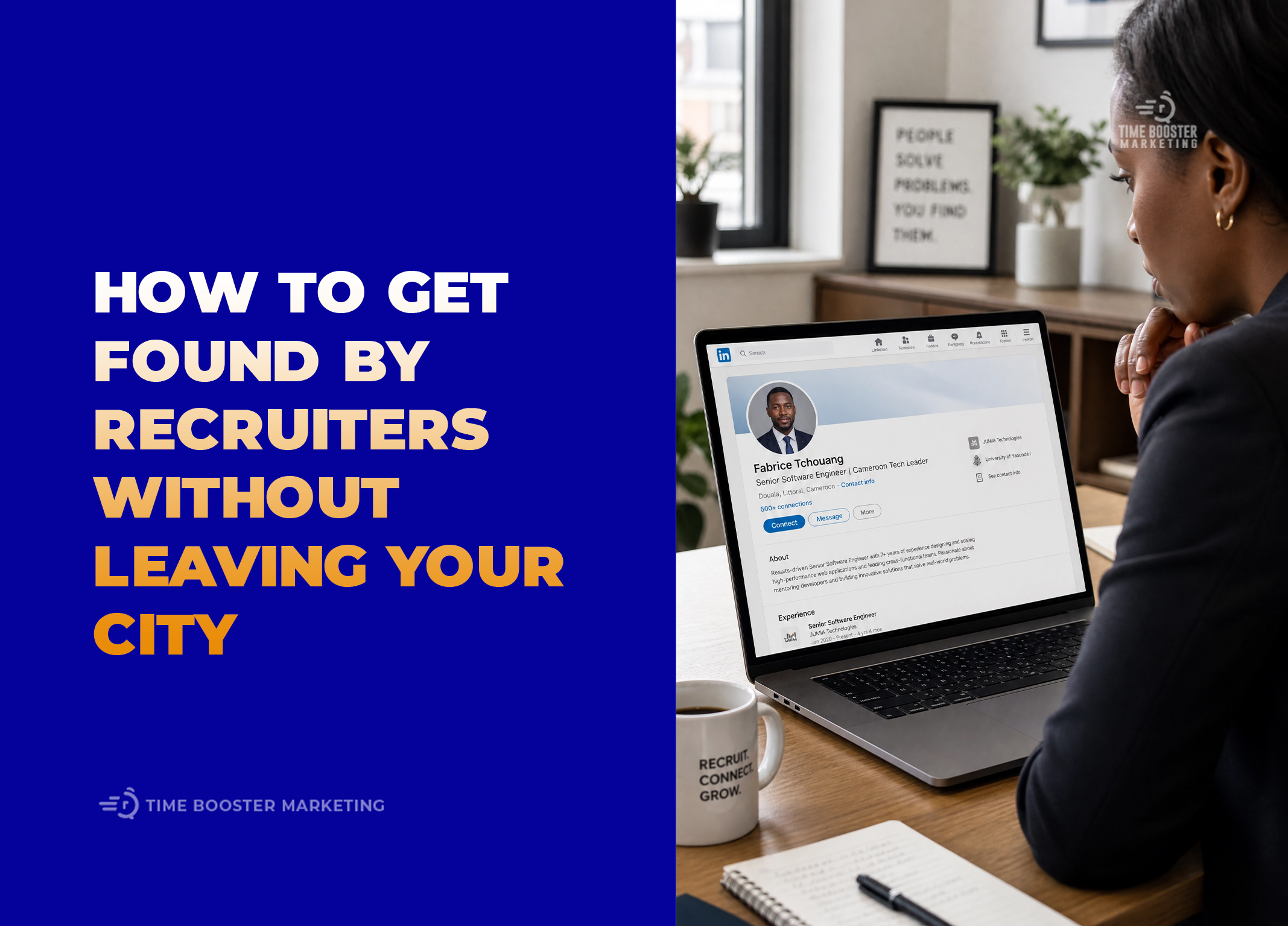
For job seekers, the opportunity is simple: stop treating LinkedIn like a dead profile page. Use it as a professional visibility system.
Why LinkedIn Is Different From a Job Board
A job board is mainly reactive. You wait for a vacancy, read the requirements, upload your CV, and hope to be shortlisted.
LinkedIn is more dynamic. It combines a CV, professional search engine, networking platform, content platform, job board, and recruiter database in one place.
That means your profile can work even when you are not applying. A recruiter can search for “accountant,” “data analyst,” “HR assistant,” “software developer,” “sales executive,” or “project officer” and find candidates whose profiles match the role. A hiring manager can see your comments, posts, recommendations, skills, work samples, and career direction before deciding whether to contact you.
LinkedIn itself describes a profile as a professional page for managing your personal brand and showing experience, skills, education, achievements, and interests beyond a traditional résumé. You can review LinkedIn’s profile overview guide for how the platform frames the profile’s purpose.
Your CV may be seen only after you apply. Your LinkedIn profile can be found before that.
How Recruiters Use LinkedIn to Find Candidates

Recruiters do not always begin by posting a job and waiting.
Many search actively.
LinkedIn Recruiter and Recruiter Lite include search filters that allow recruiters to narrow candidates by factors such as job title, location, years of experience, skills, companies, education, and other professional signals. LinkedIn’s Recruiter search filters documentation explains, for example, that years of experience can be derived from the earliest position entered in a candidate’s Experience section.
This matters because incomplete profiles are harder to find.
If you leave your skills empty, use vague job titles, omit dates, or fail to describe your responsibilities, you reduce the information recruiters can use to match you with roles.
For example, a recruiter looking for an entry-level accountant may search for:
- Bookkeeping
- Reconciliation
- Tax support
- Excel
- Accounting graduate
- Financial reporting
- Douala or Yaoundé
If your profile only says “Graduate” or “Open to Work,” you may not appear in the right searches.
Set Up Your Profile to Appear in Searches
Your LinkedIn profile should be written for two audiences: humans and search.
A human visitor wants to understand your value quickly. LinkedIn’s search systems need clear keywords connected to your role, skills, industry, and location.
Write a Searchable Headline
Your headline should not only say:
Open to Work
That tells people you are available, but not what you can do.
A better headline says:
Junior Accountant | Bookkeeping, Reconciliation and Tax Support | Open to Finance Roles in Cameroon
Or:
Customer Service Professional | Client Support, Complaint Resolution and CRM Documentation
Or:
Software Developer | Web Applications, APIs and Business Automation Tools
The formula is:
Target role + key skills + industry or opportunity direction
LinkedIn allows members to edit their professional headline instead of relying only on the current job title. Its headline editing guide confirms that the headline is a customizable profile field.
Use this space carefully. It appears near your name across LinkedIn.
Complete Your About Section
The About section should explain who you are, what you can do, and what kind of opportunity you are seeking.
Avoid empty phrases like:
I am a hardworking and motivated individual seeking opportunities to grow.
Write something more specific:
I am a finance graduate with training in bookkeeping, reconciliation, Excel reporting, and basic tax support. I am interested in entry-level accounting roles where I can support accurate records, monthly reporting, and financial administration for growing organizations.
That summary gives recruiters real information.
Fill Your Experience Section Properly
Even if you have not held a formal job, include internships, volunteer work, class projects, association leadership, freelance work, and relevant training.
For each role, explain:
- What you did
- Which tools you used
- Which responsibilities you handled
- What problem you helped solve
- What result or lesson came from the experience
Do not write only:
Intern
Write:
Supported invoice filing, supplier documentation, Excel data entry, and monthly expense tracking during a three-month finance internship.
Specific experience gives recruiters more reasons to take you seriously.
Use Skills to Match Recruiter Searches
Skills matter because recruiters often search by ability, not only job title.
LinkedIn’s talent products include skills-based search and filtering features, and its own recruiter-facing resources emphasize skills as part of candidate discovery. The LinkedIn Recruiter candidate profiles section shows how skills are part of the platform’s hiring workflow.
Add skills that match your target role.
For accounting roles, use skills such as bookkeeping, financial reporting, reconciliation, Excel, tax preparation, and accounting software if accurate.
For marketing roles, use content marketing, Meta Ads, SEO, copywriting, campaign reporting, and social media management.
For technology roles, use JavaScript, Python, SQL, API development, cloud tools, cybersecurity, data analysis, or UI design where relevant.
Do not add skills you cannot defend in an interview. Recruiter visibility must still be backed by competence.
Turn On Open to Work Strategically
LinkedIn allows job seekers to show the kinds of work they are open to, including job titles, location types, locations, start date, employment types, and visibility. You can review LinkedIn’s Open to Work guidance for the current settings.
Use this feature strategically.
If you are unemployed or openly searching, you may choose broader visibility. If you are currently employed and searching discreetly, review the privacy settings carefully before turning it on.
Also, do not depend only on the green “Open to Work” frame. Your headline, About section, skills, and experience must still explain your value.
Set Job Alerts Instead of Searching Randomly
Job hunting becomes stressful when you scroll without structure.
Use job alerts for specific titles, companies, and locations. LinkedIn’s job alerts guide explains how members can receive notifications for roles that match selected preferences.
Create alerts for realistic variations of your target role.
For example, a finance job seeker can track:
- Junior Accountant
- Finance Assistant
- Accounts Officer
- Bookkeeper
- Audit Assistant
- Tax Assistant
A communications professional can track:
- Communications Officer
- Content Writer
- Social Media Manager
- Marketing Assistant
- Public Relations Officer
Do not search only one job title. Employers use different names for similar roles.
How to Reach Out to Hiring Managers Professionally
Many job seekers contact hiring managers badly.
They send messages like:
Please help me get a job.
I need work urgently.
Can you hire me?
I sent my CV. Please assist.
The need may be real, but the message does not give the recipient enough context to help.
A professional message should be specific, respectful, and easy to answer.
Before Sending the Message
First, research the person.
Check whether they work in HR, lead the department, manage the team, or posted about the vacancy. Do not message a random employee who has no connection to the role.
Then review the company, job description, and required skills. Your message should show that you understand the opportunity.
LinkedIn’s best practices for connecting with other members recommend personalizing invitations and explaining why you want to connect.
Connection Request Example
Hello Ms. Mbah, I saw your post about the Finance Assistant opening at your organization. I am a finance graduate with experience in reconciliation, Excel reporting, and invoice documentation. I would be glad to connect and follow your updates.
This message is short, relevant, and professional.
Follow-Up Message After They Accept
Thank you for connecting, Ms. Mbah. I recently applied for the Finance Assistant role and wanted to briefly introduce myself. My background includes bookkeeping support, Excel reporting, and supplier documentation from my internship experience. I would be grateful for any guidance on what your team values most in shortlisted candidates.
This is better than asking, “Can you give me the job?” It shows initiative without pressuring the person.
Message to a Hiring Manager Without a Posted Job
Hello Mr. Talla, I noticed your company is expanding its logistics operations in Douala. I am interested in operations support roles and have experience with customer follow-up, delivery tracking, and Excel-based reporting. I would appreciate staying connected in case future opportunities arise.
This works because it connects your skills to the company’s likely needs.
What Most Cameroonian Job Seekers Are Missing
Many job seekers wait until they are desperate before becoming visible.
That is late.
LinkedIn works best when you build visibility before you need help. Comment on industry posts. Share lessons from training. Publish short reflections from internships. Connect with professionals in your field. Update your skills. Add certificates. Request recommendations where appropriate.
When a recruiter or hiring manager visits your profile, they should not see an empty page. They should see evidence of your direction, learning, discipline, and professional seriousness.
This matters because hiring is not only about qualifications. It is also about trust. A complete, active LinkedIn profile gives people more confidence that you are real, reachable, and professionally aware.
A Simple Weekly LinkedIn Job Search Routine
Use this routine for one month:
Monday: Review job alerts and save relevant openings.
Tuesday: Improve one profile section, such as About, Skills, or Experience.
Wednesday: Comment thoughtfully on three posts from people in your field.
Thursday: Send three personalized connection requests to recruiters, hiring managers, alumni, or professionals in your target industry.
Friday: Apply for selected jobs and send respectful follow-up messages where appropriate.
Weekend: Publish one short post about a lesson, project, skill, or career insight.
This routine keeps your job search active without depending only on vacancies.
LinkedIn Does Not Replace Referrals. It Strengthens Them.
Referrals still matter in Cameroon. Job boards still matter. WhatsApp groups still matter.
But LinkedIn gives you something those channels often lack: searchable professional visibility.
A referral is stronger when the person receiving your name can check your LinkedIn profile and immediately understand your skills. A job application is stronger when your profile confirms your CV. A message to a hiring manager is stronger when your profile already looks complete, focused, and credible.
The best time to build that visibility is before your next urgent job search.
Update your headline. Add your skills. Complete your About section. Set job alerts. Connect with recruiters and hiring managers professionally. Then start showing evidence of the kind of work you want to be trusted with.
LinkedIn is not magic. But for job seekers in Cameroon right now, it is one of the strongest tools for moving from hidden talent to visible candidate.