Remote Jobs LinkedIn Cameroon: How to Land International Work From Cameroon
Your location should not automatically define your income ceiling.
For many Cameroonian professionals, career opportunities have traditionally depended on local vacancies, referrals, family networks, job boards, and physical proximity to employers in Douala, Yaoundé, Buea, Limbe, or other cities. Those channels still matter, but remote work has changed what is possible.
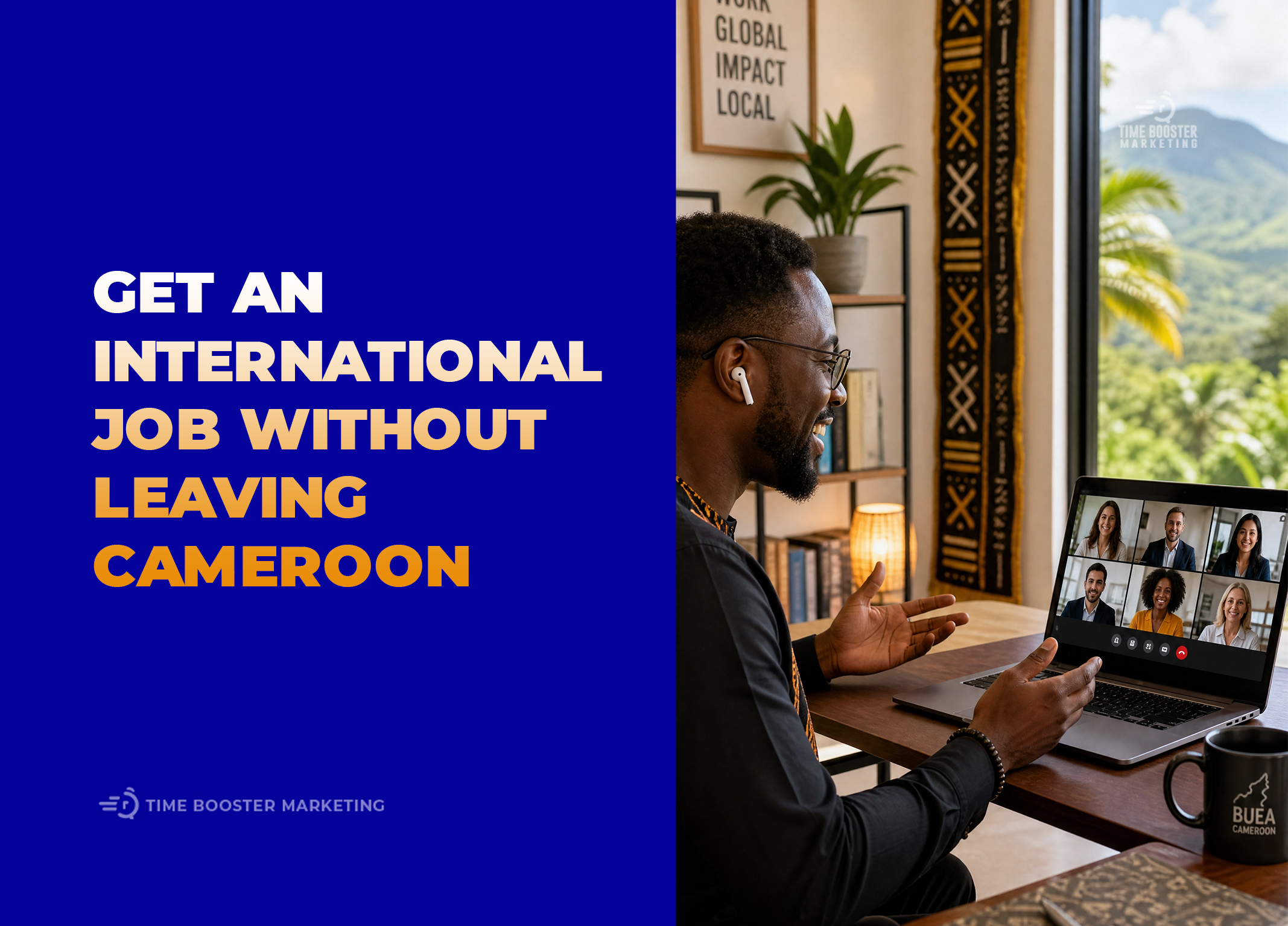
A skilled professional in Cameroon can now work with a company in Europe, North America, the Middle East, or another African market without relocating immediately. The challenge is not simply finding remote jobs. The challenge is becoming visible and credible enough for international recruiters to take your profile seriously.
LinkedIn is one of the best tools for that. DataReportal’s Digital 2026 Cameroon report states that LinkedIn’s advertising resources showed about 1.6 million registered members in Cameroon in late 2025. That makes LinkedIn a serious professional platform locally, but its real power is that it also connects you to global hiring networks.
Why LinkedIn Matters for International Remote Jobs
Remote hiring is not only about applications. It is about search, trust, proof, and communication.
International recruiters often search LinkedIn for candidates before posting publicly or while reviewing applicants. LinkedIn’s Recruiter documentation shows that recruiters can filter candidates by workplace type, including people who have specified that they are open to remote work. You can review LinkedIn’s guide on how recruiters view candidates open to remote work.
This means your profile must send the right signals before you ever send a message.
If your profile says only “Graduate,” “Freelancer,” “Open to Work,” or “CEO,” an international recruiter may not understand what role you fit. If your profile shows clear skills, remote-ready tools, strong writing, measurable work, and relevant portfolio evidence, you become easier to assess.
Remote work rewards clarity. A recruiter in Berlin, Toronto, London, Dubai, Lagos, or Nairobi should understand your value within a few seconds.

1. Build a Profile That Appeals to International Recruiters
Your LinkedIn profile is not just an online CV. LinkedIn describes it as a professional page for managing your personal brand and showcasing experience beyond a traditional résumé. Its profile overview guide explains why a complete profile helps members connect with opportunities.
For international remote work, your profile must answer five questions:
What role can you perform remotely?
Which skills make you useful?
What tools can you use?
What proof shows you can deliver?
Can you communicate clearly across distance?
Write a Remote-Friendly Headline
A weak headline says:
Open to Work
A stronger headline says:
Virtual Assistant | Calendar Management, Email Support and CRM Admin | Remote Support for Founders and SMEs
Or:
Front-End Developer | React, JavaScript and API Integration | Building Remote-Ready Web Applications
Or:
Digital Marketing Specialist | SEO, Meta Ads and Content Strategy | Helping SMEs Generate Qualified Leads
The formula is:
Role + core skills + remote-relevant outcome
Do not make the recruiter guess what kind of remote role you want.
Make Your About Section Globally Clear
Your About section should be written in clean, direct English or French, depending on the markets you are targeting. Avoid vague motivational language.
A good structure is:
Paragraph 1: Your role and specialization.
Paragraph 2: The problems you solve.
Paragraph 3: Tools, industries, and evidence.
Paragraph 4: The remote opportunities you are open to.
Example:
I am a customer support and operations assistant based in Cameroon, with experience handling client communication, CRM updates, scheduling, and follow-up processes for service businesses. I help teams stay organized by documenting customer requests, responding clearly, and making sure no enquiry is lost.
I am comfortable working remotely with tools such as Google Workspace, Slack, Trello, Notion, HubSpot, and Zoom. I am interested in remote customer support, virtual assistance, and operations coordination roles with startups, agencies, and service companies.
This summary is simple, but it tells an international recruiter what you can do.
Show Proof in the Featured Section
International employers may not know your school, previous company, or local references. Proof helps reduce uncertainty.
Add:
- Portfolio links
- Work samples
- Case studies
- GitHub projects
- Writing samples
- Design projects
- Campaign reports
- Testimonials
- Certificates
- Short project explanations
LinkedIn allows members to add work samples to the Featured section, and its Featured section guide explains how to display selected content prominently.
For remote jobs, proof is not decoration. It is trust.
2. Position Yourself for Remote-Friendly Industries
Not every job is equally remote-friendly.
Some roles require local licensing, physical presence, local market knowledge, or on-site operations. Others can be performed effectively through digital tools.
Remote-friendly fields include:
- Software development
- UI/UX design
- Data analysis
- Digital marketing
- SEO and content writing
- Customer support
- Virtual assistance
- Project coordination
- Sales development
- Bookkeeping support
- Product management
- Technical support
- Social media management
- Video editing
- Online teaching and training
The point is not to chase a trendy title. The point is to identify where your existing skills can serve global companies without requiring relocation.
If you are an accountant, you may position yourself for remote bookkeeping, reporting, or finance-assistant roles. If you are a teacher, you may explore instructional design, online tutoring, curriculum support, or learning operations. If you are a marketer, you may target content strategy, paid ads, SEO, email marketing, or campaign coordination.
Remote work is not only for developers. It is for professionals whose work can be delivered, measured, and communicated digitally.
3. Use LinkedIn Remote Job Search Properly
Do not search randomly.
LinkedIn’s remote jobs guide explains that job seekers can use filters at the top of search results and select “Remote.” It also allows users to create job alerts after applying filters.
Search for role variations, not just one title.
For example, instead of searching only “virtual assistant,” also search:
- Executive assistant
- Operations assistant
- Remote admin assistant
- Customer support assistant
- Client success assistant
For marketing roles, search:
- Content marketer
- SEO specialist
- Social media manager
- Marketing coordinator
- Growth assistant
- Paid media assistant
For tech roles, search:
- Front-end developer
- React developer
- Web developer
- QA tester
- Technical support specialist
- Junior data analyst
Set alerts for each serious search. LinkedIn’s job alerts guide explains how job seekers can receive LinkedIn and email notifications when roles match selected searches.
This gives structure to your search instead of forcing you to scroll endlessly.
4. Set Your Open to Work Preferences Carefully
LinkedIn allows you to show what kind of work you are open to, including job titles, location types, locations, start date, employment types, and visibility. Its Open to Work guide explains these settings.
For remote work, select remote location preferences where relevant. Add realistic job titles. Do not choose 20 unrelated roles because you are anxious. That makes your direction look unclear.
A better setup might include:
- Customer Support Specialist
- Virtual Assistant
- Operations Coordinator
- Client Success Assistant
Those roles are related.
A weaker setup would include:
- Accountant
- Graphic Designer
- Software Engineer
- HR Manager
- Sales Director
That tells recruiters you are desperate rather than positioned.
5. Make Your Communication Look Remote-Ready
Remote employers pay close attention to communication because they may never meet you physically.
Your profile, comments, posts, and messages should show that you can communicate clearly, respectfully, and professionally.
This does not mean using complicated English. It means being precise.
Avoid messages like:
I need job. Please help me.
Use:
I am applying for remote customer support roles and have experience with client communication, CRM updates, and email follow-up. I noticed your company hires distributed support teams, and I would be glad to connect.
The second message shows role clarity, skill relevance, and professional tone.
Remote work also requires reliability. Mention tools you actually know:
- Slack
- Zoom
- Google Workspace
- Microsoft Teams
- Notion
- Trello
- Asana
- HubSpot
- Salesforce
- GitHub
- Figma
- WordPress
Do not list tools you cannot use confidently. You may be tested.
6. Reach Out to Global Companies Professionally
Applying is not enough. You should also build direct relationships with recruiters, hiring managers, founders, and team leads.
Before messaging anyone, research the company. Check whether they hire remotely, what roles they post, what regions they accept, and what skills they value.
A good outreach message has four parts:
Context: Why you are reaching out.
Fit: What role or problem connects you.
Proof: What experience or skill supports your interest.
Soft next step: A respectful invitation to connect or share more.
Message to a Recruiter
Hello Sarah, I noticed you recruit for remote customer support and operations roles. I am based in Cameroon and have experience with client communication, CRM updates, email support, and follow-up coordination. I would be glad to connect and follow future opportunities that fit distributed support teams.
Message to a Hiring Manager
Hello David, I saw that your company is expanding its remote marketing team. I specialize in SEO content, Meta Ads, and lead-generation campaigns for service businesses. I would appreciate connecting and learning more about the skills your team values in remote marketing candidates.
Message to a Startup Founder
Hello Amara, I noticed your startup works with small businesses across several markets. I help teams manage content, customer enquiries, and online visibility systems. I would be glad to connect and share a short portfolio if useful.
These messages are not begging. They are professional openings.
7. Avoid Common Mistakes That Block International Opportunities
Many Cameroonian applicants lose remote opportunities before the interview because their positioning creates doubt.
Avoid:
- Poor grammar in your headline and About section
- No portfolio or proof
- Applying to every remote job regardless of fit
- Using “CEO” for a business with no clear service
- Sending copy-and-paste messages
- Hiding your actual skills behind motivational language
- Listing tools you do not know
- Ignoring time-zone expectations
- Failing to respond quickly to recruiter messages
- Having no clear role direction
International remote hiring is competitive. You do not need to be perfect, but you must be clear, credible, and responsive.
Remote Work Expands Opportunity, but Proof Still Wins
Your location in Cameroon does not have to define your salary, employer, or professional future.
But international remote work is not automatic. You must become searchable, credible, and easy to evaluate. That means a clear headline, a strong About section, remote-relevant skills, visible proof, targeted job alerts, and professional outreach.
Start with one role category. Improve your profile around that role. Add proof. Set remote job alerts. Connect with recruiters and hiring managers who work in that space. Send thoughtful messages. Track every application and conversation.
Remote work does not remove competition. It expands the field. The people who win are not always the loudest applicants. They are the ones whose profiles make their value obvious before the first interview.