AI-Driven SEO Analytics helps you see patterns faster, understand what is working sooner, and stop relying on gut feeling alone. It does not replace your thinking. It supports it. And maybe that is the most important part.
Let’s be honest for a moment. SEO in Buea and Yaounde is not the same as SEO in saturated Western markets. Search behavior is different. Competition levels vary wildly. Data can be messy. This is where AI-Driven SEO Analytics shines. Instead of reacting late, you start seeing things as they form. That shift alone can change how clients see you.
It helps you:
- Spot ranking opportunities earlier
- Understand local search intent better
- Track performance without drowning in spreadsheets
- Explain results clearly to clients
- Make decisions based on trends, not noise
What Is AI-Driven SEO Analytics Really About?
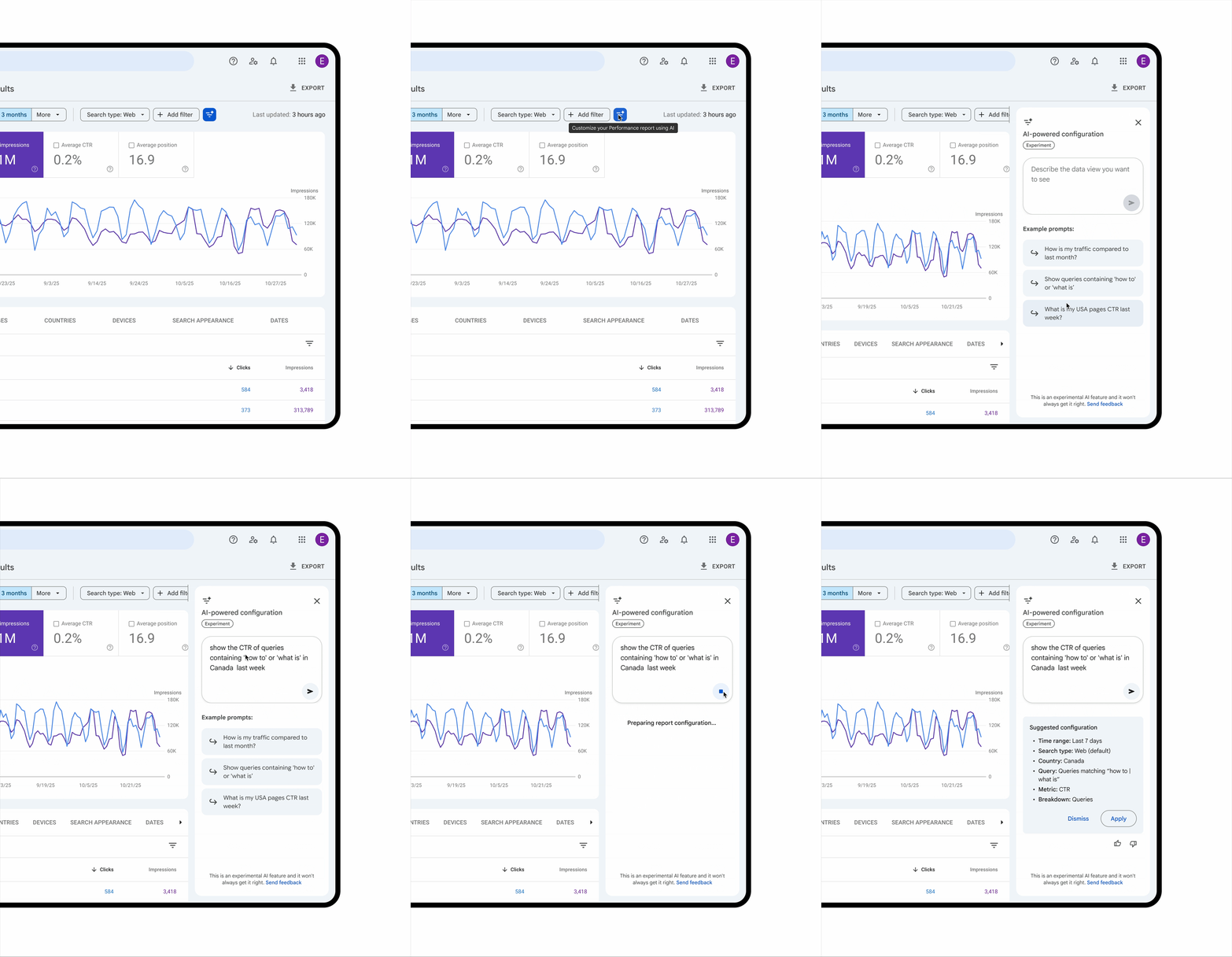
Strip away the hype and it comes down to this. AI-Driven SEO Analytics uses machine learning and pattern recognition to analyze large SEO data sets faster than humans can. It looks for correlations, trends, and signals across rankings, traffic, content, links, and technical factors. It does not guess. It observes at scale.
For agencies, that means:
- Automated insights instead of manual checks
- Predictive signals, not just historical data
- Smarter prioritization of SEO tasks
You still guide the strategy. AI just gives you better visibility.
How Agencies Used to Do SEO Analytics
Before AI really entered the picture, SEO analytics looked like this:
- Pull ranking reports
- Check Google Analytics
- Compare traffic month to month
- Guess why something dropped or improved
- Explain it as clearly as possible to the client
That process still exists. But it is slow. AI-Driven SEO Analytics compresses that timeline. What took weeks to notice can now surface in days, sometimes hours. And in competitive local niches, speed matters.
AI-Driven SEO Analytics vs Traditional SEO Reporting
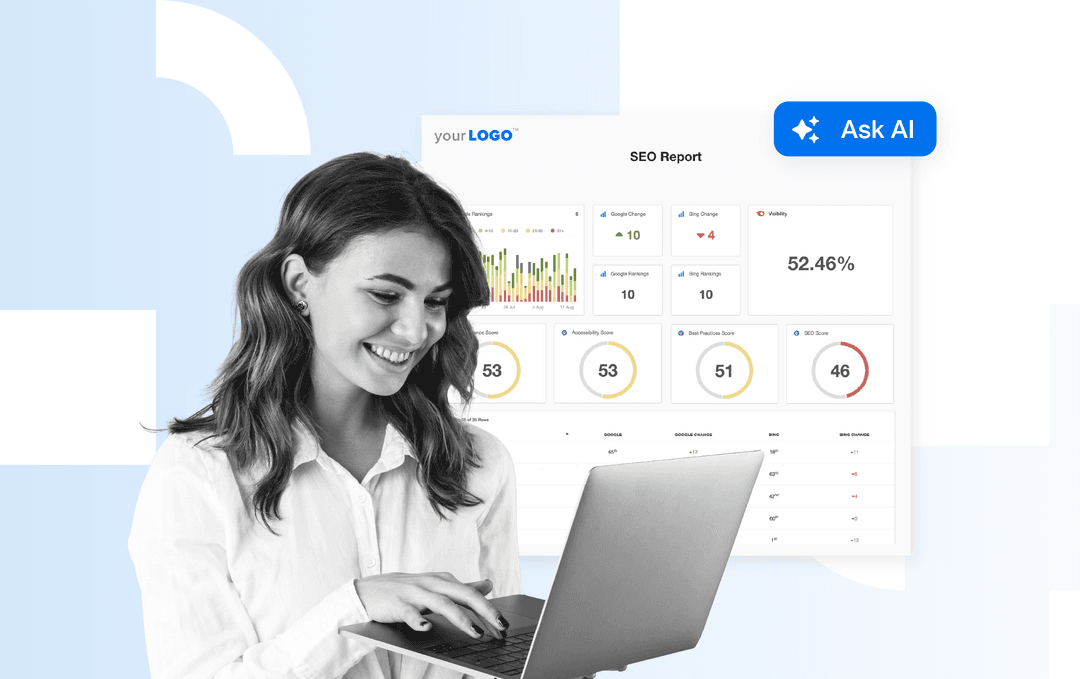
This is one of those differences that sounds small until you feel it in real work. Traditional SEO reporting is mostly backward-looking. It tells you what already happened. Rankings went up. Traffic went down. Clicks stayed flat. Useful, yes. But limited.
AI-Driven SEO Analytics shifts the focus.
It still shows what happened, but it does not stop there. It looks for reasons, patterns, and early signals. It tries to answer the question every agency quietly asks. Why did this change, and what should we do next?
That change in perspective matters more than people realize.
With traditional reporting, you open a dashboard and see numbers. A keyword dropped three positions. A page lost traffic. A competitor moved ahead. You then try to piece together explanations from experience and instinct.
Sometimes you are right. Sometimes you are guessing.
AI-Driven SEO Analytics adds context to those numbers. It compares your page to competitors automatically. It checks content depth, page speed, internal links, and search intent alignment. It notices when several small factors move together.
So instead of staring at a drop and wondering, you get a clearer story.
Traditional tools say your keyword dropped three positions.
AI-Driven SEO Analytics indicates that your keyword dropped because competitors published longer content, improved load times, and gained new links over the past four weeks. That difference is subtle, but powerful. One leaves you reacting. The other helps you respond with purpose. There is also the time factor. Traditional reporting often confirms changes after they have fully settled. AI-driven systems flag shifts early. Not as final judgments, but as warnings or opportunities.
That means you can act sooner. Update content before rankings slide further. Improve technical issues before traffic drops hard. Prepare clients before they start asking uncomfortable questions. And speaking of clients, this difference shows up clearly in conversations.
Traditional reporting forces you to explain results after the fact. AI-Driven SEO Analytics helps you explain direction. You talk about trends, not just outcomes. You sound less defensive and more in control. In practice, one gives you data. The other gives you direction. For agencies trying to grow, especially in competitive or fast-moving local markets, direction is what keeps you ahead.
AI-Driven SEO Analytics for Local SEO in Buea & Yaounde
Local SEO is where many agencies here focus, and rightly so.
Businesses care about visibility in their city, not globally.
AI-Driven SEO Analytics helps local SEO by:
- Tracking map pack volatility
- Monitoring Google Business Profile signals
- Identifying review impact patterns
- Comparing local competitors accurately
- Understanding location-based intent shifts
For example, search behavior in Buea around education services differs from Yaounde’s corporate-focused searches. AI picks up those patterns faster than manual analysis.
Key Benefits of AI-Driven SEO Analytics for Agencies
This is where theory drops away and real agency life shows up. You know that feeling when you are doing the work, publishing content, fixing pages, building links, and then you just wait. Weeks pass. Sometimes months. You keep checking dashboards, hoping for a sign. Anything. AI-Driven SEO Analytics changes that rhythm. Not magically. Just practically.
1. Faster Decision Making
With AI-Driven SEO Analytics, you are no longer stuck in that long guessing phase. Instead of waiting months to confirm if something worked, you start seeing directional signals early. Small ranking movements. Click-through shifts. Engagement changes. All those subtle hints that used to go unnoticed now surface faster. That means you can adjust sooner. Double down on what is working. Pause what is not. It feels less like hoping and more like steering. And honestly, that alone reduces stress.
2. Better Client Communication
Client conversations get easier when you are not guessing. AI-Driven SEO Analytics gives you language backed by data. You explain why traffic dipped instead of apologizing for it. You show progress even when rankings are still warming up. Clients can feel the difference. Confidence shows. Instead of saying, “Let’s wait and see,” you say, “Here is what the data is telling us so far.” That shift builds trust, even during slow months.
3. Smarter Resource Allocation
Time is limited. The budget is limited. Energy definitely is. AI-Driven SEO Analytics helps you see where effort actually matters. Which pages are close to breaking through? Which keywords are wasting time? Which technical fixes will move the needle and which ones can wait? You stop spreading effort evenly and start placing it intentionally. For small and mid-sized agencies, this is huge. It lets you do less, but get more.
4. Competitive Advantage
Let’s be honest here. Most agencies around you are still doing SEO the old way. Manual checks. Surface-level reports. General explanations. When you use AI-Driven SEO Analytics, it shows in how you talk, how you plan, and how you report. You sound sharper. More prepared. More grounded. Clients notice when you are not scrambling for explanations. That difference alone can win deals, even if your pricing is similar.
5. Predictable Growth
SEO will never be perfectly predictable. But it does not have to feel chaotic. AI-Driven SEO Analytics helps you recognize patterns early. Seasonal dips. Content momentum. Ranking cycles. You start to expect certain movements instead of being surprised by them. And when surprises reduce, planning gets easier. Forecasts feel less scary. Growth feels steadier. That is what most agencies are really chasing.
AI-Driven SEO Analytics Tools Agencies Actually Use
Here is the good news. You do not need everything. More tools do not equal better results. What you need is the right mix and a clear reason for each tool you use. Most agencies using AI-Driven SEO Analytics rely on a small stack that covers four core areas.
Search performance and behavior
Google Search Console and Google Analytics still form the base. They show how people find and use your clients’ sites. AI layers help interpret trends inside this data instead of just displaying it.
Keyword and competitor intelligence
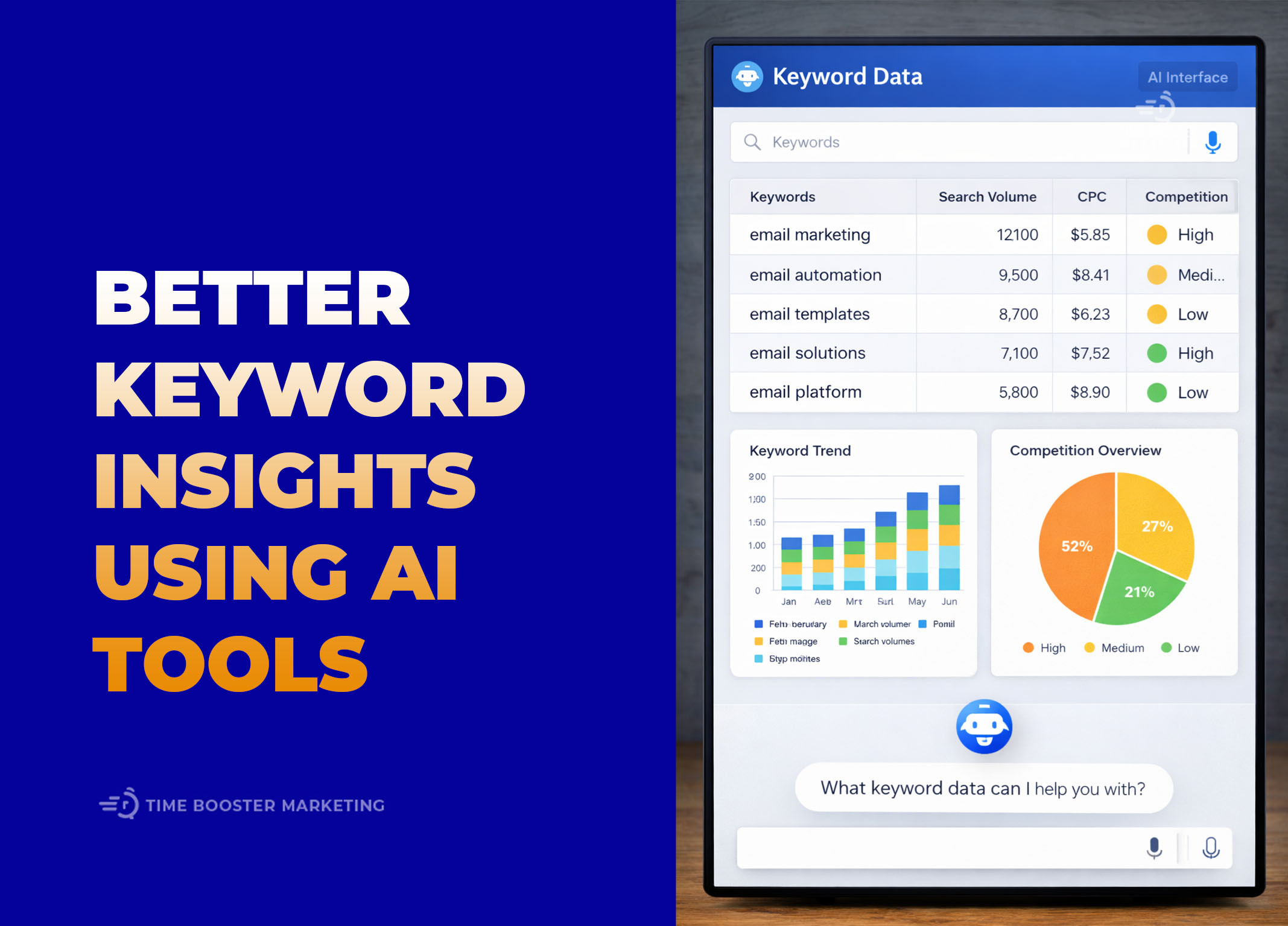
Tools like Ahrefs and SEMrush use AI to surface keyword opportunities, competitor momentum, and ranking patterns you would miss manually. They help you see where attention should go next.
Content optimization insights
Platforms like Surfer SEO analyze top-ranking pages and suggest content improvements based on real-time SERP data. This is especially helpful when clients ask why one page ranks and another does not.
Technical SEO analysis
Tools such as Screaming Frog, combined with AI-assisted analysis, help you prioritize technical fixes by impact instead of fixing everything blindly. The goal is not tool mastery. It is insight clarity. AI-Driven SEO Analytics works best when tools support thinking, not replace it. When you understand why you are using each one, the data stops feeling overwhelming and starts feeling useful. That is when SEO work becomes calmer, sharper, and more effective.
Commonly used platforms include:
- Google Search Console for foundational data
- Google Analytics 4 for behavior insights
- Ahrefs for AI-assisted keyword and competitor analysis
- SEMrush for predictive trend tracking
- Screaming Frog with AI overlays for technical audits
- Surfer SEO for content optimization insights
You can explore these directly at:
https://search.google.com/search-console
https://analytics.google.com
https://ahrefs.com
https://www.semrush.com
https://www.screamingfrog.co.uk
https://surferseo.com
Each plays a role. AI-Driven SEO Analytics is about how you interpret them together.
How AI-Driven SEO Analytics Improves Keyword Strategy

Keyword research used to be about volume. Now it is about intent.
AI-Driven SEO Analytics helps you understand:
- Which keywords convert, not just rank
- How intent shifts over time
- When long-tail terms outperform head terms
- Which keywords are close to breaking through
For agencies in Buea and Yaounde, this is critical. Many niches have low volume but high intent.
AI helps you see value where others see small numbers.
AI-Driven SEO Analytics and Content Performance
Content is expensive. Time-wise and mentally. You want proof it works.
AI-Driven SEO Analytics shows:
- Which pages drive assisted conversions
- Which content clusters support rankings
- Where content depth is lacking
- When content freshness impacts performance
Instead of guessing what to update, you know where to start. That saves time. And energy.
Using AI-Driven SEO Analytics for Competitor Analysis
Let’s talk competition. In Yaounde, corporate service niches can be crowded. In Buea, education and tech spaces move fast.
AI-Driven SEO Analytics allows you to:
- Track competitor ranking momentum
- Identify content gaps
- See backlink velocity trends
- Spot new entrants early
You stop reacting late and start planning ahead.
AI-Driven SEO Analytics and Technical SEO
Technical SEO is where many agencies struggle.
AI helps by:
- Flagging crawl issues early
- Detecting page speed patterns
- Highlighting indexation risks
- Prioritizing fixes by impact
You do not need to fix everything at once. AI helps you fix what matters most.
Client Reporting With AI-Driven SEO Analytics
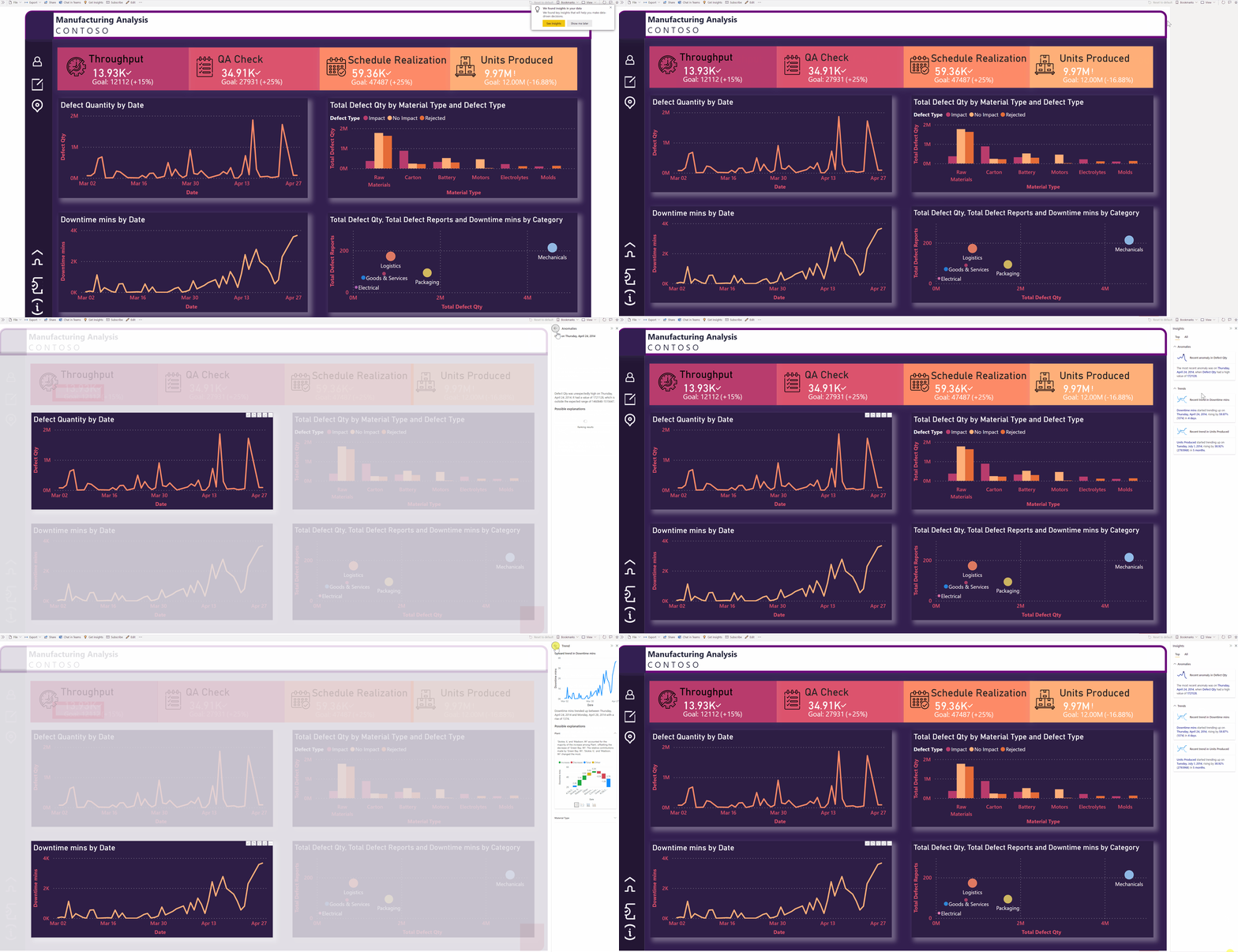
This is where trust is built or lost. Clients do not want dashboards full of charts. They want meaning.
AI-Driven SEO Analytics helps you:
- Translate data into plain language
- Highlight wins and risks honestly
- Set realistic expectations
- Show progress beyond rankings
You move from defensive reporting to confident storytelling.
How AI-Driven SEO Analytics Helps You Retain Clients
Retention is often harder than acquisition. When clients understand what is happening, they stay.
AI-Driven SEO Analytics gives you:
- Clear narratives
- Predictive explanations
- Proof of effort and direction
Even when results are slow, clarity keeps relationships strong.
Pricing SEO Services With AI-Driven SEO Analytics
Pricing confidence comes from data. When you understand performance drivers, you price better.
AI-Driven SEO Analytics supports:
- Tiered SEO packages
- Performance-based upsells
- Clear scope boundaries
- Justified retainers
You are no longer guessing your worth.
AI-Driven SEO Analytics for Small Agencies
You do not need a big team. Small agencies benefit most because AI reduces manual work. One strategist with the right tools can outperform a larger team without direction. That levels the field.
Common Mistakes Agencies Make With AI-Driven SEO Analytics
Let’s slow down here.
Mistakes happen when agencies:
- Trust tools blindly
- Ignore local context
- Overcomplicate reports
- Chase metrics instead of outcomes
AI-Driven SEO Analytics is a guide, not a boss.
You still decide.
Training Your Team to Use AI-Driven SEO Analytics
You do not need data scientists. You need curiosity.
Start with:
- Understanding key metrics
- Asking better questions
- Reviewing insights weekly
- Testing small changes
Over time, patterns become familiar.
Ethical Use of AI-Driven SEO Analytics
Ethics matter.
Avoid:
- Manipulative tactics
- Low-quality automation
- Misleading reports
Google’s guidance on responsible SEO still applies:
https://developers.google.com/search/docs/fundamentals/seo-starter-guide
AI should support value, not shortcuts.
The Future of AI-Driven SEO Analytics in Cameroon
Things are just starting. As internet usage grows and data improves, AI-Driven SEO Analytics will become standard. Agencies that adapt early will lead. Those who wait will struggle to explain results in a more data-literate market.
Final Thoughts
AI-Driven SEO Analytics is not about replacing your experience. It is about sharpening it. For agencies in Buea and Yaounde, this is an opportunity to work smarter, communicate clearer, and grow with confidence. You do not need perfection. You need direction.
If you run an agency or manage SEO for clients in Buea or Yaounde, now is a good time to audit how you use data. Are you reacting late or seeing patterns early?
Start small. Explore AI-Driven SEO Analytics tools. Ask better questions of your data. And if you want support setting this up in a way that fits your market and your clients, reach out. Growth gets easier when clarity leads the way.