

10 Ways to Do Consistent Content Marketing in Cameroon
Your business posts actively for two weeks. Customer orders increase, operations become busy, and marketing stops. Three months later, sales slow down, so you return to Instagram and Facebook expecting immediate attention.

This cycle is common among small businesses because marketing is treated as an emergency response rather than an operating system.
Consistency in content marketing does not require you to post every day. It means showing up at a frequency your business can sustain, with messages customers can recognize and content that supports a clear commercial goal.
Regularity strengthens visibility because every useful post gives people another opportunity to discover, remember, and engage with your business. It also builds familiarity. A potential customer may not contact you after seeing one post, but repeated exposure can make your company easier to remember when the need becomes urgent.
Here are 10 ways to build that consistency without creating an unrealistic workload.
1. Choose a Posting Schedule Your Business Can Maintain

Do not create a schedule based on what full-time influencers or large brands publish.
A restaurant owner, salon manager, property agent, or event planner has operational responsibilities that limit content-production time. Your posting schedule must fit that reality.
A manageable starting point could be:
- Three social media posts per week
- Two or three WhatsApp Status updates per week
- One Google Business Profile update per week
- One useful website article per month
The exact numbers are less important than your ability to maintain them. Publishing three strong posts every week for six months is more valuable than posting twice a day for one week and then disappearing.
A large Buffer analysis found a strong association between regular posting and higher engagement per post, although its findings should be treated as directional rather than a guarantee for every account. Its research on consistent posting reinforces the practical value of maintaining a sustainable rhythm.
2. Build Your Schedule Around Audience Habits
Consistency is not only about how often you publish. It is also about showing up when your customers are likely to pay attention.
Review when people normally:
- Send your business WhatsApp messages
- Comment on your Instagram posts
- Ask for prices
- Request appointments
- Make reservations
- Visit your physical location
- Plan purchases connected to weekends, salaries, holidays, or events
A restaurant may need stronger visibility before weekends. An event decorator may need to educate customers several months before major celebrations. A salon may publish booking reminders before periods of high demand. A business-to-business service may receive more meaningful attention during working hours.
Use your Facebook and Instagram insights to compare publishing times, reach, engagement, and profile activity. Meta allows Page managers to review post-level performance through Meta Business Suite, giving you evidence for adjusting your schedule rather than relying entirely on assumptions.
3. Create Repeatable Content Themes
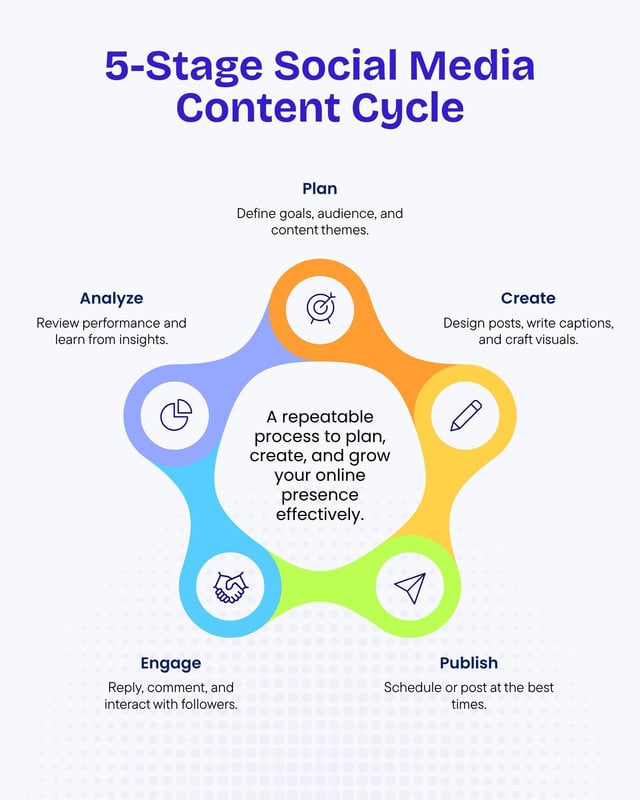
One of the biggest causes of inconsistency is deciding from scratch what to publish every time.
Content themes solve this problem. Choose four categories connected to the questions customers ask and the decisions they need to make.
A salon could use:
- Hair-care education
- Before-and-after results
- Service explanations
- Booking and availability updates
A real estate company could use:
- Property tours
- Location guides
- Documentation education
- Buyer or tenant questions
A restaurant could use:
- Menu demonstrations
- Customer experiences
- Behind-the-scenes preparation
- Reservations, offers, and event packages
These themes create boundaries. Instead of asking, “What should we post today?” you ask, “Which customer question fits this week’s educational theme?”
That smaller decision is easier to make consistently.
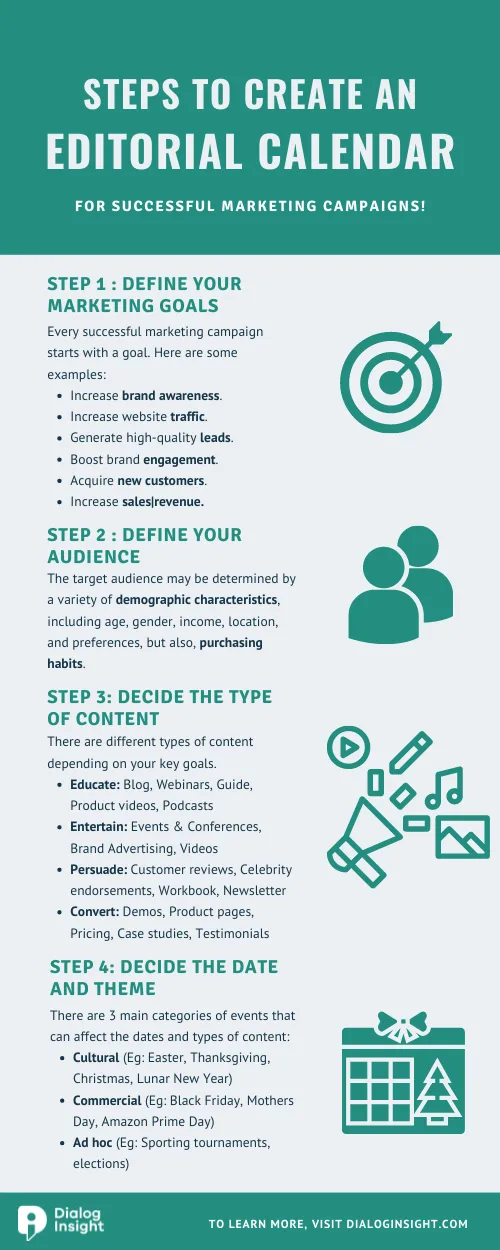
4. Use a Simple Monthly Content Calendar
A content calendar does not need complicated software. A spreadsheet, notebook, shared document, or physical wall calendar can work.
Include six basic fields:
- Publishing date
- Platform
- Content theme
- Topic
- Format
- Desired customer action
For example:
Tuesday: Instagram Reel explaining how to choose the correct gym membership.
Thursday: Facebook customer testimonial.
Saturday: WhatsApp Status showing available weekend training sessions.
Your calendar should connect content to actual business activity. Include product launches, seasonal offers, events, available appointment periods, public holidays, and recurring customer deadlines.
Plan one month at a time. A 12-month calendar may appear organized, but it becomes difficult to maintain when prices, stock, staffing, and customer priorities change.
5. Produce Content in Batches
Creating one post from beginning to end every day wastes time.
Batching means completing similar tasks together. You might photograph five products during one session, record four videos on one morning, write a week of captions together, and schedule the finished posts at once.
A boutique could use a two-hour session to photograph new arrivals, record styling videos, and collect fabric details. Those materials could produce several Reels, carousels, Stories, and WhatsApp Status updates.
A property agent could record multiple property introductions while already visiting listings rather than arranging separate content-production days.
Batching works because preparation, equipment, lighting, and staff coordination happen once. It reduces the number of times marketing interrupts normal operations.
6. Turn One Idea Into Several Pieces of Content
Consistency becomes easier when every idea produces more than one post.
Suppose a hotel publishes an article explaining how to choose accommodation near Douala International Airport. That article can become:
- A short Instagram video
- A Facebook checklist
- A carousel about airport-transfer questions
- Several WhatsApp Status slides
- A Google Business Profile update
- An email to previous guests
This is not repetitive when each version is adapted to the platform. It is message reinforcement.
Google recommends creating useful, reliable content primarily for people rather than producing material simply to manipulate rankings. Its guidance on people-first content supports focusing on genuine customer needs instead of filling a calendar with low-value posts.
7. Schedule Posts Before Operations Become Busy
Do not depend on remembering to publish manually at the right time.
Meta Business Suite allows eligible Facebook Pages to create and schedule posts in advance. Using the platform’s post-scheduling tools can help your business remain active during busy service periods, travel, events, or stock deliveries.
Set aside one fixed planning period each week. For example, use Monday morning to finalize and schedule content through Saturday.
Scheduling should not make your communication feel automated. Someone should still monitor comments, answer messages, and respond to timely customer questions. The publishing process can be automated; the relationship should not be ignored.
8. Separate Core Content From Real-Time Content
Not every post should be planned weeks in advance.
Your content system should contain two layers.
Core content includes service explanations, customer questions, demonstrations, testimonials, tutorials, and brand stories. These can be planned and scheduled.
Real-time content includes available stock, urgent booking openings, event coverage, weather-related updates, temporary promotions, or relevant local conversations. These require faster publishing.
A useful balance is to plan approximately 70 to 80 percent of your content and leave the remaining space for current activity.
This prevents two extremes: a rigid calendar that ignores real customer interests, and completely spontaneous marketing that disappears when the team becomes busy.
9. Understand How Consistency Supports Platform Visibility
Social media platforms do not simply show every post to every follower in chronological order.
Instagram explains that different parts of the application use different ranking systems. Feed ranking considers signals such as a user’s previous activity, information about the post, and the relationship between the viewer and the account.
Consistency does not guarantee that an algorithm will reward every post. It gives you more opportunities to generate the signals platforms evaluate, including viewing time, comments, shares, saves, profile visits, and message activity.
Regular publishing also improves your own learning. After several weeks, you can compare which subjects, formats, and offers generate meaningful reactions. Sporadic posting produces too little information to identify dependable patterns.
Your Google presence also benefits from ongoing maintenance. Google Business Profile lets companies publish offers, announcements, updates, and events that may appear on Search and Maps. Its official Business Profile post guidance explains how businesses can keep customers informed directly through their profiles.
10. Review Results and Improve the System Monthly
Consistency should not mean repeating an ineffective strategy forever.
At the end of each month, review:
- Posts with the highest reach
- Posts people saved or shared
- Topics that generated questions
- Content that produced WhatsApp conversations
- Offers that led to bookings or purchases
- Formats that were easiest to produce
- Planned posts that were repeatedly delayed
Use those findings to simplify the next month.
When a content format requires excessive effort but produces little commercial value, reduce it. When customer demonstrations consistently generate enquiries, produce more of them. When your team repeatedly fails to publish five times per week, lower the target instead of carrying an unrealistic schedule forward.
The objective is not maximum activity. It is a system your business can operate consistently.
Consistency Builds Marketing Momentum
Every useful post adds to a growing library of evidence about your business.
A customer may discover an educational Reel, check your older posts, read reviews, view your Google Business Profile, and then start a WhatsApp conversation. That decision is rarely created by one isolated piece of content. It comes from several signals working together.
Consistency makes those signals easier to find.
Start with a realistic schedule. Build repeatable themes. Produce content in batches. Reuse strong ideas across platforms. Schedule core posts and leave space for current business activity. Then improve the system based on enquiries and sales, not likes alone.
Your business does not need to be online constantly. It needs to appear regularly enough that customers can recognize, trust, and remember it when they are ready to act.