The Most Common Reasons for Digital Marketing Failure in Cameroon

You pay to promote a post. The advertisement receives likes, a few comments, and several “How much?” messages. Yet, after the campaign ends, you cannot identify enough sales to justify the money spent.
The easiest conclusion is that digital marketing does not work in Cameroon.
That conclusion is usually wrong.
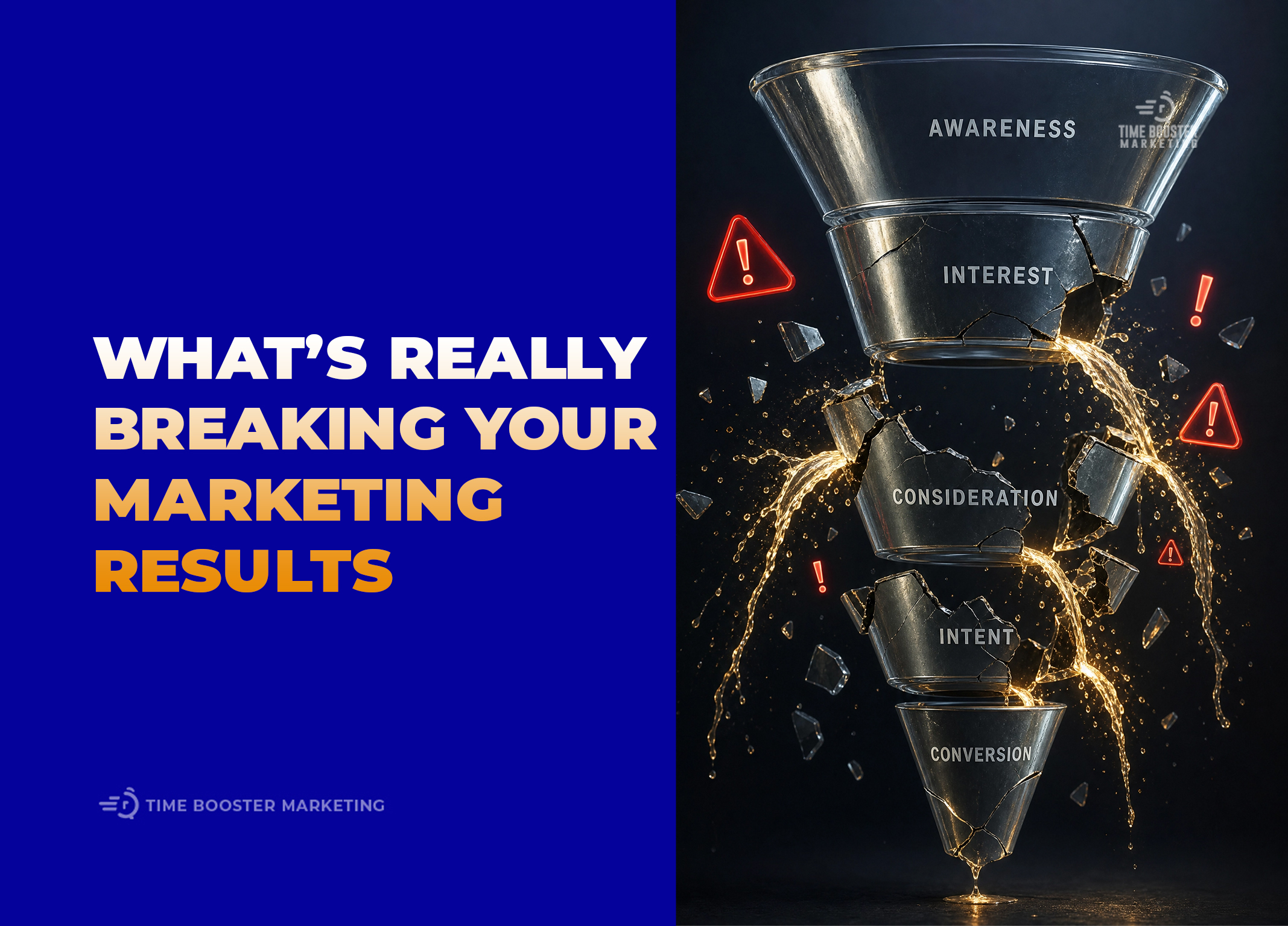
Most campaigns do not fail because Facebook, Instagram, Google, TikTok, or WhatsApp cannot produce business results. They fail because one or more parts of the marketing process are weak. The audience is poorly defined, the offer is unclear, the creative does not attract serious buyers, tracking is absent, or enquiries receive inadequate follow-up.
Failure is therefore not necessarily a final verdict. It is often a diagnostic signal showing you which part of your system needs correction.
Digital Visibility Is Not the Same as Marketing Performance
Cameroon had approximately 12.6 million internet users at the end of 2025 and 5.9 million social media user identities in October 2025, according to DataReportal’s Digital 2026 report. The online audience is substantial, but access to that audience does not guarantee profitable results. (DataReportal – Global Digital Insights)
A campaign can reach thousands of people and still fail commercially. Reach tells you that people saw the message. It does not tell you whether they understood the offer, trusted the business, qualified as potential customers, or completed a purchase.
You must separate attention metrics from business metrics.
Likes, impressions, video views, and follower growth can support a campaign, but they are not automatically evidence of revenue. For most local SMEs, the more important questions are:
- How many qualified enquiries did the campaign generate?
- How many enquiries received a proper response?
- How many became paying customers?
- What did each lead or sale cost?
- Which message, audience, or advertisement produced the result?
Without these answers, you are not managing a marketing campaign. You are purchasing visibility and hoping it becomes revenue.
1. The Campaign Targets “Everybody”
Weak targeting is one of the most common causes of digital marketing failure in Cameroon.
A restaurant may target everyone living in Douala. A real estate agency may promote apartments to any adult with a Facebook account. A salon may publish generic beauty content without identifying whether it wants students, working professionals, brides, natural-hair customers, or premium clients.
The audience may be large, but the message becomes too general to feel relevant.
Effective targeting is not simply selecting an age range and location inside an advertising platform. It requires understanding the customer’s situation.
For example, “women aged 20–45 in Yaoundé” is a demographic group, not a complete target market. A stronger customer definition would be:
Working women in Yaoundé who need reliable protective hairstyling, have limited weekday availability, and are willing to pay more for punctual appointments.
This definition influences the offer, visuals, wording, appointment system, and call to action.
Instead of saying, “We offer the best hairstyles at affordable prices,” the salon can say:
Book a Saturday protective-styling appointment with a confirmed start time. Send your preferred style on WhatsApp to receive a price and duration estimate.
The second message is more effective because it speaks to a recognizable customer problem.
2. The Business Posts Without a Strategy
Many businesses confuse activity with strategy.
They publish a product photograph today, a motivational quote tomorrow, a promotional flyer next week, and then disappear for a month. There is no clear relationship between the posts and the customer’s buying journey.
Posting consistently does not mean publishing every day. It means communicating repeatedly around a defined commercial objective.
A simple monthly content strategy could include:
Awareness content
Help the customer recognize a problem or need.
A gym might explain why random workouts produce inconsistent results. A catering company might discuss mistakes that cause event food budgets to increase unexpectedly.
Consideration content
Help the customer compare solutions.
A boutique could explain fabric quality, sizing, care requirements, and which clothing options suit particular occasions.
Trust content
Show evidence that the business can deliver.
Use customer experiences, process demonstrations, staff expertise, before-and-after examples, frequently asked questions, and transparent policies.
Action content
Present a specific offer and tell the customer what to do next.
Without this structure, your content may attract passive attention but fail to move customers towards a purchase.
3. Expectations Are Unrealistic
A business may run advertisements for three days and expect immediate, predictable sales. When this does not happen, the owner concludes that the campaign failed.
This expectation ignores how customers make decisions.
A low-cost meal may require only a short decision. A wedding service, property transaction, gym membership, professional consultation, or premium beauty treatment usually requires more consideration. Customers may need to see the business several times, compare options, ask questions, consult another person, or wait until they have sufficient money.
You should therefore define success according to the decision being requested.
A campaign promoting a FCFA 5,000 lunch offer might reasonably focus on immediate orders. A campaign advertising a FCFA 25 million property should not be judged by the same timeline or conversion process.
Unrealistic expectations also encourage businesses to change direction too quickly. The audience changes on Monday, the creative changes on Wednesday, the offer changes on Friday, and the campaign stops before useful patterns emerge.
Marketing requires testing, but testing must be controlled. Change one major variable at a time so you can identify what improved or weakened performance.
4. The Creative Does Not Communicate Quickly
Customers scroll quickly. Your creative must help them understand the offer before they lose interest.
Common creative problems include:
- Too much text squeezed onto a flyer.
- Small fonts that are difficult to read on a phone.
- Poor lighting or low-resolution product photographs.
- Videos with long introductions.
- No clear customer benefit.
- Generic claims such as “best quality.”
- A call to action that is missing or difficult to find.
- Posters containing several phone numbers, offers, and competing messages.
Meta’s official guidance recommends concise ad copy, clear instructions about the desired action, and creative designed for the placement where it will appear. Its broader ad creative guidance also emphasizes formats, placements, and visual design rather than treating one flyer as suitable for every channel. (Facebook)
Use the three-second creative test:
- What is being offered?
- Who is it for?
- What should the viewer do next?
If a customer cannot answer those questions quickly, simplify the creative.
For example, replace:
“Experience excellence and premium quality with our amazing professional services.”
With:
“Need a furnished apartment in Bonapriso for one to three months? Send your dates and budget on WhatsApp to receive available options.”
The second message communicates the customer, offer, location, buying context, and next step.
5. The Offer Is Too Weak or Too Vague
Good targeting and attractive design cannot rescue an offer that customers do not understand or want.
“Visit us today” is not a strong offer. Neither is “Contact us for all your needs.”
A commercially useful offer should explain:
- What the customer receives.
- Which problem it solves.
- Who it is designed for.
- What makes it different.
- What the customer must do next.
- Any important price, deadline, or eligibility condition.
Suppose a restaurant wants more weekday lunch orders. Instead of promoting the entire menu, it might offer:
Corporate lunch trays for teams of five or more in Akwa. Order before 10:30 a.m. for delivery between noon and 1:30 p.m.
This offer is easier to understand and act upon because it is specific.
Before blaming the platform, ask whether the offer would still be persuasive if presented face-to-face.
6. There Is No Reliable Tracking
Many businesses evaluate campaigns from memory.
The owner remembers that “some people called” but cannot identify where the leads came from, which advertisement they saw, or whether they eventually purchased.
Without tracking, you cannot separate a weak campaign from a weak sales process.
Google defines conversion tracking as a way to measure how advertisement interactions lead to valuable actions such as sales and leads. Its official conversion measurement guidance allows businesses to define specific actions and use the resulting data to improve campaigns. (Google Help)
A local business without sophisticated software can still track basic performance in a spreadsheet. Record:
- Campaign name.
- Amount spent.
- Enquiries received.
- Source of each enquiry.
- Qualified leads.
- Appointments or quotations.
- Sales completed.
- Revenue generated.
- Common reason for non-purchase.
Use different WhatsApp links, promotion codes, landing pages, or enquiry questions for different campaigns. Ask new customers, “Where did you first hear about us?”
Tracking does not need to be complicated. It needs to be consistent.
7. Enquiries Are Generated but Not Properly Followed Up
Sometimes the marketing campaign works, but the sales process fails.
A customer clicks the advertisement and sends a message. The business responds six hours later with only “Yes, available.” The customer asks for the price and receives a figure without an explanation of what is included. Nobody contacts the customer again.
The lead is then classified as unserious.
Follow-up is not harassment. It is structured assistance that helps an interested person make a decision.
A practical WhatsApp follow-up process could be:
Initial response
Acknowledge the enquiry, answer the immediate question, and ask one qualifying question.
Value clarification
Explain what is included, the process, expected outcome, and relevant conditions.
Proof
Share one useful customer example, product demonstration, testimonial, or process explanation.
Reminder
Follow up politely after an appropriate period with a useful question rather than “Are you still interested?”
For example:
“Hello Marie, were you able to review the three event packages? Your guest count will determine whether the standard or extended package is more economical.”
The message advances the decision instead of merely requesting attention.
Use a Five-Part Campaign Failure Audit
Before increasing your budget, examine five areas:
Strategy
Is the campaign connected to a specific business objective?
Audience
Are you targeting a clearly defined customer with a recognizable need?
Message and creative
Can the customer quickly understand the offer, benefit, and next step?
Measurement
Can you connect enquiries and sales to the campaign that generated them?
Follow-up
Does every qualified enquiry enter a consistent sales process?
A serious weakness in any one of these areas can reduce the performance of the entire campaign. Spending more money usually amplifies the weakness rather than correcting it.
Digital Marketing Failure Is a Process Problem You Can Fix
A failed campaign does not automatically mean your customers are not online, your market is impossible, or digital marketing is unsuitable for your business.
It may mean your audience was too broad. Your content may have lacked consistency. The creative may have been difficult to understand. Your expectations may have ignored the customer’s decision cycle. Tracking may have been missing, or your team may have failed to follow up.
Treat each campaign as a controlled learning process. Define the customer, strengthen the offer, create clear content, track meaningful actions, and examine what happens after the enquiry arrives.
When those parts work together, digital marketing stops being a sequence of hopeful posts and becomes a measurable system for generating qualified demand.