

The Problem With Micromanaging Digital Marketing Team
You review every Instagram caption before it is published. You ask the designer to move the logo several times. You rewrite advertising copy even though your copywriter has already explained the reasoning behind it. Before your social media manager responds to a customer comment, you expect them to check with you.
This level of involvement can feel responsible.

As the founder of a Cameroonian startup, you may be operating with limited cash flow, an inconsistent marketing budget, and little room for expensive mistakes. Your reputation matters, particularly in a market where referrals, personal credibility, and trust-based buying strongly influence customer decisions.
However, there is a difference between protecting your business and controlling every marketing decision.
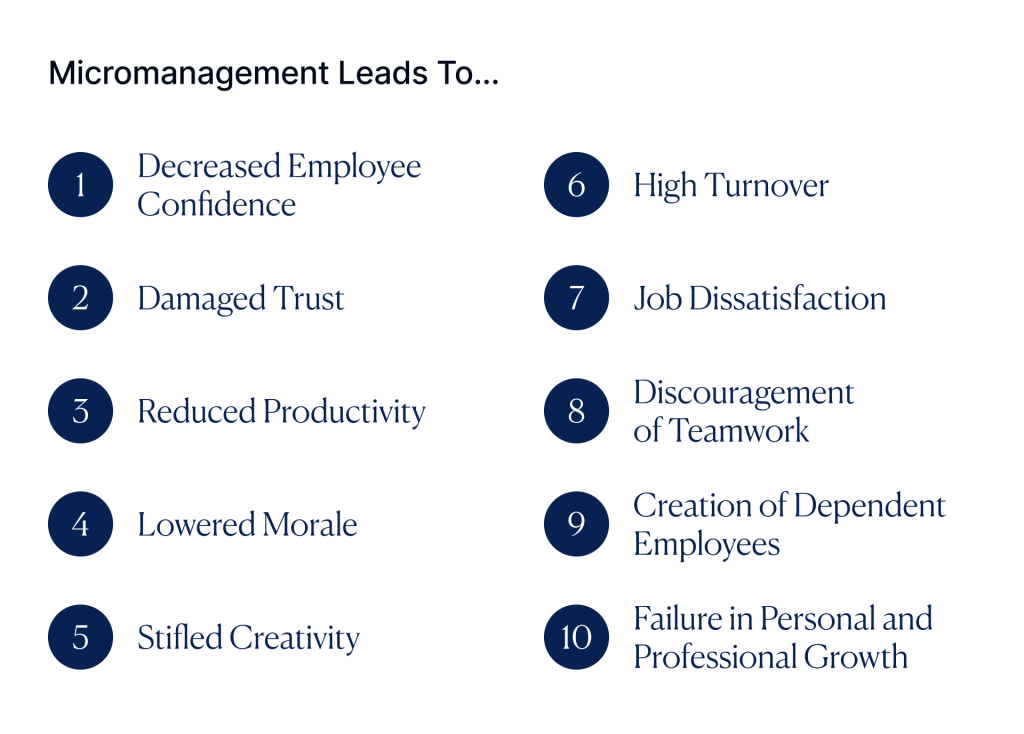
When every caption, visual, advertisement, email, and campaign idea requires your personal approval, you do not create higher standards. You create a human bottleneck. Your team becomes slower, less confident, and increasingly dependent on your instructions.
The result is a digital marketing department that looks busy but produces less meaningful work.
Why Micromanaging Digital Marketing Feels Safer
Micromanagement usually begins with a reasonable concern.
You may have hired a freelancer who wasted your advertising budget. A previous employee may have published inaccurate information. Perhaps your team once created content that looked attractive but failed to generate enquiries or sales.
After that experience, reviewing everything can seem like the safest option.
The problem is that temporary supervision can quietly become a permanent management style. Instead of giving your team clearer objectives and stronger systems, you begin making every decision yourself.
According to Gallup’s analysis of micromanagement, excessive control removes context, autonomy, ownership, and creativity from employees. Strong coaching works differently: the manager provides direction and support while allowing employees to take responsibility for achieving the agreed outcome. (Gallup.com)
Your team needs oversight. But oversight should improve decision-making, not replace it.
How Over-Control Damages Marketing Performance
Creativity Becomes Compliance
Digital marketing requires experimentation.
Your team must test different headlines, offers, formats, audiences, landing pages, and content angles. Some ideas will work. Others will produce useful information about what your market does not respond to.
Micromanagement changes the team’s objective.
Instead of asking, “What message will persuade the customer?” team members begin asking, “What will the boss approve?”
That change is dangerous.
A social media manager may know that a conversational video will perform better than another formal promotional graphic. However, if you repeatedly reject unfamiliar ideas, the employee will eventually stop proposing them. The team will produce safe, predictable content based on your personal preferences rather than customer behaviour.
Research discussed by the American Psychological Association identifies autonomy, competence, and relatedness as important psychological needs supporting workplace motivation. When employees have no meaningful control over how they perform their work, motivation becomes harder to sustain. (American Psychological Association)
Creativity cannot flourish when every original decision carries the risk of unnecessary correction.
Approval Bottlenecks Slow Execution
Digital marketing opportunities often have limited windows.
A local event becomes popular. A competitor launches a new offer. Customers begin discussing a relevant issue. A campaign needs to go live before a holiday, salary period, conference, or seasonal buying moment.
Your team may identify the opportunity quickly, but execution stalls because every decision must pass through you.
The copywriter sends the caption to the marketing coordinator. The coordinator sends it to you on WhatsApp. You respond several hours later with revisions. The designer updates the visual, but you request another version. By the time the content is approved, the opportunity has weakened or disappeared.
The problem is not that your employees are slow. The approval system is slow.
When one person controls too many small decisions, the organisation’s marketing speed becomes limited by that person’s availability.
Employees Stop Taking Ownership
Ownership develops when people are allowed to make decisions and experience the consequences.
When employees know you will rewrite their work, they stop investing fully in the first draft. When they expect you to choose the final idea, they stop building strong recommendations. When every problem must be escalated, they stop solving problems independently.
Eventually, you may conclude that your team lacks initiative.
But the team may simply have adapted to the environment you created.
Constant intervention teaches employees to wait. It rewards obedience more than judgement. Even capable marketers can become passive when independent decisions are repeatedly reversed without clear strategic reasons.
This creates a frustrating cycle:
- You intervene because the team appears dependent.
- The team becomes more dependent because you keep intervening.
- You interpret that dependence as proof that more control is necessary.
Breaking this cycle requires deliberately returning appropriate decisions to the people responsible for the work.
Output Quality Can Decline Despite More Reviews
More reviews do not automatically produce better marketing.
When several rounds of subjective edits are added to every task, the original strategic idea can become diluted. A clear headline becomes vague. A concise advertisement becomes overloaded with features. A focused call to action is weakened by multiple competing messages.
For example, your copywriter may propose:
“Book your weekend stay and receive complimentary airport pickup.”
After several revisions, the message becomes:
“We provide comfortable rooms, excellent service, Wi-Fi, a restaurant, airport pickup, conference facilities and many other services at affordable prices.”
The revised version contains more information, but the customer benefit and immediate reason to respond are less clear.
Your personal familiarity with the business can also work against you. Because you understand every service, abbreviation, and internal process, you may approve language that makes sense internally but confuses new customers.
Marketing quality should be judged by audience clarity and commercial performance—not by how closely the final output resembles the founder’s preferred wording.
Fear Reduces Honest Reporting
Digital marketing teams need to discuss weak results openly.
A campaign may attract clicks but no qualified leads. A content format may receive engagement from people outside the target market. An offer may generate enquiries but fail to produce profitable sales.
Your team needs enough psychological safety to report those problems without hiding information or manipulating the presentation.
Harvard Business Review’s examination of psychological safety connects it with speaking openly, taking reasonable risks, contributing ideas, and supporting creative performance. (Harvard Business Review)
When every mistake triggers blame or immediate takeover, team members become more likely to protect themselves. They may report vanity metrics, avoid ambitious experiments, or conceal concerns until the problem becomes impossible to ignore.
You then receive less reliable information, even though you appear to have more control.
Management and Micromanagement Are Not the Same

Effective management gives your team clarity.
Micromanagement gives your team instructions for every movement.
As the business owner, you should define:
- The commercial objective
- The target customer
- The offer and positioning
- The available budget
- Brand and reputational boundaries
- The performance indicators that matter
- Decisions requiring senior approval
Your marketing team should have reasonable authority over:
- Content angles
- Headline variations
- Creative formats
- Publishing workflows
- Routine community responses
- Campaign optimisation
- Testing recommendations
The distinction is simple: you retain control over direction and risk, while your team owns execution within agreed boundaries.
The Chartered Institute of Personnel and Development describes this balance as “freedom within a framework.” Complete autonomy can create risk, but excessive control can suppress employees’ abilities. The practical solution is to establish clear limits while allowing meaningful discretion inside them. (CIPD)
Use the CLEAR Delegation Framework
Delegation does not mean disappearing from the marketing process. It means designing a better process.
C: Define the Commercial Objective
Every assignment should begin with a business result.
Do not simply say, “Create five Instagram posts.”
Say:
“Create a five-post campaign that generates qualified WhatsApp enquiries for our corporate catering package.”
This gives the team a result to pursue rather than a list of activities to complete.
L: Establish Limits
Clarify the non-negotiables before execution begins.
These may include the budget ceiling, approved offer, prohibited claims, visual identity rules, legal considerations, tone of voice, and the circumstances under which an employee must request approval.
Clear limits reduce the need for constant intervention.
E: Give the Team Execution Ownership
Once the objective and limits are clear, allow the responsible employee to decide how the work should be completed.
Avoid giving someone responsibility while keeping all decision-making authority for yourself. That is not delegation. It is task assignment with hidden control.
Execution ownership means the employee can choose the content format, propose the message, organise production, and make routine optimisations without seeking permission for every detail.
A: Agree on Checkpoints
Replace continuous monitoring with scheduled checkpoints.
For a two-week campaign, you might approve the campaign brief on Monday, review the creative direction on Wednesday, and examine preliminary results after the first week.
These checkpoints allow you to identify material problems without interrupting every stage of production.
Gallup recommends combining autonomy with clear expectations, appropriate decision-making authority, and ongoing support. The organisation’s guidance on preventing burnout and improving autonomy also stresses that managers should define outcomes rather than control every decision. (Gallup.com)
R: Review Results, Not Personal Preferences
After the campaign, evaluate what happened.
Did the content reach the intended audience? Did it generate qualified enquiries? What was the cost per lead? Which messages produced meaningful responses? What should be repeated, adjusted, or discontinued?
Avoid turning the review into a discussion about whether you personally liked the colour, photograph, or caption.
Customer behaviour is more useful than executive taste.
A Practical 30-Day Reset
During the first week, document every marketing decision that currently requires your approval. Identify which decisions involve genuine financial or reputational risk and which ones you are reviewing mainly because of habit.
In the second week, select one campaign and delegate it using the CLEAR framework. Give the team a defined objective, explicit limits, decision rights, and scheduled checkpoints.
During the third week, replace daily WhatsApp follow-ups with a simple performance report covering work completed, upcoming priorities, obstacles, and relevant marketing results.
In the fourth week, review the quality of the team’s decisions. When something goes wrong, improve the brief or system before assuming the employee needs less autonomy.
The purpose is not to remove accountability. It is to move accountability away from constant permission-seeking and toward measurable outcomes.
Better Leadership Produces Better Marketing
Your digital marketing team cannot become strategically valuable while functioning only as an extension of your instructions.
You hired marketers because you needed specialised thinking, creative execution, and consistent attention to customer behaviour. When you override every decision, you continue paying for that expertise while receiving only basic task completion.
Strong leadership does not mean knowing the wording of every caption or supervising every design adjustment. It means giving your team a clear commercial destination, protecting the business with sensible boundaries, and holding people accountable for the results they are equipped to influence.
The more effectively you build that structure, the less your marketing depends on your daily intervention—and the more capable your team becomes of producing strong work without sacrificing trust, speed, or quality.