


AI is now baked into how companies price access, run ads, orchestrate marketing, collaborate in Office tools, design creative, and even buy GPUs. This article covers a wave of 2026 AI industry moves that directly affect how teams buy AI, run campaigns, orchestrate marketing operations, collaborate in Office tools, create content, and plan infrastructure. It looks at OpenAI’s proposed $100 ChatGPT Pro Lite tier, Meta’s agentic Ads Manager and cross-posting updates, WPP and Adobe’s expanded agentic AI partnership, Anthropic’s Cowork enterprise plugins (including Excel and PowerPoint integration), WhatsApp’s new group catch-up function, Canva’s acquisitions of MangoAI and Cavalry, YouGov data on how UK viewers want AI to support, not replace entertainment, and Meta’s long-term hardware supply deal with AMD.
Let’s dive deep into the updates:
OpenAI Tests a New Middle Tier: ChatGPT Pro Lite at $100
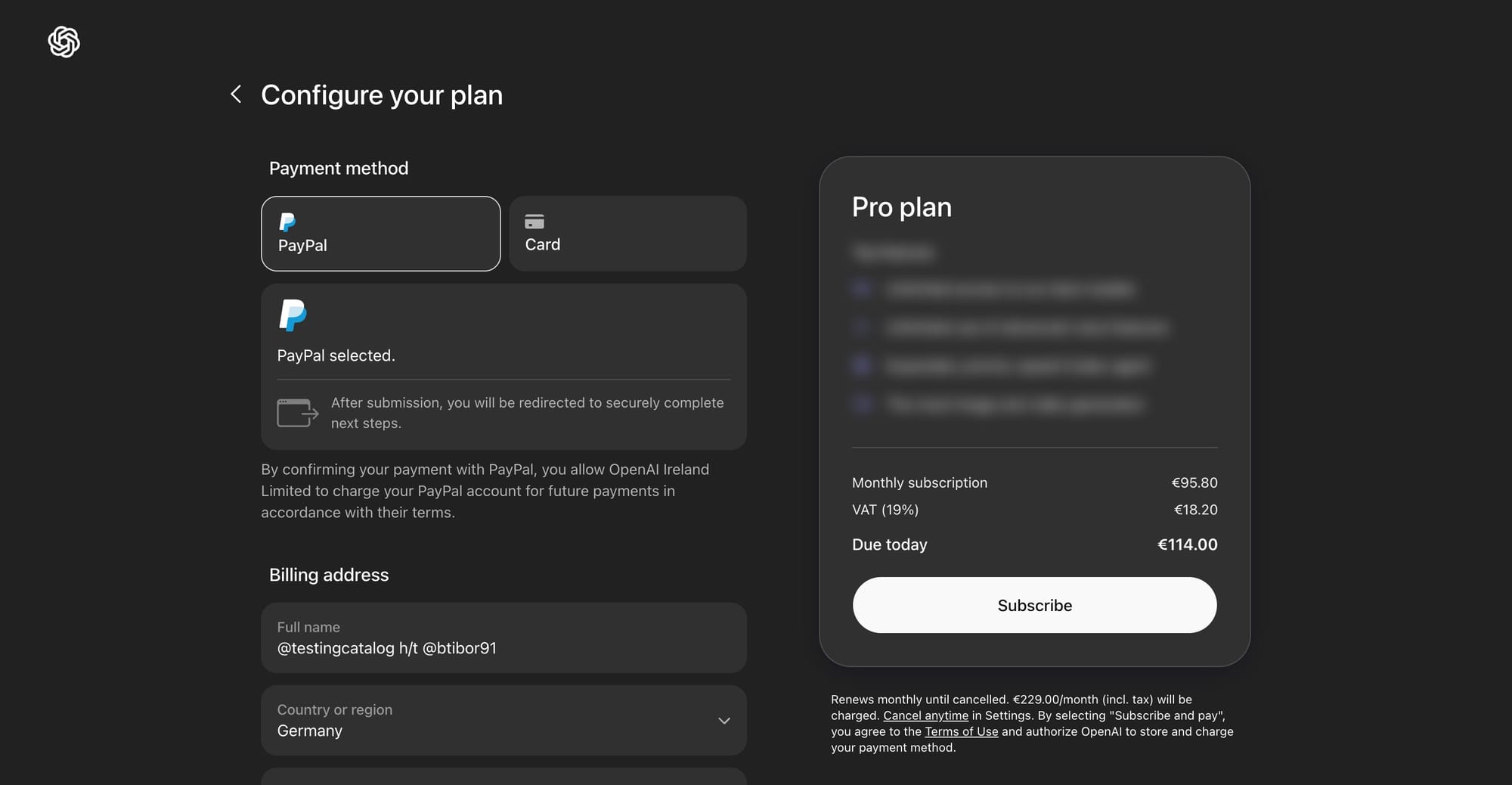
OpenAI is preparing a new ChatGPT Pro Lite tier priced at around $100 per month, sitting between ChatGPT Plus at $20 and ChatGPT Pro at $200. Code and checkout experiments suggest this plan targets heavy individual users who regularly hit Plus limits but can’t justify the full Pro spend. The new option is expected to unlock higher usage caps and more compute for people doing intensive coding, research, and multimedia work.
This fills a long-standing gap in OpenAI’s pricing ladder and reflects a broader trend: AI access is being segmented by capacity and reliability, not just features. As tools become core to work, mid-tier “power user” plans will be key for freelancers, small teams, and agencies that are too big for hobby use but too small for enterprise.
Meta’s Agentic Ads, Cross-Posting, and Onboarding Fixes

Meta is pushing AI deeper into its ad and social products through multiple updates.
Manus AI inside Ads Manager
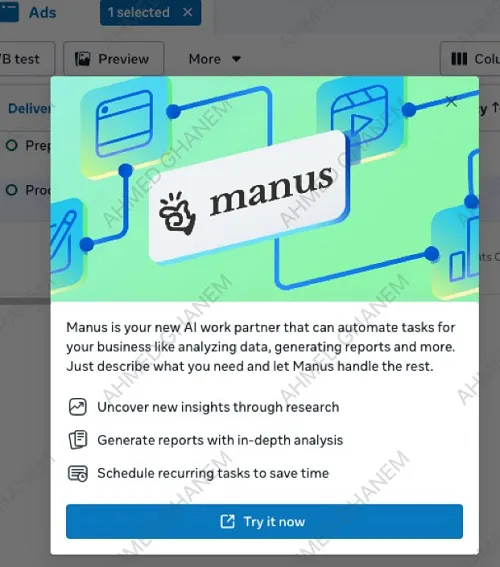
Meta is embedding Manus AI, its $2 billion agent acquisition, directly into Ads Manager as an in-interface “work partner.” Advertisers are seeing Manus as an optional tool that can:
-
Build and customize reports.
-
Help with audience research.
-
Analyze campaign performance, all inside the Ads Manager UI.
Right now, Manus is mostly read-only; it doesn’t yet launch campaigns or change bids, but Meta’s roadmap clearly points toward agentic, end-to-end campaign management over time.
Threads + Instagram: Faster Cross-Posting

On the content side, Threads is tightening its integration with Instagram by making it easier to share Threads posts directly to Instagram Stories without leaving the app. This turns Instagram into a built-in amplification engine for Threads content, helping creators get more reach without extra manual repurposing.
WhatsApp Group “Catch-Up” History
In messaging, WhatsApp is rolling out a Group Message History option that lets admins share a batch of recent messages (e.g., 25–100) with new members so they can catch up quickly. This reduces friction in active groups, removes the need for screenshots, and makes it easier to onboard late joiners into ongoing discussions.
Why all of this matters
Taken together, these changes point to an ecosystem where:
-
Ads get an “agent layer” that automates reporting and analysis so humans can focus on creative and offer strategy.
-
Distribution loops tighten, with Threads and Instagram designed to feed each other.
-
Messaging platforms reduce onboarding friction, making group-based communities more scalable.
Teams that produce more creative variations, clarify their offers, and measure cleanly will gain more leverage from these agentic and distribution improvements than teams that just “set and forget” campaigns.
WPP and Adobe: Agentic AI for Full-Funnel Marketing
WPP and Adobe have expanded their long-standing partnership to deliver integrated agentic AI workflows across the entire marketing lifecycle. The collaboration combines:
-
Adobe’s AI capabilities (including Adobe Firefly Foundry), content platforms, and data orchestration.
-
WPP’s strategic, creative, and transformation expertise via its agentic marketing platform WPP Open.
The goal is a single, connected marketing solution that:
-
Orchestrates planning, creation, production, and activation end-to-end.
-
Uses AI agents to automate and optimize content generation, adaptation, and media activation.
-
Keeps content on-brand and privacy-safe, using Firefly models trained on approved IP.
For large brands, this addresses a core pain: producing huge volumes of personalized content across channels without losing brand consistency or drowning in disconnected tools. It also signals that “just using AI tools” is giving way to agentic platforms where multiple AI agents collaborate across planning, creative, and media.
Claude’s Cowork Plugins: Enterprise Agents Inside Excel and Beyond
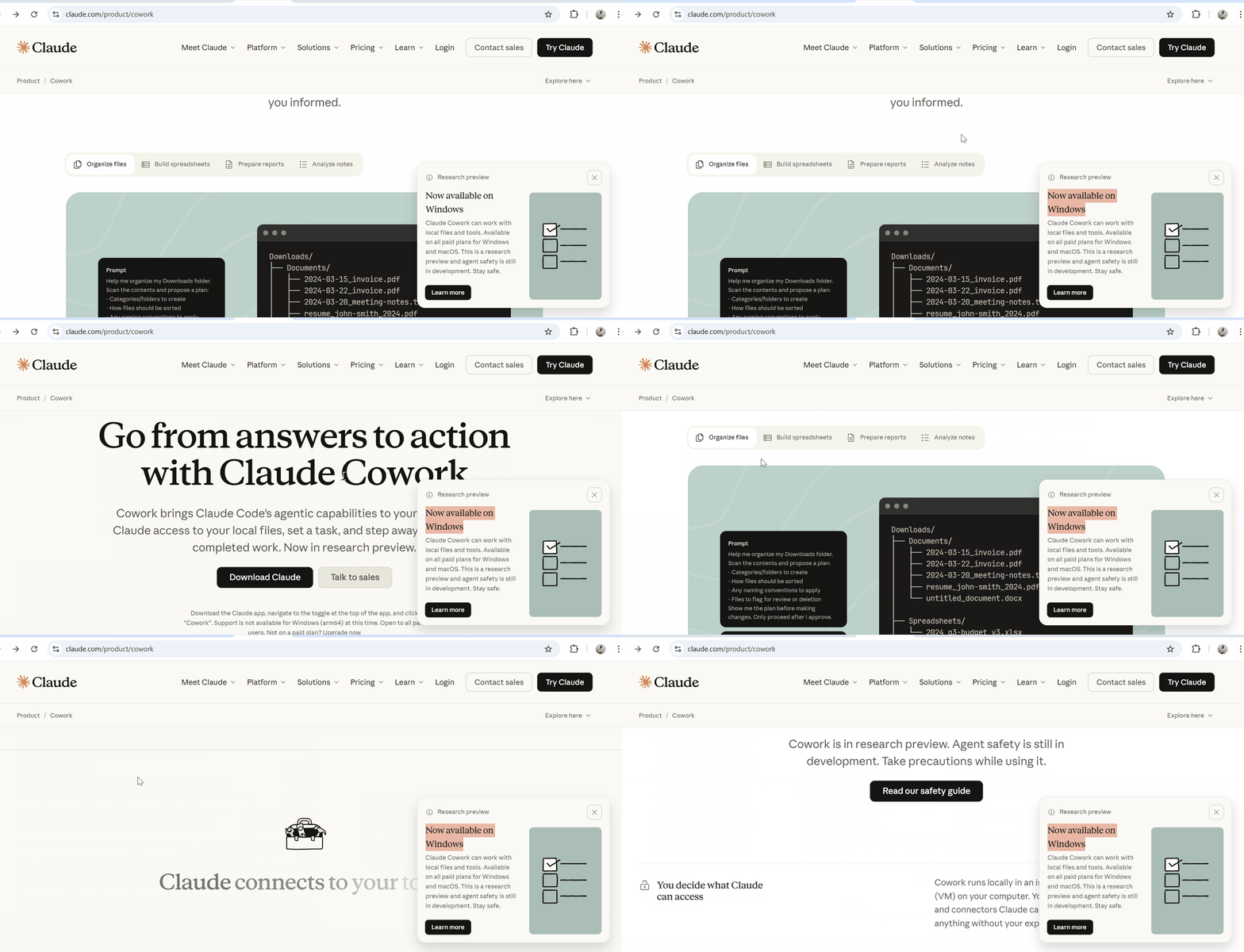
Anthropic’s Cowork now supports enterprise-ready plugins, letting companies turn Claude into specialized AI agents for different departments. Teams can:
-
Bundle skills, commands, and tool connectors into reusable “coworkers.”
-
Publish them to private plugin marketplaces with admin controls and permissions.
A major highlight is deeper integration with Excel and PowerPoint, allowing Claude to work end-to-end across spreadsheet workflows and presentations while passing context between tools.
This means a finance or marketing team can, for example:
-
Ask Claude inside Excel to clean, analyze, and summarize data.
-
Then send that context directly into PowerPoint for auto-generated slides and narratives.
For enterprises, this moves AI from “a separate chat window” to a context-aware layer woven into everyday Office tools.
Canva Buys MangoAI and Cavalry: Toward a Full-Stack Creative OS
Canva has acquired MangoAI and Cavalry as it shifts from “simple design tool” to “full-stack creative and marketing platform.”
-
MangoAI brings AI-powered ad creation and optimization, helping teams generate and test ad creatives with data-backed insights.
-
Cavalry is a professional motion design and animation tool already used by major brands.
By folding both into its ecosystem, Canva is building toward an environment where teams can:
-
Design static assets.
-
Animate and build motion graphics.
-
Launch and optimize campaigns.
-
Analyze performance, all in one stack.
This underscores three big shifts in creative departments:
-
AI becomes native to design tools, not just an add-on.
-
Motion design moves from “specialist-only” to more accessible.
-
Data and creativity converge, turning Canva into a creative-operating system, not just a design canvas.
YouGov: Audiences Want Assistive AI, Not AI-Only Shows

YouGov research into UK audiences shows a clear preference: people are comfortable with AI as a supportive tool, but are wary of AI as the main creator of entertainment content.
Respondents generally like:
-
Personalized recommendations.
-
Automated subtitles and accessibility features.
But they show strong resistance to fully AI-generated films or TV shows and are reluctant to watch content they know was produced by AI alone.
The concerns cluster around:
-
Authenticity.
-
Quality.
-
Trust and the sense that human creativity is being sidelined.
For streaming platforms and studios, the signal is clear:
-
Use AI to enhance human-created content (discovery, localization, accessibility, workflows).
-
Be cautious about pushing AI-only productions, especially if transparency is high.
Meta + AMD: Locking In AI Compute for the Long Term

Finally, Meta has signed a long-term supply deal with AMD to secure GPUs and related hardware for its AI infrastructure build-out. The agreement will see AMD accelerators used to power Meta’s next generation of AI models and services, from recommendation systems to agentic tools like Manus.
This reflects a broader reality: AI strategy is now as much about hardware access as it is about models and software. By diversifying beyond a single chip supplier, Meta aims to:
-
Increase resilience against supply constraints.
-
Optimize costs and performance.
-
Move faster on deploying AI at massive scale.
The Through Line: Agentic, Embedded, and Infrastructure-Backed AI
Across all of these stories, three themes repeat:
-
Agentic AI: Manus in Ads Manager, WPP–Adobe’s agentic platform, Claude Cowork plugins, AI is moving from static tools to agents embedded in workflows.
-
Embedded AI: Canva, Excel, PowerPoint, WhatsApp, Threads, all show AI being built into the tools and channels people already use, not separate destinations.
-
Infrastructure and trust: OpenAI’s pricing tiers, Meta’s AMD deal, and YouGov’s trust data highlight that budgets, hardware, and user expectations are now core parts of AI strategy.
For businesses, the question for 2026 isn’t “Should we use AI?” but “Where should we embed AI, and how do we structure pricing, workflows, and trust so it actually pays off?”


