


Lead Magnet Ideas: What Should You Offer So People Actually Give You Their Email?
People do not give you their email because you wrote: “download my free guide.”
They give you their email when the offer feels more useful than the privacy they are giving up.
That is why most lead magnets fail. The problem is usually not the landing page design, email platform, or button color. The problem is the offer feels too vague. “Free marketing checklist,” “business growth guide,” or “social media tips” may sound helpful to you, but to a busy buyer, those promises feel easy to ignore.
A good lead magnet is not just free content. Mailchimp describes a lead magnet as something valuable offered in exchange for a customer’s contact information, such as a sample, tool, or resource. The keyword is valuable. If the offer does not help the buyer solve something specific, it will not feel worth the email. (Mailchimp)

What Makes a Lead Magnet Feel Valuable?
A valuable lead magnet does four things quickly: it names a painful problem, gives a specific outcome, feels easy to use, and connects naturally to your paid offer.
The mistake many service businesses make is offering information instead of progress. A prospect does not want “10 branding tips.” They want to know why their homepage is not converting, what to fix before launching ads, or how to price a service without scaring serious buyers away.
Specificity creates perceived value.
Weak offer: “Free guide to better marketing.”
Stronger offer: “The 15-Minute Homepage Audit: Find the 5 Messaging Gaps Costing You Leads.”
The second offer works better because the buyer knows what they will get, how long it will take, and what problem it helps them diagnose. It feels like a useful shortcut, not another PDF they will forget in their inbox.
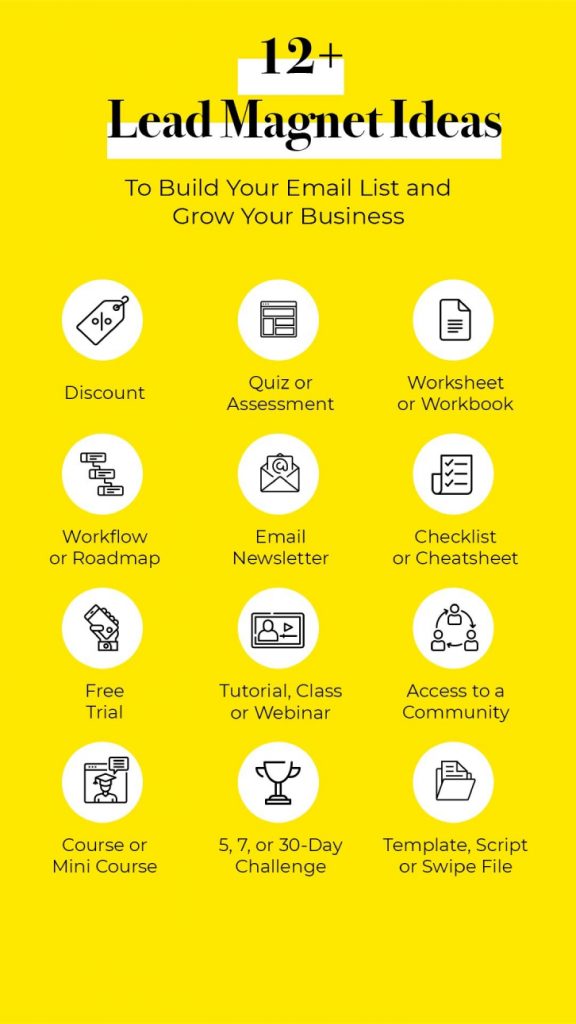
The Best Lead Magnet Formats
1. Checklists
Checklists work well because they reduce mental load. They help your prospect confirm whether they are missing something important.
For example, a marketing consultant could offer “The Pre-Ad Launch Checklist: 12 Things to Fix Before Spending on Facebook Ads.” A website designer could offer “The Homepage Trust Checklist.” A business coach could offer “The Offer Clarity Checklist.”
Checklists are best when the buyer already knows they have a problem but needs structure.
2. Templates and Scripts
Templates are powerful because they save time immediately. They are especially effective for service-based businesses because they give the buyer a practical asset they can use the same day.
Good examples include email follow-up templates, sales call scripts, proposal templates, Instagram caption prompts, WhatsApp reply scripts, or pricing page templates.
A strong template does not just teach. It lets the buyer act.
3. Scorecards and Self-Assessments
Scorecards work because people want to know where they stand. They also help you segment leads based on readiness.
For example, a consultant could offer “Is Your Business Ready for Paid Ads? Take the 3-Minute Scorecard.” A coach could offer “What Stage Is Your Service Business In?” A branding expert could offer “Brand Clarity Scorecard.”
This format works well because the lead magnet creates a diagnostic moment. The buyer sees the gap, and your paid offer becomes the logical next step.
4. Calculators
Calculators are excellent for decision-stage buyers because they connect directly to business value.
Examples include a customer acquisition cost calculator, pricing calculator, ad budget calculator, ROI estimator, or profit margin calculator.
A calculator feels valuable because it gives a personalized answer. It also attracts more serious leads because people who calculate cost, ROI, or pricing are usually closer to making a decision.
5. Short Training or Mini-Course
A short training works when the buyer needs explanation before they trust your solution. It is useful for complex services where people must understand the problem before they buy.
The key is to keep it focused. A five-day email course called “Build Your Entire Marketing Strategy” is too broad. A sharper offer would be “3 Emails to Fix Your Weak Service Offer Before You Launch Ads.”
Demand Gen Report’s 2024 Content Preferences Survey found that buyers continue to value shorter, digestible content and webinars or digital events during decision-making, which supports the case for focused, easy-to-consume lead magnets instead of overwhelming resources. (Rackcdn)
Match the Lead Magnet to the Buyer Stage
The best lead magnet depends on what your buyer already understands.
Awareness Stage: Help Them Name the Problem
At this stage, the buyer feels friction but may not know the cause. They know sales are slow, inquiries are weak, or content is not converting, but they cannot clearly explain why.
Your lead magnet should diagnose the problem.
Good formats include checklists, quizzes, audits, scorecards, and mistake lists.
Examples:
“Why Your Website Visitors Are Not Booking Calls: 7 Messaging Gaps to Check”
“Is Your Offer Too Vague? Take the 5-Minute Offer Clarity Audit”
“The Small Business Content Consistency Checklist”
Think with Google’s micro-moments framework explains that people often turn to devices when they want to know, do, discover, or buy something, and brands need to meet that intent quickly. For awareness-stage prospects, your lead magnet should meet the “help me understand what is wrong” moment. (Google)
Consideration Stage: Help Them Compare Options
At this stage, the buyer understands the problem and is comparing possible solutions. They may be considering hiring someone, using software, taking a course, or trying to fix the issue themselves.
Your lead magnet should help them evaluate.
Good formats include comparison guides, buyer guides, planning templates, decision trees, and frameworks.
Examples:
“Should You Hire a Marketing Consultant or Run Ads Yourself?”
“The Service Business Website Planning Template”
“The Buyer’s Guide to Choosing a Brand Strategist”
This kind of offer builds trust because it does not pressure the prospect. It helps them make a smarter decision, and that positions you as the safer choice.
Decision Stage: Help Them Justify Action
At this stage, the buyer is close to acting but needs confidence. They may be thinking about budget, timing, ROI, internal approval, or risk.
Your lead magnet should reduce uncertainty.
Good formats include calculators, case study breakdowns, implementation plans, readiness assessments, and consultation prep worksheets.
Examples:
“The Marketing ROI Calculator for Service Businesses”
“The 30-Day Website Fix Plan”
“Book More Sales Calls: Proposal Review Worksheet”
Decision-stage lead magnets should connect closely to your paid service. A pricing consultant should not offer a generic productivity checklist. A conversion copywriter should not offer a broad social media calendar. The closer the lead magnet is to the paid problem, the more qualified the subscribers will be.
Keep the Email Capture Simple
Even a strong lead magnet can fail if the signup process feels like work.
Ask only for what you need. For most lead magnets, name and email are enough. Mailchimp recommends keeping email capture forms short because fewer fields reduce friction and make the signup process easier. (Mailchimp)
This is not just marketing opinion. Nielsen Norman Group’s EAS framework focuses on reducing user effort by eliminating, automating, and simplifying form steps. The lesson is clear: the more effort your form demands, the more valuable the offer must feel. (Nielsen Norman Group)
If you ask for name, email, phone number, company size, budget, job title, website, and timeline for a simple checklist, many people will leave. Save deeper questions for consultation forms or sales applications.
The Simple Test: Would Someone Pay a Small Amount for It?
A practical way to judge your lead magnet is to ask: “Would my ideal buyer pay a small amount for this if it were not free?”
They do not actually need to pay. But the offer should feel useful enough that paying would not seem ridiculous.
A weak lead magnet gives general advice. A strong lead magnet creates movement.
It helps the buyer identify a mistake, make a decision, calculate a number, write a message, plan a campaign, compare options, or prepare for action.
That is the difference between a freebie and a real opt-in offer.
Conclusion
The best lead magnet ideas are not always the biggest or most polished. They are the clearest.
Your prospect should immediately understand what the offer helps them do, why it matters, and why it is worth sharing their email. A checklist can outperform a 40-page ebook if it solves a sharper problem. A calculator can beat a webinar if the buyer is already close to deciding. A scorecard can attract better leads than a generic guide because it helps people see their own gap.
Do not start by asking, “What freebie should I create?” Start by asking, “What does my buyer need to understand, decide, or fix before they are ready to work with me?”
That question will lead you to a stronger offer, better subscribers, and an email list filled with people who are closer to becoming customers.


