


Google Search Console Now Tracks Instagram, TikTok, X and YouTube Search Performance
Google Search Console is no longer just for websites.
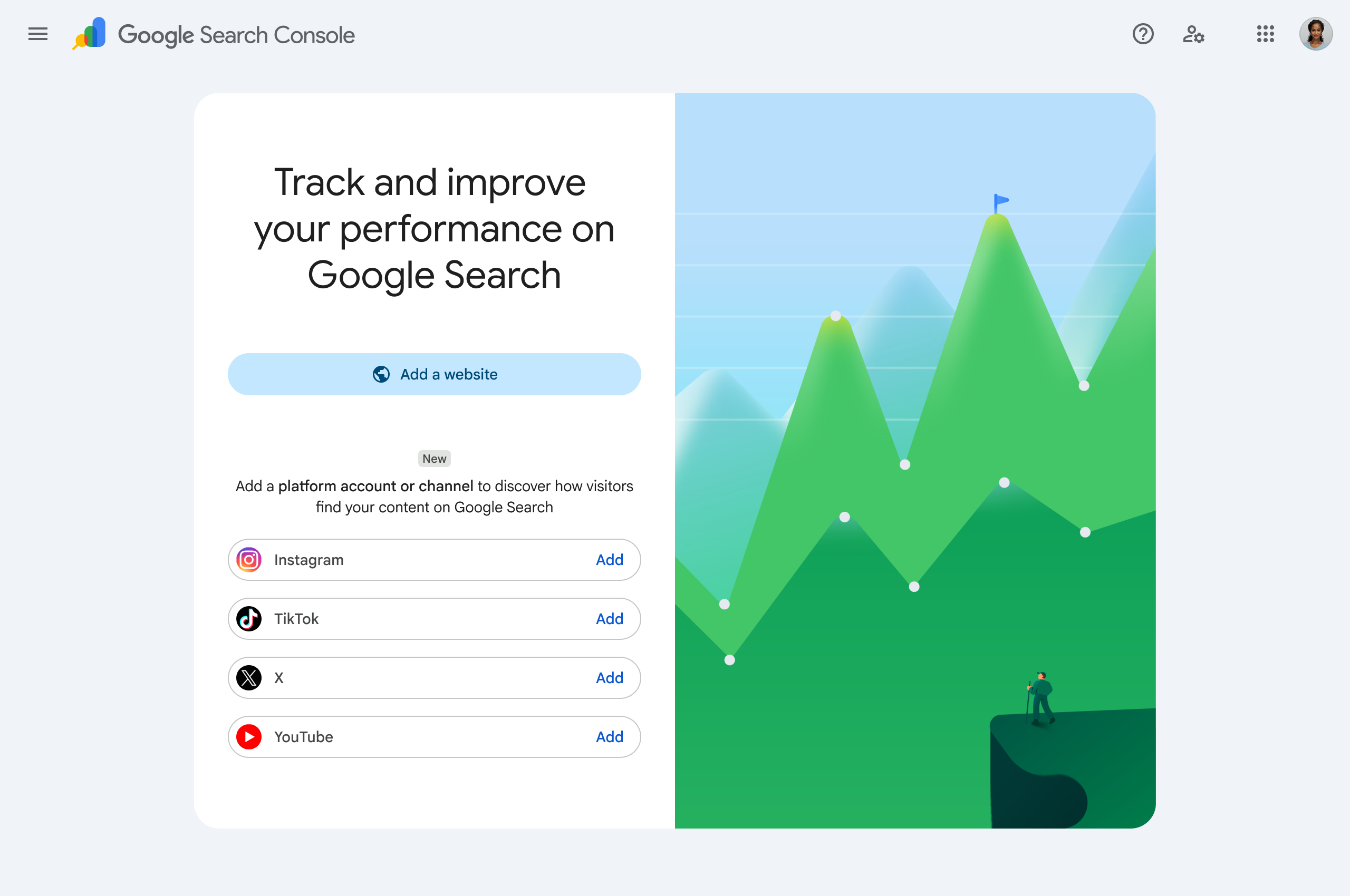
Google has introduced platform properties, a new Search Console property type that allows creators, publishers and brands to see how their social and video content performs on Google Search and Discover. The update supports Instagram, TikTok, X and YouTube, giving marketers a clearer view of how social content is discovered through Google, not only inside the social platforms themselves.
The feature was reported by Search Engine Roundtable on July 7, 2026, highlighting that this data is now appearing inside Search Console’s Performance reports, Insights reports and Achievements section.
For SEO professionals and social media teams, this is a meaningful shift. Google is giving creators a way to measure social visibility through search, which could change how brands evaluate short-form video, platform-native posts and creator-led content.
What Are Google Search Console Platform Properties?
Platform properties are a new type of Search Console property for accounts or channels on supported third-party platforms.
Until now, Search Console was primarily associated with websites, domain properties and URL-prefix properties. With platform properties, creators can add supported social or video accounts to Search Console and view performance data for content that appears in Google Search, Discover and, where applicable, Google News.
The supported platforms are:
- TikTok
- X
- YouTube
Each account or channel needs to be added as its own property. That means a business with a YouTube channel, Instagram profile and TikTok account would need to add each one separately to track performance independently.
Why This Update Matters for SEO and Social Media Teams
For years, social media reporting and SEO reporting have often lived in separate dashboards.
A social media manager might track likes, comments, shares, views and platform reach. An SEO manager might track clicks, impressions, rankings and queries in Google Search Console.
Google’s platform properties begin to connect those worlds.
The update helps answer questions such as:
- Which Google searches lead people to a brand’s TikTok videos?
- Which Instagram posts appear in Google Search?
- Which YouTube videos are earning clicks from Search and Discover?
- Which social posts are becoming evergreen search assets?
- Which topics perform better through Google than inside the native platform?
This is especially useful because social content can now function as searchable content. A TikTok video, Instagram post, YouTube Short or X post may appear when people search Google for product advice, tutorials, local services, reviews or current discussions.
For SMEs, this means social content should not be treated only as feed-based content with a short shelf life. A useful video or post may continue attracting discovery through Google long after it was published.
What Data Can You See in Search Console?
Google says platform properties provide access to performance and traffic insights for supported social and video accounts. The data is reported separately for each property, helping creators compare platforms without mixing all content into one view.
Performance Report
The Performance report shows total clicks, impressions, average click-through rate and average search position for the selected platform property. Users can filter the data to identify which posts and queries are driving traffic across Google Search, Discover and Google News when applicable.
This gives marketers a more practical way to understand search demand around their social content.
For example, a skincare brand may find that its TikTok tutorials are appearing for “how to repair dry skin barrier,” while a restaurant may discover that Instagram Reels are surfacing for local food-related searches.
Insights Report
The Insights report provides a high-level overview of recent traffic trends, top-performing content and how people discover platform content on Google Search.
This is useful for non-technical users who want a quick view of what is working without digging deeply into query and page-level performance tables.
Achievements
The Achievements section tracks milestones, such as reaching new click thresholds from Google Search over a 28-day period.
This may be less important for deep analysis, but it can help creators and smaller teams understand growth momentum.
What Platform Properties Do Not Track
One important limitation is that platform properties do not show how content performs inside the social platform itself.
Google’s help documentation says the reports show how content performs on Google Search. They do not show native platform exposure, such as how many times a video appeared inside TikTok.
That distinction matters.
A TikTok video may perform poorly inside TikTok’s feed but still earn Google Search impressions if it answers a specific query. Likewise, a viral Instagram post may receive huge engagement inside Instagram but generate little traffic from Google.
Marketers should therefore use Search Console platform properties alongside native analytics tools, not as a replacement for them.
How to Add a Platform Property in Search Console
To add a platform property, users need to open Search Console, use the property selector or verification page, choose one of the supported platforms and follow the authorization steps. Google says the feature is rolling out gradually, so it may not be available to every account immediately.
The basic setup process is:
- Open Google Search Console.
- Go to the property selector and choose “Add property.”
- Select Instagram, TikTok, X or YouTube.
- Follow the onscreen steps to authorize and verify the account or channel.
- Wait for data to appear in the reports.
Google notes that new platform properties may show empty charts at first because it can take a few days to collect and process performance data.
Ownership may also be checked periodically. If a login connection expires or access is lost, reporting can pause until the property is re-verified.
Why This Is a Bigger Deal Than Another Analytics Update
At first glance, this may look like a simple reporting feature. In reality, it reflects a broader change in search behavior.
Google is recognizing that creators and businesses publish valuable content across many channels, not only on their own websites. Users also search for firsthand perspectives, short-form video, social posts, reviews and creator-led explanations.
This means SEO is becoming more distributed.
A brand’s visibility in Google may now depend on:
- Its website pages
- Its YouTube videos
- Its TikTok explainers
- Its Instagram posts
- Its X updates
- Its presence in Discover
- Its creator partnerships
- Its platform-native content quality
For SMEs, this expands the meaning of search optimization. Ranking a website page still matters, but appearing through useful social and video content can also influence discovery, trust and conversions.
Practical SEO Opportunities for Businesses
1. Treat Social Posts as Search Assets
Businesses should create social content that can answer real questions.
Instead of posting only promotional content, brands should publish explainers, tutorials, comparisons, demonstrations and local advice that match how people search.
For example:
- A dentist could publish short videos answering common treatment questions.
- A fashion retailer could create seasonal styling guides.
- A restaurant could post videos around local food searches.
- A software company could publish quick product walkthroughs.
These assets may perform both inside the platform and through Google Search.
2. Use Search Queries to Guide Social Content
Once platform property data becomes available, marketers should review which queries are driving impressions and clicks.
Those queries can reveal what audiences want to know.
A post that earns impressions but a low click-through rate may need a stronger title, caption, thumbnail or opening hook. A post that earns clicks from a specific query may deserve a follow-up video, blog article or landing page.
3. Compare Platform Performance by Search Intent
Different platforms may perform better for different types of search behavior.
YouTube may perform well for tutorials and product demonstrations. TikTok may surface for quick explanations and trend-led content. Instagram may support visual discovery. X may appear around timely updates and commentary.
Platform properties can help marketers understand which channel supports which search intent.
4. Connect Social SEO With Website SEO
If a social post performs well in Google Search, it may reveal an opportunity for the website.
For example, if a TikTok video earns traffic for a question that the company has not covered on its website, the business could create a supporting blog post, FAQ page or product guide.
This turns social performance data into content strategy.
5. Measure Discover and Search Separately When Possible
Google notes that Discover and Google News reports only appear when content receives traffic from those surfaces.
When those reports are available, marketers should separate Search-driven content from Discover-driven content.
Search usually reflects active intent. Discover often reflects interest, relevance and content appeal before an explicit search. Both can be valuable, but they should not always be measured in the same way.
What SMEs Should Do Next
Small businesses and creators should prepare for this update by auditing their social presence and making sure key accounts are active, branded and connected to their broader digital strategy.
The immediate next steps are:
- Check whether platform properties are available in Search Console.
- Add supported Instagram, TikTok, X and YouTube accounts.
- Review search queries, clicks and impressions once data appears.
- Identify posts that already earn Google visibility.
- Create more social content around proven customer questions.
- Connect high-performing social topics to website content and conversion pages.
The main goal is not simply to get more data. It is to understand which social content helps people discover the business through Google.
Conclusion: Social Content Is Becoming Part of Search Strategy
Google’s platform properties update gives creators, publishers and brands a new way to measure social and video content performance in Google Search.
For marketers, this confirms an important trend: SEO is no longer limited to owned websites. Social posts, short-form videos and creator content can also become searchable assets.
Businesses that adapt early will have a stronger view of how audiences discover them across Google’s search surfaces. They will also be better positioned to turn social content from a short-lived engagement tactic into a long-term visibility channel.
The next phase of SEO will not be website versus social media. It will be understanding how every public content asset contributes to discovery, trust and customer action.
Sources
- Search Engine Roundtable report on Google Search Console platform properties.
- Google Search Central announcement on social and video platform performance in Search Console.
- Google Search Console Help documentation on platform properties.
- Google Search Console Help documentation on adding website and platform properties.


