


The first months of 2026 are packed with industry shifts that will affect how developers code, how users discover content, and how platforms handle both traffic and copyright. From Alibaba’s new coding model to Threads’ “Dear Algo” feature, Google’s AI Search changes, and ByteDance’s copyright diplomacy, the theme is clear: AI is no longer a side feature, it is the infrastructure.
This article breaks down the key updates, why they matter, and what they signal for the future of software, social, and search.
Alibaba Open Coder Next: Coding Models Enter a New Arms Race
Alibaba Group has introduced Alibaba Open Coder Next, the latest version of its AI-powered coding model, released in January 2026. It is explicitly positioned to compete with developer-focused tools such as OpenAI Codex, GitHub Copilot, and Code Llama, signaling that AI-assisted coding is now a multi-polar race rather than a single-ecosystem game.
What Alibaba is actually building
Open Coder Next is part of the broader Qwen/Qwen3 family: specialized large language models tuned for programming tasks and agentic workflows. Rather than being a generic chatbot that “can also code,” it is designed as a coding-first system that:
-
Generates, edits, and refactors code across multiple languages.
-
Handles multi-step software development tasks, rather than just one-off snippets.
-
Integrates into IDEs, cloud environments, and potentially full coding agents.
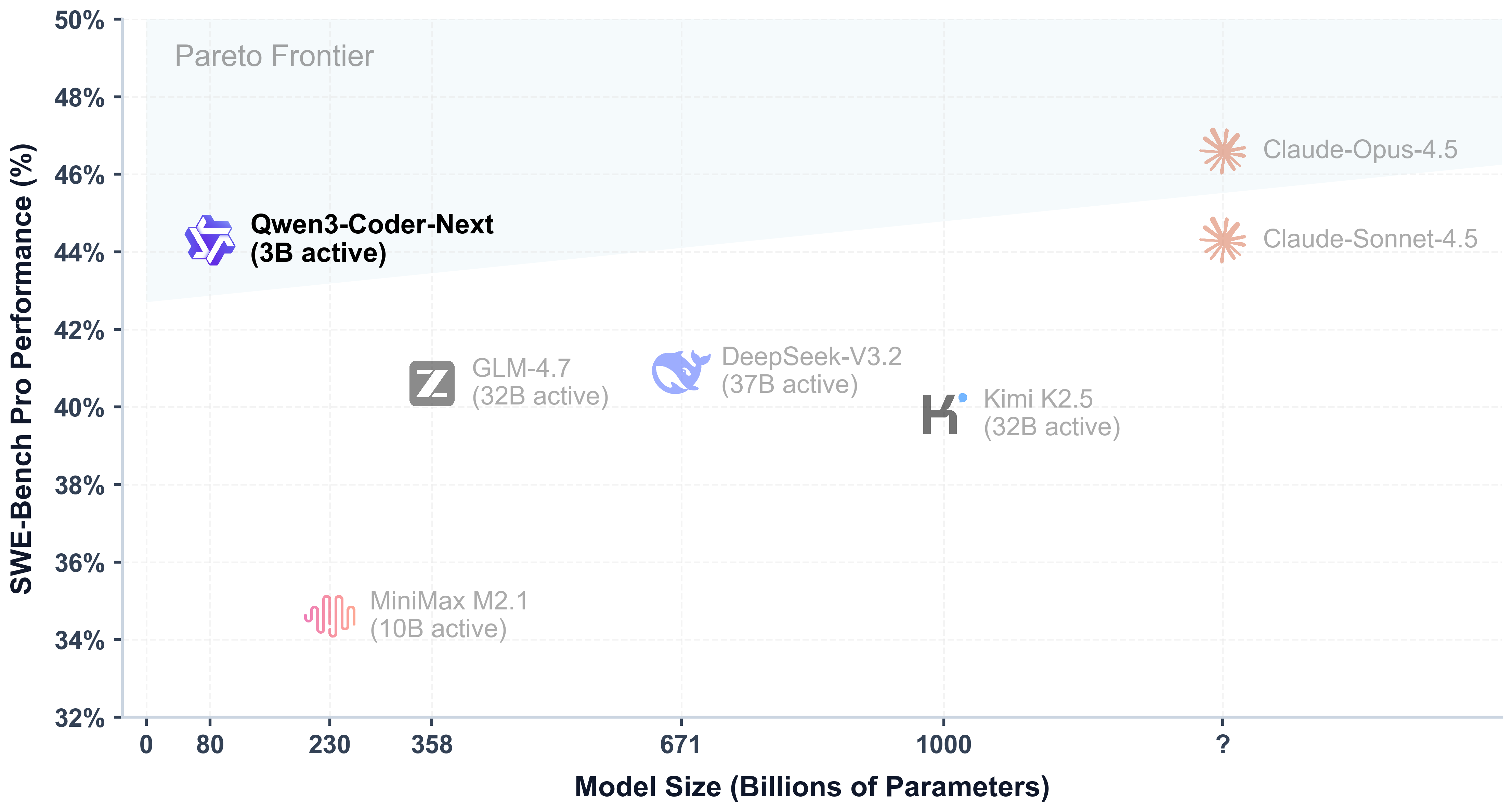
This positions Alibaba’s stack as a serious alternative in regions or organizations that:
-
Prefer open-weight or more controllable models.
-
Want to run coding assistants on their own infrastructure.
-
Operate in ecosystems where Chinese cloud providers are the default choice.
Why this matters for developers
-
More competition, better tools
With Alibaba openly chasing Codex/Copilot-level performance, developers gain more options—especially if they care about data residency, cost control, or open-source ecosystems. -
Agentic coding becomes normal
Instead of just completion-based tools, the industry is moving toward agent-like coding systems that reason about tasks, call tools, run tests, and iterate. Alibaba positioning Open Coder Next in this space means we’ll see more “full pipeline” AI coding experiences, not only autocomplete. -
Regional and regulatory diversification
In markets where Western cloud tools are limited or regulated, Alibaba’s models may become the default AI coding infrastructure. That will shape how companies build, deploy, and secure their software.
Threads’ “Dear Algo”: Talking to the Recommendation Engine
On the social side, Meta’s Threads platform has rolled out a new feature called “Dear Algo”, currently available in the US. The idea is deceptively simple: users can write a post starting with “Dear Algo” and describe what they want to see more (or less) of in their feed.

Instead of quietly guessing user preferences based only on taps, scrolls, and watch time, Threads offers a direct channel to “tell” the recommendation system what you care about.
A small UI change with big implications
“Dear Algo” is part of a broader push at Meta to give users more visible control over recommendations across its platforms. The move hints at three important shifts:
-
From silent tracking to explicit preference-setting
Recommender systems aren’t just reading signals in the background, they’re now asking users to speak up. That makes algorithms feel less mysterious and gives users a sense of agency. -
Better alignment between intent and content
People can say, in natural language, that they want more educational posts, fewer celebrity updates, or more content from a specific niche. This can help the system distinguish between “content you watched once” and “topics you actually care about.” -
Regulation and perception pressure
Platforms are under growing scrutiny for opaque algorithms. Features like “Dear Algo” can act as both UX improvement and reputational shield: “We’re giving you control; we’re listening.”
Why this matters for creators and brands
-
You’re no longer competing only for clicks, but for being part of what users explicitly request.
-
Content that fits clearly defined interests (e.g., “Dear Algo, show me more small business marketing tips”) may gain an advantage if users describe niches you operate in.
-
There is likely to be a new wave of “teach the algorithm what you want” education, similar to “save, like, and share to see more content like this” on other platforms.
Google: Links Become More Visible in AI Overviews
On the search front, Google is rolling out an update to its AI-powered features that changes how website links appear inside AI Overviews and AI Mode. Until now, many publishers and SEOs have worried that AI summaries could “trap” users, answering queries directly and reducing clicks to original sources.

Google’s response: make links more visible and more clickable inside those AI responses.
What’s changing in the interface
According to recent coverage, the update includes:
-
On desktop:
-
Hover-activated pop-up link cards showing a page description and favicon.
-
More visually distinct, interactive link elements within the AI Overview.
-
-
On mobile:
-
Larger, more descriptive link icons.
-
A clearer distinction between the AI-generated text and the underlying sources you can tap through to.
-
The goal is to make it easier for users to identify, understand, and click the links behind the AI answer, effectively turning AI Overviews into enhanced gateways rather than dead ends.
What this means for publishers and SEOs
-
AI Overviews as a new “top of funnel”
If links are more visible, AI Overviews can become a powerful discovery surface instead of a traffic threat. The users who want quick answers still get them, but those seeking depth have clearer pathways to click through. -
Presentation and snippet quality matter more
With hover cards, favicons, and descriptions, the first impression of your page inside AI Overviews becomes critical. Titles, meta descriptions, and structured content that help Google summarize your page will likely influence how attractive your link appears. -
AI search and traditional SEO converge
Optimizing only for the “10 blue links” layout is no longer enough. You must think about:-
How your content is cited or surfaced in AI-driven answers.
-
Whether your site gives clear, concise support for the AI system to use and feature.
-
In short, search is moving from “ranked pages” to “ranked sources inside AI-generated answers,” and visibility within these experiences is going to be a key SEO battlefield.
ByteDance & Seedance: Cinematic AI Video Meets Copyright Reality
ByteDance’s Seedance AI video model has already attracted attention for its high-quality, cinematic outputs. But the latest twist isn’t just about video quality; it’s about copyright and licensing.

ByteDance has reportedly taken steps to safeguard Seedance’s AI against major entertainment rights holders, including giants like Disney, members of the Motion Picture Association (MPA), Netflix, Paramount, Sony, and Universal. The goal is to reduce copyright risk and align the model with industry expectations.
Why this is a big deal
-
From “move fast” to “license first”
Early AI video tools often pushed out demos without clear copyright strategies. Now, with global media companies watching closely and litigating aggressively, major AI players are moving toward formal safeguards and licensing frameworks. -
Building trustworthy creative tools
If Seedance is to be used by studios, agencies, and platforms at scale, ByteDance must convince them that:-
Training data and outputs respect copyright.
-
There are mechanisms to prevent blatant IP infringement.
-
Partners won’t inherit legal headaches by using the model.
-
-
Template for future deals
How ByteDance structures partnerships and safeguards with companies like Disney or Netflix might become a template for other AI models that want to operate in high-stakes creative industries.
What this means for creators and brands
-
AI video is maturing from “experimental” to “commercial-grade.”
-
Copyright-safe pipelines will become a major selling point for enterprise users.
-
Smaller creators may benefit indirectly if the tools they use are built on top of legally robust foundations, reducing their risk when publishing AI-enhanced content.
The Common Thread: Control, Credit, and Capability
Looking across these updates—Alibaba’s coding model, Threads’ “Dear Algo,” Google’s AI link visibility, and ByteDance’s Seedance safeguards—a few themes stand out:
-
Control is shifting closer to the user
-
Developers choose among multiple coding AIs, not just one.
-
Social users tell the algorithm directly what they want.
-
Searchers get clearer paths from AI answers to original sources.
-
-
Credit and traffic are back in focus
-
Google is visibly addressing publisher concerns by making links more prominent in AI experiences.
-
Content platforms and AI companies alike are being pushed toward better attribution and more transparent link flows.
-
-
Capability is moving from “wow” demos to production-grade systems
-
Alibaba is compressing the cycle from platform → agent → model into a continuous loop tuned on real development tasks.
-
ByteDance is building legal and licensing scaffolding beneath cinematic AI video, not just chasing viral demos.
-
For marketers, developers, and creators, the takeaway is simple: AI is becoming more powerful, more contested, and more governed—all at once. The opportunities are huge, but so are the stakes. Those who learn to plug into these systems early, while respecting their constraints, will have a serious strategic advantage in the years ahead.


