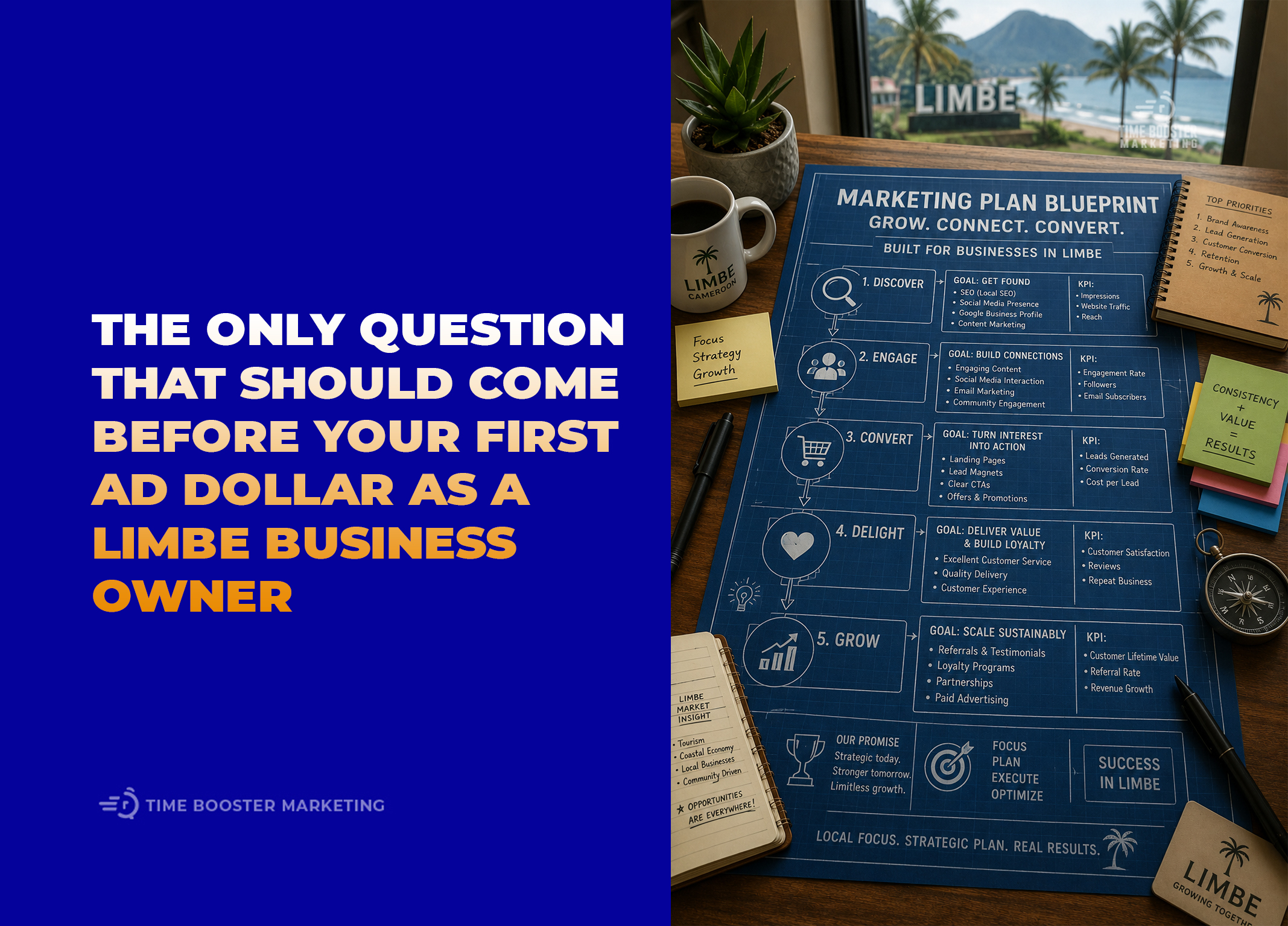
Do You Need a Marketing Strategy Before Spending on Ads in Limbe?
Yes, you need a marketing strategy before spending on ads in Limbe.
Not because strategy sounds professional. Not because every consultant says so. Not because you need a big corporate document full of charts.
You need strategy because ads amplify what already exists.
If your business already has a clear offer, a specific audience, strong proof, convincing messaging, a simple customer journey, and reliable follow-up, ads can help you reach more of the right people. But if your foundation is weak, ads do not magically create demand. They expose confusion. They increase the number of people who see your weak offer, ignore your unclear caption, click your unfinished page, ask for prices, disappear, or compare you with the cheaper business down the road.
That is why many Limbe business owners say, “Facebook ads don’t work,” when the real problem is not Facebook. The real problem is that the business sent paid traffic into a broken system.
Limbe is not a market where customers buy only because they saw a nice graphic. Buyers often ask around, compare, check proof, message on WhatsApp, negotiate, delay, and look for signs that you are serious. That is especially true for restaurants, hotels, beauty brands, event vendors, real estate agents, boutiques, gyms, professional services, and tourism-related businesses. Your ad is only the first touch. The sale depends on everything that happens after attention.
Cameroon’s internet and social media environment is real enough to justify digital marketing investment. DataReportal reported 12.4 million internet users in Cameroon at the start of 2025, while the World Bank’s Cameroon data also shows internet usage has continued rising in recent years. But access does not automatically mean buyer intent, and visibility does not automatically mean revenue. (DataReportal – Global Digital Insights)
That is the decision you need to make before you spend: are you ready to scale, or are you about to pay platforms to reveal what is broken?
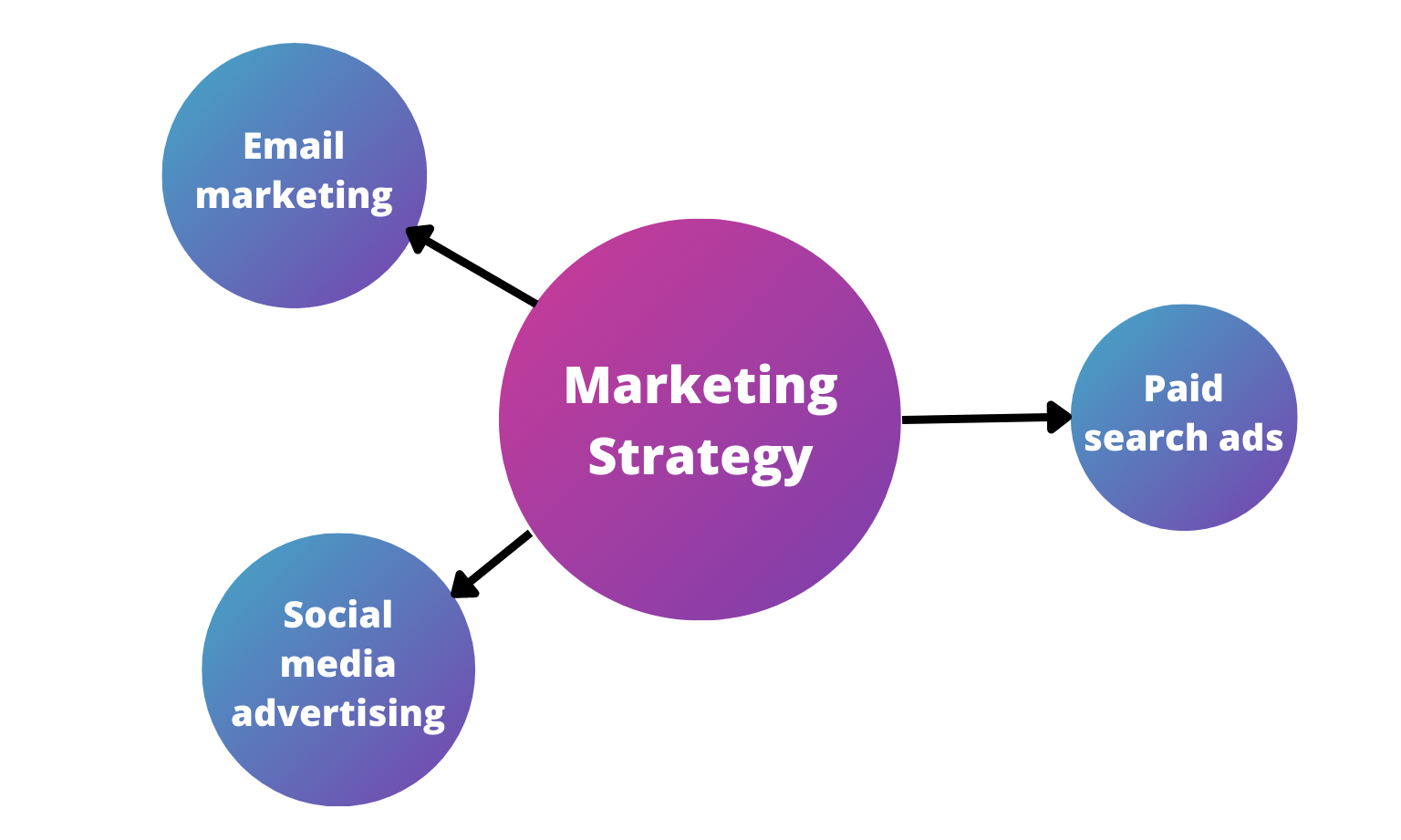
Why Ads Without Strategy Fail Faster in Limbe
Ads are not a rescue plan. They are a traffic source.
This distinction matters because many businesses treat ads like medicine. Sales are slow, so they boost a post. A restaurant has empty tables, so it runs a weekend promo. A boutique has new arrivals, so it sponsors an Instagram post. A hotel has low bookings, so it runs a “book now” ad without fixing its booking process. A real estate agent pays for leads but has no qualification script, no property comparison sheet, and no follow-up rhythm.
The ad creates activity. It does not necessarily create sales.
A paid ad can bring attention to your offer, but the customer still needs to understand what you sell, why it matters, why they should trust you, why they should act now, and what step to take next. If those answers are missing, your ad spend becomes a public test of your weak foundation.
This is why a marketing strategy before ads in Limbe is not just about branding. It is about reducing waste.
Google Ads, for example, evaluates ad relevance, expected click-through rate, and landing page experience as part of Quality Score. In plain English, that means the platform cares whether your ad matches what people are searching for and whether the page they land on is useful. A weak message and poor landing experience can hurt performance before your salesperson even speaks to a lead. (Google Help)
Meta also uses a learning phase where its delivery system gathers information about how an ad set may perform. If your campaign objective, audience, creative, and conversion signals are messy, you are feeding the system unclear information from the start. (Facebook)
In Limbe, that problem becomes even sharper because many customer journeys move from public visibility to private conversation. Someone sees your ad, checks your page, asks a friend, enters your WhatsApp inbox, compares your price, and waits for proof. If your strategy stops at “run ads,” you are only planning for attention. You are not planning for conversion.
The Hard Truth: Ads Amplify What Already Exists
Ads make strong businesses stronger and confused businesses more visibly confused.
If your offer is attractive, ads amplify it. If your message is sharp, ads spread it. If your proof is credible, ads put that proof in front of more people. If your WhatsApp response is fast and structured, ads feed more conversations into a system that can convert them.
But if your pricing is unclear, ads amplify hesitation.
If your page has no proof, ads amplify doubt.
If your caption says “quality services available” but does not explain who the service is for, ads amplify vagueness.
If every customer must ask the same basic questions because your ad does not provide enough information, ads amplify operational stress.
If your team replies late on WhatsApp, ads amplify poor customer experience.
That is why the question is not simply, “Do I need a marketing strategy Limbe businesses can use before advertising?” The better question is: “What exactly will my ad budget multiply?”
For a restaurant in Limbe, ads may multiply weekend reservations if the offer is specific: “Grilled fish platter for two, ocean-view seating, Saturday from 6 PM, reservations on WhatsApp.” But if the ad only says “Come and enjoy delicious meals,” the business competes with every other restaurant making the same claim.
For a boutique, ads may multiply sales if the audience, sizes, prices, delivery options, and styling context are clear. But if the ad shows clothes without prices, fit guidance, or purchase instructions, it may only multiply “How much?” messages from people who never buy.
For a hotel or guesthouse, ads may multiply bookings if rooms, location, amenities, rates, availability, and trust signals are clear. But if the ad sends people to a page with old photos and no booking flow, the campaign may only multiply suspicion.
Ads do not create clarity. Strategy does.
The 6-Part Marketing Foundation Checklist Before Advertising in Limbe
Before you spend on ads, you need a foundation that can turn attention into action. You do not need a 70-page marketing plan. You need six practical decisions.
1. Define the exact customer you want to attract
“Everybody in Limbe” is not a target audience.
Your customer definition must be specific enough to shape your offer, message, channel, and follow-up. A salon targeting university students will not communicate the same way as a salon targeting working professionals preparing for weddings, photoshoots, or corporate events. A restaurant targeting families after church will not use the same message as one targeting young professionals looking for nightlife. A real estate agent targeting diaspora buyers will not follow up the same way as one targeting local renters.
Your customer definition should answer four questions:
Who are they?
What situation are they in?
What problem or desire pushes them to act?
What makes them hesitate before paying?
This matters because ad platforms can help you reach people, but they cannot decide your positioning for you. If you do not know who you want, you will create broad campaigns that attract attention without commercial direction.
2. Make your offer specific enough to sell
A weak offer makes advertising expensive.
Many Limbe businesses advertise categories instead of offers. “We sell clothes.” “We offer catering.” “Rooms available.” “Makeup services.” “Land for sale.” These statements describe what the business does, but they do not give the customer a strong reason to act.
A strategic offer is more concrete. It connects the product or service to a specific buyer situation.
Instead of “rooms available,” a hotel might promote “quiet weekend rooms for couples and business travelers, with secure parking and breakfast options.”
Instead of “catering available,” a food vendor might promote “affordable trays for office meetings, birthdays, and small family events, delivered within Limbe.”
Instead of “makeup services,” a beauty brand might promote “soft glam makeup for graduation photos, bridal court events, and birthday shoots.”
The more specific the offer, the easier it becomes to write ads that attract buyers instead of browsers.
3. Sharpen your message before paying to spread it
Your ad message must answer the customer’s silent question: “Why should I care?”
This is where many campaigns fail. The design may look nice, but the message is too generic. “Best quality.” “Affordable prices.” “Customer satisfaction guaranteed.” “Your number one choice.” These phrases are common because they are easy to write. They are also weak because any competitor can say the same thing.
A stronger message connects the customer’s need to a clear outcome.
For example:
“Stop guessing where to take your guests this weekend. Reserve a table with sea-view dining, grilled seafood, and group seating in Limbe.”
That message works harder than “Visit us for delicious food” because it speaks to a specific situation: hosting guests.
Your message should make the customer feel seen. That is strategy.
4. Prepare proof before asking strangers to trust you
Limbe is a trust-driven market. People ask friends. They check comments. They want to know whether you are reliable. They may have had bad experiences with vendors, late deliveries, exaggerated photos, or businesses that disappear after payment.
Before ads, gather proof.
Proof can include customer testimonials, before-and-after photos, video walkthroughs, delivery screenshots, event photos, room videos, menu photos, Google Business reviews, behind-the-scenes content, staff introductions, price transparency, guarantees, and clear policies.
Proof reduces perceived risk.
This is especially important for businesses asking for deposits, bookings, reservations, or advance payments. Your ad may create interest, but proof helps the customer feel safe enough to continue.
5. Fix your conversion path
A conversion path is the journey from seeing your ad to taking action.
For many Limbe businesses, that path looks like this:
Ad → Instagram or Facebook page → WhatsApp message → price question → negotiation → follow-up → payment or visit.
If any part of that journey is weak, money leaks out.
Before running ads, test your own path like a customer. Click your ad destination. Read your bio. Check your pinned posts. Open your WhatsApp link. Review your automated greeting. Ask whether someone can understand your offer in less than 30 seconds.
A good conversion path should make the next step obvious. “Send us ‘MENU’ on WhatsApp.” “Book your room with your date and number of guests.” “Request the price list.” “Call to confirm availability.” “Visit our store at Mile 4.” “Reserve your seat before Friday.”
Do not make interested people work too hard.
6. Set follow-up rules before leads start coming in
Most businesses do not lose sales only because of bad ads. They lose sales because they do not follow up.
Someone asks for the price. You reply. They go silent. You assume they are not serious.
But many customers are comparing, waiting for salary, asking a spouse, planning with friends, checking transport, or deciding whether they trust you. A simple follow-up system can recover sales that a casual business would lose.
Create follow-up rules before spending. For example:
Reply within 10 minutes during business hours.
Send one helpful follow-up after 24 hours.
Send proof, not pressure.
Use saved replies for common questions.
Tag hot leads in WhatsApp Business.
Record where each lead came from.
The goal is not to disturb people. The goal is to behave like a serious business.
The Limbe Money Leak Audit: Where Your Ad Budget Disappears
A money leak audit helps you see where your campaign loses value. You do not need complicated software to start. You need honesty and a simple tracking sheet.
Before launching ads, review these leak points.
Leak 1: The wrong audience sees the ad
This happens when your targeting is too broad or your message attracts people who are curious but not ready to buy. A boutique may attract people who like fashion but cannot afford the items. A restaurant may attract engagement from people outside the practical visiting radius. A service provider may attract students when the offer is priced for professionals.
The fix is not only better platform targeting. The fix is sharper positioning. Your creative, caption, price cues, and offer details should help the wrong people disqualify themselves.
Leak 2: People click but do not understand the offer
This usually means the ad created curiosity but not clarity.
If people keep asking basic questions such as “Where are you located?”, “How much?”, “What do you offer?”, “Is this available?”, or “How does it work?”, your ad may be under-explaining.
Some questions are normal. Too many repeated questions signal a messaging problem.
The fix is to include essential buying information earlier: location, offer, starting price, availability, delivery options, booking process, and who the offer is best for.
Leak 3: People message but do not buy
This is one of the most common leaks in Cameroon-style social selling.
The customer enters WhatsApp. Then the conversation becomes slow, vague, or too transactional. The business replies with a price and waits. But price alone rarely closes the sale when trust is not yet built.
The fix is to structure your replies. A strong response does three things: confirms the customer’s need, gives the relevant information, and guides the next step.
For example:
“Thanks for reaching out. Are you booking for a couple, family, or solo stay? Our rooms start from XAF [insert price], and I can send you available options for your date.”
That is better than simply saying, “25,000.”
Leak 4: People like the offer but do not trust the business
This happens when your page has weak proof. Maybe your photos look inconsistent. Maybe comments are unanswered. Maybe there are no recent customer reviews. Maybe your profile does not show a location. Maybe your business looks active only when you are selling.
The fix is to build proof before traffic. Add testimonials, real customer photos, behind-the-scenes content, FAQs, staff videos, product demos, service process posts, and clear contact information.
For local search visibility, a complete Google Business Profile can also help customers verify your business details. Google’s own guidance encourages businesses to keep profile information accurate, including address, hours, phone number, and website where relevant. (Google Business)
Leak 5: People are interested but the offer feels risky
Risk kills conversions.
A customer may like your hotel but worry the room will not match the photos. They may like your food offer but worry delivery will be late. They may like your boutique item but worry about size. They may want to book an event vendor but fear disappointment on the day.
The fix is to reduce risk with better information. Show real photos. Explain policies. Offer size guidance. Share delivery timelines. Clarify deposit terms. Show previous work. Provide location details. Give customers fewer reasons to hesitate.
Leak 6: You cannot tell which campaign produced sales
This is where many businesses waste money quietly.
They boost posts, receive messages, make some sales, and assume the ad worked. But they do not know which post, audience, offer, or channel produced the best customers.
At minimum, track:
Amount spent
Campaign dates
Offer promoted
Number of messages
Number of serious leads
Number of sales
Revenue from those sales
Common objections
This simple record tells you whether marketing is producing profit or just noise.
Why Strategy Costs Less Than One Failed Campaign
Many business owners resist strategy because they see it as an extra cost. In reality, strategy often protects the money you were about to waste.
A failed campaign does not only cost the amount you paid to Meta, Google, an influencer, or a designer. It also costs the time spent replying to unqualified leads, the emotional frustration of “ads don’t work,” the lost confidence in marketing, and the opportunity cost of reaching the right customers with the wrong message.
Imagine a Limbe restaurant spends money promoting a weekend offer. The ad gets likes, comments, and WhatsApp messages. But the offer does not mention reservation times, group packages, parking, menu options, or whether customers need to book ahead. The staff replies slowly. The photos are old. The page has no clear location. At the end of the campaign, the owner says the ad failed.
But what failed?
The targeting may have been imperfect, yes. But the deeper issue was that the business paid for attention before preparing the sales path.
Now compare that with a strategy-first approach. Before spending, the restaurant defines the audience, packages the offer, updates photos, creates a WhatsApp booking script, prepares FAQs, pins location details, collects testimonials, and sets a follow-up rhythm. Even with a modest ad budget, the business is now sending traffic into a stronger system.
That is why strategy costs less than failure. It prevents repeated waste.
A Simple Marketing Plan Before Advertising in Cameroon
A marketing plan before advertising in Cameroon does not need to be complicated. For a Limbe SME, your plan should answer seven practical questions.
Who exactly are we trying to reach?
Do not define people only by age or location. Define them by buying situation.
Examples:
Young professionals in Limbe looking for weekend hangout spots.
Parents planning birthday meals or small family events.
Diaspora Cameroonians researching property or accommodation.
University students looking for affordable beauty, fashion, or food options.
Companies needing catering, printing, cleaning, logistics, or event support.
This helps you build campaigns around real needs rather than generic demographics.
What are we selling right now?
Do not advertise everything at once.
Choose one offer per campaign. A hotel can advertise weekend stays. A restaurant can advertise group reservations. A boutique can advertise office wear. A makeup artist can advertise graduation packages. A real estate agent can advertise verified rentals in specific neighborhoods.
One campaign should have one clear job.
Why should customers choose us instead of another option?
This is your positioning.
Your answer should not be “quality” or “affordable.” Those words need proof.
A better positioning statement might be:
“We help busy professionals in Limbe book clean, quiet short-stay rooms without back-and-forth confusion.”
Or:
“We provide well-portioned office lunch trays for Limbe teams that need reliable delivery and clear pricing.”
Or:
“We style modest, elegant outfits for women who want to look polished without spending the whole day searching.”
Specific positioning makes your ads sharper.
What proof will support the claim?
Choose proof before launching.
If you claim reliability, show delivery screenshots or customer reviews.
If you claim quality, show close-up product or service details.
If you claim experience, show past events or behind-the-scenes preparation.
If you claim convenience, show the booking process.
Proof should match the promise.
Where will the ad send people?
Do not send people somewhere confusing.
Your destination might be WhatsApp, a landing page, Instagram DMs, Facebook Messenger, Google Business Profile, or a booking form. The best choice depends on the business, but the destination must be ready.
If WhatsApp is your main sales channel, use WhatsApp Business properly. Add a catalog, greeting message, labels, quick replies, business hours, and clear product or service information.
How much can we afford to test without panic?
Your first campaign is not a miracle button. It is a test.
Set a budget you can evaluate calmly. If the amount is so painful that you expect instant results, you may make emotional decisions too quickly. Strategy helps you decide what you are testing: offer, audience, message, creative, or conversion path.
What result will prove the campaign worked?
Do not judge only by likes.
For some campaigns, the goal is qualified WhatsApp messages. For others, bookings, calls, store visits, form submissions, or purchases. The success metric must match the business goal.
A restaurant should not celebrate reach if tables remain empty. A real estate agent should not celebrate leads if none are qualified. A boutique should not celebrate comments if no one pays. Attention is useful only when it moves the business closer to revenue.
When You Can Spend on Ads Without a Full Strategy
You do not need to perfect everything before advertising. Perfection can become procrastination.
You can start running ads when the basics are strong enough.
At minimum, you should have:
A clear offer
A specific audience
A direct message
Recent proof
A working contact path
Fast response system
A way to track results
If those pieces are in place, you can test. The campaign itself will teach you. But it should teach you from a structured starting point, not from chaos.
For example, a Limbe food vendor does not need a full website to run ads. But they do need clear menu photos, prices or starting prices, delivery areas, ordering instructions, customer proof, and a WhatsApp system.
A makeup artist does not need a large studio. But they need a portfolio, package details, booking process, deposit terms, availability, and proof of past clients.
A guesthouse does not need luxury branding. But it needs accurate room photos, location clarity, rates, amenities, check-in details, and trust signals.
Strategy is not about looking big. It is about removing confusion before you pay for visibility.
When You Should Not Spend on Ads Yet
There are times when spending on ads is premature.
Do not spend yet if you cannot explain your offer in one sentence.
Do not spend yet if your page has no proof.
Do not spend yet if you do not know who the campaign is for.
Do not spend yet if your WhatsApp replies are slow or disorganized.
Do not spend yet if your pricing changes randomly depending on the customer.
Do not spend yet if you are hoping ads will fix a weak product, poor service, bad customer experience, or unclear positioning.
Ads can bring people to the door. They cannot make a disappointing experience good.
This matters especially in a referral-driven market. A bad customer experience does not stay private. People talk. They warn friends. They share screenshots. They compare you with competitors. If your operations are not ready, ads can accelerate negative word-of-mouth as quickly as positive growth.
The One-Sentence Brand Position Formula for Limbe Ads
Before writing any ad, complete this sentence:
We help [specific customer] get [specific outcome] through [specific offer or method] without [main frustration or risk].
Examples:
“We help busy workers in Limbe get reliable lunch packs delivered to their office without late delivery or confusing prices.”
“We help women preparing for graduations and events get elegant makeup looks without last-minute booking stress.”
“We help weekend visitors find clean, quiet rooms in Limbe without guessing whether the photos match reality.”
“We help small event hosts serve quality food without managing cooking, setup, and delivery alone.”
This formula forces clarity. It helps you avoid vague advertising. It also helps your designer, copywriter, social media manager, or ad specialist understand what the campaign is really selling.
If you cannot complete this sentence, you are probably not ready to spend.
A Practical Pre-Ad Checklist for Limbe Business Owners
Before you boost a post or launch a campaign, answer these questions:
What specific offer are we promoting?
Who is the best-fit customer?
What problem or desire does this offer solve?
What proof do we have?
What objection will customers likely raise?
Where will the ad send people?
Who will respond to messages?
How fast will we respond?
What will we say after someone asks for the price?
How will we follow up?
How will we track sales from this campaign?
What result would make us repeat, improve, or stop the campaign?
This checklist turns advertising from gambling into decision-making.
It also protects you from one of the most common mistakes: blaming the platform before auditing the foundation.
So, Do You Need a Marketing Strategy Before Ads in Limbe?
Yes.
You need a marketing strategy before ads in Limbe because your market is too competitive, your budget is too valuable, and your customers are too skeptical for careless advertising.
The strategy does not need to be complicated. It needs to be clear.
Know who you are targeting. Package one specific offer. Say something stronger than “quality and affordable.” Show proof. Make the next step easy. Prepare your WhatsApp or sales process. Track what happens after the click.
When those pieces are in place, ads become useful. They can increase reach, test demand, generate leads, support bookings, and bring more serious buyers into your sales process.
But when those pieces are missing, ads become an expensive mirror. They show you the confusion, weakness, and leaks that were already there.
So before you spend, ask the sharper question:
“What exactly are these ads about to amplify?”
If the answer is clarity, trust, proof, and a strong offer, you are ready to test.
If the answer is confusion, weak messaging, slow replies, and hope, fix the foundation first.