


The SEO-First Website: How Modern Web Design Requires an Integrated Content Strategy
Ten years ago you could design a beautiful website, hand it to an SEO team, and expect them to “add keywords” later. Today that approach is a death sentence for organic traffic. Modern Web Design must be SEO-first from the first wireframe. Search engines reward sites that bake structure, speed, and intent-matched content into their DNA. If design and content live in separate silos, you launch with a competitive disadvantage that no amount of post-launch optimization can fix.

If you’ve invested in a stunning new website only to see it languish on page 10 of Google, you’re not alone. This is the fate of countless businesses that treat Modern Web Design and SEO as separate, sequential tasks, design first, SEO later. This outdated approach creates a fundamental disconnect. You end up with a site that may be visually impressive but is structurally misaligned with how people actually search for your products or services. It’s like building a beautiful store in a location where no one walks by.
The reality is that Modern Web Design must be SEO-first from day one. This isn’t about stuffing keywords into headers or adding meta tags as an afterthought. It’s about weaving a strategic content plan into the very fabric of your website, its architecture, its user experience (UX), its navigation, and its individual pages. When SEO and content strategy are integrated from the outset, your website becomes more than a digital brochure; it becomes a dynamic, living asset engineered to attract, engage, and convert your ideal audience through organic search.
This guide shows you how to merge Modern Web Design with an integrated content strategy so every pixel, heading, and paragraph works toward higher rankings, more qualified traffic, and better conversions, before the site ever goes live.
What You Will Learn
- Why “design first, SEO later” fails in 2026
- How to plan information architecture around search intent
- Designing for Core Web Vitals without sacrificing aesthetics
- Content modelling that ranks and converts
- A repeatable workflow that keeps designers, developers, and content teams in sync
Why “Design First, SEO Later” Breaks Modern Web Design

1. Core Web Vitals Are a Design Problem
Largest Contentful Paint (LCP), First Input Delay (FID), and Cumulative Layout Shift (CLS) are now ranking factors. Layout decisions, image sizes, font loading, animation timing, directly affect these metrics. Retro-fitting performance after design approval usually means bloated code or a visual downgrade.
2. Search Intent Dictates Structure
Google groups queries into Know, Do, Buy, and Visit-in-Person intents. Your navigation, URL hierarchy, and internal linking must mirror those intents. If you design pages before mapping intents, you create orphan topics or keyword cannibalisation.
3. Content Depth Requires Component Planning
Modern ranking pages average 1,800–2,200 words and include FAQ schemas, video, and comparison tables. Designing a template that only accommodates 300-word paragraphs guarantees thin content penalties.
4. Schema & Accessibility Are Creative Constraints
Rich-results markup (FAQ, HowTo, Product) and WCAG 2.2 accessibility rules influence colour contrast, focus states, and DOM order. Ignoring them during visual design means rebuilding components later.
The Broken Model: Why Traditional Web Design Fails at SEO
The Siloed Process and Its Costly Consequences
The traditional web project often follows a linear path: a business defines its needs, a designer creates mockups based on brand guidelines and aesthetic preferences, a developer builds the site from those designs, and only then is an SEO specialist brought in to “optimize” the finished product. This siloed process is fundamentally flawed because it treats SEO as a layer of polish applied at the end, rather than a foundational principle.
By the time the SEO expert arrives, the critical decisions have already been made. The site map has been approved, the URL structure is set, the primary navigation is locked in, and the content placeholders are filled with generic text. The SEO specialist is then left to work within these constraints, often forced to make compromises that limit the site’s true potential. They might have to shoehorn important keywords into awkward places, create complex redirects for poorly structured URLs, or struggle to get buy-in for changing a beautiful but non-descriptive hero image headline.
The consequences of this broken model are severe:
- Poor Information Architecture: The site structure doesn’t reflect how users search for information, making it hard for search engines to understand the site’s topical relevance.
- Missed Keyword Opportunities: Pages are created without targeting specific, valuable search queries, leaving significant organic traffic on the table.
- Content-Design Mismatch: Beautiful layouts are paired with thin, generic, or irrelevant content that fails to satisfy user intent.
- Technical SEO Hurdles: Design choices (like heavy JavaScript frameworks or image-only content) can create crawlability and indexability issues that are expensive to fix post-launch.
According to Search Engine Journal, websites that integrate SEO from the beginning of the design process consistently outperform those that bolt it on later, achieving higher rankings and more sustainable organic traffic growth.
The Evolution of Search: From Keywords to User Intent

The reason this integrated approach is now essential is that search engines themselves have evolved dramatically. Google’s algorithms have moved far beyond simple keyword matching. Today, they are sophisticated systems designed to understand the intent behind a user’s search query and deliver the most relevant, helpful result.
There are four primary types of search intent:
- Informational: The user wants to learn something (e.g., “how to fix a leaky faucet”).
- Navigational: The user is looking for a specific website or page (e.g., “Facebook login”).
- Commercial: The user is researching brands or products before a purchase (e.g., “best CRM software for small business”).
- Transactional: The user is ready to buy or take a specific action (e.g., “buy running shoes online”).
A successful Modern Web Design must account for this intent at the page level. An informational blog post should be structured and designed to provide a comprehensive answer, while a product page should be optimized for transactional conversion. If your design process doesn’t start by mapping your content to these specific intents, your pages will struggle to rank, no matter how beautiful they are.
The Rise of E-E-A-T and the Need for Strategic Content
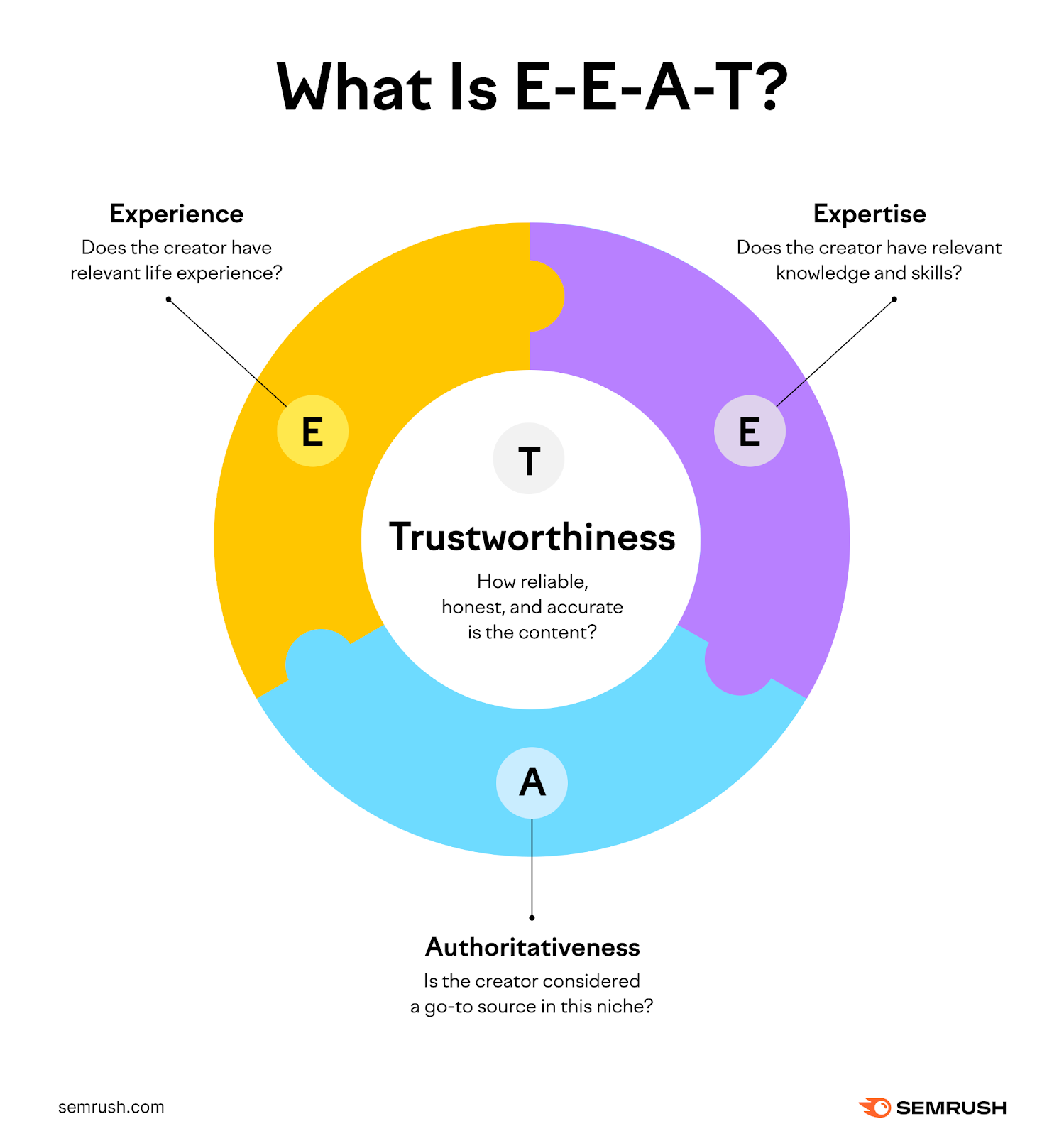
Google’s emphasis on Experience, Expertise, Authoritativeness, and Trustworthiness (E-E-A-T) further underscores the need for an integrated content strategy. A website cannot demonstrate E-E-A-T through design alone. It requires high-quality, well-researched, and strategically placed content that establishes your business as a credible source of information.
For example, a medical practice’s website needs more than just a clean layout; it needs detailed service pages written by or reviewed by qualified professionals, patient testimonials, and clear information about credentials. A financial advisor’s site needs in-depth guides on complex topics, author bios with relevant certifications, and transparent contact information. Modern Web Design provides the stage, but strategic content is the performance that builds trust and authority with both users and search engines.
Building an SEO-First Website: Integrating Content Strategy into Modern Web Design
To build a truly effective website, you must break down the silos between design, development, and content. Here’s how to weave an integrated content strategy into each phase of your Modern Web Design process.
Phase 1: Discovery & Planning – Where SEO and Content Lead the Way
The foundation of an SEO-first website is laid during the discovery phase, long before a single wireframe is drawn.
- Conduct Deep-Dive Keyword Research: Go beyond a simple list of keywords. Use tools like Ahrefs, SEMrush, or Google Keyword Planner to understand search volume, keyword difficulty, and, most importantly, the user intent behind each query. Group keywords into thematic clusters that will form the basis of your site’s main content pillars.
- Map Content to the Customer Journey: Align your keyword clusters with the stages of your customer journey (awareness, consideration, decision). This ensures you have the right type of content for each stage of the funnel.
- Define Core Content Pillars: Based on your research, define 3-5 core topic areas (pillars) that your business is an authority on. These will become the main sections of your website.
- Create a Preliminary Site Map: Your initial site map should be driven by your content pillars and keyword clusters, not just by departmental org charts or arbitrary categories. This ensures a logical, search-friendly structure from the start.
Phase 2: Information Architecture & Wireframing – Structuring for Search and Users
With your content strategy in hand, you can now design a site architecture that serves both users and search engines.
- Build a Topic Cluster Model: Structure your site around your core pillars. Each pillar page (a comprehensive guide on a broad topic) is supported by multiple cluster pages (more specific, long-tail keyword-focused articles) that link back to the pillar. This internal linking structure signals topical authority to Google.
- Craft Descriptive, Keyword-Rich URLs: Your URL structure should be a direct reflection of your site map and content hierarchy (e.g.,
/services/digital-marketing/seo-audit). - Design Intuitive Navigation: Your main navigation menu should mirror your core content pillars, making it easy for users to find what they need and for search engines to crawl your most important pages.
- Plan for On-Page SEO Elements in Wireframes: In your wireframes, explicitly designate spaces for key on-page elements: H1 tags, meta titles, meta descriptions, image alt text, and primary body content. This ensures these critical SEO components are considered as part of the design, not an afterthought.
Phase 3: Visual Design & UI – Making SEO Beautiful
The visual design phase is where many projects go off the rails for SEO. The goal here is to create a stunning user interface that enhances, rather than obscures, your strategic content.
- Prioritize Readable Typography: Choose fonts and font sizes that are highly legible on all devices. A beautiful but unreadable font is a conversion killer.
- Use Descriptive Headlines and CTAs: Work with your copywriter to ensure headlines (H1, H2, etc.) are not just clever but also clearly communicate the page’s topic and include target keywords where natural. Calls-to-action should be clear and action-oriented.
- Optimize Images for Speed and Context: Every image should have a descriptive file name and alt text that includes relevant keywords. Compress images to maintain fast load times, a critical ranking factor.
- Avoid Text in Images: Never put critical content (like headlines or value propositions) inside an image. Search engines can’t read it, and it won’t scale well on mobile. Keep all important text as HTML.
Phase 4: Development & Technical SEO – The Engine Under the Hood
Your developers are your SEO allies. Their work ensures that the beautifully designed, strategically planned site is technically sound and easily accessible to search engine crawlers.
- Implement a Clean, Semantic Code Structure: Use proper HTML5 semantic elements (
<header>,<main>,<section>,<article>,<footer>) to help search engines understand the structure and hierarchy of your content. - Ensure Mobile-First, Responsive Design: With mobile-first indexing, your site must perform flawlessly on all devices. This is a non-negotiable technical and user experience requirement.
- Optimize Core Web Vitals: Focus on the three key metrics: Largest Contentful Paint (LCP) for loading speed, First Input Delay (FID) for interactivity, and Cumulative Layout Shift (CLS) for visual stability. A fast, stable site is a ranking signal and a user retention tool.
- Configure a Robust
robots.txtand XML Sitemap: These files guide search engine bots on how to crawl and index your site efficiently. - Implement Structured Data (Schema Markup): Add schema markup to your pages to help search engines understand your content in more detail, which can lead to rich results like star ratings, FAQs, or event listings in the SERPs.
Phase 5: Content Creation & Launch – Bringing the Strategy to Life
With the technical and design foundation in place, your content team can create copy that is perfectly aligned with both user intent and your site’s strategic goals.
- Write for Humans First, Search Engines Second: Create content that is genuinely helpful, engaging, and answers the user’s query completely. Keyword integration should feel natural, not forced.
- Maintain Consistent Brand Voice: Ensure all content, from service pages to blog posts, reflects your brand’s personality and values.
- Optimize for Featured Snippets: Structure content with clear headings, bullet points, and concise answers to common questions to increase your chances of winning “position zero” in the SERPs.
- Plan for Ongoing Content: An SEO-first website is never “done.” Build a content calendar for regular blog posts, updates to existing pages, and creation of new cluster content to keep your site fresh and authoritative.
The Tangible Outcomes of an Integrated Approach
When you successfully integrate an SEO-first content strategy into your Modern Web Design, the results are clear and measurable.
Sustainable Organic Traffic Growth
Instead of relying solely on paid ads or social media, your website becomes a self-sustaining engine for attracting qualified visitors. By targeting a wide range of relevant keywords across the customer journey, you capture traffic at every stage, from early research to final purchase decisions. This leads to consistent, long-term growth in organic visibility that compounds over time.
Higher Conversion Rates
Visitors who arrive via organic search are often further along in their buying journey and have a clear intent. When they land on a page that was specifically designed to answer their query and guide them to the next step, they are far more likely to convert. The alignment between search intent and page content creates a seamless, trustworthy user experience that drives action.
A Competitive Moat
In a crowded market, a well-optimized, content-rich website is a powerful differentiator. It’s much harder for competitors to replicate the depth of topical authority and the technical excellence of a site built with an integrated SEO-first approach. This creates a sustainable competitive advantage that protects your market share.
Efficient Marketing Spend
By generating a steady stream of qualified organic traffic, you reduce your dependence on paid acquisition channels. This makes your overall marketing budget more efficient and resilient, providing a stable foundation for growth even when paid ad costs rise or platform algorithms change.
For deeper insights into the relationship between content and SEO, resources like Moz’s Beginner’s Guide to SEO and Ahrefs’ Blog offer comprehensive, up-to-date guidance on best practices and strategies.
Measuring Success: KPIs for SEO-First Modern Web Design
| KPI | Tool | Target |
|---|---|---|
| Core Web Vitals pass rate | PageSpeed Insights | 90+ mobile |
| Rich-result impressions | Google Search Console | +25% MoM |
| Crawl errors | GSC Indexing report | 0 |
| Internal-link coverage | Screaming Frog | 95% pages linked |
| Scroll depth 75% | GA4 events | 40% sessions |
Common Pitfalls When Merging Design and SEO
- Keyword stuffing in alt text – keep it descriptive.
- Lazy-loading above-the-fold images – delays LCP.
- Using CSS to hide H1 – violates cloaking rules.
- Forgetting hreflang on bilingual sites – causes duplicate content.
- Designing hero banners as background images – hurts LCP; use
<img>tags.
The Convergence of Design, Content, and AI
The future of Modern Web Design will see an even deeper convergence of design, content, and technology. Artificial intelligence will play a growing role in personalizing content for individual users, optimizing on-page elements in real-time, and even assisting in the creation of initial content drafts. However, the core principle will remain the same: a successful website is built on a foundation of strategic intent.
Businesses that master the art of integrating their content strategy into every facet of their web design, from the initial architecture to the final pixel, will be best positioned to thrive in this evolving landscape. They will build digital assets that are not just beautiful, but are intelligent, adaptive, and relentlessly focused on serving their audience and achieving business goals.
Your First Step Toward an SEO-First Website
You now have a complete blueprint for why and how to build an SEO-first website through integrated Modern Web Design. The key is to start at the beginning, with strategy, and carry that intent through every subsequent phase.
Here is your action list to begin:
- Audit your current site’s structure: Does your site map reflect your core business topics and keyword strategy, or is it an afterthought?
- Review your top 5 landing pages: Are they clearly aligned with a specific user search intent? Do they have a strong, keyword-rich H1 and meta description?
- Evaluate your content creation process: Is SEO a core part of your content planning, or is it an add-on task for someone else?
- Talk to your web team: If you’re planning a redesign, ensure your designer, developer, and content strategist are working from the same SEO-first brief from day one.
Start by auditing your current site’s structure against your top 5 target keywords. This simple exercise will reveal whether your website is built to attract organic traffic or if it’s a beautiful island in an empty sea. By integrating your content strategy into your Modern Web Design, you can turn that island into a thriving, discoverable destination.


