

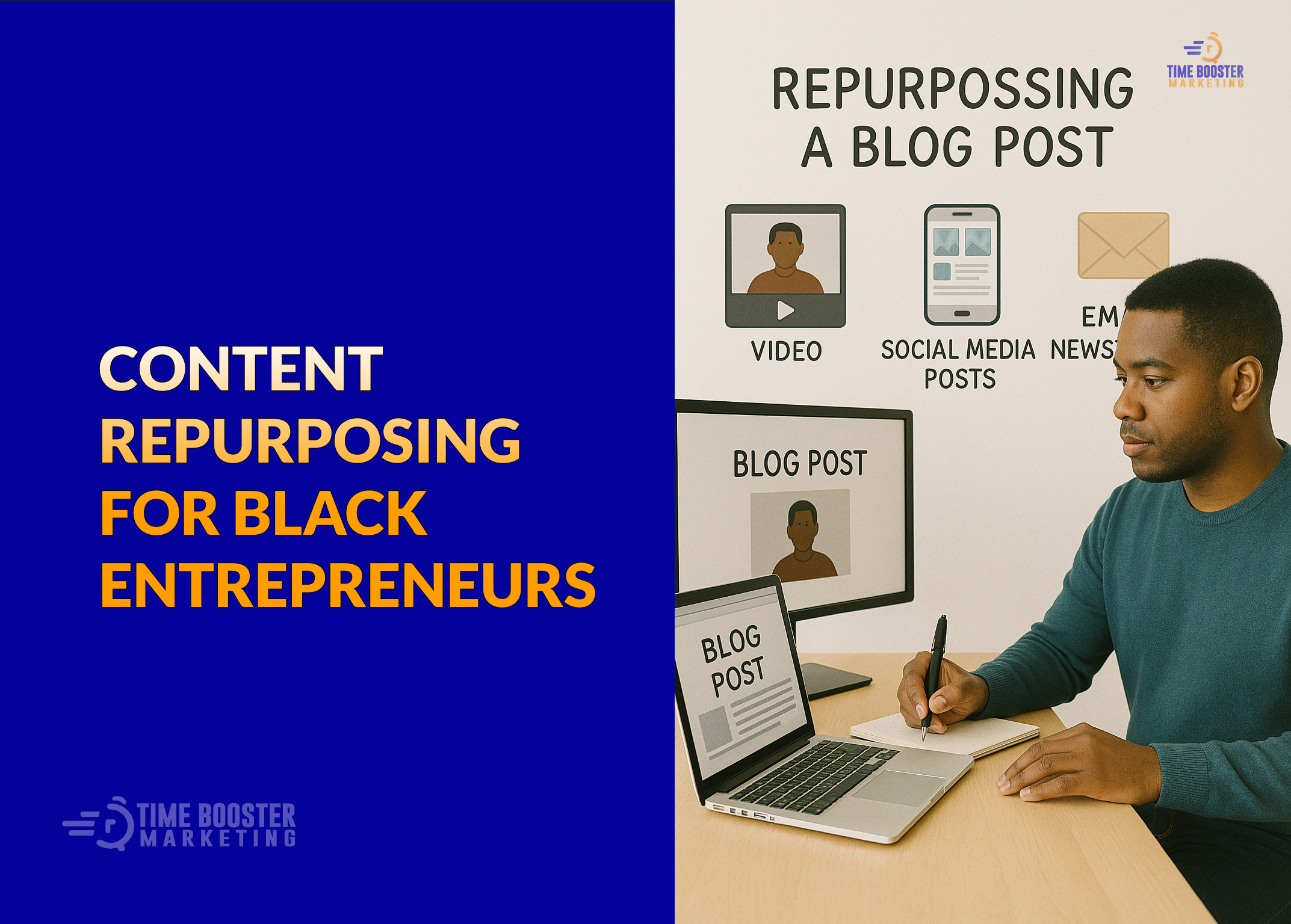
Creating high-quality content that truly resonates with your community as a black business owner takes effort, creativity, and cultural insight. That’s why content repurposing is a game-changing strategy that allows you to maximize the impact of every piece of content you create, reaching more people across multiple channels without reinventing the wheel each time.
Repurposing content not only saves you hours of work but also amplifies your voice and cultural narratives in spaces where Black stories and businesses deserve to be heard. In a digital landscape crowded with content, strategically adapting your material helps you cut through the noise, build authentic connections, and grow your brand sustainably.
This article will guide you through effective content repurposing strategies tailored for Black entrepreneurs. You’ll learn how to identify the best content to repurpose, explore creative techniques to transform your work, and implement a workflow that keeps your marketing consistent and culturally relevant.
What Is Content Repurposing?

Content repurposing means taking existing content like blog posts, videos, or podcasts and adapting it into new formats to reach different audiences or platforms. It’s not about copying and pasting but creatively transforming your message to fit various contexts and consumption habits.
For Black business owners, repurposing is especially valuable. Limited marketing budgets, time constraints, and the need to maintain cultural authenticity make repurposing a smart way to stretch your efforts. Instead of constantly creating new content, you build on what already works, reinforcing your brand’s message and deepening engagement.
Identifying Content to Repurpose
Effectively repurposing content begins with knowing which pieces to adapt and amplify. For Black business owners, this means selecting content that not only performs well but also resonates culturally and supports your community’s values. Here’s how to identify the best content to repurpose:
Evergreen Content

Evergreen content is the foundation of sustainable marketing. This type of content remains relevant and useful over months or even years, continuously attracting new audiences without needing constant updates. Examples include how-to guides, cultural insights, foundational business tips, and educational resources that speak to your community’s ongoing needs.
For instance, a Black-owned wellness brand might have a blog post on “Self-Care Rituals Rooted in Black Culture” or a guide on “Starting a Black-Owned Business: Essential Steps.” These topics remain valuable regardless of trends or seasons and can be repurposed repeatedly.
Why Evergreen Content Matters:
-
It provides lasting SEO value, helping your website rank consistently over time.
-
It builds trust by offering reliable, authoritative information.
-
It reduces the pressure to constantly create new content, saving time and resources.
Practical Tip: Use tools like Google Analytics or social media insights to identify which evergreen posts continue to attract traffic and engagement. Plan to refresh and repurpose these regularly, such as turning a popular blog into an ebook or a video series.
High-Performing Content

Your analytics are a treasure trove for repurposing. Identify blog posts, videos, or social media posts that have generated significant traffic, shares, comments, or conversions. These pieces have already proven their appeal and are excellent candidates for adaptation.
For example, if a video highlighting a Black entrepreneur’s journey received high engagement on Instagram, consider repurposing it into a podcast episode, a written interview for your blog, or a series of social media quotes.
Why Use High-Performing Content:
-
It reduces risk by building on content your audience already loves.
-
It maximizes ROI by extending the lifespan and reach of successful pieces.
-
It helps maintain a consistent brand message aligned with audience interests.
Practical Tip: Regularly review your top-performing posts across platforms. Use this data to create a content calendar focused on repurposing these hits into new formats like infographics, newsletters, or short-form videos.
Topical Content

Content tied to current events, cultural celebrations, or trending topics can be refreshed and repurposed to maintain relevance and capitalize on timely interest. For Black business owners, this includes content related to Black History Month, Juneteenth, cultural festivals, or social justice movements.
For example, a blog post created for Black History Month highlighting influential Black-owned businesses can be adapted into a video series, an infographic gift guide, or a social media campaign featuring community stories.
Why Repurpose Topical Content:
-
It connects your brand to important cultural moments, deepening community ties.
-
It leverages increased search and social media interest around these events.
-
It positions your business as engaged and culturally aware.
Practical Tip: Plan your content calendar around key cultural dates. Repurpose past topical content with fresh updates or new formats each year to maintain momentum and relevance.
Conducting a Content Audit
Before repurposing, conduct a thorough content audit. This means reviewing your existing library such as blogs, videos, social posts, podcasts, and noting:
-
Content formats and topics
-
Performance metrics like page views, shares, and engagement
-
Gaps where content could be expanded or refreshed
-
Overlaps or outdated pieces that need consolidation or updating
A content audit helps you identify which pieces are ripe for repurposing and which need reworking or retirement. It also reveals opportunities to align content with evolving community interests or business goals.
Practical Tip: Use spreadsheets or content management tools to track your audit findings. Prioritize content that aligns with your brand’s mission and cultural authenticity.
Aligning with Community Interests: Authenticity is Key
Repurposed content must reflect the values, stories, and needs of your community to maintain trust and engagement. Authenticity is especially critical for Black-owned businesses, where cultural relevance and genuine connection are foundational.
For example, if your audience values social justice, repurpose content that highlights your business’s community involvement or partnerships with Black-led initiatives. If cultural heritage is central, focus on storytelling that celebrates traditions and shared experiences.
Why Community Alignment Matters:
-
It strengthens emotional bonds and brand loyalty.
-
It differentiates your business by showcasing unique cultural perspectives.
-
It encourages word-of-mouth and community advocacy.
Practical Tip: Engage your audience through surveys, social listening, or community forums to understand what content resonates most. Use this feedback to guide your repurposing strategy.
Top Content Repurposing Techniques and Ideas
1. Convert Blogs into Ebooks (and Vice Versa)
Written content often requires the most effort, so maximizing its value is crucial. If you have a series of blog posts around a central theme—such as “Building Black-Owned Businesses” or “Cultural Entrepreneurship Tips”—compile them into a well-designed ebook. This ebook can serve as a valuable lead magnet to grow your email list, offering in-depth guidance that your community can return to.
Conversely, long ebooks or guides can be broken down into shorter blog posts or social media snippets. This makes your content more digestible and keeps your channels active with fresh posts. For example, a comprehensive guide on Black business funding can be split into weekly blog posts or Instagram carousel tips.
Pro Tip: Use professional design tools or services to create visually appealing ebooks that reflect your brand’s cultural identity.
2. Create Visuals with Quotes and Key Takeaways
Extract powerful quotes, statistics, or cultural insights from your blogs, videos, or interviews. Turn these into branded graphics optimized for platforms like Instagram, Facebook, Pinterest, or Twitter. Visual content is highly shareable and can reinforce your message in a way that resonates emotionally.
For example, a quote from a Black entrepreneur featured in your blog can become a striking Instagram post that inspires and connects with your audience.
Pro Tip: Use tools like Canva or Adobe Spark to create culturally relevant and visually cohesive graphics.
3. Share Presentations and Case Studies on LinkedIn and Niche Platforms
Transform webinars, workshops, or detailed reports into slide decks or PDFs. LinkedIn is a great platform for sharing these, especially if you target B2B audiences or professional communities supporting Black entrepreneurship.
Presentations can summarize key insights, industry trends, or success stories, positioning your business as a thought leader.
Pro Tip: Convert presentations into bite-sized LinkedIn posts or articles to extend their reach.
4. Turn Blog Posts or Videos into Social Media Posts and Reels
Break down longer content into short, engaging social media posts or videos. For instance, a 10-minute YouTube video can be sliced into multiple 30-second reels or TikTok clips highlighting key points.
Use captions, text overlays, and culturally relevant music or visuals to increase accessibility and appeal.
Pro Tip: Collaborate with Black content creators to add authenticity and fresh perspectives to your social clips.
5. Convert Content into Email Series
Repurpose blog posts or guides into multi-part email sequences that nurture your subscribers. This drip approach keeps your audience engaged over time, delivering value in manageable chunks.
For example, a blog post on “Steps to Launch Your Black-Owned Business” can become a 5-email course guiding subscribers through each phase.
Pro Tip: Personalize emails based on subscriber behavior to increase open and click rates.
6. Host Webinars or Workshops Based on Existing Content
Use your blog posts, ebooks, or videos as the foundation for live or recorded webinars and workshops. These interactive formats deepen engagement and allow real-time connection with your community.
You can focus sessions on culturally relevant topics like navigating funding challenges for Black entrepreneurs or celebrating Black business heritage.
Pro Tip: Record sessions and repurpose them into shorter videos, blog summaries, or podcasts.
7. Use Podcasts to Reach Audio-Focused Audiences
Repurpose interviews, panel discussions, or articles into podcast episodes. Podcasts are growing in popularity and offer a personal, intimate way to share your message.
For example, a blog series on Black entrepreneurship can be adapted into a podcast season featuring guest experts and community stories.
Pro Tip: Transcribe episodes to create blog posts or social snippets, maximizing content reach.
Implementing a Content Repurposing Workflow: Step-by-Step Guide
Step 1: Conduct a Content Audit
Review your existing content library to identify evergreen, high-performing, or culturally significant pieces. Use analytics tools like Google Analytics, social media insights, or email performance reports to find content that resonates most with your audience.
Step 2: Select Content to Repurpose
Choose content that aligns with your current marketing goals and community interests. Prioritize pieces that can be adapted across multiple formats or that address timely cultural themes.
Step 3: Define New Formats and Platforms
Decide which formats best suit your audience and platforms. For instance:
-
Instagram and TikTok favor short videos and visuals
-
LinkedIn suits presentations and articles
-
Email campaigns benefit from serialized content
-
Podcasts reach audio learners and busy professionals
Step 4: Adapt Content Creatively
Rewrite, redesign, or re-record content to fit new formats while maintaining your brand voice and cultural authenticity. For example, turn a blog post into a script for a video or podcast episode, or design infographics summarizing key points.
Step 5: Schedule and Distribute
Integrate repurposed content into your marketing calendar to ensure consistent delivery. Use scheduling tools like Buffer, Hootsuite, or Later to automate posting across platforms.
Step 6: Measure Performance
Track engagement metrics such as views, shares, click-through rates, and conversions. Use insights to refine your repurposing strategy, focusing on formats and topics that perform best.
Step 7: Iterate and Optimize
Continuously update and refresh repurposed content based on feedback and trends. For example, update statistics in an infographic or create a new video version reflecting recent cultural events.
Why Content Repurposing Matters for Black Business Owners
-
-
Saves Time and Resources: Creating new content from scratch is time-consuming. Repurposing lets you leverage existing assets efficiently.
-
Reaches Diverse Audiences: Different people consume content differently—some prefer reading, others watching or listening. Repurposing helps you meet your community where they are.
-
Boosts SEO and Visibility: Multiple content formats create more entry points for search engines, improving your online presence.
-
Reinforces Your Message: Repetition across channels helps your brand story stick, especially when tied to cultural identity and community pride.
-
Maximizes ROI: Extract more value from every piece of content, increasing your marketing effectiveness without extra cost.
-
Conclusion
Content repurposing is a powerful, resource-smart strategy for Black business owners to amplify their voice, maximize reach, and deepen community engagement. By identifying your best content and creatively adapting it across formats and platforms, you save time and money while ensuring your message resonates authentically.
Embrace repurposing not just as a marketing tactic but as a way to celebrate and elevate Black entrepreneurship. Your stories and insights deserve to be heard widely—and repurposing helps you do just that.


