


xAI Launches Grok Imagine Video 1.5 as AI Video Tools Race Accelerates
xAI has launched Grok Imagine Video 1.5, its latest image-to-video model, positioning the company more aggressively in the fast-moving AI video market. The update is focused on the areas that matter most to creators and marketers: more realistic motion, stronger physics, better audio, and faster generation speeds. xAI says Grok Imagine Video 1.5 is now generally available through its API, while Grok Imagine Video 1.5 Fast has rolled out on Grok’s web, iOS, and Android experiences. (xAI)
The launch arrives during a broader wave of AI product releases from major platforms. Google has introduced Gemini Omni for multimodal video generation, Meta is expanding AI search and editing tools on Facebook, LinkedIn has launched AI training courses for marketers with Adobe, Microsoft is adding AI citation metrics to Bing Webmaster Tools, and Apple is updating SwiftUI with new app performance and interface capabilities. Together, these moves show that AI is no longer a standalone software category. It is becoming part of the everyday marketing, search, social, creative, and product development stack.
What Is Grok Imagine Video 1.5?
Grok Imagine Video 1.5 is xAI’s updated image-to-video generation model. The model takes a starting image, combines it with a motion prompt, and generates video output. xAI says the new model improves audio, motion, physics, and speed compared with its previous version. (xAI)
One of the key upgrades is synchronized audio generation. According to xAI, sound effects, ambience, and dialogue are generated in the same pass as the video, with clearer speech and better synchronization. The company also says motion is more stable across the length of a clip, with fewer visual distortions and more believable weight and momentum. (xAI)
Speed is another major part of the announcement. xAI says Grok Imagine Video 1.5 Fast can produce six-second, 720p videos in about 25 seconds, compared with more than 40 seconds for its previous model. (xAI)
For marketers and creators, that improvement matters because AI video tools are moving from experimentation to workflow. Faster generation means more room for testing hooks, product shots, social ad concepts, short-form videos, and campaign variations before committing to paid media or full production.
Why AI Video Is Becoming a Marketing Priority
AI video is becoming valuable because it addresses a common business problem: demand for content keeps rising, but production resources often stay limited.
Small businesses, agencies, and internal marketing teams are under pressure to produce more short-form video for social platforms, landing pages, ads, email campaigns, product explainers, and community content. Traditional video production can be expensive and slow. AI video tools do not remove the need for strategy, creative direction, or brand judgment, but they can reduce the time needed to prototype visual ideas.
Grok Imagine Video 1.5 fits into this shift by offering a faster route from a still image to a usable moving asset. A product image, campaign visual, event photo, or branded graphic can become a short video concept without requiring a full production setup. That makes AI video especially relevant for SMEs that need consistent content but do not have large creative teams.
Google Gemini Omni Raises the Competitive Bar
xAI is not alone in pushing AI video forward. Google has also unveiled Gemini Omni, a family of generative AI models capable of creating and editing video from text, images, audio, sketches, photographs, and existing clips. The Daily Star reports that Gemini Omni supports conversational editing, allowing users to request changes such as altering backgrounds, adding objects, or changing actions while maintaining consistent characters and physical plausibility. (The Daily Star)
Google is also emphasizing real-world reasoning and safety infrastructure. The company says Gemini Omni is grounded in Gemini’s knowledge of history, science, and cultural context, and its outputs include SynthID watermarking with verification available through Gemini, Chrome, and Google Search. Gemini Omni Flash is available to Google AI Plus, Pro, and Ultra subscribers and through Google Flow, with developer and enterprise access planned through APIs. (The Daily Star)
For marketers, this points to a future where video production becomes more conversational. Instead of starting every revision from scratch, teams will increasingly edit generated media through natural-language instructions.
Meta Brings AI Discovery and Editing Deeper Into Facebook

Meta is also expanding AI inside Facebook. The company is updating AI-powered search so users can get answers grounded in public content from across Facebook, including Groups and Reels. Meta’s goal is to make Facebook’s public conversation data more useful for discovery, turning community comments and social posts into a searchable knowledge layer. (Social Media Today)
The company is also adding AI-powered photo and video editing tools, including improved transition and collage effects linked to camera roll sharing suggestions. Meta says the camera roll feature is opt-in. It is also rolling out AI presets that let users change clothing in images, including a wardrobe feature for profile pictures and stories. (Social Media Today)
For business owners, this matters because Facebook is becoming more than a publishing platform. It is increasingly becoming an AI-assisted discovery and content creation environment. Local businesses, community brands, and creators should expect AI search inside social platforms to affect how audiences find recommendations, opinions, and product discussions.
LinkedIn and Adobe Push AI Skills for Marketers
The AI shift is also changing the skills marketers need. LinkedIn has partnered with Adobe to launch AI Essentials for Marketers, a new set of LinkedIn Learning courses designed to help marketing professionals develop role-specific AI skills. The program launched with four role-based courses available in 47 languages. (Social Media Today)
LinkedIn says marketing job postings requiring AI literacy have more than doubled year over year, rising 113%. The initial courses cover AI use in digital marketing programs, content creation, social and communications work, and data and analytics. Participants can earn LinkedIn Learning certificates to display on their profiles. (Social Media Today)
This is a clear signal for marketing teams: AI competency is becoming part of the job description. Knowing how to prompt a model is only the starting point. Marketers now need to understand workflow design, quality control, audience relevance, data interpretation, brand safety, and ethical use.
Bing Adds AI Citation Share for Search Visibility

AI is also changing SEO measurement. Microsoft is rolling out new features in the Bing Webmaster Tools AI Performance dashboard, including Citation Share, Intents, Topics, and Compare. Citation Share shows the percentage of AI citations a website captures for a specific grounding query. Microsoft describes it as an observational metric, not a traffic-share measure and not a competitor disclosure tool. (Search Engine Journal)

The new Intents feature groups grounding queries into categories such as informational, commercial, and research. Topics clusters related queries into broader themes, while Compare lets site owners compare citation activity across time periods. (Search Engine Journal)
For SEO professionals, this is important because AI visibility is becoming measurable. Ranking on a search results page is no longer the only concern. Brands now need to understand whether AI answers cite their pages, which topics they are associated with, and whether their content is structured clearly enough to be used as a trusted source.
Apple’s SwiftUI Updates Matter for AI-Enabled App Experiences
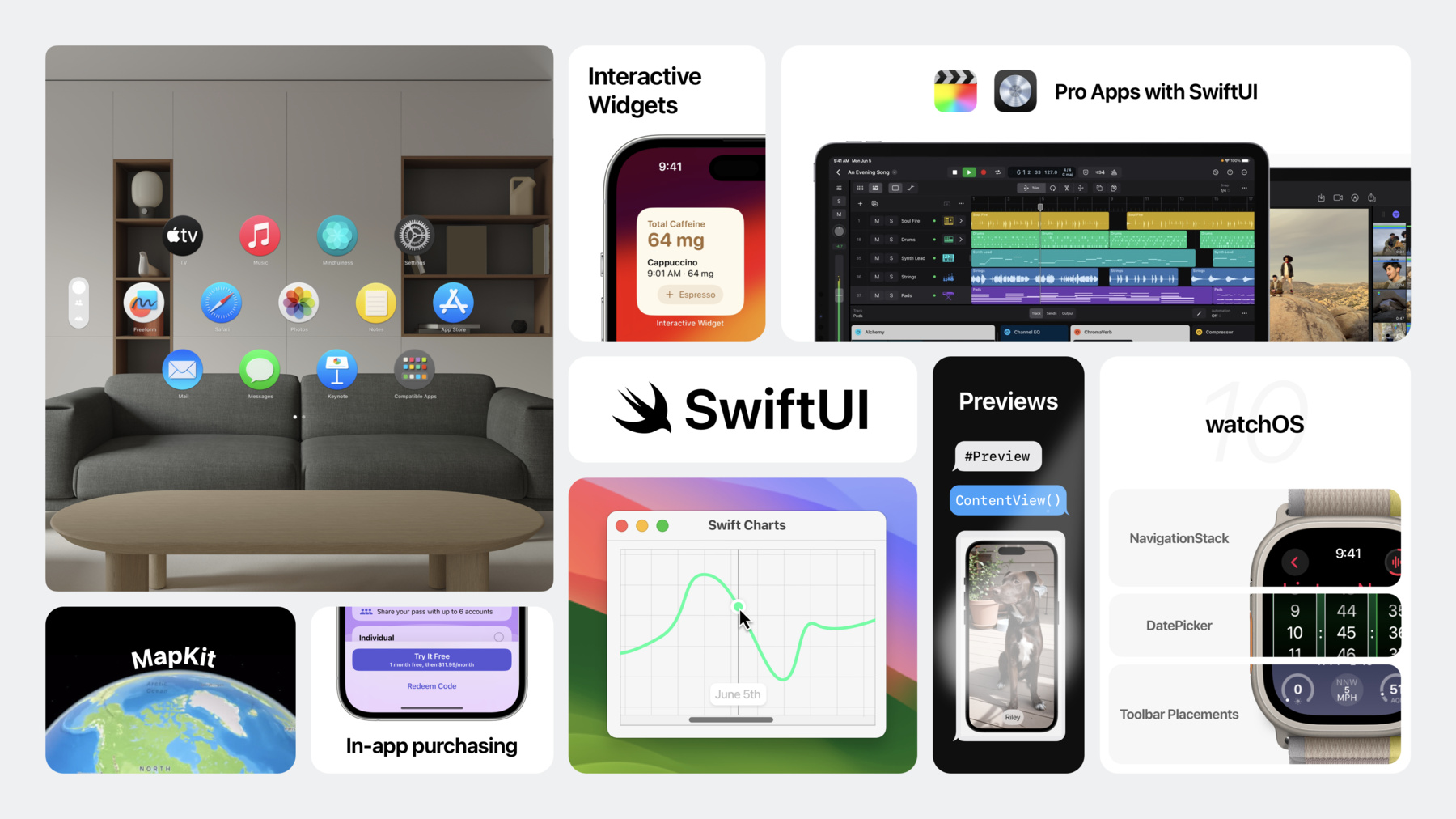
Apple’s WWDC26 SwiftUI update is not an AI video launch, but it is still relevant to the broader platform shift. Apple introduced SwiftUI improvements including a new Document protocol with direct disk access, snapshot-based diffing for high-performance apps, reordering APIs for lists and grids, toolbar enhancements, expanded presentation APIs, AsyncImage caching improvements, and lazy state initialization for Observable types. (Apple Developer)
For app developers and product teams, these updates support smoother, more flexible app experiences. As AI features become embedded in consumer and business apps, performance, interface quality, and responsive design will matter more. AI can generate content, but the app experience still determines whether users trust and continue using the product.
What This Means for Marketers and SMEs
The latest AI updates point to five practical changes for marketing teams.
First, video production cycles will get shorter. Tools like Grok Imagine Video 1.5 and Gemini Omni make it easier to test visual concepts quickly before investing in final creative.
Second, social search will become more important. Meta’s AI search updates show that public conversations, group discussions, and Reels content may become more discoverable through AI-powered answers.
Third, AI skills will become a hiring and training priority. LinkedIn’s AI courses reflect a market where marketers are expected to understand how AI applies to content, analytics, digital campaigns, and communications.
Fourth, SEO reporting will expand beyond rankings and clicks. Bing’s Citation Share shows that brands will increasingly track whether AI systems cite their content.
Fifth, businesses will need stronger content governance. Faster AI generation creates more opportunities, but it also increases the risk of off-brand, inaccurate, or low-quality content. Human review, brand guidelines, and clear approval processes remain essential.
The Bigger Picture: AI Is Moving Into the Marketing Operating System
The Grok Imagine Video 1.5 launch is not just another model update. It is part of a larger movement in which AI tools are being built directly into creative software, search dashboards, social platforms, learning systems, and app development frameworks.
For marketers, the opportunity is clear: faster production, richer creative testing, more measurable AI visibility, and better access to advanced tools. But the challenge is equally clear. Businesses need to move beyond casual experimentation and build repeatable AI workflows that protect quality, brand trust, and customer relevance.
The winners will not be the teams that use the most AI tools. They will be the teams that know where AI genuinely improves speed, insight, and creative output — and where human judgment still matters most.
Grok Imagine Video 1.5 shows how quickly AI video is improving. The wider industry response shows that every major platform now wants a role in how content is created, discovered, measured, and monetized. For SMEs and marketers, this is the moment to review the content workflow, train the team, and prepare for a marketing environment where AI-generated media and AI-powered discovery become standard parts of daily business.


