


Meta Lookalike Audiences Tutorial: Build High-Yield Seeds and Scale Ads
Not all lookalike audiences are built from equally valuable signals.
A lookalike generated from repeat customers gives Meta a different instruction from one generated from Instagram likes. The first says, “Find more people who behave like customers who repeatedly spend money.” The second says, “Find more people who perform a low-commitment engagement action.”
Both audiences may produce clicks. They are unlikely to produce the same commercial outcome.
For an African SME working with a limited advertising budget, this distinction matters. You cannot afford to scale cheap traffic that produces weak WhatsApp conversations, low-quality enquiries, abandoned bookings, or customers who purchase once and never return.
Your objective is not to create the largest possible lookalike. It is to give Meta a clean, meaningful definition of the type of customer you want it to find.
How Meta Lookalike Audiences Work

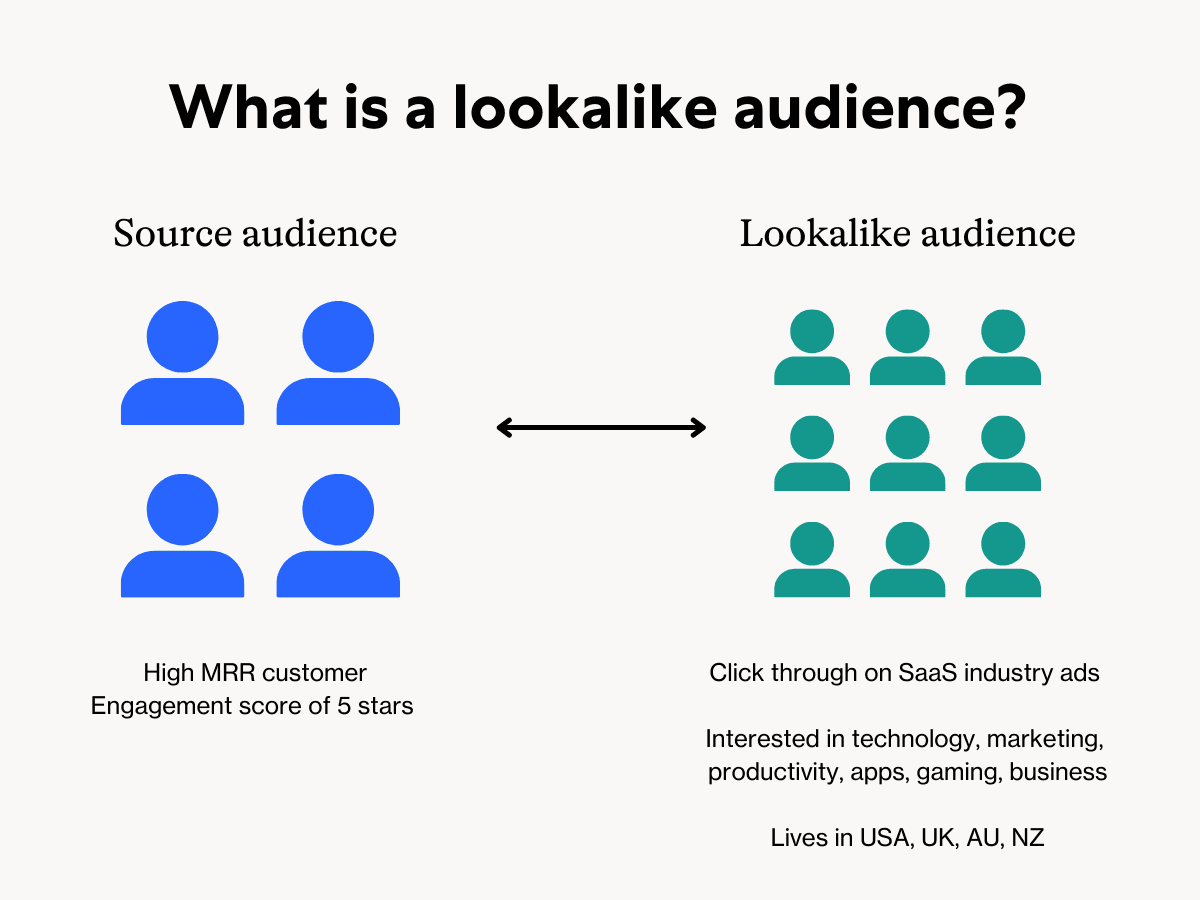
A lookalike audience helps you reach new people who share characteristics with an existing source audience. That source might contain customers, website purchasers, qualified leads, app users, or people who completed another measurable action. (Facebook)
Meta requires a source containing at least 100 people, although its guidance generally recommends approximately 1,000 to 5,000 people. (Facebook)
The minimum requirement is not the same as the strategic ideal.
A seed of 150 repeat buyers can be commercially meaningful but statistically narrow. A seed of 10,000 page engagers may be large but polluted by people who never intended to buy. Seed selection therefore requires a balance between behavioral quality, recency, volume, and data accuracy.
Why Vanity Seeds Produce Weak Predictive Profiles
Meta’s system learns from the common patterns inside the source you provide. It does not understand your business priorities unless those priorities are reflected in the seed.
Consider a furniture business that creates a lookalike from everyone who watched a short interior-design Reel. Some viewers may be homeowners preparing to buy. Others may be students, decorators, competitors, international viewers, or people who simply enjoyed the video.
The model may find more people who resemble that mixed group. It has not been instructed to prioritize people who can afford the furniture, live inside the delivery area, or have previously completed a purchase.
Low-intent seeds commonly include:
- Page followers acquired through giveaways.
- Three-second video viewers.
- All website visitors regardless of page depth.
- Unqualified lead-form submissions.
- People who opened a form but never submitted it.
- Customers mixed with suppliers, employees and test records.
These sources are not always useless. They are simply better suited to awareness or early-stage testing than to high-confidence conversion lookalikes.
Build Your Seed Hierarchy Around Business Outcomes
Your strongest source is usually the deepest reliable event for which you have sufficient data.
A practical hierarchy for an SME is:
- Repeat customers or high-LTV customers.
- Customers ranked by transaction value or profit contribution.
- Completed purchases.
- Sales-qualified leads.
- Booked appointments, viewings or consultations.
- Initiated checkouts or high-intent product visitors.
- General website visitors and social engagers.
This hierarchy is not absolute. A real estate company may value verified property-viewing requests more than a database of old tenant transactions. A salon may obtain better results from customers who completed three appointments than from everyone who booked once.
The correct seed is the group whose future behavior you most want to reproduce.
Separate Qualified Leads From Cheap Leads
Do not create a source from every person who submitted a form when only a small percentage were suitable.
Tag leads inside your CRM or spreadsheet according to actual sales quality:
New enquiry
Contacted
Qualified
Quotation issued
Sale completed
Disqualified
Create the seed from qualified leads or completed sales rather than all submissions. Otherwise, your campaign may optimize toward the characteristics of people who fill forms easily but cannot afford, access, or meaningfully use your service.
For WhatsApp-led sales, send downstream outcomes back into your marketing system where possible. Meta’s Conversions API can connect CRM, server, website, messaging and offline event information to its measurement and optimization systems. (Facebook)
This closes the gap between “started a WhatsApp conversation” and “became a paying customer.”
Why High-LTV Data Creates a Better Commercial Signal
A normal customer lookalike may treat a one-time discount buyer and a loyal repeat buyer as equally important members of the source.
A value-based lookalike introduces a numeric value for each matched customer. Meta describes value-based lookalikes as an enhancement that uses the values assigned to people in the source audience when finding similar prospects. (Facebook Developers)
Your value column could represent:
- Total historical revenue.
- Estimated customer lifetime value.
- Repeat purchase value.
- Subscription revenue.
- Gross profit contribution.
- A consistent customer score.
Use one consistent method. Do not value one customer using revenue and another using estimated profit.
Do Not Upload Only Your Five Biggest Customers
High-value focus does not mean reducing the seed to a handful of exceptional buyers.
A very small “VIP-only” list may be too narrow or may fail to match enough people. A better approach is to upload a larger, reliable customer set with a value attached to each record. The model can then distinguish higher-value customers from lower-value customers inside the same source.
For example:
email,phone,country,value
customer1@example.com,+237600000001,CM,850
customer2@example.com,+237600000002,CM,220
customer3@example.com,+237600000003,CM,75
The values do not need to reveal your profit margins publicly, but they must be accurate enough to create a meaningful ranking.
Understanding 1% Versus 5% Lookalike Audiences
Lookalike percentages represent the balance between similarity and reach.
A 1% lookalike contains the people Meta considers most similar to the source within the selected market. A wider percentage increases audience size while gradually relaxing similarity. Meta’s developer guidance describes the similarity option as the top 1% of people in a selected country who most closely resemble the seed. (Facebook Developers)
When to Start With 1%
Use a 1% lookalike when:
- Your budget is limited.
- Your seed is highly specific.
- You are entering a new market cautiously.
- Lead quality matters more than immediate volume.
- You need to validate whether the seed can generate conversions.
A 1% audience is not automatically the cheapest. Its smaller size may create higher auction pressure or faster creative fatigue in a restricted geography.
When to Test 3% or 5%
Expand toward 3% or 5% when the 1% audience produces acceptable customer acquisition costs but cannot absorb additional budget.
A 5% audience creates more delivery opportunities, but the people at the wider edge are less similar to the source than those inside the tightest percentage. It should therefore be treated as a scaling hypothesis, not a guaranteed improvement.
Evaluate downstream performance. A wider audience that generates cheaper leads but fewer completed sales may be more expensive in practice.
Balance Geographic Scope Against Predictive Precision
Geography changes the commercial meaning of similarity.
Combining several markets may work when they share your pricing, customer profile, language and purchasing conditions. It becomes less reliable when the markets have significantly different income levels, delivery infrastructure, cultural expectations or sales processes.
A Cameroon-based hospitality company should not assume that a lookalike covering several unrelated countries will preserve the behavior of its strongest domestic guests.
Use market-specific lookalikes when:
- Your offer is locally delivered.
- Prices differ substantially by country.
- Language affects conversion.
- Sales teams operate by territory.
- Customer value varies by location.
Broader regional audiences are more appropriate when you sell the same digital product, SaaS plan or internationally deliverable service under similar commercial conditions.
Under Meta Advantage+ audience, lookalikes may operate as audience suggestions rather than rigid boundaries. Meta can prioritize the suggested profile and then search more widely, while controls such as location, minimum age, language and custom-audience exclusions can remain restrictive. (Facebook)
Check the audience mode inside your ad set before interpreting results. A lookalike used as an Advantage+ suggestion is not the same test as a tightly defined original-audience ad set.
Sequence Lookalike Tests Inside Cold Campaigns
Do not launch six lookalikes at once and let them compete with different creatives, budgets and optimization events. You will not know which variable caused the result.
Start with a controlled testing stack:
Ad Set A: High-LTV 1%
Use your strongest value-based or repeat-customer source.
Ad Set B: Purchaser 1%
Use all recent, verified customers without value weighting.
Ad Set C: High-LTV 3% or 5%
Test whether broader reach preserves conversion quality.
Ad Set D: Broad or Advantage+ Control
Use the same location and optimization event without a lookalike restriction, or provide only your strongest audience suggestion.
Keep the offer, creative mix, placements, attribution approach and conversion event consistent. Exclude existing customers and warm leads from every cold ad set.
During the initial test, ad-set budgets provide more control than immediately allowing campaign-level automation to direct most spending toward one audience. Once a winner is established, you can consolidate and test automated budget allocation.
Judge each ad set using business metrics:
Qualified lead cost
Purchase cost
Lead-to-sale rate
Average order value
Repeat purchase rate
Gross profit per customer
Click-through rate and cost per lead are diagnostic metrics. They are not proof that the audience is profitable.
Scale the Winning Signal, Not Just the Winning Ad Set
When a 1% high-LTV lookalike performs, scaling does not simply mean doubling its budget every day.
You can scale through controlled budget increases, wider lookalike percentages, additional qualified markets, stronger conversion signals, broader automated delivery, and new creative angles built for the same customer profile.
Meta notes that larger audiences can provide the auction with more opportunities to find people likely to respond. (Facebook) That does not mean “broad” should replace strategy. It means your data, optimization event and creative must be strong enough to help the system use that freedom intelligently.
Your best long-term structure is therefore not lookalike versus broad targeting. It is a testing system in which high-quality first-party data defines the customer you want, lookalikes test the portability of that signal, and broad or Advantage+ delivery tests whether Meta can outperform the manual audience.
A lookalike built from vanity engagement gives you more people who resemble attention. A lookalike built from verified, high-value customer behavior gives you a better chance of finding people who resemble revenue.


