


LinkedIn Ads for Service-Based Businesses That Want Higher-Quality Leads: 9 Strategies
For service-based businesses, generating leads isn’t enough; you need high-quality leads. Leads that fit your Ideal Customer Profile (ICP), have a budget, and possess the authority to make purchasing decisions. Spending time chasing unqualified prospects drains resources and morale.
If you are running a service-based business, whether you are a consultant, agency, legal firm, financial advisor, or B2B software provider, you know that lead volume means nothing without lead quality. Getting 100 leads who cannot afford your services or lack decision-making power is a waste of time and budget.

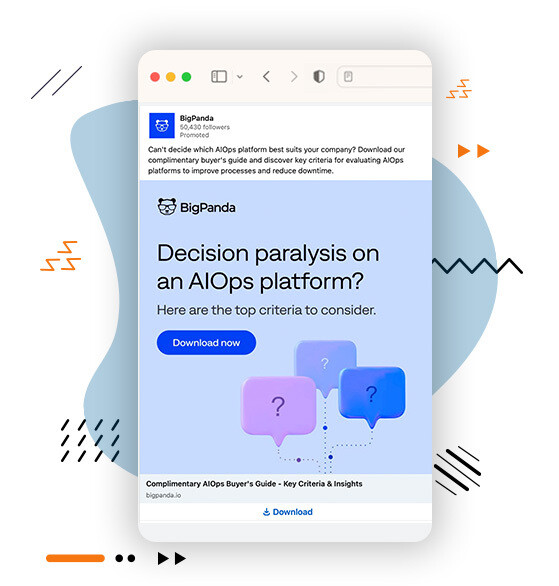
This is where LinkedIn Ads fundamentally changes the game. Unlike other advertising platforms, LinkedIn operates in a professional context, positioning your service directly in front of the decision-makers and influencers who matter most to your business.
Many service providers, from consultants and agencies to software-as-a-service (SaaS) companies, overlook or misuse LinkedIn’s powerful advertising capabilities, treating it like any other social media platform. This approach often leads to wasted ad spend and frustration. However, with a strategic and nuanced approach tailored to the platform’s professional ethos, LinkedIn Ads can become your most consistent source of valuable, high-intent leads, allowing your business to scale efficiently and profitably.
Here’s what you’ll gain from this comprehensive guide:
- An understanding of why LinkedIn is uniquely suited for generating high-quality leads for service businesses.
- 9 actionable strategies to build, run, and optimize your LinkedIn Ad campaigns.
- Insights into crafting offers and creative that resonate with a professional audience.
- Methods for tracking and integrating your LinkedIn efforts for maximum ROI.
Why LinkedIn Ads Deliver Higher-Quality Leads for Service Businesses
The Professional Context Advantage
The primary differentiator of LinkedIn from other advertising platforms is its professional context. Users are on LinkedIn with a professional mindset: they are seeking industry news, connecting with colleagues, exploring career opportunities, and researching solutions for their businesses. This environment inherently filters out much of the noise and casual browsing behavior found on consumer-focused platforms. When your ad appears on LinkedIn, it catches an audience already primed for business-related content and solutions, significantly boosting the quality of engagement from the outset.
This professional mindset means your advertisements are not competing with vacation photos or memes. Instead, they are alongside articles about industry trends, professional development courses, and company updates. Your service is presented as a valuable business solution, not an interruption. This inherent contextual relevance is the first layer of quality filtering that LinkedIn Ads provides.
Here are key aspects that contribute to higher lead quality on LinkedIn:
- Professional Intent: Users are actively seeking professional growth, solutions, and connections.
- Verified Data: LinkedIn profiles are often more accurate and detailed than other platforms, with self-reported job titles, companies, and industries.
- B2B Focus: The platform is built around business-to-business interactions, making it a natural fit for service providers.
- Specific Targeting Options: Granular targeting allows you to reach decision-makers directly.
Understanding “Quality Leads” in a Service Business Context
For a service-based business, a “quality lead” is not just someone who fills out a form. It is a prospect who matches your Ideal Customer Profile (ICP), has a defined need that your service addresses, possesses the budget to invest, and holds the authority or influence to make a purchasing decision. Other platforms might deliver a high volume of leads, but if 90% of them are not a good fit, your sales team wastes time qualifying them, leading to longer sales cycles and lower close rates.
LinkedIn Ads excel at delivering leads that are pre-qualified on these crucial dimensions. By allowing you to target based on very specific professional criteria, the platform helps ensure that the individuals engaging with your ads are already aligned with your service’s value proposition. This means your sales team spends less time sifting through irrelevant contacts and more time engaging with genuinely interested and viable prospects.
Indicators of a higher-quality lead for service businesses include:
- Clear Role/Seniority: Are they a decision-maker (e.g., Director, VP, C-level) or an influencer (e.g., Manager, Specialist)?
- Relevant Industry/Company Size: Does their organization fit your typical client profile?
- Expressed Need: Do they download content related to a problem your service solves?
- Engagement Level: Do they engage with multiple pieces of your content before converting?
According to a HubSpot report on lead generation, the quality of leads often trumps quantity, directly impacting sales efficiency and revenue growth. Investing in platforms that prioritize quality, like LinkedIn, can significantly improve your sales team’s productivity and close rates.
Common Challenges Service Businesses Face Without LinkedIn Ads
Without a strategic approach to LinkedIn Ads, service businesses often encounter several common hurdles that impede scalable growth. These challenges typically stem from relying on less targeted channels or inefficient lead generation methods that do not fully leverage professional intent.
Typical problems without effective LinkedIn Ads:
- Time-Consuming Cold Outreach: Manually researching and reaching out to prospects is inefficient and often yields low response rates.
- Generic Lead Sources: Purchasing lists or running broad campaigns on consumer platforms results in a high volume of unqualified leads.
- Lack of Authority Access: Struggling to get your message in front of actual decision-makers and being stuck at lower-level contacts.
- Long Sales Cycles: Spending too much time qualifying leads that should have been pre-vetted by a more precise advertising channel.
- Limited Brand Authority: Difficulty establishing thought leadership and credibility among a professional audience.
Mastering LinkedIn Ads: 9 Strategies for Superior Lead Quality

To consistently generate high-quality leads, your LinkedIn Ads strategy must be deliberate, precise, and integrated. These nine strategies will guide you from audience identification to conversion tracking, ensuring your campaigns are designed for maximum impact.
Strategy 1: Precision Targeting for Your Ideal Customer Profile (ICP)
This is the cornerstone of generating high-quality leads on LinkedIn. The platform’s robust professional targeting allows you to define your audience with unparalleled accuracy, ensuring your ads reach only those most likely to convert.
- Job Title & Seniority: Target specific roles (e.g., “Head of Marketing,” “VP of Sales”) and seniority levels (e.g., “Director,” “Owner,” “CXO”) within companies that align with your ICP.
- Industry & Company Size: Focus on industries your service excels in and company sizes that typically benefit from your solutions (e.g., 50-200 employees).
- Skills & Groups: Target professionals based on the skills listed on their profiles or their membership in specific LinkedIn Groups relevant to your service or their professional challenges.
- Matched Audiences (Account-Based Marketing): Upload a list of target companies or email addresses (Custom Audiences) to run Account-Based Marketing (ABM) campaigns, directly reaching decision-makers at your most desired client accounts.
Strategy 2: Crafting Compelling Offerings for B2B Audiences
Professionals on LinkedIn are looking for solutions and insights, not hard sales pitches. Your ad offer must reflect this.
- Educational Content: Offer high-value resources like industry reports, whitepapers, webinars, masterclasses, or in-depth case studies that address your ICP’s pain points.
- Complimentary Consultations/Audits: Position your service as an expert solution by offering a free, no-obligation consultation or audit specific to their business challenge.
- Toolkits & Templates: Provide practical, downloadable resources that help professionals perform their jobs better.
- Webinars & Virtual Events: Host events that deliver genuine value and position you as a thought leader in your niche.
Strategy 3: Optimizing Creative for Professional Audiences
Your ad visuals and copy must project professionalism and authority while clearly conveying value. Avoid consumer-style ads that look out of place on LinkedIn.
- Professional Imagery: Use high-quality, clean, and relevant images or videos. Opt for graphics with clear text overlays, professional headshots, or relevant data visualizations.
- Clear Value Proposition: Your ad copy should immediately state the problem you solve and the specific benefit your service provides. Use concise, benefit-driven language.
- Thought Leadership Videos: Short (1-2 minute) videos where a subject matter expert discusses an industry challenge and subtly introduces your service as a solution can build trust and authority.
- Avoid Clickbait: While tempting, clickbait headlines or overly flashy visuals can undermine your credibility with a professional audience.
Strategy 4: Leveraging LinkedIn Lead Gen Forms for Low Friction
LinkedIn Lead Gen Forms are a powerful tool for service-based businesses, reducing friction by pre-filling user information directly within the LinkedIn platform.
- Pre-Filled Fields: Forms automatically populate with user data (name, email, company, job title), making it incredibly easy for prospects to convert.
- Custom Qualification Questions: Add 1-3 custom questions to further qualify leads (e.g., “What is your biggest challenge with X?” “What is your budget for Y?”). This helps your sales team prioritize.
- Direct CRM Integration: Integrate Lead Gen Forms directly with your CRM (e.g., Salesforce, HubSpot) to instantly push new leads into your sales pipeline for rapid follow-up.
- Thank You Page/Content Download: Ensure your thank you message links directly to the promised content download or a scheduler for a consultation.
Strategy 5: Strategic Campaign Objectives for Lead Quality
Aligning your campaign objective with your ultimate goal of higher-quality leads is crucial. While LinkedIn offers various objectives, some are better suited for lead generation than others.
- Lead Generation Objective: This is purpose-built for collecting leads using Lead Gen Forms and is often the most efficient for this goal.
- Website Conversions Objective: Use this for driving traffic to a dedicated landing page on your website, where you have a custom form. This gives you more control over the landing page experience.
- Brand Awareness or Engagement (for Thought Leadership): If you’re running thought leadership content (e.g., video series), these objectives can build credibility, but ensure you have a clear retargeting strategy to convert engaged users later.
- Focus on the “Why”: Always choose an objective that directly supports the generation of a qualified lead, not just any lead.
Strategy 6: Budgeting and Bidding for Value, Not Volume
For service businesses seeking quality over quantity, your bidding strategy for LinkedIn Ads must reflect this priority.
- Focus on Cost Per Qualified Lead (CPQL): Track not just Cost Per Lead (CPL), but the actual cost to acquire a qualified lead after your sales team has reviewed it. Optimize campaigns based on CPQL.
- Automated Bidding with Clear Goals: Use automated bidding strategies like “Target Cost” or “Max Conversions” (if you have strong conversion data) and set realistic CPA goals that align with your CPQL targets.
- Manual Bidding for Control: For highly specific or niche target audiences, manual bidding can give you more control over your spend, especially when data volume is lower.
- Test Budget Limits: Start with conservative budgets to gather initial data, then scale up spend on your best-performing campaigns and audiences. Remember, quality often comes at a higher CPL, but a lower CPQL overall.
Strategy 7: Retargeting and Nurturing Highly Engaged Prospects
Many high-quality leads require multiple touchpoints before converting. Retargeting allows you to nurture these prospects efficiently.
- Website Retargeting: Target users who visited your service pages, pricing page, or blog posts but didn’t convert. Offer them specific follow-up content or a direct consultation.
- Video View Retargeting: Create audiences of users who watched a significant portion (e.g., 25%, 50%, 75%) of your thought leadership videos. Serve them conversion-focused ads.
- Lead Gen Form Retargeting: Target users who opened but did not submit a Lead Gen Form. Remind them of the value and encourage completion.
- Sequential Messaging: Develop a series of ads that guide prospects through your sales funnel, addressing different objections or offering deeper insights at each stage.
Strategy 8: A/B Testing for Continuous Improvement
Successful LinkedIn Ads campaigns are never static. Continuous A/B testing is essential to refine your approach and consistently improve lead quality and efficiency.
- Test Headlines & Primary Text: Experiment with different value propositions, pain points, and calls to action.
- Vary Creative: Test different images, video thumbnails, and video lengths. Use A/B tests to see which visuals capture attention best.
- Optimize Lead Gen Form Questions: A/B test the number and type of custom questions on your Lead Gen Forms to find the sweet spot between qualification and conversion rate.
- Audience Segments: Test slightly different combinations of job titles, industries, or seniority levels to see which segment delivers the highest CPQL.
Strategy 9: Integrating LinkedIn Ads with CRM for End-to-End Tracking
For service businesses, understanding the full journey from ad click to closed deal is paramount. Deep integration of your LinkedIn Ads with your CRM provides invaluable insights into lead quality.
- Native CRM Integration: Leverage LinkedIn’s native integrations with major CRMs like Salesforce, HubSpot, and Microsoft Dynamics to automatically push lead data.
- UTM Parameters: Use consistent UTM parameters on all your ad URLs to accurately track traffic and conversions within your analytics and CRM systems.
- Lead Scoring: Implement lead scoring within your CRM, assigning points to leads based on their LinkedIn attributes (e.g., seniority, company size) and engagement (e.g., content downloaded, page visits). This helps your sales team prioritize.
- Closed-Loop Reporting: Connect your ad spend data with your closed-won revenue in your CRM. This allows you to calculate true ROI and optimize not just for leads, but for profitable leads.
How Service Businesses Win with LinkedIn Ads
Consider a B2B consulting firm specializing in digital transformation. Initially, they struggled with generic leads from broad campaigns. By implementing precise targeting on LinkedIn Ads for “CIO,” “Head of IT,” and “VP of Digital Strategy” within enterprise-level companies, and offering a whitepaper on “Navigating AI Adoption,” they saw a 70% increase in marketing-qualified leads (MQLs). Their sales cycle shortened by 20% because leads were already deeply pre-qualified.
A niche SaaS company providing project management tools for engineering firms saw similar success. They leveraged Matched Audiences to target decision-makers at specific engineering companies they wanted to acquire. Their ad creative featured case studies of how their tool saved 100+ hours a month for similar firms. This ABM-focused approach, combined with LinkedIn Lead Gen Forms with custom qualification questions, resulted in a 3x higher conversion rate from lead to demo compared to their general campaigns.
Another example is a marketing agency offering specialized SEO services. They used thought leadership video campaigns on LinkedIn, featuring their experts discussing common SEO challenges. They then retargeted users who watched 50%+ of their videos with an offer for a free SEO audit. This strategic use of LinkedIn Ads built credibility, nurtured prospects, and led to a 40% decrease in their sales cycle length because prospects were already familiar with their expertise.
What’s Next for LinkedIn Ads and Service Businesses
The landscape for LinkedIn Ads will continue to evolve, offering even more sophisticated tools for service-based businesses seeking quality leads. Expect further advancements in AI-driven targeting, enhanced analytics for measuring lead quality, and richer creative formats. As the B2B buying journey becomes more complex, LinkedIn’s role in connecting professionals with solutions will only grow.
To stay ahead, consider these trends:
- AI-Driven Creative & Personalization: LinkedIn’s algorithms will become even better at matching ad creative and messages to individual user profiles, driving higher relevance.
- Enhanced Conversation Ads: Expect more interactive ad formats that facilitate direct, personalized conversations between prospects and sales teams.
- Greater Emphasis on First-Party Data: As privacy regulations tighten, leveraging your own customer data for Matched Audiences and Lookalike Audiences will become even more critical for precision targeting.
- Video Dominance: High-quality, educational video content will continue to be a powerful format for building trust and thought leadership.
For comprehensive resources on optimizing your LinkedIn Ads, refer to the official LinkedIn Marketing Solutions Blog for the latest updates and best practices. HubSpot also provides excellent guidance on B2B lead generation and CRM integration in their Marketing Blog. Additionally, insights into the broader PPC landscape can inform your LinkedIn strategy, as seen on Search Engine Journal’s PPC section.
Your First Step Toward Higher-Quality Leads This Month
You now have a complete, practical framework for leveraging LinkedIn Ads to generate higher-quality leads for your service-based business. Nine strategies designed for precision targeting, compelling offers, optimized creative, and robust tracking. This isn’t about simply generating more leads; it is about attracting the right leads that drive sustainable growth and profitability.
Here is your action list for the first week:
- Audit your current LinkedIn Ads targeting: Does it precisely match your ICP’s job titles, industries, and seniority?
- Review your ad offers: Are they truly valuable and educational for your professional audience, or are they too sales-focused?
- Check your Lead Gen Forms: Are you using custom qualification questions and integrating leads directly into your CRM for rapid follow-up?
- Analyze your CPQL: Go beyond CPL and calculate the cost to acquire a qualified lead from your current campaigns.
Start with an audit, pick one or two strategies to implement immediately, and measure the impact. This iterative approach is the most effective way to transform your LinkedIn Ads from a cost center into a powerful engine for high-quality lead generation.


