


AI Marketing Tools 2026: How Agents Are Becoming the New Business Operating Layer
The most important change in business AI is no longer the arrival of another chatbot, writing assistant or image generator.
Artificial intelligence is moving into the systems businesses use to attract customers, operate websites, create content, build products and measure demand.
Recent announcements involving Pie, Google Gemini, Adobe Topaz Labs, Figma and Cursor point in the same direction. AI is becoming less of a separate tool that employees occasionally consult and more of an operating layer embedded across the customer journey.
For small and medium-sized businesses, this shift could lower the cost of work that previously required agencies, specialist software and larger internal teams. It also raises the standard for website usability, creative production, data governance and campaign measurement.
AI Is Moving From Assistance to Execution
The first generation of mainstream generative AI primarily helped users produce text, images and answers.
The emerging generation is being designed to complete business processes.
That distinction matters. An AI assistant might recommend an advertising strategy. An AI agent could create elements of the campaign, monitor activity, answer prospective customers and help book an appointment.
The latest products illustrate several forms of AI execution:
- Pie connects discovery, advertising and telephone conversion.
- Browser agents can navigate websites and attempt to complete tasks.
- Creative platforms are transforming prompts into editable production workflows.
- Coding agents can continue working while developers are away from their computers.
- Advertising platforms are connecting video exposure with measurable customer intent.
Together, these developments suggest that competitive advantage will increasingly depend on how well a business connects AI to practical workflows—not simply whether it has access to an AI tool.
Pie Targets the Small-Business Customer Acquisition Gap
Pie officially launched after raising $19.5 million to expand an AI-powered growth platform for local businesses.
According to SiliconANGLE’s report on Pie’s launch, the company was founded by former Square and Toast product builders. It is positioning its technology as an alternative to expensive and fragmented marketing services.
Its product portfolio covers three connected stages of customer acquisition.
AI Search is designed to help businesses appear in answers generated by platforms such as ChatGPT, Claude and Perplexity.
Growth manages advertising campaigns across channels including Google Maps, Yelp and Nextdoor.
Front Desk answers incoming telephone calls, responds to questions and helps book appointments at any time of day.
The significance is not simply the availability of another AI telephone agent or advertising tool. Pie’s broader proposition is that these functions should operate as one connected growth system.
A customer might discover a local repair shop through an AI-generated answer, encounter an advertisement and then call the company. Instead of treating those activities as separate channels, the platform attempts to connect them from initial discovery to a completed booking.
For SMEs, this represents a shift from purchasing isolated software features to purchasing a measurable business outcome.
Owners should still evaluate the economics carefully. AI marketing platforms should be assessed according to qualified leads, completed appointments, customer acquisition costs and generated revenue—not simply the number of tasks they automate.
Businesses Need Websites That AI Agents Can Use
The development of browser-based agents introduces another major change: websites increasingly need to serve machines as well as humans.
An analysis from No Hacks distinguishes between AI systems that read information from websites and agents that directly interact with website interfaces.
A reading agent might use website content to construct an answer. An acting agent might attempt to complete a booking, submit a form, compare products or make a purchase.
The No Hacks analysis of phone-based AI agents argues that Google’s Chrome Auto-Browse is designed to visit websites and complete tasks, while Apple’s Siri AI is primarily positioned to retrieve information from the web and perform actions within applications.
This creates two different optimization requirements for website owners.
Websites Must Be Easy for AI Systems to Understand
Businesses still need clear, structured and accessible content.
Important information such as services, prices, business hours, locations, policies and booking conditions should not be hidden inside images or unnecessarily complicated interfaces.
Server-rendered content, descriptive headings, structured data and consistent business information can make it easier for search engines and answer-generating systems to interpret a company accurately.
Websites Must Be Easy for Agents to Operate
A website may look attractive to a human visitor while remaining difficult for an automated agent to use.
Unlabelled form fields, unusual navigation, visual-only instructions, aggressive pop-ups and unpredictable checkout processes can interfere with task completion.
The No Hacks analysis recommends testing high-value processes such as booking forms, lead-generation forms and checkouts from a non-human perspective.
This is becoming a conversion issue. A business could lose a prospective customer not because its offer is weak, but because the customer’s AI agent cannot complete the required transaction.
Figma Is Turning Design Into an AI Production Environment
The movement from isolated content generation to integrated workflows is also visible in creative software.
At Config 2026, Figma announced code layers, Figma Motion, shader tools, generative plugins, Weave tools and an expanded Figma agent.
The official Figma Config 2026 recap describes a strategy that brings code, motion, shaders and generative workflows onto the same collaborative canvas.
Code layers are intended to help teams introduce interactive, code-based elements into their design work. Figma Motion expands animation capabilities, while shader fills and effects offer more advanced visual treatments.
Generative plugins allow creators to describe a custom tool and its controls without beginning with a traditional plugin-development process.
Figma’s Weave tools extend this approach through reusable generative workflows. Creative teams can connect models and processes, compare outputs and reuse successful methods rather than starting every project from the beginning.
For marketing teams, the implication is significant. Creative production is becoming a connected system instead of a sequence of handoffs between separate design, animation, development and collaboration platforms.
The value will not come only from generating assets faster. It will come from maintaining brand consistency, reusing approved workflows and moving ideas into production with fewer translation errors.
Adobe Strengthens Professional Creative Workflows
Adobe is pursuing a similar integrated strategy across Premiere, Firefly, Frame.io and its wider Creative Cloud portfolio.
Ahead of NAB 2026, Adobe introduced updates including Color Mode for Premiere, Frame.io Drive and additional Firefly Video Editor capabilities.
The No Film School report on Adobe’s NAB 2026 updates examines how the company is connecting video editing, colour workflows, cloud-based collaboration and generative AI capabilities.
Color Mode gives video editors a more dedicated grading environment within Premiere. Frame.io Drive is designed to make cloud-based projects easier to access within production workflows.
Adobe has also been expanding Firefly’s role as a creative environment that brings generation, editing and access to different AI models into a more unified experience.
For production companies, agencies and internal marketing teams, the objective is fewer disconnected stages between creating an asset, reviewing it, editing it and preparing it for publication.
Adobe’s Topaz Labs Deal Focuses on Final-Output Quality
Adobe has also entered into an agreement to acquire Topaz Labs, an AI company known for image and video enhancement technology.
The development was covered by DPReview in its report on Adobe and the AI imaging company.
Topaz Labs specializes in capabilities such as sharpening, noise reduction, restoration and resolution enhancement. Adobe announced the definitive acquisition agreement on June 25, 2026, subject to customary closing requirements.
This proposed acquisition highlights an important gap in generative production.
Producing an image or video is only one part of professional content creation. Businesses also need to improve resolution, repair imperfections, maintain visual fidelity and prepare assets for different screens, formats and advertising platforms.
Adobe is effectively strengthening the stage between AI generation and publishable professional output.
For creative teams, this suggests that the next competitive phase of generative AI will not focus only on what a model can create. It will also focus on how reliably that output can be refined and prepared for commercial use.
Google Expands Free Personalized Image Generation
Google is also reducing the barriers to personalized visual creation.
According to Android Headlines’ coverage of Gemini’s personalized image-generation expansion, eligible users in the United States can access personalized image creation in Gemini without paying for a premium subscription.
Google’s expansion connects Personal Intelligence with its Nano Banana image technology and information from connected Google services, including Google Photos. The experience is optional and depends on the user connecting eligible services.
Instead of describing every personal preference in a long prompt, a user can make a simpler request and allow Gemini to draw relevant context from connected services.
For marketers, the broader direction is important.
General-purpose AI platforms are becoming capable of creating outputs informed by individual context rather than relying entirely on detailed instructions. Similar systems could support localized campaign assets, customer-specific visuals and faster production of creative variations.
However, the use of personal context also increases the need for clear consent, account controls and human review. Businesses should not assume that personalization automatically produces appropriate or accurate creative work.
Cursor Takes Coding Agents Beyond the Desktop
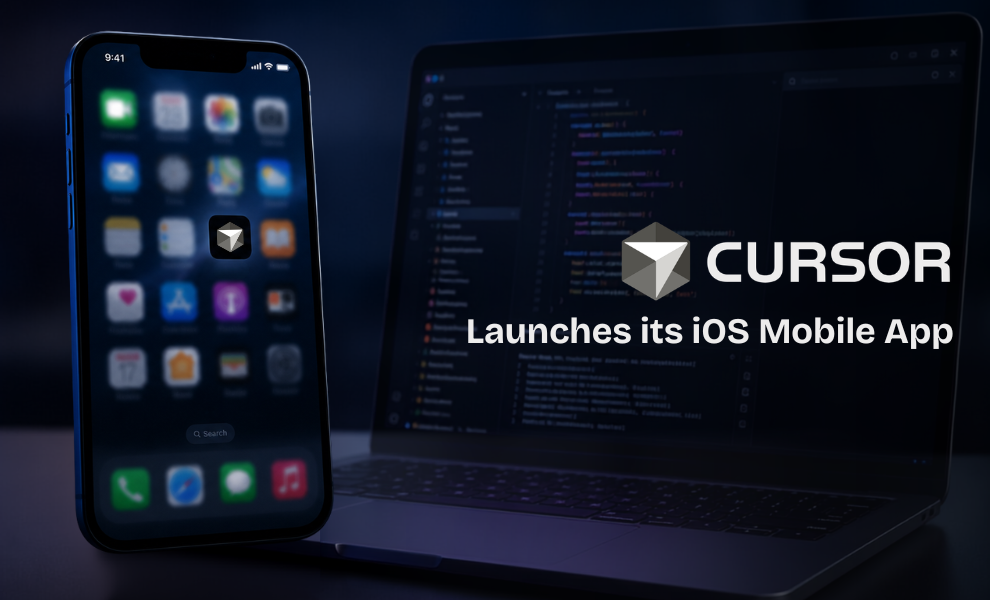
Cursor’s iOS application shows how agentic work is also moving beyond traditional desktop software.
The Cursor mobile app announcement states that the application is available in public beta for users on paid plans. Developers can launch and manage cloud agents from an iPhone.
Users can select a repository, choose a model, provide spoken instructions and continue directing work remotely.
Cursor says its cloud agents run in isolated virtual machines with development environments that can test, verify and demonstrate their work. Development sessions can be moved from a local computer to the cloud so that they continue running after the user closes a laptop.
Developers can also review screenshots, logs, demonstrations and code differences from the mobile application. Push notifications indicate when an agent has finished a task, requires input or is ready for review.
This changes software development from a completely keyboard-based activity into a more supervisory workflow.
A developer can define a task, review the agent’s progress, provide corrections and approve the result without remaining at a workstation throughout the process.
For SMEs with small technical teams, this could accelerate routine maintenance, testing and product iteration. It does not eliminate the need for experienced developers. Instead, it increases the value of people who can define requirements, identify risks and review machine-generated work.
Google Connects Video Advertising With Customer Intent
AI-assisted creative production will allow businesses to produce more marketing content, but advertisers still need to understand whether that content influences customer behaviour.
Google’s latest updates to Video View and Video Reach campaigns focus on that measurement challenge.
The changes were detailed in Social Media Today’s coverage of Google’s video campaign features.
Among the updates, Google is expanding the signals and reporting available to advertisers using YouTube video campaigns. The company is placing greater emphasis on interactions and branded searches that occur after someone has been exposed to a video advertisement.
Attributed Branded Searches can help advertisers understand when users search for a company or product after seeing an advertisement.
This is useful because customers do not always click immediately after viewing a campaign. They may remember the brand, conduct a search later, visit a physical location or contact the business through another channel.
For SMEs, the practical lesson is to measure more than immediate clicks.
Video advertising should be evaluated using a combination of:
- Reach and watch time
- Engagement signals
- Branded search activity
- Website visits
- Qualified inquiries
- Appointments or purchases
- Customer acquisition costs
Marketing dashboards need to reflect the longer and less direct path between brand exposure and commercial action.
Five Priorities for SMEs Entering the Agentic AI Era
1. Audit the Complete Customer Journey
Map how prospective customers discover the business, evaluate its offer, make contact, complete a transaction and receive follow-up support.
Look for disconnected systems, slow handoffs and repeated manual work. These are usually the strongest opportunities for responsible automation.
2. Make the Website Readable and Operable
Publish clear service information, contact details, prices and policies in structured formats.
Test forms, checkouts and booking systems without relying on visual assumptions. The goal is to make important tasks easy for human visitors and automated agents.
3. Build Reusable Creative Workflows
Avoid using AI only for one-off images, advertisements or social posts.
Develop approved prompts, templates, brand guidelines and review procedures that can be reused across campaigns.
A repeatable workflow is more valuable than an occasional burst of fast content.
4. Keep Humans Responsible for Quality and Risk
AI-generated campaigns, designs, images and code still require review.
Assign clear responsibility for factual accuracy, brand consistency, privacy, security, accessibility and final approval.
Faster production should not mean weaker governance.
5. Measure Business Outcomes
Track qualified inquiries, completed bookings, sales, returning customers and acquisition costs.
Engagement metrics can provide useful signals, but they should remain connected to commercial performance.
The Competitive Advantage Is Moving Into Workflow Design
The current wave of AI announcements is not simply producing more software choices. It is changing how business work is organized.
Pie is connecting customer discovery with advertising and call conversion.
Browser agents are turning websites into environments where AI systems can complete tasks.
Figma and Adobe are integrating generation into professional creative production.
Google is making personalized visual creation more accessible while improving the measurement of video advertising.
Cursor is allowing coding agents to operate beyond the desktop.
The businesses that benefit most will not necessarily be those that adopt the largest number of AI products.
They will be the companies that identify where automation improves the customer experience, connect the right tools to measurable outcomes and maintain human control over quality, privacy and strategic decisions.
AI is becoming an operating layer. The next challenge for SMEs is to build an operation worth automating.
Sources
- SiliconANGLE: Pie launches with $19.5M to bring AI marketing to small businesses
- No Hacks: Chrome Auto-Browse Acts on Your Website, Apple’s Siri AI Only Reads It
- Figma: Config 2026 Recap
- DPReview: Adobe Is Trying to Buy an Important AI Upstart
- Android Headlines: Google Gemini Free Personalized Image Generation
- Cursor: Cursor Mobile App for iOS
- No Film School: Adobe Updates at NAB 2026
- Social Media Today: Google Adds Features to Video Reach and Video View Campaigns


