


The Biggest Tech and AI Platform Updates Right Now
Something interesting is happening across tech right now. Platforms that once guarded control tightly are loosening their grip, while AI systems are moving from experimental features into the core of how products work. When you step back and look at the latest updates from Instagram, Adobe, Anthropic, Neural Concept, and Apple, a pattern starts to form. Control, creativity, and decision-making are shifting closer to users, creators, and professionals.
Each of these updates looks different on the surface, but they all point to the same direction. Technology is becoming less about static tools and more about adaptive systems that respond to how people actually work, search, and create.
Instagram Rolls Out Algorithm Control to Users
Instagram’s decision to let users directly influence their Reels algorithm is one of those changes that feels small until you think about what it represents. For years, users have complained that algorithms decide too much, often pushing content they did not ask for. Now, Instagram is offering a slider-based control that allows people to choose topics they want more or less of, with visual previews to guide their choices.
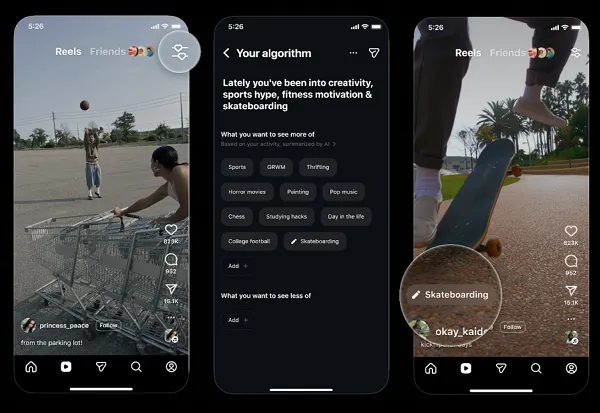
This does not mean the algorithm disappears. Instagram still relies heavily on AI recommendations to drive engagement. But it does change the psychological relationship between users and the platform. People are no longer fully passive. Even if many never touch the settings, the option itself matters. It signals a shift toward transparency and perceived control, which platforms are increasingly pressured to offer.
Whether this leads to better experiences or just better feelings about the app remains open. Still, it is a notable move in how social platforms respond to growing algorithm fatigue.
Adobe Firefly Adds GPT-Image 1.5 and Unlimited Generation
Adobe’s Firefly update is less about control and more about creative freedom at scale. By integrating OpenAI’s GPT-Image 1.5 model and temporarily removing generation limits, Adobe has turned Firefly into a true experimentation space. For designers and creators, that changes how ideas flow. There is less hesitation, fewer constraints, and more room to explore visually without worrying about usage caps.
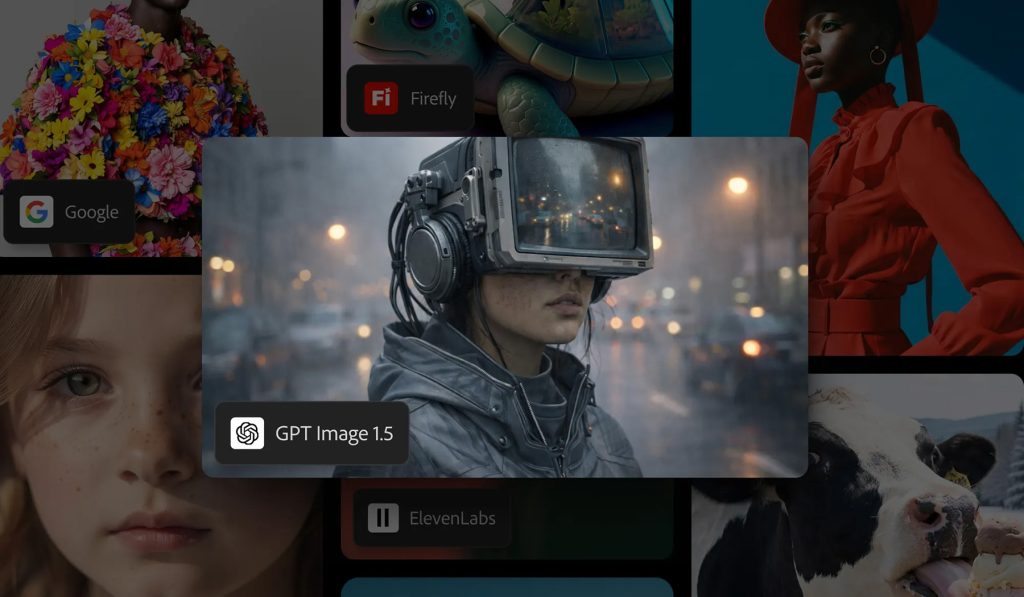
The quality jump also matters. GPT-Image 1.5 follows prompts more accurately and handles edits with greater precision. That means Firefly becomes not just a quick mockup tool, but something closer to a creative partner. Adobe’s broader strategy is clear here. Firefly is no longer one model. It is a hub where different AI systems coexist, giving users choice rather than forcing one approach.
This update reflects how creative tools are evolving. They are no longer static software. They are adaptive systems that learn how creators think.
Anthropic Introduces Anthropic Labs
Anthropic’s announcement of Anthropic Labs feels quieter than flashy product launches, but it may be one of the most important updates on this list. Labs is designed as a structured space for experimentation, where early users and researchers test ideas before they become full products. It acknowledges something many AI companies struggle with, not everything should go straight to mass rollout.
By creating a formal experimentation pipeline, Anthropic is trying to balance innovation with responsibility. They are testing how people actually use advanced AI features before committing to them long-term. This approach contrasts with the rush-to-release mentality seen elsewhere, and it suggests a more deliberate model for AI development.
In the long run, this could influence how safe, useful, and stable AI tools become. It is less exciting in headlines, but potentially more impactful over time.
Source: https://www.anthropic.com/news/introducing-anthropic-labs
Neural Concept Launches an AI Design Copilot
At CES 2026, Neural Concept showcased something that pushes AI far beyond text and images. Their AI Design Copilot allows engineers to generate CAD-ready designs using natural language prompts, while accounting for physics, materials, and performance constraints. This is not conceptual art. It is functional engineering.

What stands out here is speed and scale. Engineers can explore hundreds or thousands of design variations in the time it once took to explore a handful. That fundamentally changes how early-stage design works. Iteration becomes cheap. Exploration becomes normal. Innovation accelerates not because people work harder, but because tools remove friction.
This update shows where AI is heading next. Not replacing professionals, but amplifying what they can explore and test.
Source: https://www.engineering.com/neural-concept-launches-ai-design-copilot-at-ces-2026/
Apple and Google’s Gemini Partnership
The Apple and Google Gemini deal may be the most strategically significant update of all. Apple integrating Google’s Gemini models into Siri and Apple Intelligence marks a major shift in how Apple approaches AI. Historically, Apple preferred to build in-house. Choosing Gemini suggests that scale and capability now matter more than ownership alone.
This partnership strengthens Siri dramatically. It also deepens Google’s presence inside the Apple ecosystem, extending beyond search into everyday interactions. For users, this means more capable AI assistance. For the web, it signals something else entirely. If AI assistants answer questions directly, traditional search behavior changes.
This deal accelerates the move toward AI-generated answers as the default interface for information. Visibility becomes about being referenced, not clicked. That has massive implications for content, search, and digital strategy.
Source: https://9to5mac.com/2026/01/12/apples-new-google-gemini-deal-sounds-bigger-better-than-expected/
What These Updates Tell Us About Where Tech Is Going
When you connect these updates, a clear pattern emerges. Platforms are giving users more control, tools are becoming more generative and adaptive, and AI is moving closer to the decision-making layer of products. Search, creativity, and design are no longer separate activities. They are converging into systems that anticipate intent and respond conversationally.
This is not about novelty anymore. It is about restructuring how people interact with technology. Control shifts from platforms to users. Creation shifts from manual effort to guided exploration. Discovery shifts from links to answers.
Understanding these changes early helps you adapt calmly rather than react later in panic.
Final Thoughts
None of these updates exist in isolation. Together, they show how fast the center of gravity in tech is moving. Algorithms are becoming adjustable. AI tools are becoming collaborators. Platforms are becoming answer engines instead of directories.
If you work in digital, content, design, engineering, or business, paying attention to these shifts is no longer optional. They shape how people discover, decide, and trust information. The question is not whether this future is coming. It already is.


