

Conversion Rate Optimization for Ads: 9 Critical Reasons It Beats Chasing Clicks
If you’re struggling with paying for clicks that never turn into leads or sales, this is for you. Conversion Rate Optimization is what separates “nice traffic” from real revenue, because clicks are only a cost until someone takes action. It is completely possible to raise your budget, get more visitors, and still feel stuck because the page after the click is slow, confusing, or untrustworthy. The frustrating part is that most ad accounts try to solve that by buying even more clicks. The profitable move is usually the opposite: make your current clicks convert better first.

Here’s what you’ll walk away with, in plain language:
- How to spot the hidden “leaks” that waste your ad spend
- What to fix first when you need higher conversions fast
- How to test changes without needing massive traffic volume
- Real examples and numbers you can model right away
Conversion Rate Optimization: Why Clicks Alone Fail and What “Better” Really Means
Clicks are attention, conversions are commitment
A click is not success, it is a hand raise. Someone is saying, “Maybe,” not “Yes.” If your campaign is optimized only for click-through rate, you can accidentally attract curious people who were never going to buy, or you can win cheap clicks that bounce immediately. That makes your dashboard look busy while your bank account stays unimpressed.
Your job is to build a smooth bridge from intent to action. That bridge includes message match, page speed, proof, and a next step that feels easy. When any one of those pieces is weak, the click becomes wasted spend. When they work together, your cost per lead drops even if your cost per click stays the same.
Use these “click vs conversion” truths to keep your priorities straight:
- More clicks can increase sales, but only if your post-click experience is strong.
- Better conversions increase sales even when traffic stays flat.
- High CTR is great, but it can be misleading if conversion rate is low.
- Low CPC is nice, but cheap traffic is expensive if it never converts.
A short history of CRO and the shifts that make it urgent now (keyword variation)
CRO started as a website discipline: improve pages, run A/B tests, and squeeze more value from existing traffic. In the early days, people obsessed over small design tweaks because analytics were basic and testing tools were limited. Over time, the field matured into something more practical and less gimmicky: clearer offers, better proof, fewer steps, faster pages, and smarter measurement. In other words, the work moved from “button color debates” to “make this easier to buy.”
Today, paid media has changed in ways that make post-click performance more important than ever. Privacy changes have reduced tracking clarity, and platforms have become more automated, which means you often have fewer manual levers to pull. At the same time, competition has increased in most industries, so wasted clicks cost more than they used to. That combination makes CRO less optional, because you cannot target your way out of a weak landing page anymore.
Current shifts that push you toward post-click improvement:
- Automation is stronger, so your inputs (offer, creative, landing page) matter more.
- Attribution is messier, so you need cleaner conversion signals you can trust.
- Mobile dominates, and mobile friction kills conversions fast.
- Customer skepticism is higher, so proof and clarity beat hype every time.
Conversion Rate Optimization checkpoints that predict profit
You do not need a fancy analytics stack to know whether your ads are leaking money. You need a few practical checkpoints that tell you, “This experience is easy,” or “This experience is fighting the customer.” Think of it like walking into a shop: if the door is jammed and nobody greets you, you probably leave. Landing pages work the same way.
Run this quick checkpoint list on your highest-spend campaign first:
- Message match: Does the landing page headline repeat the promise from the ad?
- Speed: Does the page load fast on a normal phone, not just your office Wi-Fi?
- Clarity: Can a visitor explain your offer in 5 seconds after landing?
- Proof: Do you show reviews, numbers, demos, before-after, or guarantees?
- Friction: Are there too many form fields, steps, or distractions?
- CTA: Is there one obvious next action, and is it easy on mobile?
If you fix these basics, you often see improvements across multiple metrics. Your conversion rate rises, your cost per acquisition falls, and your campaigns become easier to scale without panic. It is not magic, it is simply removing barriers between the customer and the decision. That is why CRO so often beats click-chasing as a growth strategy.
Conversion Rate Optimization: A Practical Framework to Turn Paid Clicks Into Customers
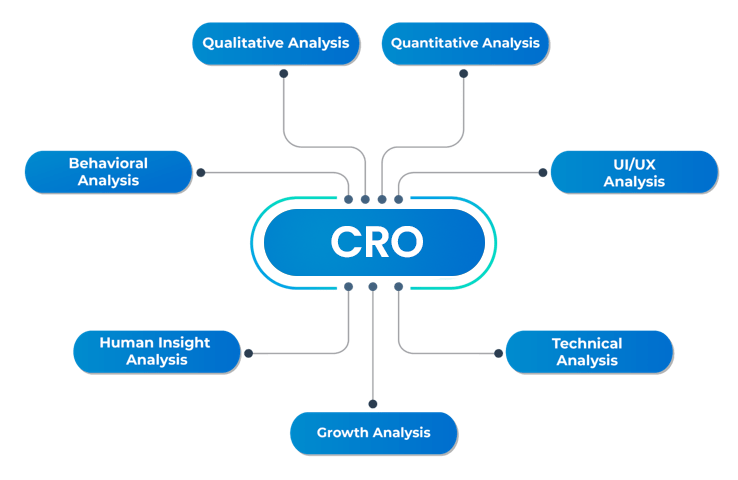
Start with the post-click map, not the ad account
Most advertisers start in the platform and tweak bids, audiences, or placements. That can help, but it is often the slower path to real improvement. Start by mapping the path after the click, because that is where the most controllable wins usually live. If your landing page is weak, better targeting just delivers more people to a bad experience.
Draw your post-click map like this: click, landing page, primary action, follow-up, sale. Then circle any point where a real human might hesitate, get confused, or lose trust. Those circles are your test ideas. Keep it simple and focus on the points closest to revenue.
Common “hesitation points” you can test quickly:
- A headline that is vague or does not match the ad
- A form that asks for too much too early
- A CTA that is buried below the fold on mobile
- Pricing that is missing or unclear when customers expect it
- No clear timeline for “what happens after I submit?”
CRO for ads: how to pick tests that actually move numbers (keyword variation)
Good tests are not random. They are tied to a clear hypothesis about why people are not converting. The fastest way to pick winning tests is to look at where users drop off, then remove the most likely reason. If your bounce rate is high, focus on message match and speed. If people scroll but do not act, focus on proof, offer clarity, and CTA placement.
Use this simple “ICE” style prioritization without overcomplicating it:
- Impact: If this works, will it meaningfully change conversions?
- Confidence: Do you have evidence this is a real problem (recordings, surveys, data)?
- Ease: Can you implement it quickly without breaking your site?
Here are high-impact test categories that consistently improve performance:
- Offer framing: “Free quote” vs “Quote in 10 minutes” vs “Fixed-price packages”
- Proof type: reviews vs short case result vs demo video vs guarantee
- CTA format: button copy, placement, sticky mobile CTA, click-to-call
- Form friction: fewer fields, two-step forms, autofill, WhatsApp first
- Trust cues: address, certifications, real photos, policies, clear contact info
Keep each test focused on one primary change. If you change the headline, hero image, CTA, and form all at once, you may get a lift, but you will not know why. And if performance drops, you will not know what broke it. One change at a time is slower for your impatience, but faster for your learning.
Challenges that make CRO feel “hard” and how to overcome them
CRO can feel intimidating because people imagine you need huge traffic and advanced statistics. In reality, you can improve conversions with small data if you focus on obvious friction and clarity problems. Another common challenge is internal opinion battles, where decisions get stuck in “I like this” instead of “the customer does this.” The fix is to anchor changes to customer behavior and measurable outcomes.
Here are common CRO blockers and practical ways around them:
- Low traffic: Focus on bigger changes (headline, offer, form length) and run tests longer.
- No developer time: Use simple tools for landing page variants, or test with lightweight page edits.
- Tracking gaps: Start with one primary conversion and measure it reliably before adding more.
- Stakeholder opinions: Use customer language from reviews and calls to guide copy and layout.
- Slow follow-up: Improve conversion rate, but also improve speed-to-lead so leads do not go cold.
Also, do not ignore the human side: people fear being “sold to.” If your page reads like a brochure and not a helpful guide, it may get clicks but not actions. Use plain words, specific outcomes, and proof that feels verifiable. The goal is to reduce doubt, not to increase pressure.
Conversion Rate Optimization: 3 Plays You Can Implement This Week
Lists work great here:
- Fix message match and first-screen clarity
Start by making your landing page headline match your ad promise word-for-word, or as close as possible. Then make sure the first screen on mobile shows the offer, the proof, and the next step without scrolling. If your page starts with a long paragraph about your company, rewrite it, because customers care about their problem first. A practical pattern is: outcome headline, one sentence explaining who it’s for, 2 to 3 proof bullets, one CTA button. This one change often lifts conversion rate because it removes confusion immediately. - Cut friction with a “minimum viable form” and faster contact options
Your form should only ask what you truly need to start the conversation, not what you wish you knew. Reduce it to 3 to 5 fields, and consider offering click-to-call or WhatsApp as a primary path if your customers prefer it. Add microcopy that sets expectations, like “We reply within 15 minutes during business hours,” because uncertainty lowers conversions. If you need more details, collect them after the lead converts, not before. Fewer steps usually beats more persuasion. - Add proof that answers the biggest objection
Figure out the top objection customers have, then answer it with proof, not promises. If the objection is trust, show reviews, real photos, policies, and clear contact details. If it is price, show starting prices or transparent packages. If it is “will this work for me,” show a short example, a before-after, or a simple case result. Put that proof near the CTA, because proof that lives far away from the decision does not help the decision.
Success Stories: What CRO Wins Look Like (With Realistic Numbers)
A local service business was getting plenty of clicks from high-intent search terms, but the landing page asked for eight form fields and hid the phone number in the footer. They reduced the form to four fields, added a sticky click-to-call button on mobile, and rewrote the headline to match the top ad exactly. Over the next month, the conversion rate moved from 3.2% to 5.1%, and cost per lead fell about 37% without changing bids. The click volume stayed similar, but the business started seeing more booked jobs, not just “inquiries.”
An ecommerce brand had decent traffic from social ads but a checkout that felt risky: unclear shipping timeline, return policy buried, and trust badges missing. They added a clear delivery estimate on the product page, moved the return policy summary near the buy button, and added reviews higher on the page. Conversion rate improved from 1.4% to 1.9%, which does not sound dramatic until you do the math on spend and average order value. That shift turned a barely break-even campaign into a profitable one, with no need to hunt for cheaper clicks.
A B2B company ran lead gen ads to a generic homepage and complained about lead quality. They created one dedicated landing page per offer, added a “who this is for” section, and replaced “Contact us” with “Get a 20-minute assessment and a written plan.” Leads decreased slightly, but qualified leads increased, and booked meetings rose by about 22%. This is a classic CRO outcome: fewer junk conversions, more real customers, and a sales team that stops rolling their eyes at marketing.
Patterns you can copy from these wins:
- Match the ad promise to the landing page headline
- Put proof near the decision point, not buried below
- Reduce steps and form fields, especially on mobile
- Clarify what happens next and how fast you respond
- Optimize for qualified conversions, not just total conversions
Future Outlook: Why CRO Will Matter Even More Next Year
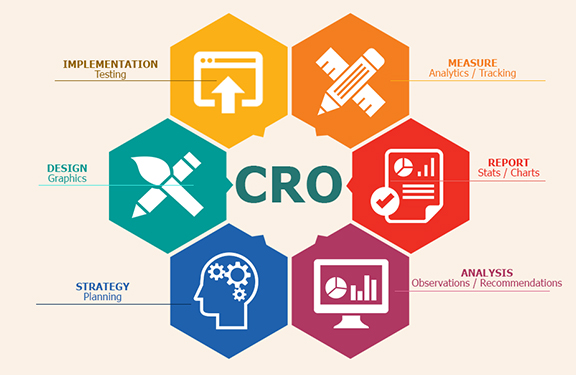
Paid media is moving toward more automation and less manual control, and that trend is not reversing. When platforms decide more about who sees your ad and when, your biggest lever becomes what happens after the click. Customers are also getting less patient, especially on mobile, and competition continues to rise in most categories. That means the cost of a wasted click will keep going up. CRO is how you protect your ROI in a world where traffic is not getting cheaper.
Expect these shifts, and plan for them now:
- More “black box” delivery, so creative and landing page clarity matter more
- More mobile-first journeys, so speed and simplicity become non-negotiable
- More emphasis on first-party data, so you need clean conversion tracking
- Faster creative fatigue, so you must refresh offers and proof regularly
A practical habit that keeps you ahead is a weekly post-click review. Pick one high-spend campaign, watch a few user recordings or review a simple funnel report, then choose one test. Keep a running list of “proof assets” like testimonials, case results, demo clips, and FAQs, so you can strengthen pages quickly. Small improvements compounded over months are how average accounts become profitable accounts. And yes, it is less glamorous than chasing clicks, but it pays better.
[3-4 external links naturally integrated to reputable sources
For deeper grounding, review Moz’s CRO fundamentals at https://moz.com/learn/seo/conversion-rate-optimization, explore landing page testing ideas from Ahrefs at https://ahrefs.com/blog/landing-page-optimization/, and compare PPC-focused CRO practices in Search Engine Journal’s paid media library at https://www.searchenginejournal.com/category/paid-media/. For credibility signals that lift conversions across industries, Stanford’s web credibility guidelines are a practical checklist at https://credibility.stanford.edu/guidelines/index.html.]


