


Local SEO vs National SEO: 10 Clear Differences
If you’re struggling with getting calls, bookings, or walk-ins from people near you, this is for you. Local SEO vs National SEO is not just a marketing debate; it decides whether your business shows up when customers are ready to buy. One path focuses on Maps, local listings, and reviews that create quick trust. The other path focuses on ranking across wider areas and building authority for bigger keyword opportunities. When you understand the difference, you stop wasting time and start choosing the strategy that matches how your customers actually search.
Most businesses want “more visibility,” but visibility is not the same thing as local results. Local results mean actions: phone calls, direction requests, store visits, appointment bookings, and quote requests. National rankings can bring traffic, but traffic alone does not pay bills if the visitor is not in your service area. That is why the best SEO plan starts with intent and geography, not hype. You need the approach that matches how far you can realistically sell and deliver.
In this article, you will learn definitions, a short history of how search evolved, the biggest changes happening now, and the real challenges businesses face. You will also get simple examples and step-by-step guidance to choose the right approach. Every section includes checklists so you can apply what you learn immediately. By the end, you will know which option drives better local results for your business, and how to combine them without confusion.
Local SEO vs National SEO: What They Mean and How They Work
Simple definitions you can explain to your team
Local SEO is the process of helping your business appear in local search results, especially Google Maps and the local “Map Pack.” It focuses on customers who are physically near you or searching for services in your city. The goal is to turn local searches into immediate actions like calls and visits. A big part of local success is your Google Business Profile, your reviews, and your business information being consistent across the internet. Google explains that local rankings are mainly based on relevance, distance, and prominence, which is why accuracy and trust matter so much: https://support.google.com/business/answer/7091?hl=en
National SEO is the process of ranking for searches across a wider region, country, or multiple cities. It focuses more on website content, authority, and competitive keywords that are not limited to one location. The goal is to capture broader demand and scale traffic across markets. National SEO typically involves larger content strategies, stronger link building, and deeper site architecture. It can drive leads, but it often takes longer to show results, especially in competitive industries.
Here is the simplest way to think about it:
- Local SEO: “Find me nearby” and “best option close to me”
- National SEO: “Find the best option anywhere” and “teach me before I buy”
- Local SEO success: calls, direction requests, bookings
- National SEO success: broader rankings, traffic growth, multi-city demand
A short history of why “local” became a separate game
In the early days of search, website results were the main path to discovery. Businesses competed by building pages and links, and customers clicked through multiple results to decide. Over time, Google and other engines started showing local listings with addresses, hours, and reviews right on the results page. That shift changed buying behavior because customers could decide faster without visiting a website. For local businesses, the listing became the storefront window.
Now, the local experience is often “Maps first,” especially on mobile. People search while walking, driving, or commuting, and they want a quick answer. They scan ratings, see who is open, and choose the business that looks reliable. This is why reviews, photos, and accurate hours matter as much as your website. Local is not easier than national, it is simply different, with different signals and faster decisions.
Key shifts that shaped the local game:
- Maps and local listings became the first click for many searches
- Reviews and photos became major trust signals at the moment of choice
- “Near me” intent increased because mobile searches increased
- Businesses started competing for a few top local spots, not page one links alone
What changed recently and why results feel more competitive
Search results are more crowded today because the results page answers more questions immediately. Many customers decide from the listing before they ever see your website. That puts pressure on your listing quality and your reputation. It also makes local competition feel intense because only a small set of businesses show in the Map Pack. If your basics are messy, like inconsistent phone numbers or missing services, you can be invisible even if your business is excellent.
At the same time, national SEO competition has also increased because content is easier to publish than ever. That means generic articles are not enough, and thin pages are often ignored. National results increasingly favor strong brands, deep topic coverage, and clear expertise. This does not mean small businesses cannot win, but it means you need a smarter plan than “publish a few blogs.” You must match strategy to your market and resources.
Common reasons people feel stuck:
- Local: poor listing accuracy, weak reviews, wrong categories, few photos
- National: broad keywords, thin content, weak authority, unclear site structure
- Both: measuring success by rankings instead of leads and conversions
Local SEO vs National SEO: which drives better local results and why
When local SEO clearly wins
If you serve one city, a small set of neighborhoods, or a specific service area, local usually wins. This includes salons, clinics, restaurants, repair services, local law firms, gyms, and retail stores. Your customers are close by, and they search with immediate intent. They want a provider they can reach quickly, not an article from another region. Local visibility is often the difference between getting the call and losing it.
Local SEO wins because it targets what customers see first in many cases: your business profile. A complete profile with the right category, services, photos, and reviews can outperform a competitor with a stronger website but a weaker listing. It also wins because it builds trust on the results page itself. When a person sees 4.5 stars, fresh reviews, and “open now,” they act faster.
Local SEO usually drives better local results when:
- Most customers can only buy in-person or within a small delivery area
- Calls and visits matter more than long research sessions
- The Map Pack dominates the results for your service
- Your competitors are close, so trust signals decide the winner
When national SEO can still drive strong local outcomes
National SEO can drive local outcomes when customers research first and choose later. This is common in higher-ticket services, education, B2B, and industries where people compare options across cities. If someone searches “best accounting software for small business,” that is not local, but it can still lead to local calls if your content builds trust. National content can also help you win outside your immediate area, especially if you can deliver remotely or ship products.
National SEO also helps when you plan to expand across multiple cities. A national strategy can build a strong foundation of authority, then you can create city pages and location clusters later. This is how multi-location brands grow without starting from scratch each time. It takes more time, but it scales better. If you can serve more than one location, national SEO can become a long-term growth engine.
National SEO can drive local outcomes when:
- You serve multiple cities or plan to expand soon
- People research for weeks before contacting anyone
- Your services are not tied to being “near me”
- You can sell remotely, ship, or serve wider regions
The practical truth: most businesses need a blend, in the right order
For most local businesses, the fastest path is local first, then national support. Local foundations bring quick wins: better Maps visibility, more calls, and better trust signals. Once that is stable, national content can expand your reach and strengthen your authority. The blend works best when each piece has a clear job. Local drives immediate leads, and national supports long-term growth.
Here is the blend that usually makes sense:
- Start with local: profile, listings, reviews, and service pages
- Add national: educational content, comparison guides, and industry pages
- Connect them: link national content to local service pages and contact options
- Measure both: track calls and bookings from local, and assisted conversions from national
Local SEO vs National SEO: the strategy checklist you can implement tomorrow
Step 1: Identify your true service radius and buyer intent

Before you choose a strategy, define how far you can realistically serve. Be honest about where you deliver, travel, or support customers. Then match that radius to search intent. Local intent is “near me,” “in Minneapolis,” or “open now.” National intent is “best,” “how to,” “cost,” and “comparison” without a location.
Do this quick exercise:
- List the top 10 services you sell that generate the most revenue
- Write the top 10 questions customers ask before they buy
- Mark which questions include a city or “near me”
- Mark which questions are broad and research-based
Your decision becomes clearer when you see it on paper:
- Mostly local questions: prioritize local SEO
- Mostly research questions: add national SEO content sooner
- Mixed questions: build local foundations first, then build national content around the research questions
Step 2: Build the local foundation that drives immediate results
If you want better local results, you need a strong local foundation. That foundation starts with your Google Business Profile and consistent business information across directories. It also includes a website that clearly explains what you do and where you serve. These are basic, but they are often the biggest gaps. Fixing them can create faster gains than publishing new blog posts.
Local foundation checklist:
- Correct primary category and relevant secondary categories
- Add 10 to 30 services using real customer wording
- Upload at least 20 real photos, then add new ones monthly
- Ensure Name, Address, Phone match everywhere
- Create one strong service page per top revenue service
- Create one location page that lists areas served and FAQs
Local trust and conversion boosters:
- Add tap-to-call and messaging options where appropriate
- Add clear hours and special hours updates
- Respond to every review calmly and quickly
- Add direction tips using landmarks if needed
Step 3: Add national SEO layers that expand reach and authority
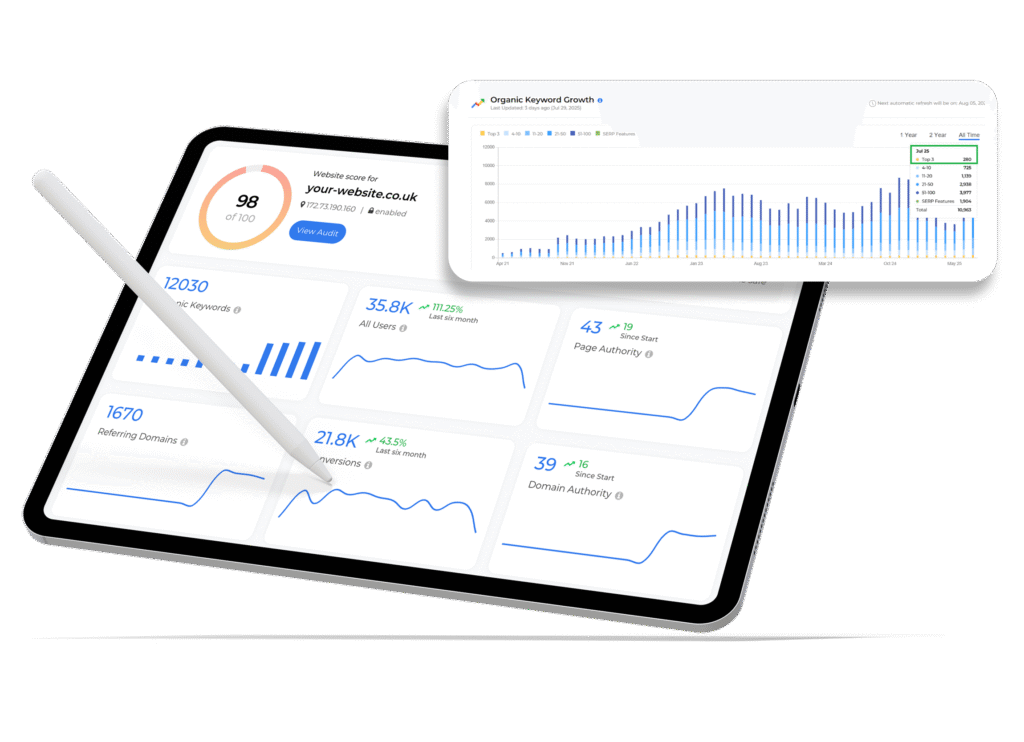
Once local foundations are solid, national SEO helps you capture broader searches that influence decisions. This includes content that answers how-to questions, price factors, comparisons, and common mistakes. The goal is to become the trusted source before the buyer chooses. Then you lead them to your service pages or booking page. National content supports local growth when it is tied to conversion paths.
National SEO checklist:
- Build topic clusters around your main services
- Create comparison pages that answer common decision points
- Publish pricing guides with ranges and what affects costs
- Add internal links from articles to your service pages
- Improve page speed, mobile usability, and navigation
- Build credible backlinks over time through partnerships and PR
A simple national content plan:
- 2 service-related guides per month
- 1 comparison page per quarter
- 1 pricing page update per quarter
- Refresh older content every 6 to 12 months based on performance
Step 4: Measure results using leads, not rankings

Rankings can change by location, device, and personalization, especially for local searches. That is why you should measure actions that reflect revenue. Track calls, direction requests, form submissions, quote requests, and booked appointments. Then track which pages and listings drive those actions. When you measure this way, you can improve the right parts of your strategy.
Local results metrics:
- Calls from your business profile and from your website
- Direction requests and website clicks from your listing
- Messages, bookings, and quote requests
National results metrics:
- Leads from organic landing pages
- Assisted conversions from informational pages
- Growth of impressions for key topics
- Engagement quality, like time on page and next-step clicks
Local SEO vs National SEO: Common Challenges and How to Overcome Them
Local SEO fails most often because of basics, not because of advanced tactics. Wrong categories and missing services can prevent your listing from matching searches. Inconsistent business details can reduce trust and cause duplicate listings. Reviews that are old or sparse can make your business look inactive. These are common, but they are fixable with a simple routine.
Local blockers and fixes:
- Wrong category: choose the best primary category for your main service
- Weak profile: add services, photos, and a clear business description
- Inconsistent listings: standardize Name, Address, Phone and update top directories
- Review gap: ask for reviews weekly and respond to all reviews
- Confusing location: verify your map pin and add clear directions
A weekly routine that prevents local drop-off:
- Add 3 to 5 photos weekly or biweekly
- Request reviews from recent happy customers
- Respond to reviews and Q&A
- Check hours and special hours
- Post one update or offer if relevant
The National Challenges That Waste Time and Budget
National SEO fails when content is too broad and not useful. Many businesses publish articles that do not match what buyers actually search. Others target keywords that are too competitive without building authority first. Some create too many pages that compete with each other, which confuses search engines and users. National strategy needs structure and focus, not volume.
National pitfalls and fixes:
- Targeting broad keywords: start with specific, buyer-focused topics
- Thin content: write pages that answer the question fully with examples
- No internal linking: connect articles to service pages and conversion paths
- Weak authority: earn links through partnerships, PR, and credible resources
- Poor site structure: organize content into clear categories and clusters
A simple authority-building plan:
- Partner with local organizations and industry groups for mentions
- Publish original insights, case studies, and data where possible
- Pitch useful resources to journalists and niche publications
- Build a resource page that others can reference
The Trust Challenge: Reviews and Reputation Affect Both Strategies
Even national content can be judged through local trust signals once a customer is ready to decide. Reviews influence click behavior and purchase decisions across industries. Research from Northwestern University’s Spiegel Research Center highlights that reviews can have a measurable impact on how people choose and buy, which is why a review system is not optional for most businesses: https://spiegel.medill.northwestern.edu/wp-content/uploads/sites/2/2021/04/Spiegel_Online-Review_eBook_Jun2017_FINAL.pdf
Practical review actions that work:
- Ask within 24 hours of a successful service
- Keep the request message short and polite
- Make the review link easy to access
- Reply to every review with gratitude and clarity
- Address complaints calmly and offer a resolution path
Local SEO vs National SEO: Success Stories
A local clinic that needed calls, not just traffic
The clinic had a decent website but a weak business profile with missing services and few recent photos. After completing the profile, updating hours, and building a simple review routine, the clinic saw more calls from Maps. The biggest difference was trust at first glance, because the listing answered key questions instantly. The website was then updated with service pages that explained treatments and booking steps. The combination improved both visibility and conversions.
What they changed:
- Added services and categories correctly
- Uploaded recent photos of the facility and staff
- Asked for reviews weekly and responded to every review
- Added clear booking CTAs on service pages
A multi-city service business that needed scale
This business served several cities, so local-only focus was not enough. They built city pages with unique details, but they also built national content that answered buyer questions like cost, timelines, and comparisons. The national pages attracted research traffic, and internal links guided visitors to the right city page. Over time, authority grew and performance improved across multiple markets. Local results improved because the brand became more recognizable and trusted.
What they changed:
- Built a consistent city page framework without copying content
- Created national guides that matched real buyer questions
- Strengthened internal linking between guides and city pages
- Earned credible mentions and links through partnerships
A retailer that relied on foot traffic and needed “near me” visibility
The retailer struggled because hours were sometimes wrong online and photos were outdated. Customers saw confusion and chose competitors. They fixed hours, verified the map pin, uploaded fresh photos weekly, and encouraged reviews at checkout. Local results improved because the listing looked active and reliable. Website content helped later, but the first wins came from local foundations.
What they changed:
- Updated hours and special hours consistently
- Added clear categories and product-related services
- Uploaded recent product and store photos
- Built a steady review habit through a simple ask
Key Challenges You’re Facing
If you feel stuck, you are probably facing one of these common problems. You may be investing in national content while your local foundations are weak, which means you get traffic that does not convert. Or you may be only focusing on local profiles while ignoring website content that builds deeper trust. Another common issue is tracking, where you watch rankings but do not measure calls, bookings, and direction requests. When tracking is weak, you cannot tell what is working.
Here are the most common decision challenges:
- “We want quick results”: local SEO usually provides faster wins
- “We want to expand”: national SEO supports scale, but local still matters per city
- “We get traffic but no leads”: mismatch between intent and service area
- “Competitors outrank us locally”: reviews, profile completeness, and consistency may be the gap
- “We cannot choose”: start local, then add national once conversions stabilize
A quick decision guide:
- One city, one location: start with local SEO
- Multiple cities, remote service: blend local and national
- Ecommerce and shipping: national first, local second if you have stores
- High-ticket services: national content plus strong local trust signals
Your Next Steps
Start by auditing your current situation, then choose a strategy based on your service radius and customer intent. If you have a physical location or serve a specific area, fix your local foundations first. That usually means your business profile, listings, reviews, and core service pages. Once you are generating consistent local leads, add national content to capture research demand and strengthen authority. Keep your plan simple, measurable, and focused on leads.
Your 7-day action plan:
- Day 1: List your top services and map them to local vs national intent
- Day 2: Audit your Google Business Profile for categories, services, photos, hours
- Day 3: Standardize Name, Address, Phone across your website and key listings
- Day 4: Create a review request message and start using it
- Day 5: Build or improve one core service page with FAQs and clear CTAs
- Day 6: Outline two national content topics based on customer questions
- Day 7: Set tracking for calls, bookings, direction requests, and form leads
Your 30-day plan:
- Publish two service pages and one location page if you are local
- Publish two buyer-focused guides if you need national reach
- Improve internal linking from guides to service pages
- Build one credible mention or link through partnership or local PR
- Review metrics weekly and repeat what drives leads
Conclusion
Local SEO vs National SEO is really a question of intent, geography, and how fast a customer wants to act. If you need better local results, local foundations usually deliver faster because they improve what customers see and trust first. National SEO becomes powerful when you want scale, broader reach, and long-term authority, but it works best when it supports a clear conversion path. Many businesses win by starting local, then adding national layers once leads are steady and tracking is clear. Start with a local intent audit today.


