


The right CRM can help you track leads, follow up with customers consistently, and even automate repetitive tasks like email campaigns or reminders. It doesn’t matter whether your business is a boutique clothing line, a service startup, or a creative agency; these tools level the playing field and give you the structure to focus on growth.
Why Black-Owned Businesses Should Invest in CRM Solutions
Running a business always comes with challenges, but Black entrepreneurs often face unique obstacles, from accessing affordable resources to navigating industries where visibility can be limited. A CRM helps you overcome some of these challenges by creating a centralized system to manage contacts, sales, and communications.
A CRM can:
- Keep all client information in one place, reducing missed opportunities
- Allow personalized communication, making your customers feel valued
- Provide insights through analytics so you know which strategies work
- Automate repetitive tasks to save time and reduce stress
According to the Harvard Business Review, structured customer management correlates strongly with small business growth, retention, and repeat sales. By using the Best CRM Solutions, you give yourself a foundation for more predictable results and sustainable growth.
Top Best CRM Solutions for Black-Owned Businesses in 2025
Here’s a detailed look at CRMs that are practical, beginner-friendly, and scalable.
1. HubSpot CRM

HubSpot CRM offers a free tier that is incredibly robust, perfect for startups or small businesses with limited budgets. Beyond the free option, premium plans scale with your business needs.
Why It Works: HubSpot organizes contacts, deals, and tasks in a single dashboard. The email integration and marketing automation help you nurture leads efficiently. The platform also provides analytics and reporting that make decision-making easier.
Best Features: Contact management, email sequences, lead tracking, sales reporting, and integration with tools like Gmail, Outlook, and social media.
2. Zoho CRM
Zoho CRM is known for its flexibility and affordability, which makes it ideal for small Black-owned businesses looking for a customizable experience without overspending.
Why It Works: Zoho lets you automate workflows, segment leads, and integrate with multiple communication channels. You can track pipeline progress and even manage social media interactions within the platform.
Best Features: Lead scoring, workflow automation, multi-channel communication, mobile app, and AI-powered analytics.
3. Salesforce Essentials
Salesforce CRM is a household name in CRM, and the Essentials plan is designed specifically for small businesses. While it comes at a cost, it offers powerful tools for growing operations.
Why It Works: Salesforce Essentials combines lead management, task automation, and email integration. It’s particularly useful if your business is planning to scale quickly or if you want extensive reporting capabilities.
Best Features: Contact management, automated workflows, opportunity tracking, sales forecasting, and customizable dashboards.
4. Pipedrive
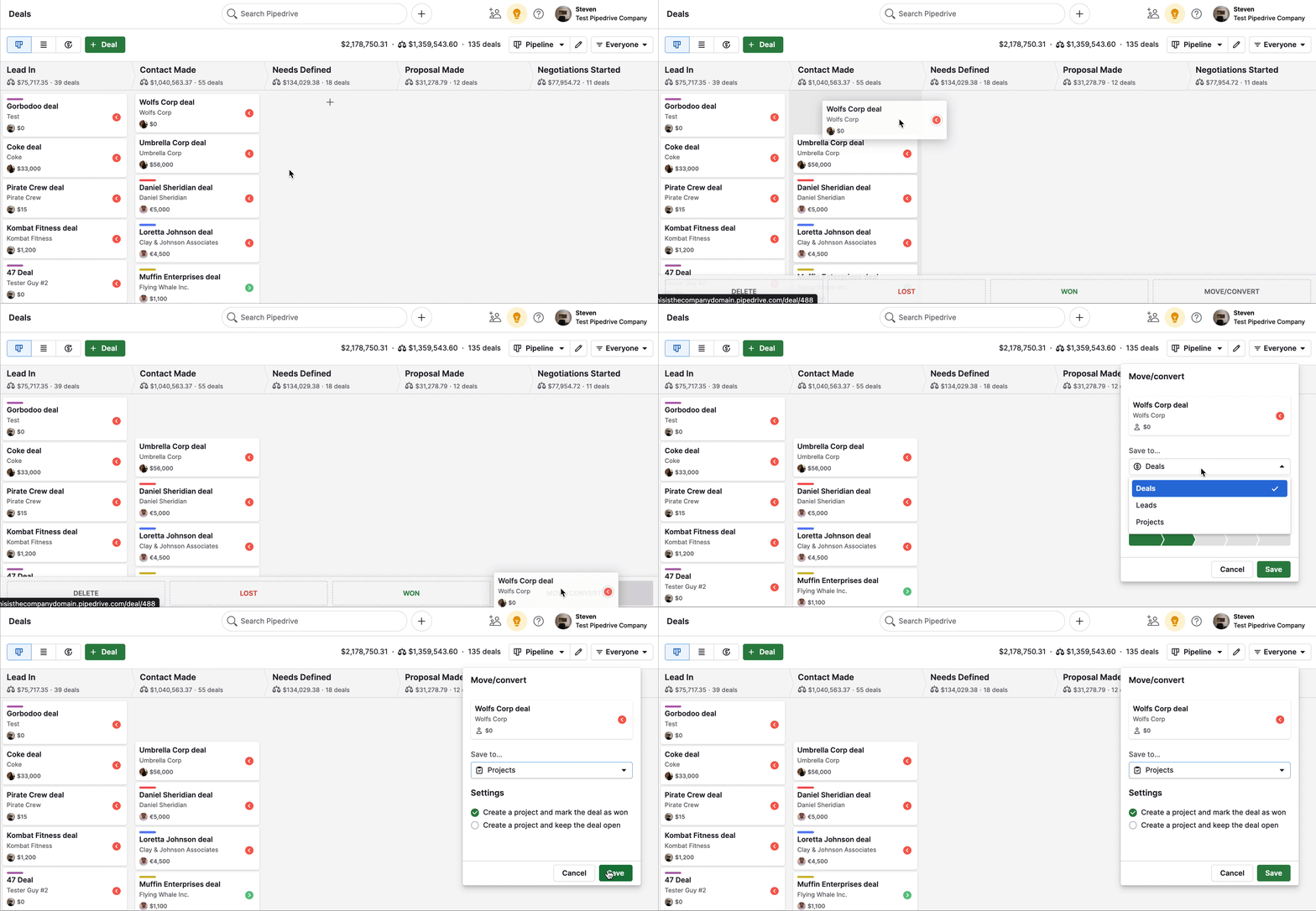
Pipedrive is a visually intuitive CRM, perfect for entrepreneurs who prefer seeing their pipeline in a clear, organized way.
Why It Works: Pipedrive makes managing leads and deals simple. The visual pipeline helps ensure no potential sale is overlooked. It also offers email integration and easy-to-understand reporting.
Best Features: Pipeline management, task automation, email integration, customizable pipelines, and reporting.
5. Freshsales by Freshworks

Freshsales combines CRM and AI-powered insights, making it great for small businesses that want some automation without complexity.
Why It Works: You can manage leads, track engagement, and even leverage AI to prioritize follow-ups. The platform is beginner-friendly but still powerful enough as your business grows.
Best Features: Lead scoring, sales sequences, AI insights, customizable dashboards, and multi-channel support.
6. Monday.com CRM
Monday.com CRM started as a project management tool but now has an excellent CRM solution for small businesses.
Why It Works: If your business already uses Monday.com for project management, the CRM extension makes workflow integration seamless. You can track deals, manage contacts, and automate reminders all in one workspace.
Best Features: Visual dashboards, task management, automation, workflow templates, and integrations with email and chat apps.
| CRM | Best For | Pricing (Starting) | Key Features | Pros | Cons |
|---|---|---|---|---|---|
| HubSpot CRM | Startups & small businesses | Free (Premium from $50/month) | Contact management, email sequences, lead tracking, sales reporting, integration with Gmail/Outlook/social | Free tier is robust, beginner-friendly, excellent reporting | Paid features can get expensive, some advanced tools require premium |
| Zoho CRM | Customizable, budget-friendly businesses | $14/month/user | Lead scoring, workflow automation, multi-channel communication, mobile app, AI analytics | Affordable, flexible, multi-channel support | Can feel complex at first, mobile app slightly limited |
| Salesforce Essentials | Scaling businesses | $25/month/user | Contact management, automated workflows, opportunity tracking, sales forecasting, dashboards | Powerful, highly customizable, industry standard | Steeper learning curve, more expensive than other small business CRMs |
| Pipedrive | Visual pipeline management | $14.90/month/user | Pipeline management, task automation, email integration, reporting | Intuitive visual dashboard, easy pipeline tracking | Less robust for marketing automation, fewer integrations than Salesforce |
| Freshsales | AI-powered small business CRM | $15/month/user | Lead scoring, sales sequences, AI insights, dashboards, multi-channel support | AI prioritization, simple interface, good automation | Limited reporting features in lower plans |
| Monday.com CRM | Businesses already using Monday.com | $10/month/user | Visual dashboards, task management, automation, workflow templates, integrations | Seamless if already using Monday, flexible workflow | CRM features may feel basic compared to dedicated CRMs |
Tips for Using the Table Effectively:
- Focus on features that matter most to your business—don’t pick a CRM just because it’s popular.
- Start with the free or lowest-tier option if budget is tight; upgrade as you grow.
- Consider team adoption—choose a CRM your staff will actually use consistently.
- Look for integration with tools you already use (email, social media, payment systems).
- Revisit your choice every 12–18 months to ensure it still meets your growing business needs.
How to Choose the Best CRM Solution for Your Business
Not every CRM will work for every business. Here are practical steps to help you decide:
- Define Your Needs: Are you looking for lead tracking, email marketing, pipeline management, or all of the above?
- Consider Your Budget: Free or low-cost tiers may be enough initially. Don’t pay for features you won’t use.
- Ease of Use: Choose a platform that your team can adopt quickly. Complicated systems create friction.
- Integration Options: Make sure it connects with the tools you already use—email, social media, payment systems.
- Scalability: Pick a CRM that grows with your business; switching later is time-consuming.
- Support and Training: Reliable support saves headaches, especially if you are new to CRMs.
Benefits Black-Owned Businesses Gain from Using CRMs
The benefits extend beyond organization:
- Better Customer Relationships: CRMs help you remember customer preferences and send timely follow-ups.
- Increased Efficiency: Automate repetitive tasks like emails or reminders.
- Data-Driven Decisions: Analytics show which leads or campaigns work best.
- Revenue Growth: Better tracking leads to higher conversion rates.
- Team Collaboration: Everyone on your team stays on the same page.
For Black entrepreneurs, these benefits can be transformative, allowing more focus on creative work, brand building, and strategic planning. A report by Salesforce highlights that small businesses using CRM see up to a 41% increase in sales productivity. Source: https://www.salesforce.com
Common Mistakes to Avoid with CRM Solutions
Even with the Best CRM Solutions, mistakes happen:
- Skipping Setup: Not customizing the CRM to your business reduces its effectiveness.
- Ignoring Training: Your team must understand how to use the tools properly.
- Overcomplicating Processes: Start simple; add complexity as needed.
- Failing to Update Data: Old or incomplete contact info undermines your system.
Maximizing Your CRM Investment
To get the most out of your CRM:
- Integrate with social media and email platforms.
- Set up automated reminders for follow-ups.
- Use reporting dashboards weekly to track progress.
- Segment customers based on behavior or preferences.
- Test different workflows and adjust based on results.
Even small Black-owned startups can see meaningful results by starting with just one or two core features and gradually expanding.
The Future of CRM for Black-Owned Businesses
CRM solutions continue to evolve with AI, mobile optimization, and automation. We expect tools to become:
- Smarter at predicting customer needs.
- More affordable for small businesses.
- Integrated across messaging apps, e-commerce, and social platforms.
- Capable of helping you build stronger, more personal customer relationships.
For Black entrepreneurs, these improvements mean even more opportunity to grow efficiently and focus on innovation rather than administrative tasks.
Final Thoughts
Choosing the Best CRM Solutions for your Black-owned business is not just about software—it’s about creating a system that helps you connect with customers, streamline operations, and make better decisions. With the right CRM, you can save time, increase revenue, and focus on the parts of your business you truly love.
Start small, pick a CRM that feels intuitive, and gradually expand as your business grows. Your customers will notice the difference, and your workflow will feel lighter.


