


AI is evolving fast, and this week’s updates show how quickly tools are moving from “nice to have” to “must have” for serious creators and marketers. Below is a full breakdown of four notable launches and what they mean in practice.
This article breaks down four standout AI tools in 2026: Deep Research in ChatGPT (GPT‑5.2), ElevenLabs Audiobooks, Similarweb AI Studio, and ByteDance’s Seedance 2.0—and explains how they’re reshaping research, content creation, and marketing workflows. It’s written for creators, marketers, and businesses looking to upgrade their tool stack.
Deep Research in ChatGPT (GPT‑5.2): Search That Thinks With You
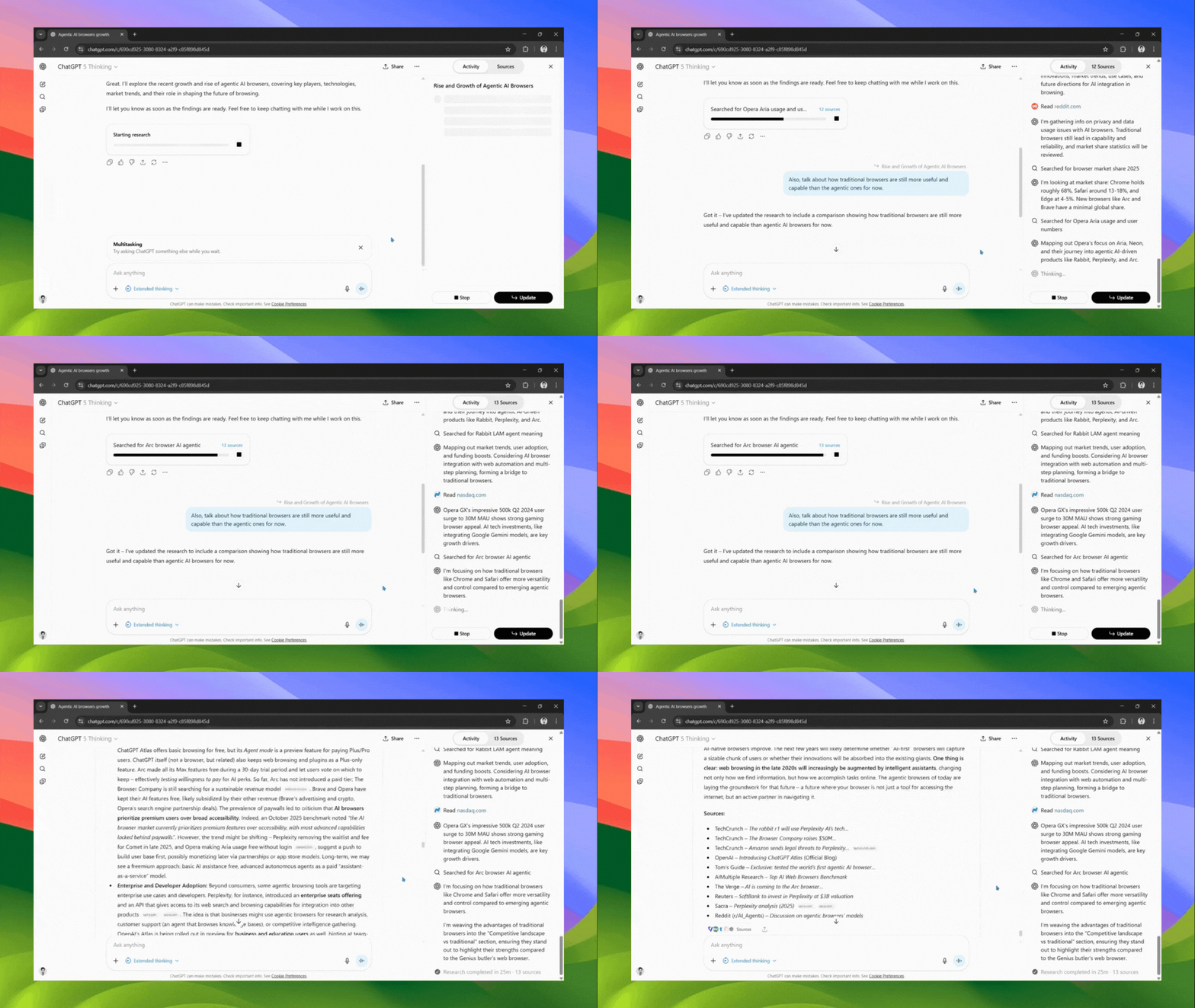
OpenAI’s Deep Research experience inside ChatGPT has been upgraded to GPT‑5.2, the company’s latest model. It’s designed to handle complex research tasks, cross-check multiple sources, and synthesize findings in a more precise, structured way than earlier versions.
Three things stand out:
-
Stronger reasoning for research-heavy tasks
GPT‑5.2 improves how Deep Research understands long, messy questions and breaks them into subproblems. That matters when you’re doing things like market analysis, competitor research, or technical content—areas where previous models could be too shallow or generic. -
Connection to your existing apps
Deep Research can now plug into connected apps, meaning it can pull context directly from tools you already use (documents, project hubs, or data sources). Instead of copying and pasting information into ChatGPT, you can let the system pull what it needs from your workspace, then build reports, outlines, or strategies around it. -
Trust-focused web search
Web searching is now restricted to trusted sites only. This is a clear move toward reliability over randomness: instead of scraping “anything on the internet,” Deep Research prioritizes vetted sources to reduce hallucinations, misinformation, and low‑quality references.
What it unlocks in practice
-
Faster, more reliable research for long-form content, strategy documents, and internal reports.
-
Safer use in professional workflows where citing decent sources matters.
-
Less manual juggling between tabs, files, and tools: more of your research happens in one place.
ElevenLabs Audiobooks: Studio-Grade Audio for Non‑Narrators
ElevenLabs has introduced an Audiobooks tool inside its ElevenSuite, focused on making audiobook creation accessible even if you’re not a professional voice actor or audio engineer.
Key aspects:
-
Lifelike AI voices
The tool uses ElevenLabs’ well-known voice models to generate speech that sounds natural, expressive, and consistent. This helps authors, educators, and brands publish audio content without hiring narration talent every single time. -
End‑to‑end audiobook workflow
You can create, refine, and publish a full audiobook inside one environment. That typically includes:-
Importing or writing text
-
Choosing and adjusting voices
-
Editing pacing, emphasis, and tone
-
Exporting ready‑to‑publish audio files
-
-
Consistent quality at scale
Because the voices are model-based, you avoid common issues like inconsistent tone between recording sessions, background noise, or fatigue in long projects.
What it unlocks in practice
-
Authors can turn books, guides, or newsletters into audiobooks without studio time.
-
Content teams can repurpose existing text content into audio for busy, on‑the‑go audiences.
-
Small publishers and educators gain access to a level of production value previously reserved for bigger budgets.
Similarweb AI Studio: Conversational Access to Marketing Intelligence
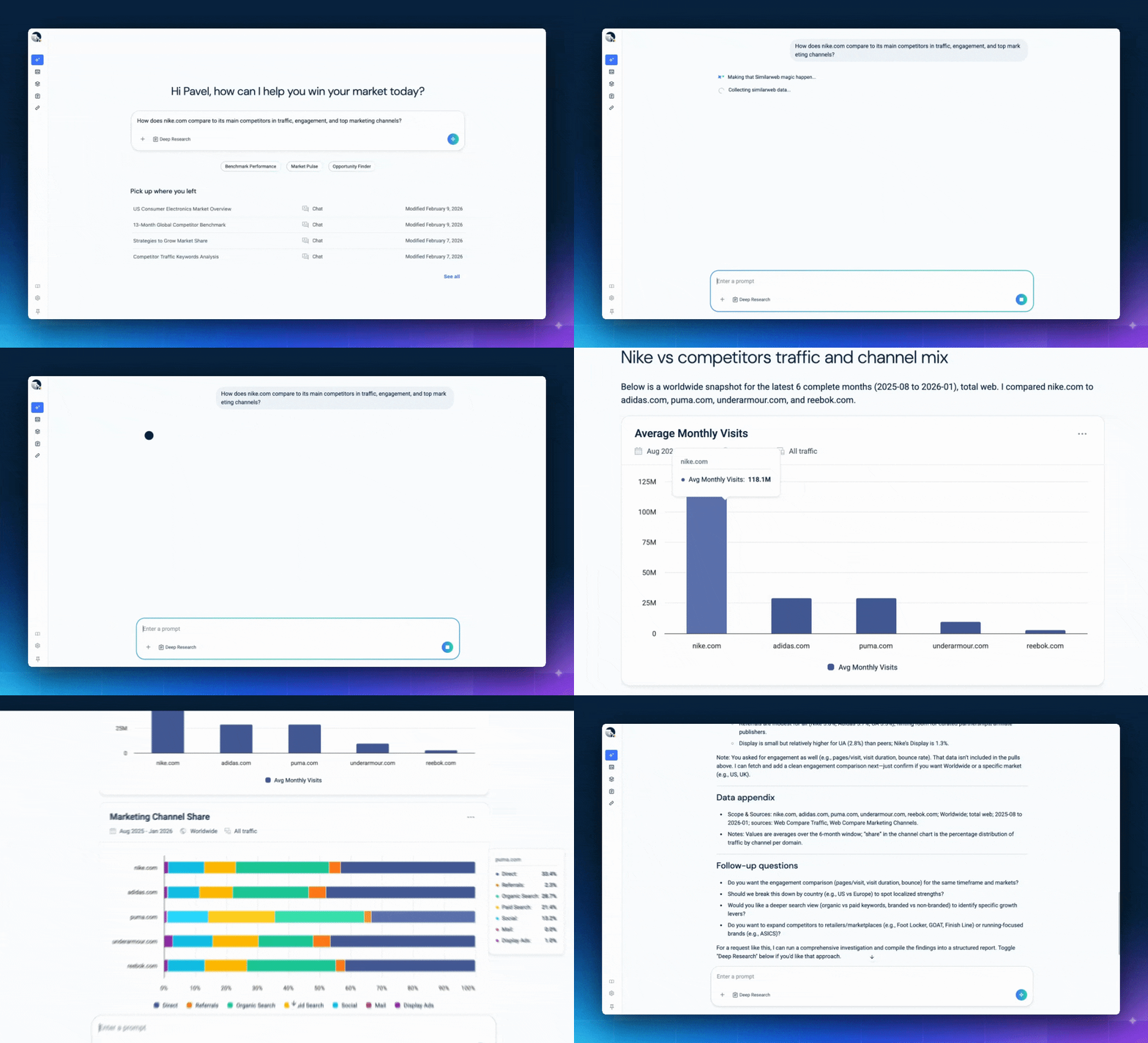
Similarweb AI Studio positions itself as an enterprise-grade “AI intelligence conversational” layer on top of a company’s marketing data. Rather than digging through dashboards, reports, and exports, teams can query their data in natural language and get synthesized answers.
Core ideas:
-
Chat-first interface to complex data
Instead of manually building reports, users ask questions like, “How did my traffic from paid social in France change month over month?” or “Which competitor gained the most organic traffic last quarter?” The AI then pulls, analyzes, and explains the data. -
Deep integration with marketing intelligence
Because it sits on Similarweb’s data stack, the tool can access web traffic analytics, competitive intelligence, and market insights. The AI layer combines those inputs into explanations and recommendations. -
Faster decisions, fewer bottlenecks
Non-analysts can self-serve answers they’d normally have to request from data teams. This reduces friction and helps marketing, product, and leadership teams move faster.
What it unlocks in practice
-
Quicker strategy and performance reviews, done via chat instead of custom reports.
-
Easier competitive and market analysis for teams that aren’t data experts.
-
A step toward “always-on” intelligence—where questions like “Is this campaign working?” or “Where are we losing share?” can be answered in minutes.
ByteDance Seedance 2.0: Cinematic AI Video for the Masses
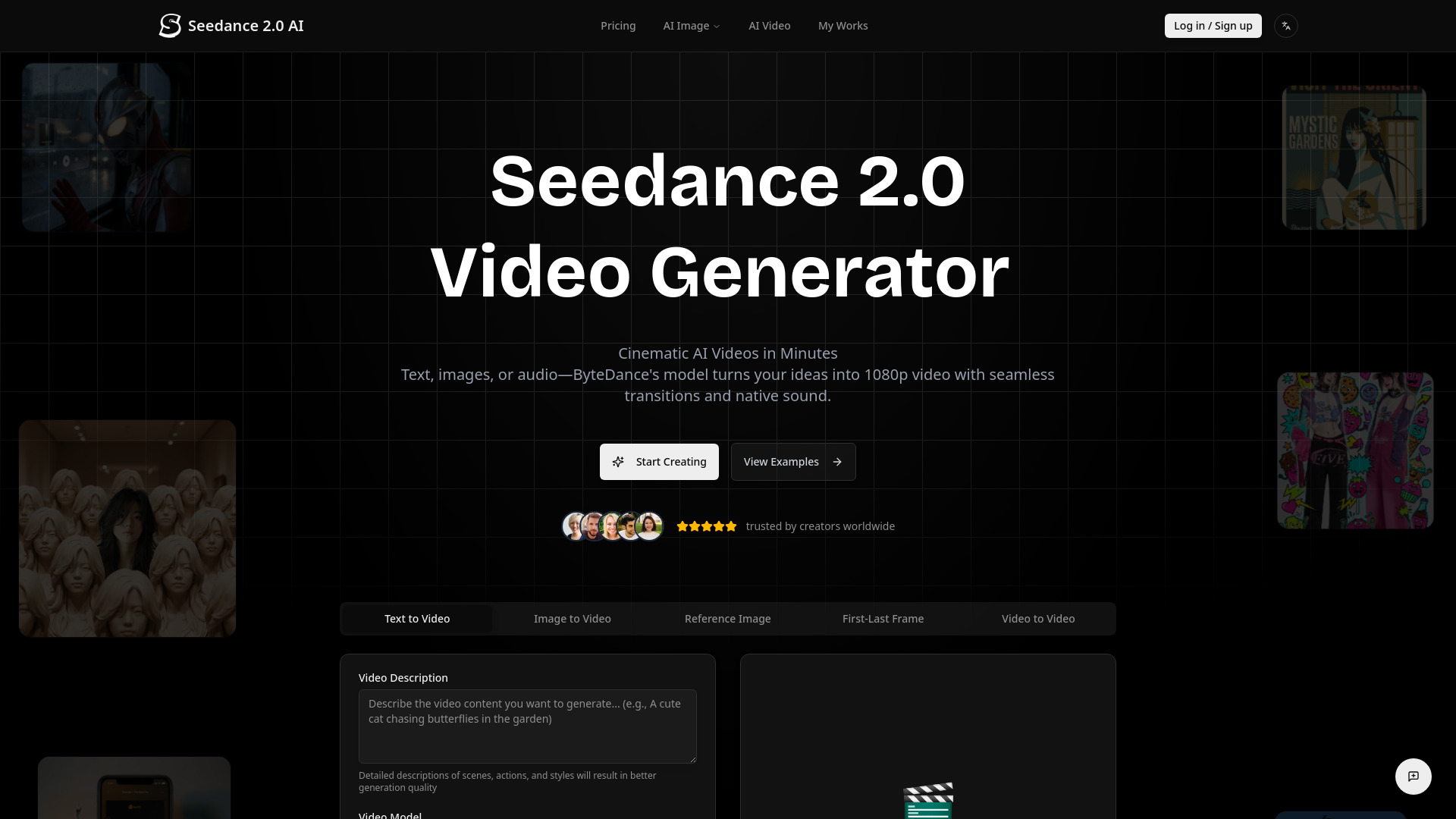
ByteDance (the company behind TikTok) has released a pre‑release version of Seedance 2.0, a new AI video model that’s gone viral largely due to its cinematic quality.
Highlights:
-
High-fidelity, cinematic outputs
Seedance 2.0 can generate video that looks far more polished than typical AI clips: better motion, composition, lighting, and overall coherence. This nudges AI video closer to a “film look” rather than a gimmick. -
Pre-release status, but already viral
Even before a full public rollout, demos circulating online have attracted attention. That suggests strong creative potential for advertising, storytelling, and short-form content. -
Short-form native thinking
Coming from ByteDance, the model is likely designed with short-form, mobile-first platforms in mind—quick, visually striking pieces that work well in feed environments.
What it unlocks in practice
-
Creators and brands can prototype visually rich concepts without full production teams.
-
Agencies can test multiple creative directions at lower cost and higher speed.
-
As quality improves, AI video may begin to replace or augment some traditional production workflows, especially for social and performance creatives.
Why These Updates Matter Together
Looked at individually, each tool targets a specific workflow: research, audio production, marketing intelligence, and video creation. Taken together, they hint at a broader direction:
-
Deeper AI, not just broader AI
Tools are becoming specialized and workflow-aware. Deep Research focuses on trustworthy, structured research. Similarweb AI Studio focuses on marketing data. Seedance 2.0 focuses on cinematic video. This is AI moving from “general assistant” to “expert copilot” in specific domains. -
From manual production to AI-first pipelines
Audiobooks, videos, and reports that once required multiple roles (writer, analyst, narrator, editor, producer) can increasingly be produced end-to-end within one AI-powered environment. -
Democratization of “top-tier” quality
Capabilities that were once limited to big budgets—studio-grade narration, cinematic video, rich market intelligence—are becoming accessible to smaller teams and individual creators.
If you share your target audience (e.g., “Cameroon marketers,” “global SaaS founders,” “authors and educators”), I can adapt this article into a more niche-focused piece with tailored examples and suggested calls‑to‑action.


