


Meta Launches Muse Image AI Model for Instagram, WhatsApp and Meta AI
Meta is pushing deeper into generative AI with the launch of Muse Image, a new AI image-generation model designed to create and edit visuals across Meta’s consumer apps.

The model is Meta’s first image-generation system from Meta Superintelligence Labs and is now being used inside Meta AI, with integrations across platforms such as Instagram and WhatsApp. The launch signals a major step in Meta’s plan to make AI-generated media part of everyday social sharing, messaging and eventually advertising workflows.
For creators, marketers and small businesses, Muse Image matters because it brings AI image creation directly into the platforms where audiences already spend time. Instead of relying only on external image-generation tools, users can now create, edit and share AI visuals inside Meta’s own ecosystem.
What Is Meta Muse Image?
Muse Image is Meta’s new AI model for generating and editing images from text prompts, existing photos and user instructions.
According to reports on the launch, the model can understand complex prompts, combine multiple photo inputs and support image editing through sketches or annotations. This makes it more than a simple text-to-image generator. It is designed to help users move from an idea to a finished visual with fewer manual steps.
Meta is positioning Muse Image as part of a broader creative AI system. The model is connected to Meta AI and is expected to support creative features across Instagram, WhatsApp, Facebook, Messenger and advertising tools over time.
That makes Muse Image especially important for businesses that already use Meta platforms for customer communication, social media marketing and paid advertising.
Where Muse Image Is Available
Muse Image is available through Meta AI and is being used to power image-generation features across Meta’s apps.
The Android Headlines report notes that Meta is bringing Muse Image into platforms including Meta AI, Instagram and WhatsApp. Reuters also reported that the model is being rolled out across Meta’s applications and can support prompt-based generation, image inputs and visual editing.
On Instagram, Muse Image is being used to power new AI effects for Stories. These effects allow users to apply creative transformations and generate visuals more easily within the Stories experience.
On WhatsApp, Meta AI can support image generation inside direct chats in select markets. This gives users a more conversational way to create and modify images without leaving a messaging thread.
Meta is also expected to expand Muse Image into more surfaces, including Facebook, Messenger and advertiser tools.
Key Features of Muse Image
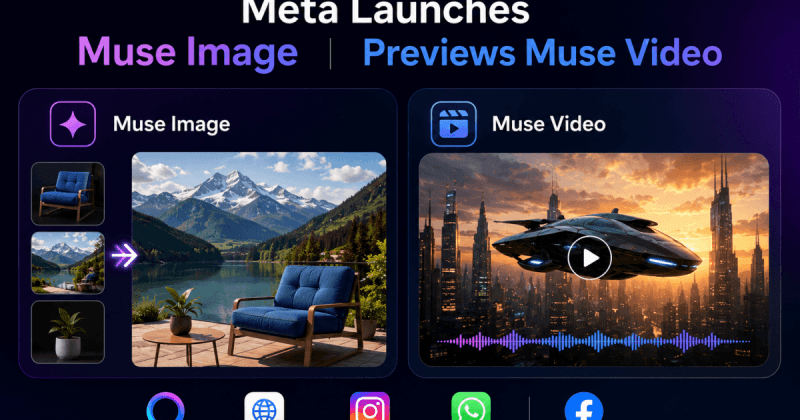
Muse Image introduces several features that could make AI image generation more useful for everyday users and businesses.
Text-to-Image Generation
Users can describe the image they want, and Muse Image can generate a visual based on that prompt.
This is the core use case for most AI image-generation tools. For example, a user might ask for a birthday invitation, a product-style image, a fantasy portrait or a themed social media graphic.
Image-Based Inputs
Muse Image can also use existing photos as inputs.
This makes it useful for editing or transforming visuals rather than starting from a blank prompt. For businesses, this could support creative variations of product images, event photos, interiors, fashion looks or promotional graphics.
Sketch and Annotation Editing
One of the more practical features is the ability to edit images using sketches or annotations.
Instead of rewriting a long prompt, users can indicate visually what they want changed. This could make the editing process more intuitive, especially for non-designers.
Instagram Story Effects
Muse Image powers more than 30 AI effects for Instagram Stories.
This is important because Stories are already a high-usage creative format for individuals, creators and brands. By placing AI effects directly inside Stories, Meta is making generative visuals part of normal social publishing behaviour.
WhatsApp Image Generation
Muse Image also supports image creation through Meta AI in WhatsApp chats in selected markets.
This could be useful for casual users, but it also has business implications. Many SMEs use WhatsApp to communicate with customers, share product photos, promote offers and coordinate orders. AI image generation inside chat could eventually become part of faster customer-facing content creation.
Why Muse Image Matters for Meta
Meta is competing in a fast-moving AI market where companies such as OpenAI, Google, Adobe and others are building increasingly capable creative tools.
Muse Image gives Meta a stronger position in AI media generation because Meta has something many AI companies do not have at the same scale: distribution.
Instagram, WhatsApp, Facebook and Messenger reach huge consumer audiences. If AI image generation becomes part of these apps, Meta does not need to persuade users to visit a separate creative platform. It can place AI tools directly where people already post, message, shop and advertise.
That distribution advantage could make Muse Image important even if users do not think of it as a separate product. Many people may encounter it simply as a new feature inside Instagram Stories, WhatsApp chats or Meta AI.
What Muse Image Means for Marketers and SMEs
For small businesses and marketers, Muse Image could become a practical tool for faster content production.
Many SMEs struggle to create enough quality visuals for social media, advertising and customer communication. Hiring designers, photographers or agencies can be expensive, while generic templates often feel repetitive.
Muse Image may help businesses create:
- Instagram Story graphics
- Event announcements
- Promotional visuals
- Product mockups
- Seasonal campaign images
- WhatsApp marketing creatives
- Social media backgrounds
- Quick concept visuals for ads
The biggest advantage is speed. A business owner or social media manager may be able to create simple campaign visuals without leaving the platform where the content will be published.
However, AI-generated content should still be reviewed carefully. Businesses need to check whether images are accurate, brand-safe, culturally appropriate and legally usable before publishing them.
The Advertising Opportunity
Muse Image could become especially important once it is connected more deeply to Meta’s advertising tools.
Meta’s Advantage+ creative tools already help advertisers automate and optimize parts of the ad creative process. If Muse Image is integrated into those workflows, advertisers may be able to generate more creative variations for campaigns.
This could help brands test different visuals, formats and concepts faster.
For example, an ecommerce business could create multiple versions of a product lifestyle image. A local restaurant could test different event promotions. A fashion brand could produce variations for seasonal campaigns.
The business value would not come only from generating images. It would come from connecting image generation with ad testing, performance data and audience targeting.
That is where Meta has a major advantage: it owns both the creative surface and the advertising infrastructure.
Privacy and Brand Safety Concerns
Muse Image also raises questions that businesses should not ignore.
Reports around the launch have highlighted that Meta’s AI image tools may be able to use public Instagram photos in generated images when users are mentioned or when content is available for reuse. This introduces sensitive issues around consent, likeness and personal identity.
For brands, the safest approach is to avoid using customer, employee, creator or public-profile images in AI-generated content without clear permission.
Even if a platform technically allows a type of reuse, that does not mean it is automatically wise for a business. Trust matters. A brand that uses someone’s likeness in an AI-generated image without permission could face reputational damage, customer complaints or legal questions.
Businesses should create internal rules for AI-generated visuals, including:
- Only use owned or licensed images as inputs.
- Get consent before using a person’s likeness.
- Review AI outputs before publishing.
- Avoid misleading or deceptive visuals.
- Label AI-generated content when appropriate.
- Keep brand guidelines and customer trust at the centre of the process.
Muse Image and the Future of Social Media Creation
Muse Image shows where social media is heading.
AI creation is no longer a separate activity that happens outside the platform. It is becoming part of the publishing experience itself.
Users will not only upload photos. They will generate, remix, edit and personalize images inside the same apps where they share them.
For creators, this could speed up content production and open new creative formats. For businesses, it could reduce the gap between idea and campaign execution. For platforms, it creates a stronger reason for users to stay inside their ecosystems.
The next phase of competition in AI image generation may not be decided only by model quality. It may also depend on where the tool lives, how easy it is to use and how well it connects to publishing, messaging and advertising.
Meta has a strong advantage here because Muse Image is being placed inside apps that already shape how people communicate visually.
Practical Tips for Businesses Using AI Image Tools
Businesses that want to experiment with Muse Image or similar tools should start with a clear workflow.
1. Use AI for Drafts and Variations
AI image tools are useful for creating first drafts, campaign concepts and multiple visual options. They should not replace final human review.
2. Protect Brand Consistency
Create prompt guidelines, approved colour palettes, tone rules and visual examples. This helps prevent AI-generated images from feeling disconnected from the brand.
3. Avoid Sensitive Inputs
Do not upload or reuse private customer images, employee photos or creator content unless permission is clear.
4. Check Every Image Before Publishing
Look for errors in text, hands, faces, products, logos, cultural references and brand claims.
5. Measure Performance
If AI-generated images are used in campaigns, compare their performance against human-designed assets. Track engagement, click-through rates, inquiries and conversions.
Conclusion: Meta Is Turning AI Image Generation Into a Social Platform Feature
Meta’s launch of Muse Image is more than another AI model announcement.
It shows that AI image generation is moving directly into the apps people use every day: Instagram, WhatsApp, Meta AI and eventually more Meta surfaces.
For users, this means faster and more playful visual creation. For creators, it offers new ways to produce content. For marketers and SMEs, it could become a practical tool for creating campaign visuals, social posts and ad variations more quickly.
But speed must be balanced with responsibility.
Businesses should treat Muse Image as a creative assistant, not an automatic publishing system. The best results will come from combining AI generation with human judgment, clear brand rules and careful attention to privacy and consent.
Meta is making AI image creation more accessible. The brands that benefit most will be those that use it strategically, ethically and with a clear connection to real marketing goals.
Sources
- Android Headlines: Meta launches Muse Image AI generation model.
https://www.androidheadlines.com/2026/07/meta-launches-muse-image-ai-generation-model.html - Reuters: Meta expands generative AI tools with Muse Image rollout.
- The Verge: Meta’s new Muse Image model can pull other Instagram users into AI photos.
- Meta Newsroom: Introducing Muse Image: Image Generation Built for Your World.


