


AI Content Calendar: Using AI to Sync Your Content Calendar with Revenue Goals
Your content calendar is likely a beautiful spreadsheet. Color-coded, meticulously planned, filled with clever headlines and scheduled publish dates. There’s just one problem: it’s probably completely disconnected from your revenue goals.

For most marketers, the content calendar is a publishing schedule, not a revenue engine. You plan based on hunches, industry trends, or what competitors are doing. You measure success by vanity metrics: page views, social shares, and time on page. But when the CFO asks how content contributes to bottom-line growth, you’re left pointing at traffic charts that don’t translate to sales pipelines.
This disconnect isn’t your fault. Traditional content planning is manual, guesswork-heavy, and backward-looking. You analyze what worked last quarter, then try to replicate it. Meanwhile, market conditions shift, customer preferences evolve, and new competitors emerge, rendering your carefully crafted calendar obsolete before you publish the first piece.
The autonomous content engine changes everything. By integrating artificial intelligence into your content strategy, you transform your calendar from a static document into a dynamic, self-optimizing system that aligns every publication with revenue outcomes. This isn’t about replacing human creativity; it’s about augmenting it with data-driven intelligence that ensures your content actually drives business growth.
The Problem with Traditional Content Calendars

The Planning Fallacy
Most content calendars suffer from three fatal flaws:
- They’re based on assumptions, not data: You’re guessing what topics will resonate, which formats will convert, and when to publish for maximum impact.
- They measure the wrong things: Traffic and engagement metrics don’t correlate with revenue. A viral post might generate thousands of shares but zero qualified leads.
- They’re rigid and unresponsive: Once set, calendars resist change. When a market shift or competitor move occurs, you’re locked into publishing irrelevant content.
The result? You’re producing content for content’s sake, checking boxes on a publishing schedule rather than strategically advancing business objectives.
The Cost of Misalignment
Consider these common scenarios:
- Your blog drives 50,000 monthly visitors but only 10 marketing-qualified leads
- Your social team creates engaging videos that get thousands of likes but don’t mention your product
- You publish 20 articles about industry trends while your ideal customers are searching for solution comparisons
Each represents wasted resources, editorial hours, production budgets, and promotion spend that could be directed toward revenue-generating activities.
What Is an Autonomous Content Engine?
An autonomous content engine is an AI-powered system that continuously:
- Analyzes performance data across channels
- Identifies content opportunities aligned with business goals
- Generates or recommends content ideas and outlines
- Optimizes distribution and promotion strategies
- Measures impact on revenue metrics (not just engagement)
Unlike traditional calendars that you build and execute, the autonomous engine builds and optimizes itself based on real-time data. It’s the difference between manually driving a car and using autonomous driving mode, both get you there, but one requires constant attention while the other navigates efficiently based on traffic conditions.
The Core Components

A fully functional autonomous content engine integrates several AI capabilities:
Predictive Analytics AI
- Analyzes historical performance data to predict which topics, formats, and channels will drive conversions
- Identifies emerging trends before they become competitive
- Forecasts content ROI before creation begins
Natural Language Generation (NLG)
- Creates first drafts of blog posts, social updates, and email copy
- Generates multiple headline variations for A/B testing
- Adapts content tone and style for different audience segments
Semantic Analysis AI
- Maps your content against customer journey stages
- Identifies gaps in your content coverage
- Ensures content aligns with search intent and user questions
Distribution Optimization AI
- Determines optimal publishing times for each channel and audience segment
- Recommends promotion strategies based on content type and goals
- Automates cross-channel distribution
Building Your Autonomous Content Engine: A Step-by-Step Framework
Phase 1: Foundation – Connect Content to Revenue Metrics
Before implementing AI, you must establish what success looks like. This requires moving beyond vanity metrics to revenue-connected KPIs.
Map Content to Customer Journey Stages
Every piece of content should serve a specific purpose in moving prospects toward conversion:
Awareness Stage Content → Consideration Stage Content → Decision Stage Content (Top-of-funnel) (Middle-of-funnel) (Bottom-of-funnel) Industry insights Product comparisons Case studies “How-to” guides “Vs competitor” articles Demo requests Trend reports Feature deep-dives Pricing pages
Establish Revenue Attribution
Implement tracking that connects content consumption to revenue:
- Use UTM parameters on all content links
- Set up conversion tracking in Google Analytics
- Integrate your CMS with your CRM to track lead source
- Implement multi-touch attribution modeling
Define Content KPIs by Stage
- Awareness content: Measured by reach, branded search growth, and topic authority
- Consideration content: Measured by lead generation, time on page, and content downloads
- Decision content: Measured by conversion rate, sales cycle acceleration, and deal size
Phase 2: Intelligence Layer – Implement AI Analytics
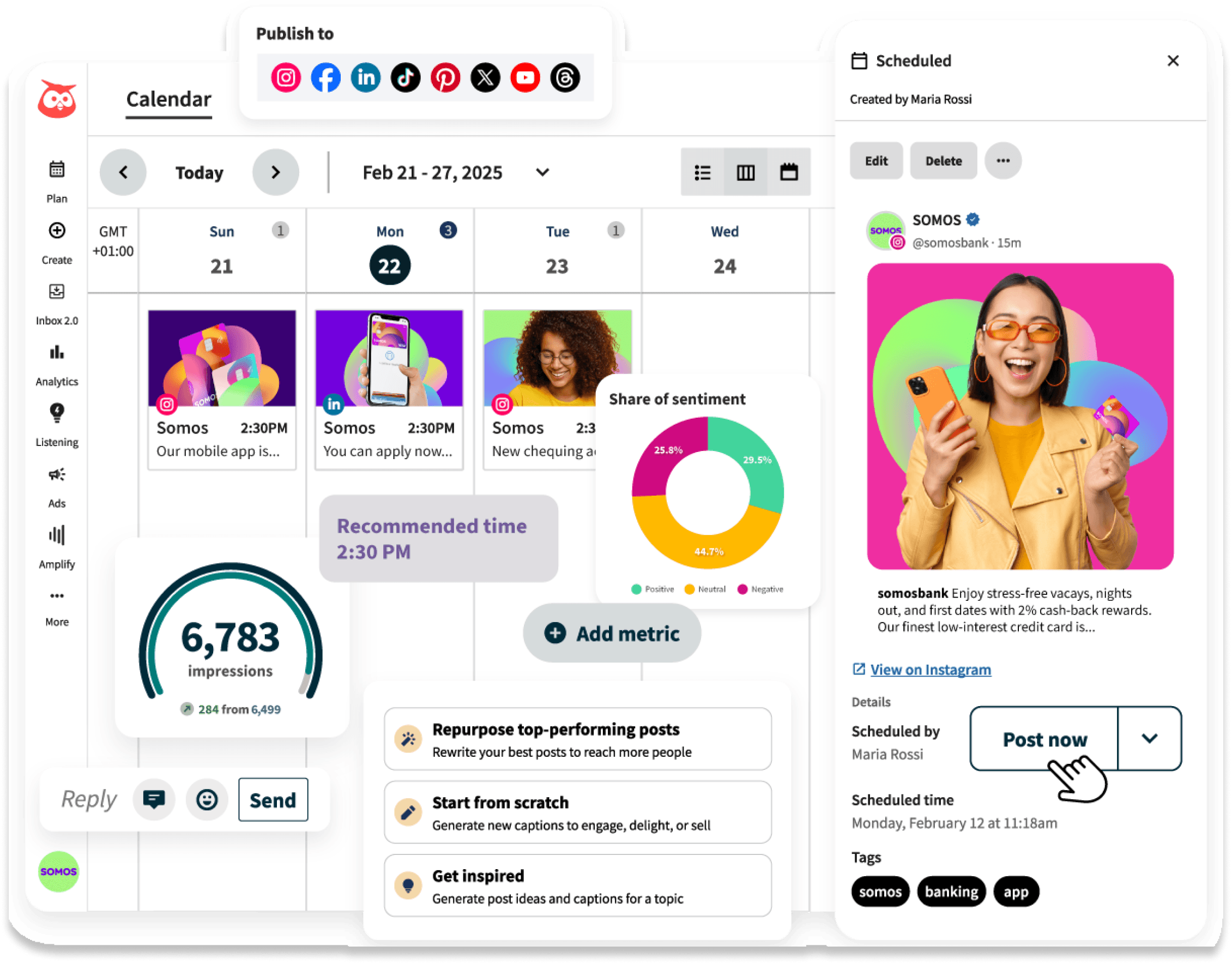
With your foundation established, layer in AI-powered analysis to guide content decisions.
Content Gap Analysis
Use AI tools to analyze:
- Search volume for topics you haven’t covered
- Questions your audience is asking (via forums, social media, review sites)
- Competitor content performance
- Semantic relationships between topics
Performance Prediction
AI can predict content success before creation by analyzing:
- Historical performance of similar content
- Seasonal trends in your industry
- Current events and market conditions
- Audience engagement patterns
Automated Brief Generation
Instead of starting with a blank page, use AI to create data-driven content briefs
Bottom Line
An autonomous AI Content Calendar doesn’t just save hours, it turns content into a self-optimising profit centre. Feed it revenue data, guard-rails, and brand voice; it will publish, test, and rewrite until every post pays for itself.
Run a content audit today, identify your top revenue goals, and ask: “Is my content calendar working for Cameroon’s market?” If not, it’s time to rebuild.


